2015 – the large wave of refugees reached Germany. Steinmühle, too, made it its mission to provide active assistance and organized a residential group for unaccompanied minor refugees, designed to help these young people find their footing in Germany as quickly as possible and take their first steps toward successful integration. Not least because of this experience, the exhibition “Faces and Stories” by the bsj Marburg immediately piqued the interest of the Steinmühle’s leadership.

The exhibition traces the journey of Tarek, Ali, and Muhi Eddin, who arrived in Marburg in 2015 and, several years later, reflect on their experiences over the past few years. Sometimes enthusiastic, sometimes pensive, but always optimistic, they talk about their experiences and adventures.

Together with educators from bsj Marburg, the three young Syrians also compiled diaries of their flight, featuring cell phone photos of their families, their hometowns—Damascus, Idlib, Al-Hasaka—and of individual stops along their journey of flight to the Marburg-Biedenkopf district. The young people developed the concept for illustrating their stories during a weekend workshop together with a graphic designer. There, they counted the days of their journey and illustrated each stage with photos, their own drawings, and handwritten notes in Arabic and German

What has become of Tarek, Ali, and Muhi Eddin since 2015? Have the three of them found a new home in the Marburg-Biedenkopf district? Which of their wishes have come true, and which have not?

The three young men come to very different conclusions on this matter, but they all emphasize that they feel they have found their place, even if things haven’t turned out exactly as they had hoped five years ago.

The exhibition was on display for two weeks on the upper floor of the Steinmühle high school building and drew a great deal of interest from the students.

(Bernd Hülsbeck)

Resource scarcity, global warming, the climate crisis, and more: The Future is Now—the future has already begun! That’s why Ines Vielhaben, an art teacher at Steinmühle, is leading a new student group dedicated to activities that could slow this trend or highlight alternative ways for each of us to act. What’s actually happening? How can we take countermeasures? And how can this topic be addressed at Steinmühle across the various subject departments? Ines Vielhaben presented the project to the faculty meeting this past spring, outlining these questions along with the goals and responsibilities of the new club. The plan is to address the topic ideally through smaller lesson units or larger projects. Those present spontaneously contributed ideas and expressed their willingness to participate. Annett Miller expressed a desire to integrate a project using the iPad, particularly with regard to the necessary resources. Lisa Braun offered the assistance of the Geography department, which already had a wealth of materials on the subject.

“We hope to see even more interest from students, parents, and faculty, and we hope that over the summer break, some of them will decide to join our club,” says Ines Vielhaben, who is happy to serve as the contact person (ines.vielhaben@steinmuehle.net). As part of her advanced art class, high school senior Talea Funk designed a logo for the club to help people quickly recognize its posts and activities.

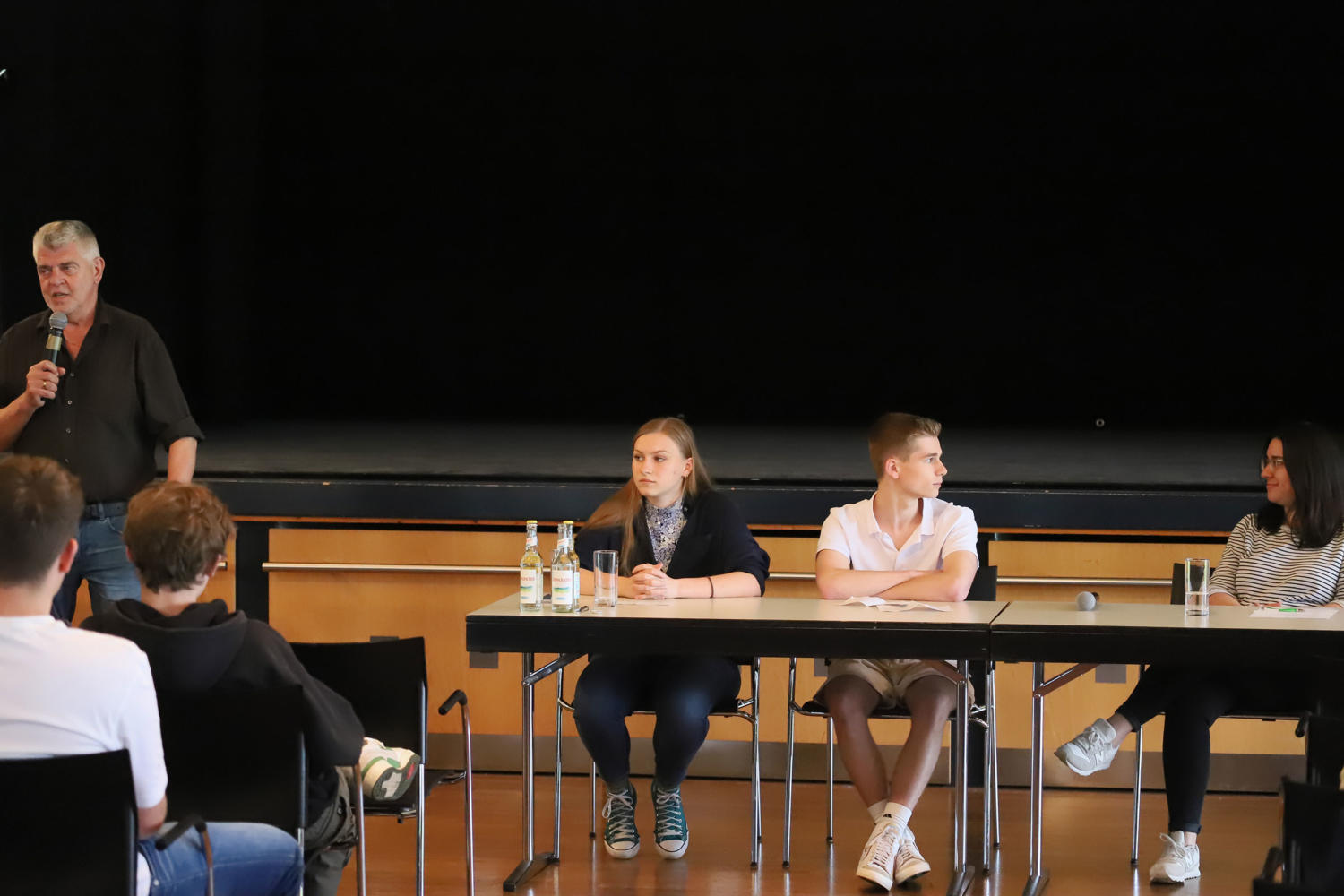
Whenever there’s an opportunity to engage with politicians, the high school students at Steinmühle are eager to participate. They value the chance to discuss current issues, hear different perspectives, and ask questions about topics that are on their minds. This was also the case during the visit by State Parliament Representative Nina Eisenhard. The 32-year-old has been a member of the Hessian State Parliament since 2019 and serves as the higher education policy spokesperson for the Green Party’s state parliamentary caucus.

The visit, organized by Erno Menzel and Bernd Hülsbeck with the support of their colleagues in the Politics and Economics department, had been prepared in class. Participants included the 12th-grade class and the future 11th-grade Politics and Economics honors class. However, some questions also arose spontaneously, partly prompted by the conflict in Ukraine. The discussion centered on defense spending, the question of how the Green Party, as a coalition partner, could possibly support certain decisions in substance, and the fact that digitization is progressing so terribly slowly, especially in higher education.

Despite her young age, Nina Eisenhardt was able to draw on her own personal experience. She didn’t go straight from the classroom to a seat in parliament. The politician spoke about her experience as a self-employed entrepreneur running a web development company. “This has significantly improved my understanding of these issues,” she said. According to Nina Eisenhardt, the slow pace of digitization in the education sector isn’t due to a lack of available hardware: “That’s already in place.” Rather, there is a lack of staff for maintenance and long-term oversight. “It’s simply a matter of jobs.”

The students, led by the moderator team of Tilmann Molzberger and Mara Mensing, asked whether she found the decisions being made within the coalition unsatisfactory in terms of their substance. The member of parliament described the coalition compromises as side effects of a “temporary alliance of convenience.” She noted that if one wants to be part of the process and play a fundamental role in shaping it, there will inevitably be decisions that run counter to one’s personal views.

The questioners—all of whom were men—were also interested in the visitor’s views on a possible lowering of the voting age.

According to Nina Eisenhardt, voting is a right that requires no qualifications. You don’t have to explain why you want to vote. There is no reason to deny the right to vote to those under 18. The representative continued: “I’m in favor of lowering the voting age to 14. From that age on, you can work, earn a salary, and are required to pay taxes.” Nina Eisenhardt concluded: “Voting starting at age 14—that would be a huge opportunity.”

Spotlight on Ukraine: Lucia Puttrich, Hesse’s Minister for Federal and European Affairs, visited the Steinmühle

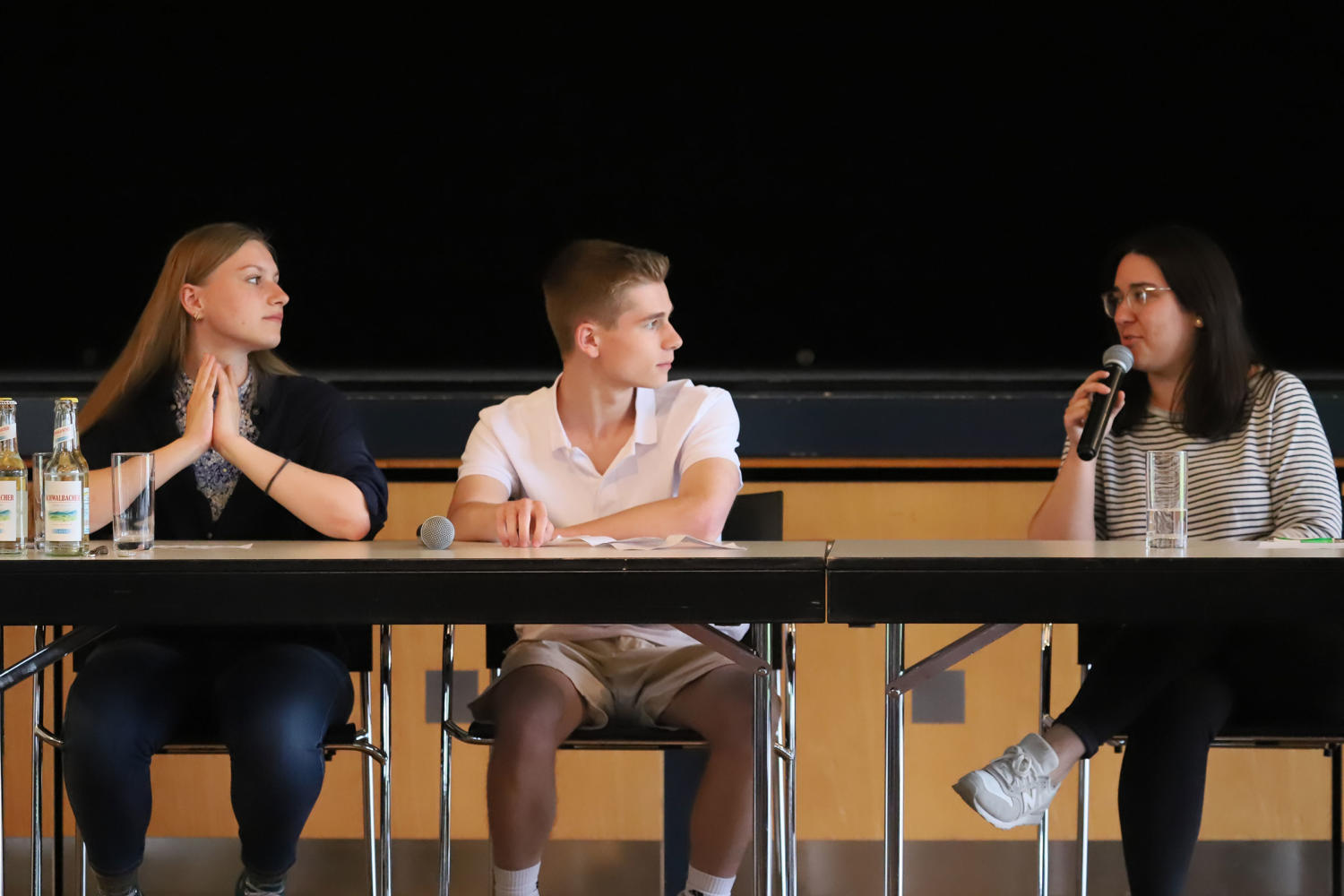
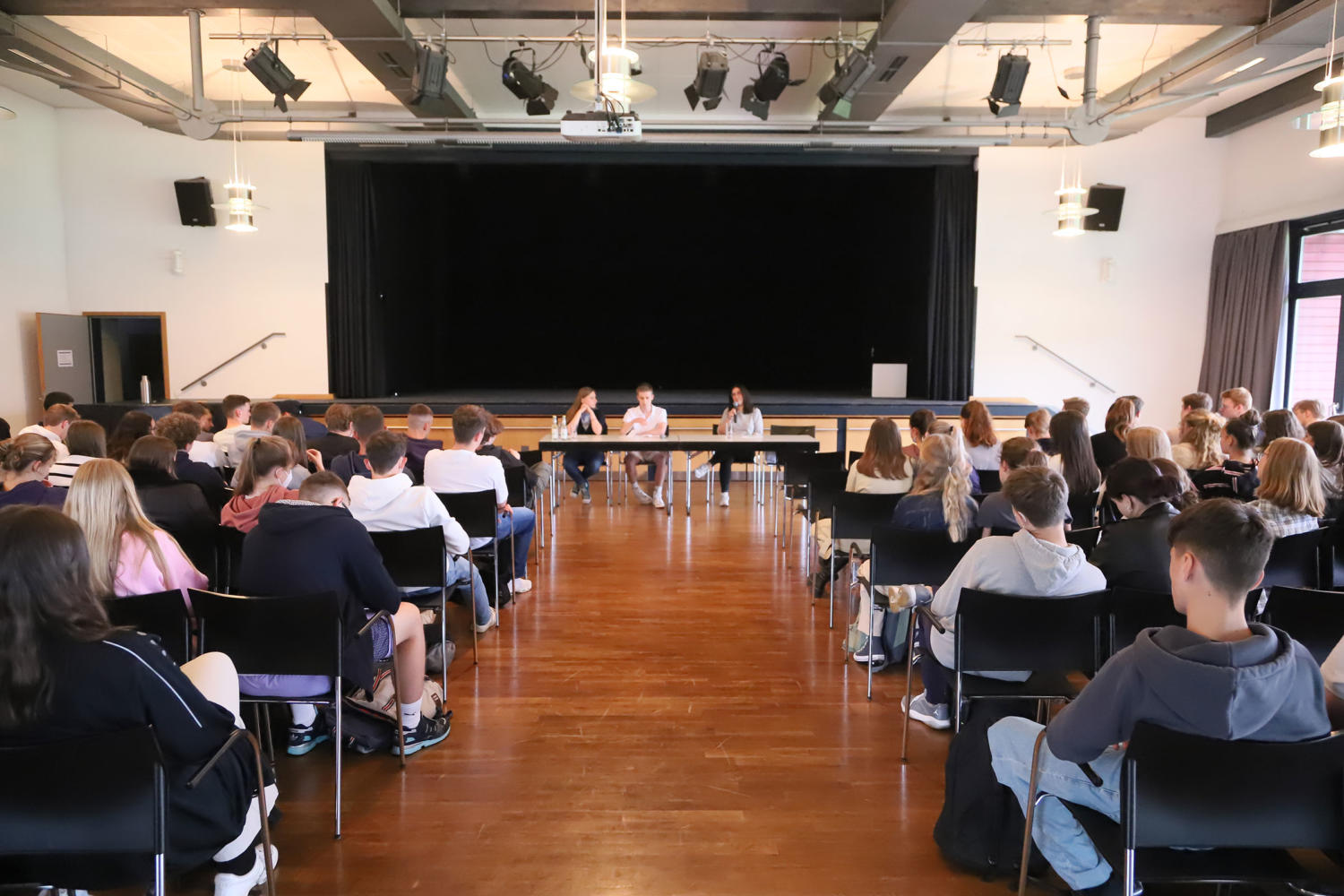
Don’t talk about politicians—talk with them. That is the goal of Steinmühle High School, and it is also why the school always welcomes visits from members of parliament and ministers. Through local state parliament member Dirk Bamberger (CDU), Steinmühle established contact with Lucia Puttrich. She is not only Bamberger’s colleague in the Hessian State Parliament, but also Hessian Minister for Federal and European Affairs and Plenipotentiary of the State of Hesse. She recently joined Dirk Bamberger and Horst Falk—also a member of the state parliament and the education policy spokesperson for the CDU parliamentary group—on the panel at the Steinmühlenforum event: “Students Ask—Politicians Answer.”

A ministerial visit in the midst of the war in Ukraine—this was a good opportunity for the 11th and 12th graders at Steinmühle to raise issues that were on their minds. It’s no surprise that this topic was the main concern for the Steinmühle students. It was a serious event featuring in-depth questions and well-considered answers from the minister. And her answers didn’t always dispel concerns or alleviate fears. Informative, but not sugarcoated.


“A War Against NATO and the EU”

“Ukraine is defending its sovereignty, and virtually every Ukrainian has a weapon,” said Lucia Puttrich as she began her description of the situation in the country that is currently the focus of attention in Europe and around the world. However, the minister was also keen to make it clear that the conflict does not stop at territorial borders but is imperialist in nature: “Putin wants his old empire back. It is a war against NATO and the EU. And Putin is fundamentally unwilling to change the course of the war before achieving these goals.” In response to the frequently asked question of whether Putin’s absence from the scene would improve the situation, the minister offered no positive outlook: “It’s not about the person; it’s the system behind him.”

What is at stake in the war in Ukraine? What are we defending? What will happen if Russia cuts off the gas supply? — Questions from the minister to ponder, and questions from the students. “We’re defending democracy,” said Puttrich, “and rising prices and economic downturns are currently the price we’re paying for that.” It’s about our stance, about realizing that we shouldn’t take anything for granted. “We have a responsibility toward Ukraine,” Lucia Puttrich stated, and continued: “And we also have a responsibility toward Russia. But that cannot mean condoning a war of annihilation.”


“A Time of Escalation”

The minister described NATO’s foundation as a defense pact with a mutual assistance obligation. She noted that there are currently security threats in the Baltic states and in Poland. This situation means that certain events are interconnected: “If Ukraine falls, we’ll see a domino effect.” She noted that the current situation is fundamentally at odds with the formal realities. Puttrich: “Ukraine is a sovereign state, recognized even by Russia.” This fact alone demonstrates a certain unpredictability: “If Putin wants World War III, then that’s what he wants—it’s not up to us to decide. And war is most likely to be avoided if it is unwinnable for Russia.” In fact, according to the visitor from Wiesbaden, we must probably brace ourselves for a long conflict: “A ceasefire would already be a good thing.” It takes a long time for sanctions to take effect. The minister considers it a mistake to dismiss the Russian president’s behavior as mere caprice: “Putin is serious about these matters. We are living in a time of escalation.”

“We must learn from history—anything is possible,” said State Parliament Representative Horst Falk, concluding the overall discussion between the panel of politicians and the student body. The event—prepared by Steinmühlen teachers Bernd Hülsbeck and Erno Menzel and moderated by Tilmann Molzberger from the Q2 Political Science Honors Class—did not end on a reassuring note, particularly given the minister’s use of sources of information that were, in some cases, exclusive. Principal Björn Gemmer expressed his gratitude for arranging the event, for the attendance and active participation of everyone present, and for their willingness to take the time to engage in dialogue with young people.

When the event came to an end, the audience could have continued the discussion. This was certainly a sign that the topic was thought-provoking, but also that the exchange had been fruitful.

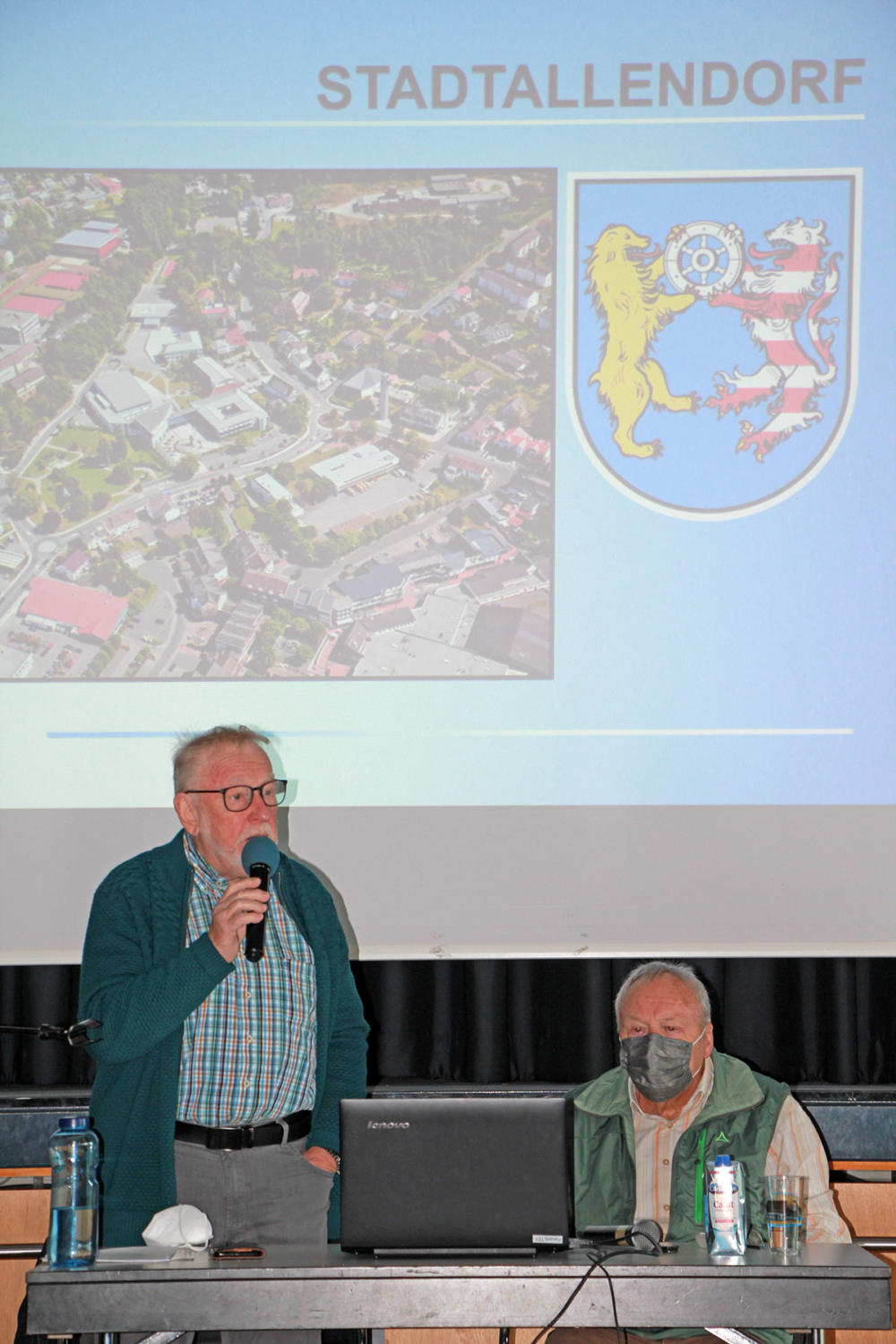
From time to time, parents or relatives of our students are able to make valuable contributions to Steinmühlen’s curriculum—thanks to their professional experience or knowledge. The visit by Herbert Köller, the grandfather of Alexandra Köller (6b), was one such example. Together with Hans-Jürgen Wolff, he spoke to Steinmühlen students in grades 8, 10, and 13 about the work of the Stadtallendorf Documentation and Information Center (DIZ), founded in 1994, which is Germany’s first and oldest memorial dedicated to forced labor.

The DIZ (www.diz-stadtallendorf.de) has received photographs and records from the late phase of World War II from the estate of Hilmar Eisenhut. Hilmar Eisenhut was a 15-year-old student in Eschwege when his friends from the grade above him, who were serving as anti-aircraft gunners near Kassel, were killed by a crashing airplane. Shortly thereafter, Hilmar also became an anti-aircraft gunner and was stationed in Stadtallendorf.

From a Poor Village to the No. 1 Industrial City

In the first part of the double period, Hans-Jürgen Wolff used a PowerPoint presentation to explore why Stadtallendorf is now a thriving industrial city. He traced the town’s journey from a poor Catholic village, through its history as an ammunition depot and a refuge for displaced persons and guest workers, to its current status as the number one industrial town in the Marburg-Biedenkopf district. In doing so, he also explored the question of why Stadtallendorf was not bombed during World War II. This is where 16-year-old Hilmar Eisenhut, his accounts, and his photographs came into play.

A 16-Year-Old’s War Experiences

In the second part, the presentation took on a more personal tone and was told from the boy’s perspective. Herbert Köller read vividly, taking on various roles, and emotionally brought Hilmar’s notes to life—sometimes in the loud tone of the sergeant, sometimes with a tear-choked voice. In between, Hans-Jürgen Wolff repeatedly interrupted the reading to provide factual, matter-of-fact, and even technical information to help the audience contextualize what they had heard.

The title “History Up Close” can therefore be understood in two ways. On the one hand, it was about regional proximity—that is, the history of a town in our county. On the other hand, the accounts were emotionally moving, as the fate of the anti-aircraft gunner and his friends—who were the same age as the audience—struck a deep chord—not even ten days before another war of aggression began in Europe.

Our photo shows the speakers Herbert Köller (left) and Hans-Jürgen Wolff.

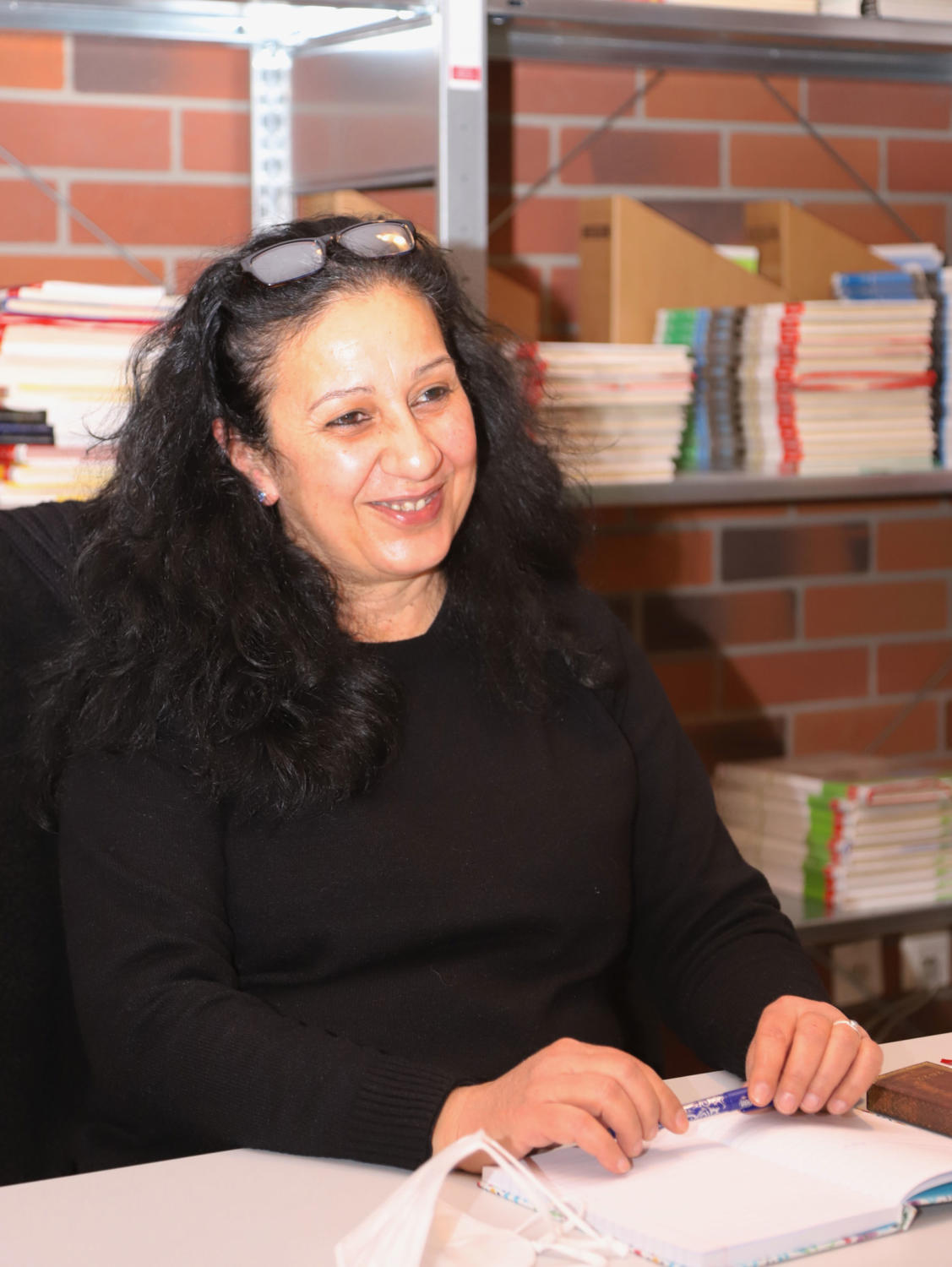
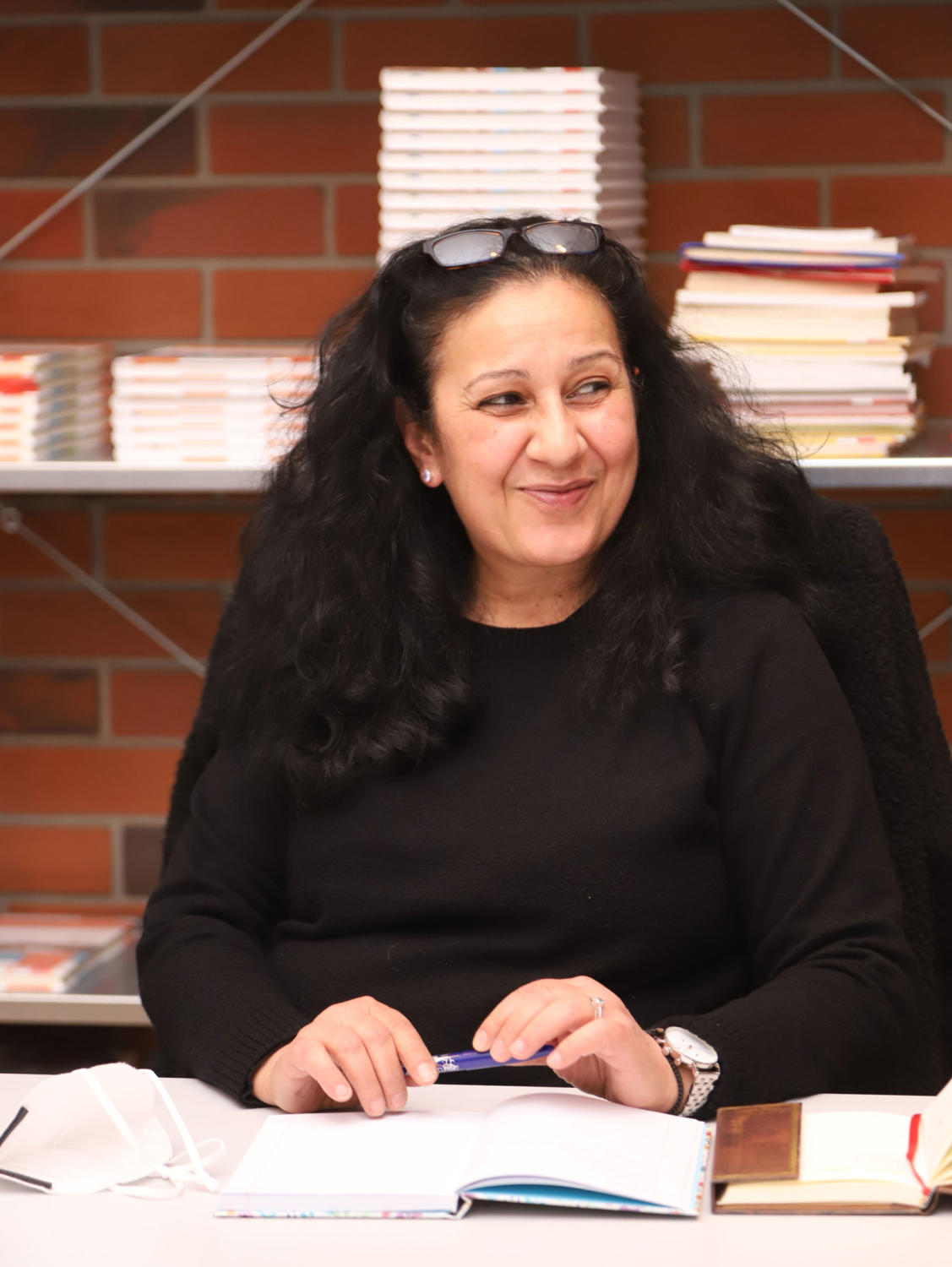
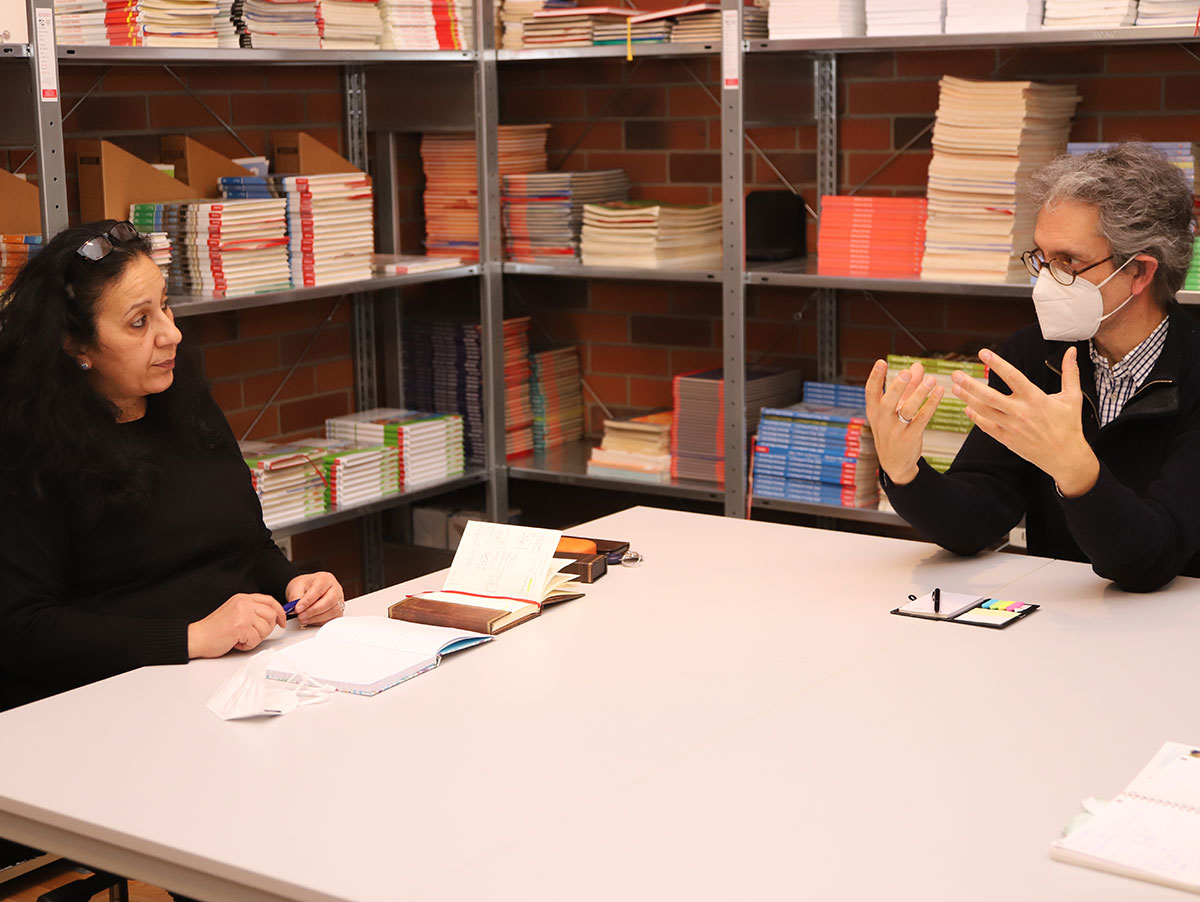
Your thoughts are going in circles, even your closest friends don’t have a solution, and besides, you don’t want to go around telling everyone about your problem: For anyone who needs someone to talk to and would like to get an “outside” perspective, there’s been a new point of contact at Steinmühle since the start of the school year: Maria Sideraki. She’s available to anyone who’s stuck on an issue that’s really weighing on their mind or that they’d like to change.

Support in various life situations can mean many things. A student feels bullied, parents are worried about their daughter’s development, a teacher feels on the verge of burnout, an administrative staff member is struggling with a poor relationship with colleagues. — All of these examples are fictional. They are meant to illustrate just one thing: Anyone, regardless of their role within the Steinmühlen community, can take advantage of Maria Sideraki’s services. Frank Wemme, the head of the lower secondary school, is aware of the prejudices that persist to this day: “No, you’re not crazy just because you seek therapeutic help once in a while. There are many situations that can pull the rug out from under you. This could include the loss of a loved one due to separation or even death, or, for example, a medical diagnosis. The offer of counseling is there. You just have to accept it.”

Maria Sideraki has lived in Germany since she was 7 years old. Born in Athens, she initially lived in Kassel with her parents and siblings, attended high school there, and, after graduating from high school and completing a voluntary social service year, went on to study psychology and education in Marburg. “That was when I first came into contact with the Steinmühle,” she recalls. At the time, she was living in the Bremerhaus.

A few months after she graduated, her son was born. The two years of parental leave that followed are the only “personal” period in Maria Siderakis’s life, which otherwise features an impressive range of professional activities in the fields of psychotherapy and education, complemented by a dozen or so internships, continuing education courses, and volunteer work.

In summary, it can be said that the quadrilingual therapist (Greek, German, English, Arabic) has led many therapeutic interventions, provided support in many situations, and cared for many people over the years and decades—regardless of their age or nationality. Notable examples include her work in the field of psychogeriatrics at a nursing home in Marburg, conducting literacy courses for young adults in Wetzlar, and leading training sessions for children and adolescents on ADHD and social skills at a pediatric practice in Giessen. Parents were also involved in some of these courses. Since 2015, Maria Sideraki has been working at a practice for psychiatry and psychotherapy in Giessen, conducting psychological testing and diagnostics. At the same time, she works at the Rhön-Klinikum Gießen-Marburg, Giessen campus, in the Center for Social Pediatrics/Neuropediatrics. There, she specializes in educational and psychological assessment and therapy for children and adolescents and serves as the director of the Regulation Clinic.

Appointments with Maria Sideraki:

All students, parents, teachers, and staff at Steinmühle are welcome to take advantage of Maria Sideraki’s counseling services. If necessary, she may also observe classes. Individual sessions are scheduled for 45 minutes. Follow-up appointments are available as needed. Maria Sideraki is bound by confidentiality. She will not discuss the content of the sessions with any third parties. The costs of this service are shared equally between Steinmühle School and Steinmühle Boarding School. Appointments with Maria Sideraki can be scheduled through Frank Wemme via email frank.wemme@steinmuehle.net. Confidentiality is also guaranteed when contacting us.

The annual Career Information Day, organized in collaboration with the Rotary Club Marburg-Schloss, has become a tradition at Steinmühle. In 2020, due to the pandemic, it could only be held virtually. This year, a new format made it possible to hold the event in person while adhering to COVID-19 safety guidelines; the event remains consistently popular and in high demand.

Thanks to the ample space in the atrium, the organizers—Hans-Heinrich Bähr from the Career Services Department of the Rotary Club Marburg-Schloss and Steinmühlen teacher Dr. Claudia Röder—decided to assign a separate room or a dedicated corner to each representative of a specific profession. This arrangement was well received. Principal Björn Gemmer welcomed the participants and was pleased with the lively interest shown by everyone.


Architecture in High Demand

In total, representatives from 20 different professions were on hand to answer the students’ questions. The most popular session was the one on architecture, represented by Thomas Oesterle, the architect behind the new Steinmühlen buildings—given the current workload at all existing architecture firms, it might not be a bad idea to consider a career in this field. The sessions on medicine, psychology, management consulting, and journalism were also well attended. New professions featured at this event included pharmacist, mechatronics engineer, theater director, and positions at the municipal utilities involving both technical and business roles.

The twelfth graders were impressed by the career information session that evening, and they expressed their thoughts as follows:

Lasse Siener: “We got some great insights into different careers; it was nice that there was something for everyone.”

Felix Mittag: “We had good discussions in a positive atmosphere, but I would have liked to have had more time and a fourth round as well. It was very pleasant that the discussions took place on an equal footing.”

Tillmann Molzberger: “The career fair dispelled stereotypes and gave us a lot of insight into what everyday work life is really like.”

Jan Siegwolf: “It was a great event; we gained new insights and were able to get a concrete idea of what each profession entails.”

Lutz Lehning: “It was a really awesome event, but there wasn’t enough time.”

A new exhibition at the Steinmühle, featuring works in the atrium, the Centrum, and the main building, is themed “Human Rights.” It was created by Thomas Gebauer, an artist and activist whose previous exhibition, “People, Diversity, Future,” was very well received.

“The exhibition should be seen as a tool of the ‘Future Workshop: Democracy and Education,'” says art teacher Ines Vielhaben. Students in her 10th-grade elective course (WU) “Kulturallee” were actively involved in the arrangement and installation of the exhibition.

The Human Rights exhibition consists of 28 large-format photographs that visually incorporate human rights concepts in both English and Arabic. They depict scenes and situations related to the democracy movement (2011–12) during the Arab Spring in Sfax, Marburg’s sister city in Tunisia, and address the Tunisian people’s call for freedom, democracy, and justice during that time. The photographs by Thomas Gebauer are complemented by posters from Basic Rights – Survival Goods poster exhibition, which presents the theme of democracy as the foundation, perspective, and prerequisite for a dignified participation in life based on freedom and justice, and illustrates access to essential resources for survival in a global context.


Can be incorporated into lessons

The exhibition focuses on the 30 fundamental human rights enshrined by the UN in 1948 in the context of resources essential for life and survival, such as water, food, education, health, and justice. The entire human rights exhibition was produced by its initiator, Thomas Gebauer, as a high-quality, portable exhibition module printed on truck tarps, so that it can be borrowed by schools and educational institutions throughout the Marburg-Biedenkopf district along with accompanying teaching materials.

“The exhibition,” says Steinmühlen art teacher Ines Vielhaben, “can be incorporated into subject-specific instruction in various ways.” Possible options include project days, themed visits, and block-schedule visits for all grade levels, as well as an evening event as a cultural program featuring a slide presentation followed by a discussion. If you are interested, Thomas Gebauer is available as the direct contact (agent21 Zukunftswerkstatt, email: thomas.a.gebauer@gmail.com).