

“The General University Entrance Qualification has no expiration date”
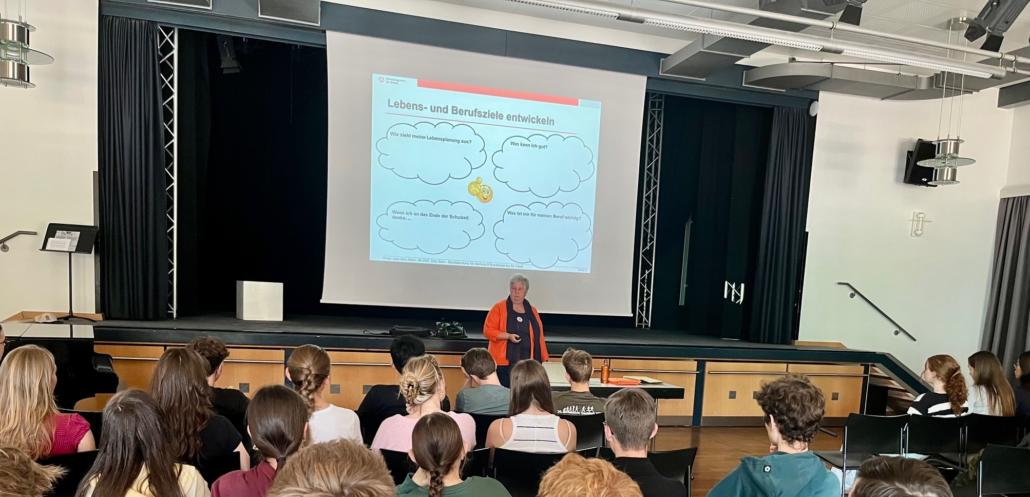
Career guidance is traditionally a focus for 11th graders at the start of each new school year. Slowly but surely, students should be making their decisions regarding the advanced courses they will choose at the end of the so-called introductory phase to upper secondary school (“E-Phase”). But where should this journey actually lead? Dr. Claudia Röder, who is responsible for internships and career guidance at Steinmühle, invited an expert to speak—especially for students who are still unsure. But the entire grade benefited from the event.
Choosing a career is a process
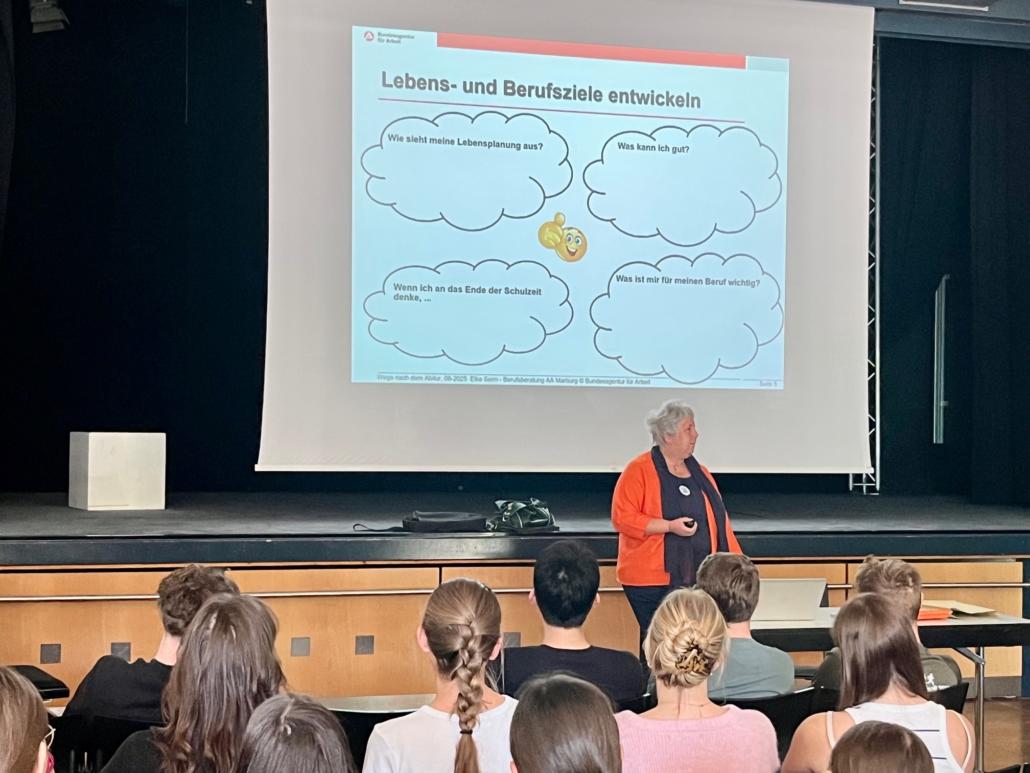
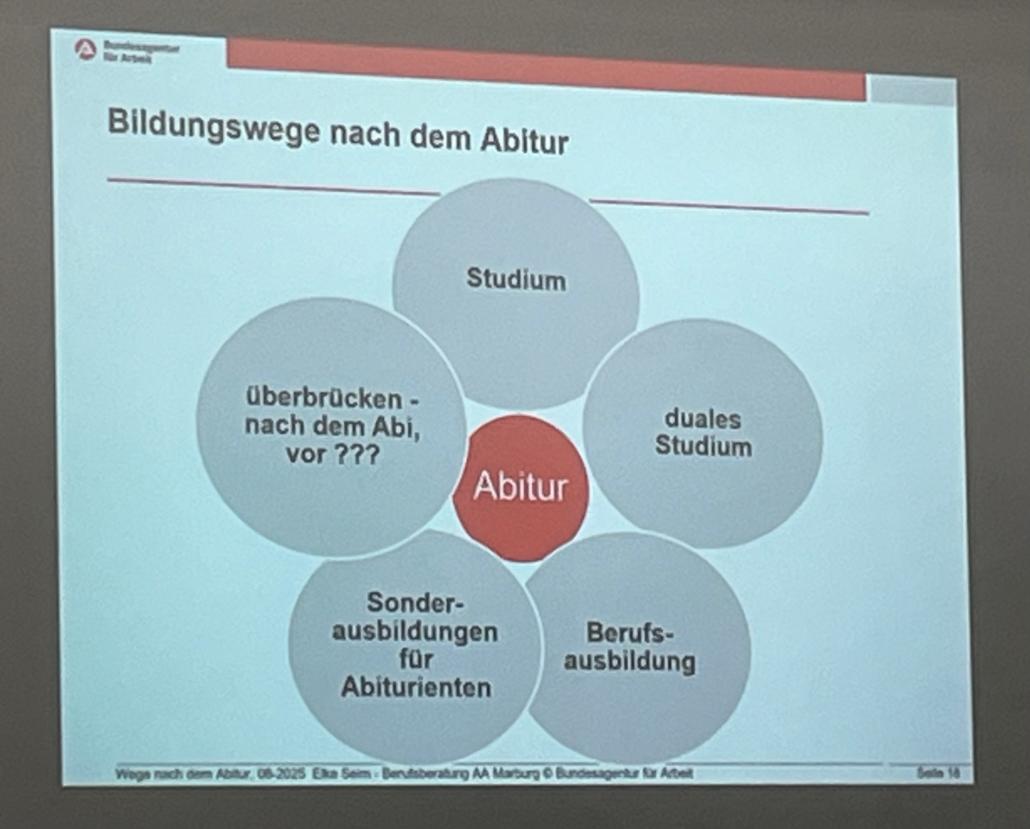
Elke Seim holds degrees in education and public administration and works as a career counselor at the Federal Employment Agency in Marburg. In her presentation, she not only gave the students food for thought regarding their choice of advanced courses but also offered tips for their future career planning. “It’s about finding your own path; choosing a career is a process,” explained Elke Seim. She emphasized that experience gained through an internship or even vocational training could certainly precede a college degree. “A vocational college entrance qualification or a general college entrance qualification has no expiration date.”
Personalized “Roadmap”
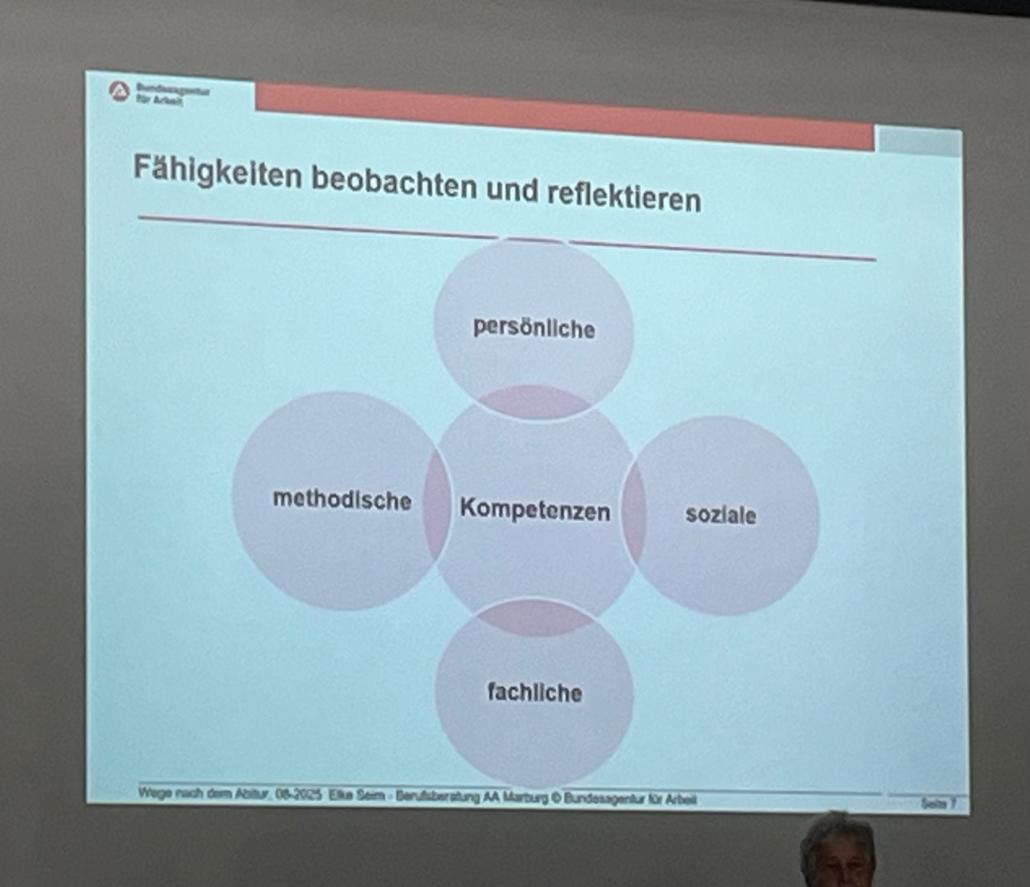
It’s important to honestly answer a few questions for yourself: Where do I want to work? What fields interest me? What am I good at? What do I value in life? This year’s 11th-grade class needs to tailor its own individual roadmap through 2028, the year they’ll graduate from high school. For those aiming to pursue a dual degree program or vocational training immediately after graduating from high school, the report card from the first semester of 12th grade is particularly important.
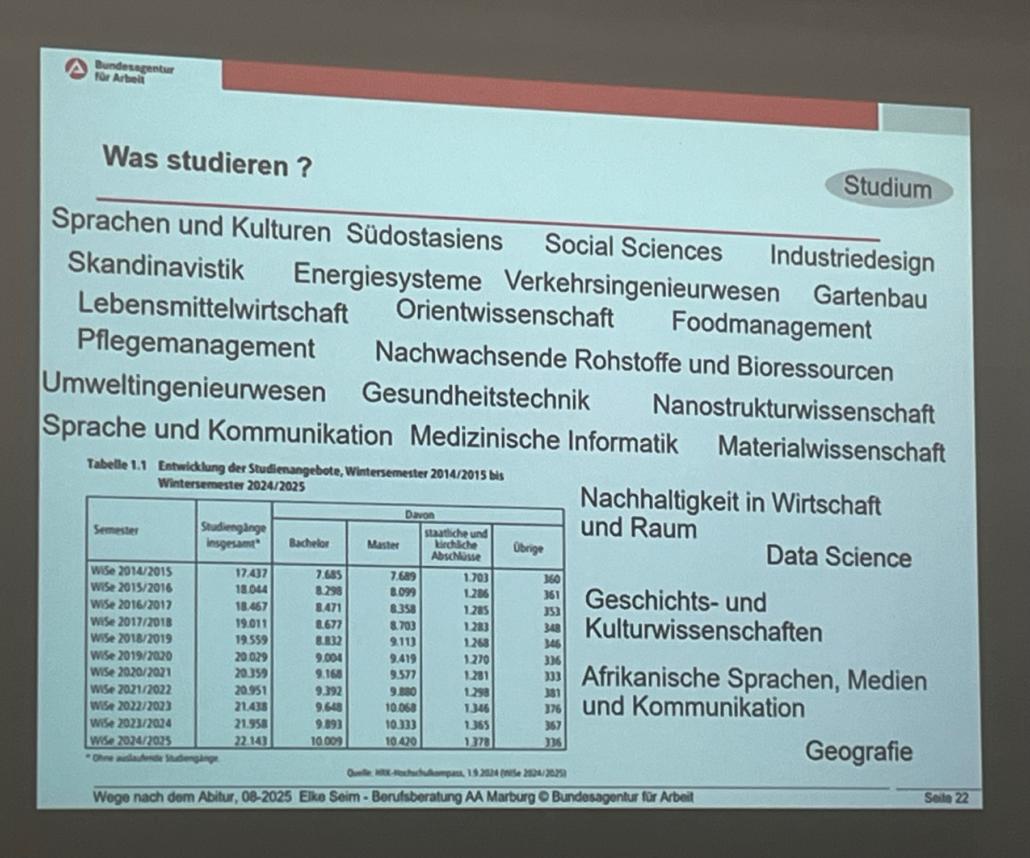
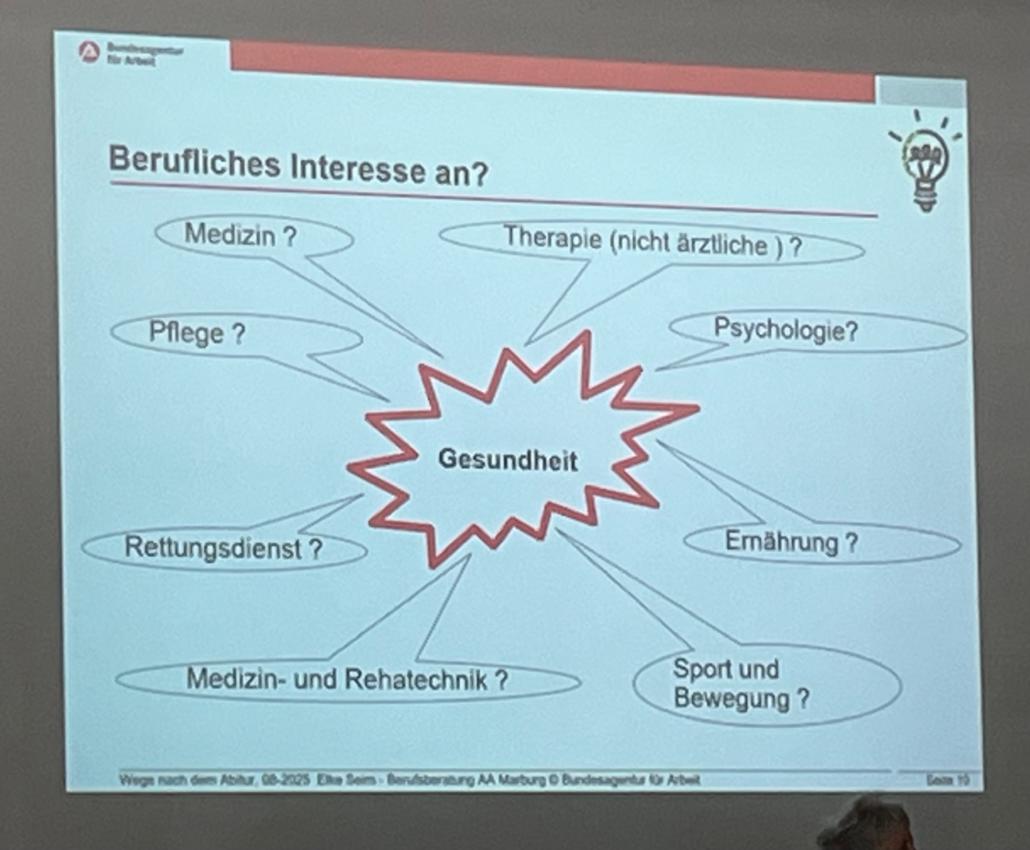
Using a PowerPoint presentation, Elke Seim outlined in brief points what else plays a role: Choosing from among the many professions and fields of study, the goal of completing the respective degree program with a bachelor’s degree (B.A./B.Sc.) or even a master’s degree (M.A./M.Sc.), and the opportunities that this opens up.
The career counselor is available to answer any questions students may have following the presentation or in the near future (elke.seim@arbeitsagentur.de).