

“Youth Research/Student Experiments”: The Best Interdisciplinary Project in Hesse Comes from Steinmühle
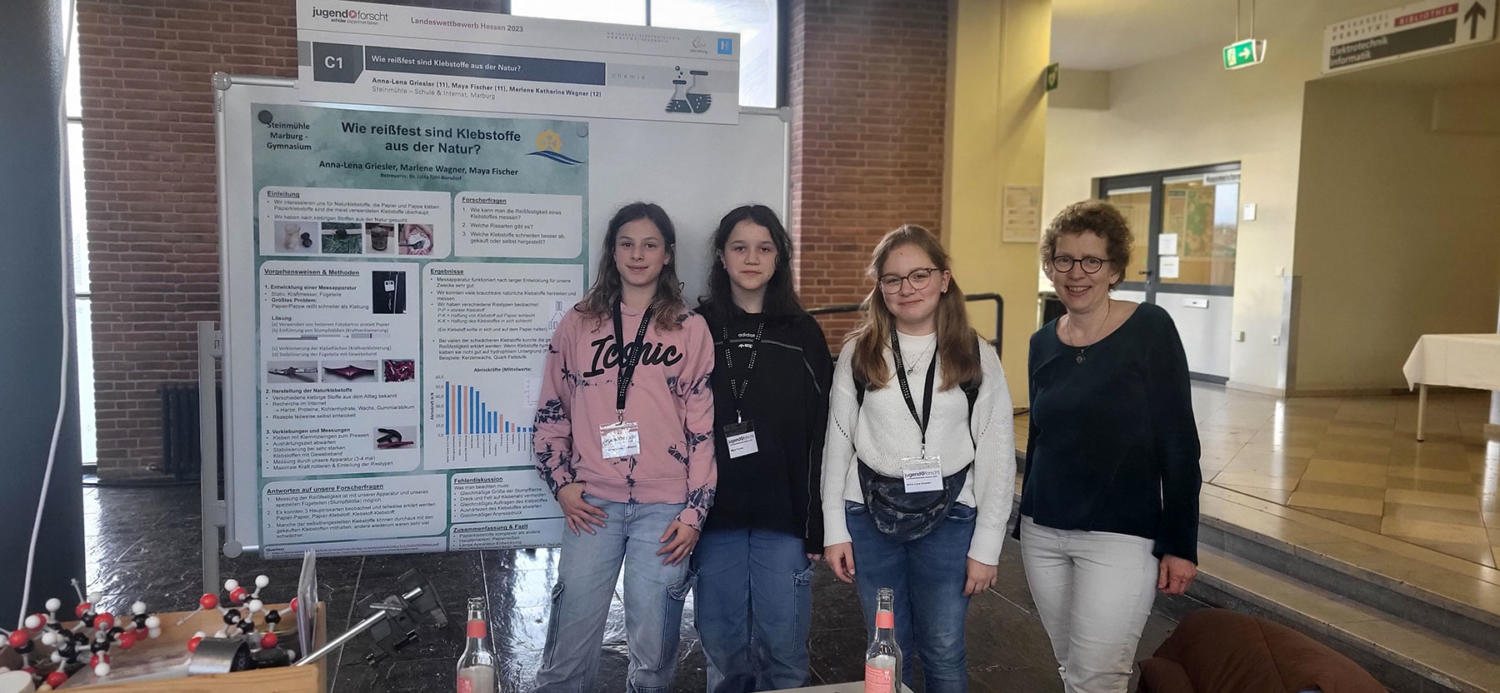
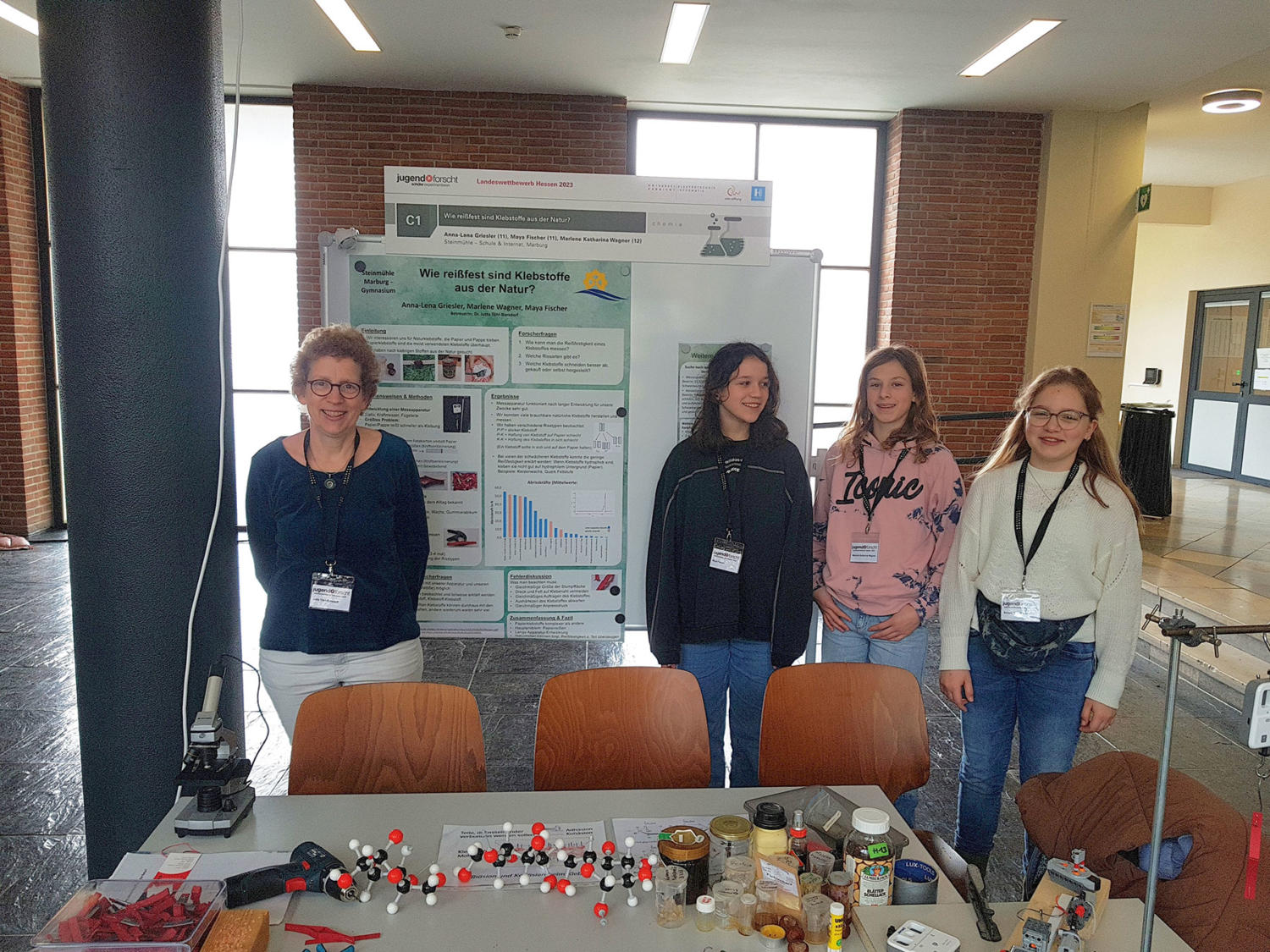
A great success for our very young researchers from 6th grade: By winning the regional competition in Gießen, they qualified for the state competition and were able to travel to Kassel for two days with their advisor, Dr. Jutta Töhl-Borsdorf, to present their research project there. And they won there, too.
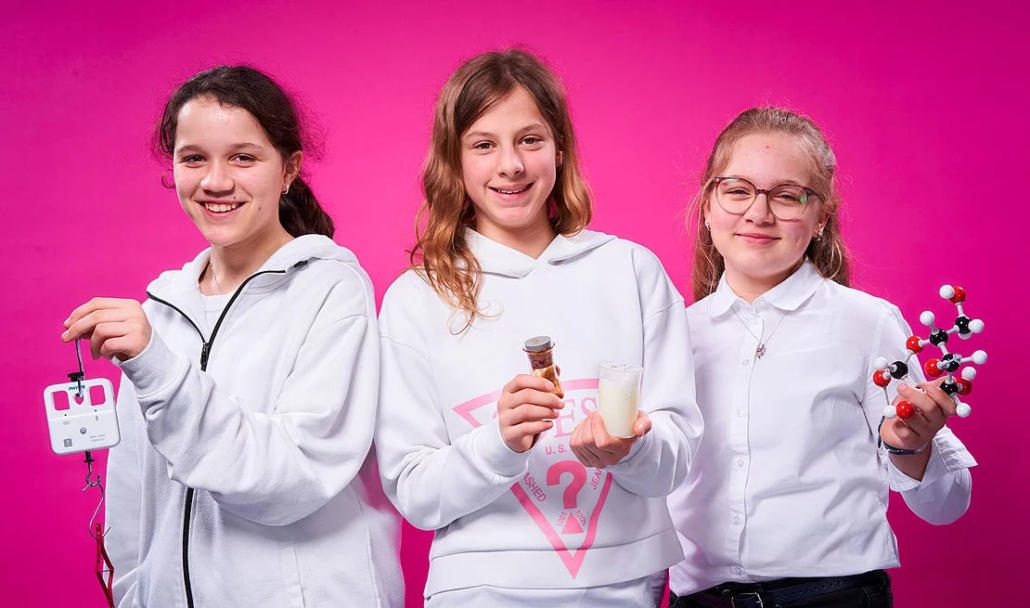
, Anna-Lena Griesler (11), Maya Fischer (11), and Marlene Wagner (12) focused on making adhesives from natural sources (as we reported), and this involved a lot of chemistry. But since the three didn’t stop at just making the adhesives—they also built a device to test their tensile strength—engineering played a major role in this project as well. Their force measurements using digital force sensors ultimately fell within the realm of physics as well.
This multifaceted approach—that is, its interdisciplinary nature—impressed the jury. The continuous refinement of the experimental apparatus and the depth of understanding with which they analyzed the underlying processes impressed the judges. In addition, they were praised for their confidence during the presentation and, in particular, for their strong team spirit.
The depth of content is something that is also close to the heart of “Jugend forscht” advisor Dr. Jutta Töhl-Borsdorf. “The three of them had to explain the different adhesive properties of the various materials on the paper. Since paper is made of cellulose, that’s more of a topic from 12th-grade chemistry class. Natural adhesives are also rather complex molecules. But you can ‘break it down’ into simpler terms.” During the jury deliberations, the team was able to impress with their expertise and technical terms such as hydrophilic and hydrophobic, hydrogen bonding, and cohesion and adhesion failures.
It was also great to see the students interacting with students from other schools. One team, for example, had been working on an adhesive made from mistletoe berries. A sample was quickly provided and measured by the girls. However, this adhesive turned out not to be suitable for everyday use just yet.
The team’s best adhesive consists of starch, sugar, and a little vinegar, which breaks down the starch molecules into shorter chains.
Last but not least, the Steinmühlen team also took home the special “Materials and Substances” prize from the Institute of Materials Science at the University of Kassel. In total, this meant prize money of 300 € for the three young researchers, though Anna-Lena noted: “The money isn’t really important at all. Spending those two days with like-minded people was the best part.”
We are very proud of you. Congratulations!
Click here for the University of Kassel’s press release