Art teacher Ines Vielhaben reports on the interdisciplinary Impressionism project in the introductory phase at Steinmühle:

Impressionism was a politically and culturally turbulent period in which rigid forms in music and art were replaced by evocative snapshots. For the composer Debussy, music is “the art of sound and color.” Thus, as the 19th century drew to a close, music and art were, at least linguistically, very closely related.

Students in the art and music classes of the introductory phase were to explore the themes of mutual inspiration and dialogue between the arts in a joint lesson. Through not only theory but also the use of brushes, clay, and instruments, the classes taught by Ulrike Wilmsmeyer and Ines Vielhaben explored the Impressionist era.

In one workshop, for example, the musicians and artists listened together to Ravel’s famous *Boléro* and allowed the music to evoke moods and associations. The artist then distilled these into a landscape motif, which she rendered on paper with broad brushstrokes, while the musicians practiced the underlying rhythm and the main melody in their various keys for the presentations.

Marie Sans performs Claude Debussy’s “La cathédrale engloutie” to open the presentations, while images of Claude Monet’s “Rouen Cathedral, 1893” are projected and artwork by students Hannah and Sarah is on display.

During the presentation, the mosaic of different thematic focuses coalesced into a broad tapestry, which was further enriched by insights into contemporary history provided in the presentations by students Julia, Lina, and Fynn.
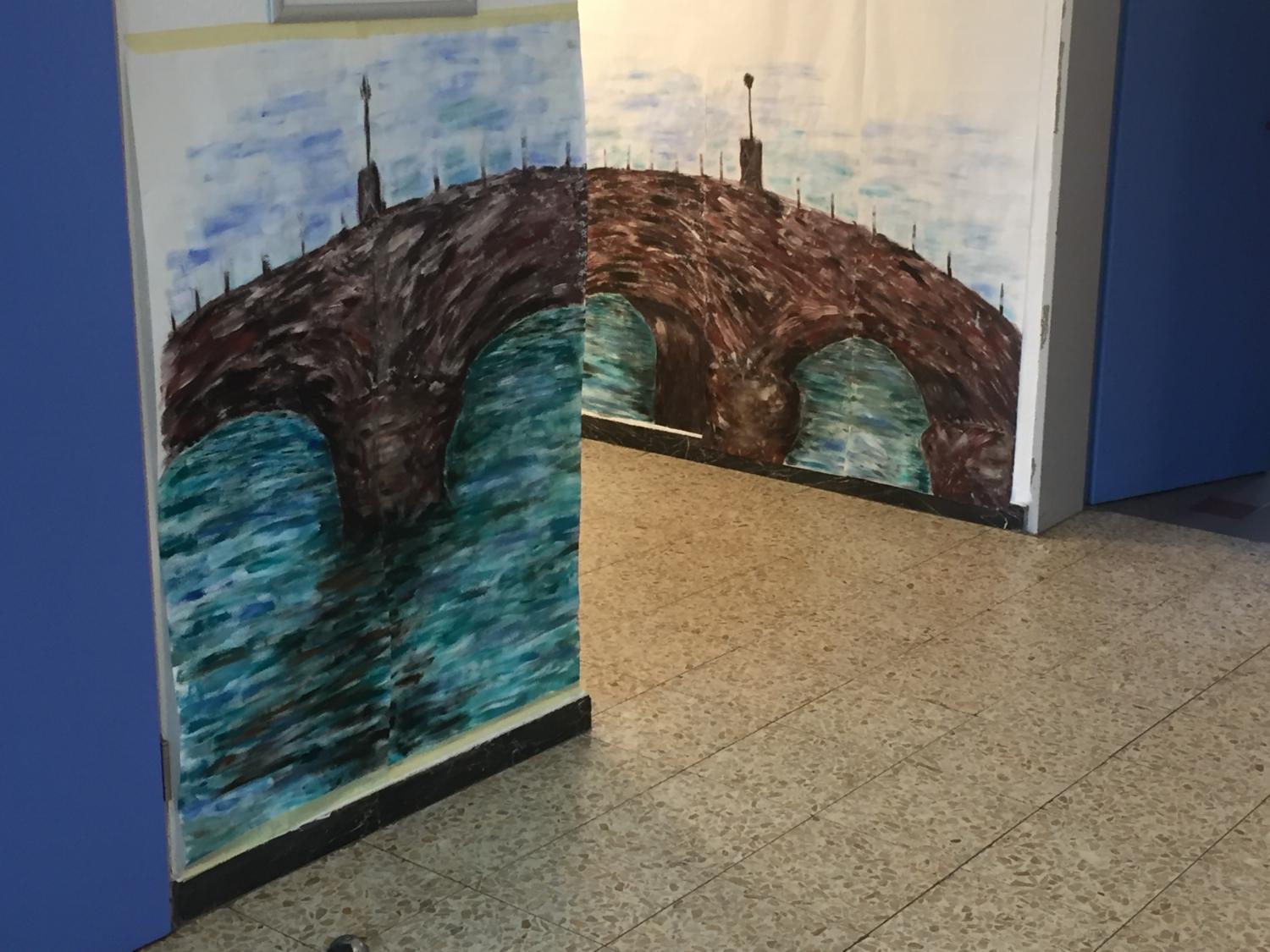
The Weidenhäuser Bridge: From a certain vantage point in the hallway of the Hessenhaus, the bridge appears to be connected, but in reality, the two parts were painted separately on wallpaper by students Chiara and Jana using their characteristic broad brushstrokes.

The highlight of the lesson was the reflection session following the presentations, during which all participants—still filled with impressionistic melodies and impressions of the visual arts—discussed the parallels and differences. In the process, connections were drawn between the dissolution of forms and contours in art and unresolved harmonies in music. It was concluded that, thematically, both disciplines have used atmospheres and moods as inspiration for their works.

It is impressive how fruitful the exchange between the arts—which are always kept separate in school curricula—can be, and how the spirit of an era can be conveyed much more comprehensively than a single subject can achieve.

Clothes make the man—this was the theme of Class 5a’s activities, as the students, together with their art teacher Ines Vielhaben, immersed themselves in the world of fashion and tailoring. For six weeks, the students learned about the history of fashion, explored the work of fashion designers, and got hands-on experience themselves. They sewed a cell phone case by hand and were taught by Ines Vielhaben how to use a sewing machine. Proud and happy—as is clearly evident in the photos—they later presented their sewing projects.

Ethical issues related to textile processing and clothing production were also discussed. By trying their hand at sewing themselves, the girls and boys gained an appreciation for just how labor-intensive it is to make a garment. They also discussed global clothing production conditions and the associated costs. According to Ines Vielhaben, this allowed the topics of ethics and art to be integrated with the activities of the sewing workshop, which, incidentally, also prepares the costumes for the 5th-grade musical performances.

Stone Mill lessons are causing a sensation—even as far away as Recklinghausen. Project teacher Ines Vielhaben explained some of her work at the 10th Church Film Festival.

During the four-day event, the short film “Diego from Guatemala,” part of the “199 Little Heroes” project, was screened in the short film category. During the post-screening discussion, Ines Vielhaben, the project teacher at Steinmühle, presented what the students in the current 6th-grade class at Steinmühle had developed as part of the “Children from All Over the World” project—inspired by this very film. Ines Vielhaben accepted the invitation to attend the event in Recklinghausen to explain the teaching approaches there.

Thematically, the project-based learning focused on exploring children’s rights. This provided the students with opportunities to write articles about an aspect of their partner children’s lives. The film footage provided the students with an excellent foundation for empathizing with the local conditions and everyday situations of the children through its evocative imagery. Since the documentaries feature only children aged 9–12 talking about their lives, their hopes, and their futures, they speak directly to the sixth-grade students. The students followed the “little heroes” on their journey from waking up to arriving at school.

The project-based lesson, with its on-site explanations, served as a model and example for the audience. Ines Vielhaben received a great deal of enthusiastic feedback on her “very engaging and informative report from the field,” as the moderator put it.

By the way, the wall newspapers featuring the 15 little heroes that the sixth graders got to know through the short films will be on display for interested parents in the Steinmühle Forum during the summer concert.

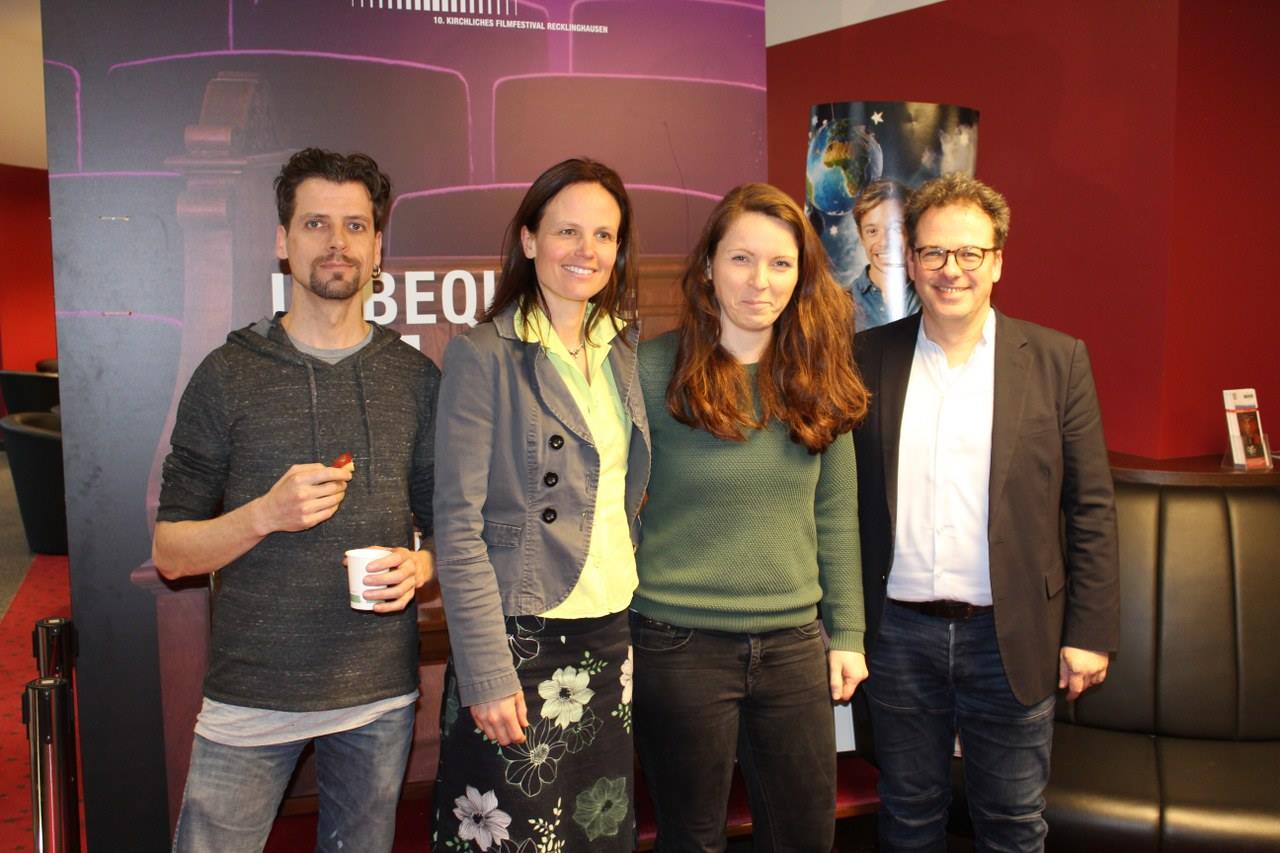
As part of the event, the Cineworld festival cinema in Recklinghausen screened the following short films for the education sector: “Ich habe noch Auferstehung” by Jan-Gerrit Seiler (left) and “Nicht mal im Traum” by Astrid Menzel (second from the right). Michael Kleinschmidt (right) served as the moderator and thanked Ines Vielhaben (second from the left) for the insights she shared.


After practicing indoors up until now, the climbers among the boarding school students were out on “real” rock for the first time, reports Christian Schäfer from the teaching staff:

The weather was fantastic, and the few clouds that drifted by left us alone. The rock was solid and dry, and the routes were beautiful. For our first attempts at rock climbing, we chose some easier routes.

First, we got an initial orientation on what the natural rock face actually looks like, especially in terms of the routes. Climbing outdoors is much more challenging because the routes aren’t marked by colored holds like they are in the gym. You have to feel your way along them yourself. There are also many other (distracting) factors that take some getting used to: birds, trees, wind, rocks that slip away—and the stance when belaying is neither level nor always ideal. The sun shines right in your eyes. But the routes can also be much higher: the longest one this time was 25 meters long. Compared to the 14 meters in the gym, that’s definitely no small feat.

Since the routes and belay intervals aren’t standardized, and the distances between belay points are much greater when lead climbing than in the gym, our lead climbing ambitions were a bit cautious at first. After leading, however, everyone agreed that climbing outdoors is much better than in the gym—and not nearly as difficult as expected, but actually more relaxed.

Abseiling is always a highlight

Another topic covered for one of the participants was setting up, adjusting, and taking down the top rope. Top rope climbing involves climbing with a rope that’s routed from above. Outdoors, however, the rope must first be led up the wall via lead climbing and then properly anchored and set up at the top for top-roping. We practiced this. After taking down the setup, we moved on to rappelling, which is always a highlight in its own right.

Overall, we didn’t climb many routes, but we did successfully take our first steps outdoors. Those who weren’t climbing (at the time) explored the area around the rock on their own and climbed the side peaks from the back via the trails.

Everyone was very happy with the day. Those who took the lead were able to gain valuable experience and will approach their next runs with renewed confidence. On the way home, we stopped at a Chinese restaurant and picked up dinner to take home. We then ate it together back at the house.