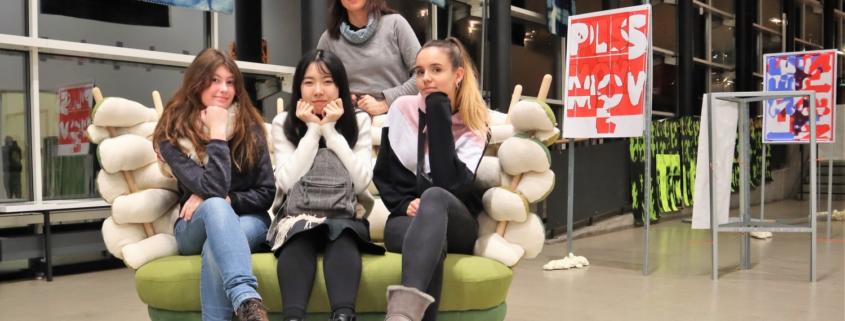
Graduates and master’s students from the programs in Fine Arts, Art Education, Art History, Product Design, and Visual Communication at the Kassel Art Academy hosted their graduation exhibition in December. The exhibition took place in the documenta Hall. The artists’ final projects gave the students of the Steinmühlen Art Elective Course, led by Ines Vielhaben, insight into the quality and diversity of contemporary art and design in Kassel. The report from the Steinmühlen Art Elective Course states:
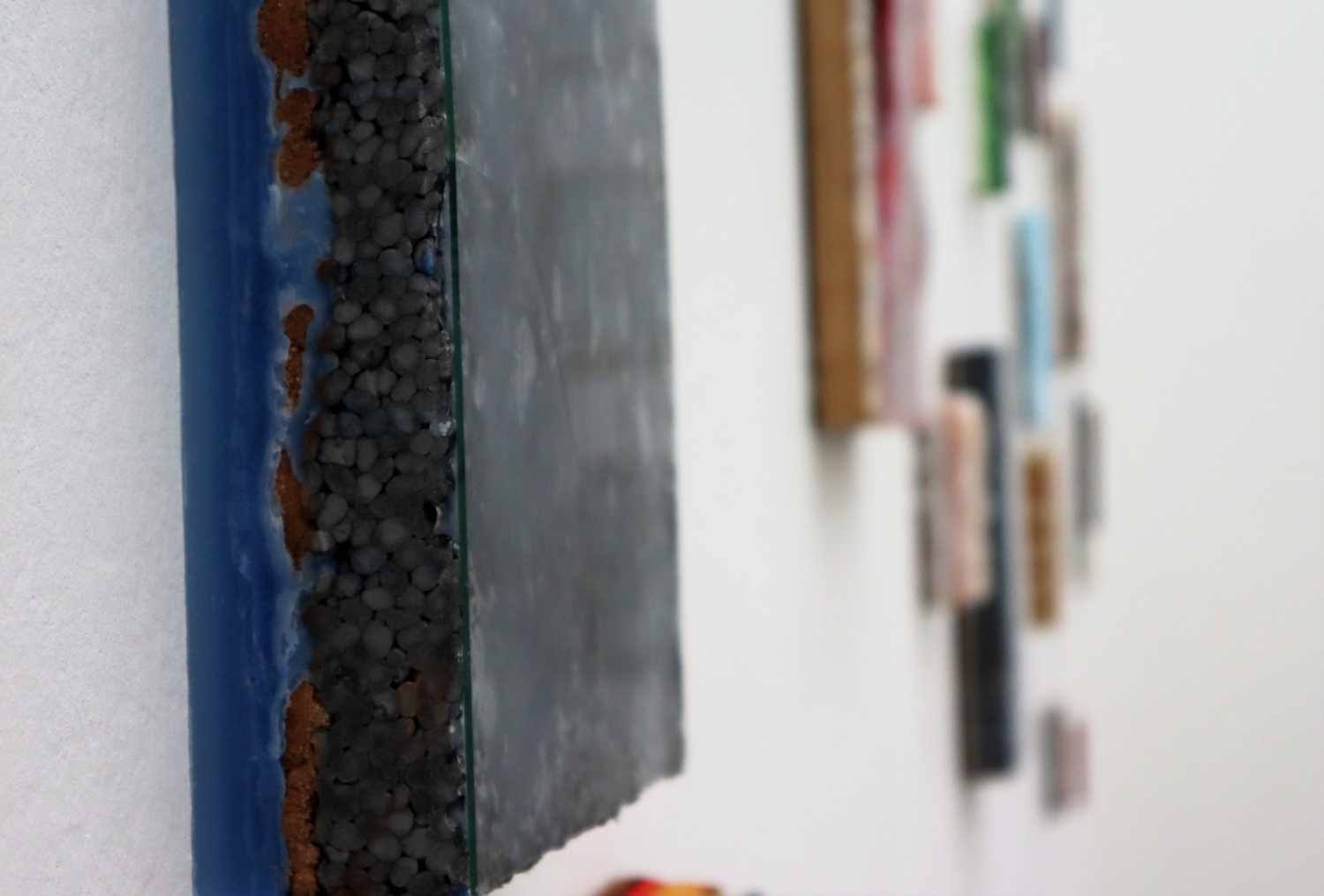
Armed with their cameras, the students first wandered through the exhibition, capturing the unusual, the surprising, and the thought-provoking from various perspectives. The students agreed: Almost everything about these exhibits is amazing! While they had previously been accustomed to traditional art forms such as drawing, painting, sculpture, film, and design at school, the arrangements in this exhibition seemed to blend all these genres together, employing cutting-edge technical methods and repeatedly subjecting art itself to ironic scrutiny. For example, graduates of the film classes painted over canvases and projected animated drawings of a running figure onto them.
The Creepy Face Scanner
One graduate experimented with seemingly mundane materials from the hardware store and the kitchen to create painterly images that emerged more by chance. A work featuring a facial scanner—which was given its own room—was both unsettling and technically impressive. Here, visitors could interactively animate a virtual face—similar to a video game—by changing their own facial expressions and head position. The face scanner’s learning ability was very unsettling for everyone and hinted at cutting-edge programming for artificial intelligence.
The Changing Role of the Viewer
In an installation that included a real swimming pool, above which a projection screen displaying a video was mounted, the boundaries of art became completely blurred. In the videos, the artist staged herself as she explored existential questions about life and its meaning. Through this artistic work, the students realized that, in addition to the use of unusual materials, the role of the viewer in contemporary art had also changed significantly: By being invited to step into the 37-degree water—swimwear and towels were provided—the viewer became a participating subject, intended to experience a sense of “oneness” with the water and with the other swimmers.
Female visitors as part of the performance
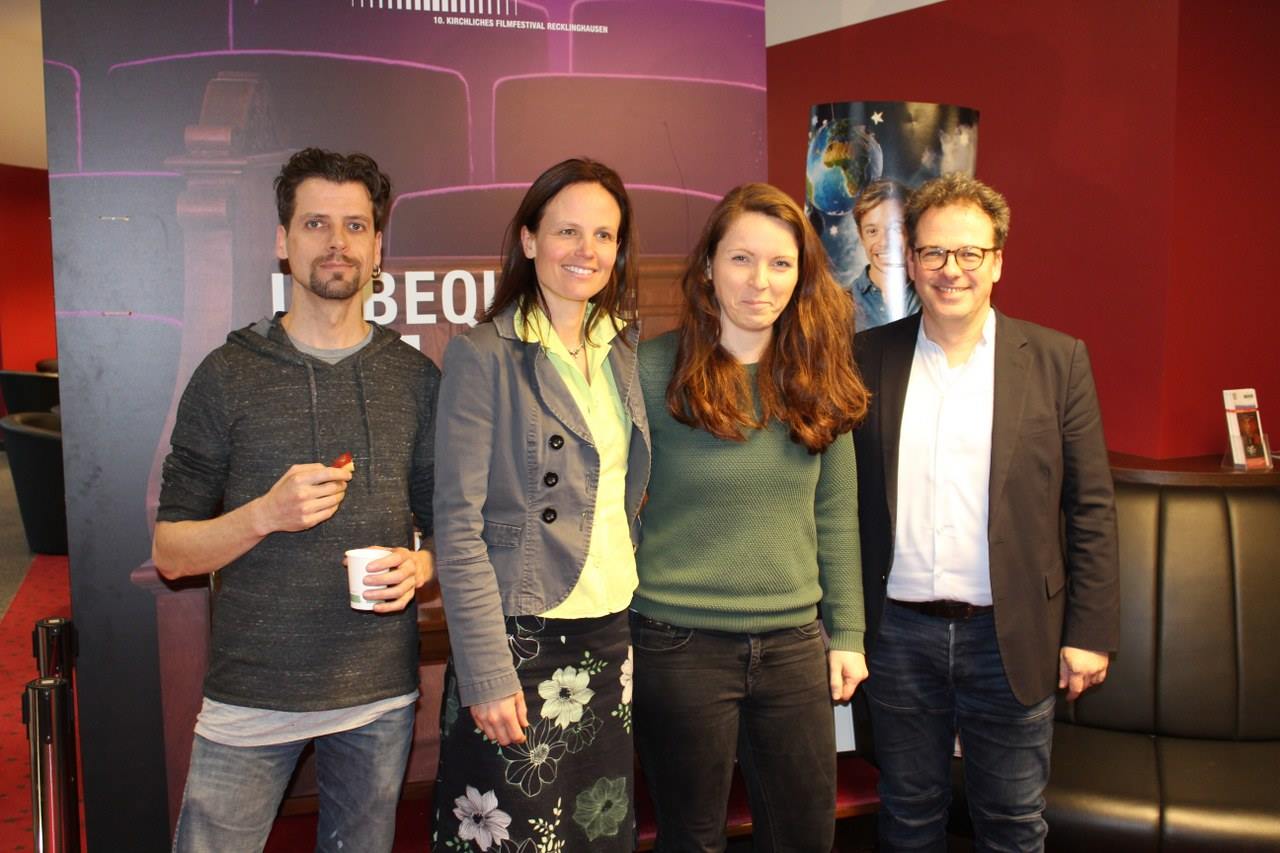
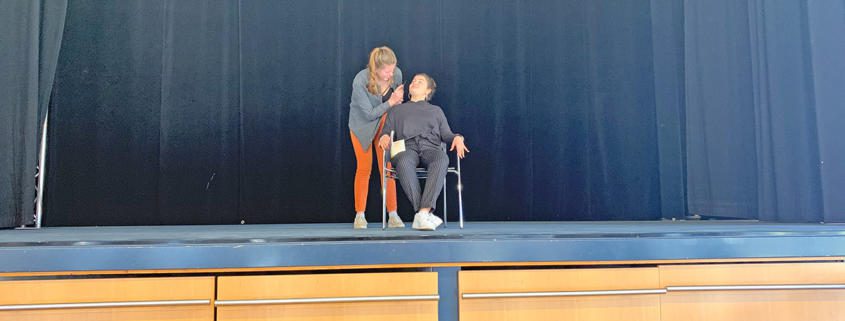
“Even though,” the report states, “none of us accepted this invitation, our small group was to become part of a performance-like presentation.” After an hour of exploring the art exhibition on their own, the students pinned their hopes on a guided tour by a professional art educator that would hopefully explain everything. But the guide, Julian, dashed those expectations right at the start of his tour. He literally slipped into the “role of the educator” by donning a costume, thereby making them—and us—part of a performance: he had photos of the exhibition printed on canvas, from which he had sewn together elements of clothing that exuded power. In this way, as the guide for this exhibition, he demonstrated his authority to us; at the same time, however, this attire reflected his ironic approach to the role of the educator, upon whose shoulders rested the burden of interpretive authority and the evaluation of the exhibition’s exhibits.
Discussing Aspects of Art Studies
Apparently, the older visitors who had intended to join our guide were so unsettled by his slightly provocative manner that only our advanced art class continued to listen to his explanations. Even though Julian didn’t explain the exhibits themselves, he was able to share some insightful background information with us about the creation of the masterclass final projects and the concept behind the exhibition. As the “private tour” came to a close, the students found it particularly exciting to ask him about various aspects of studying art and the art scene.
A visit like being thrown in at the deep end
All in all, this first-time visit to a contemporary art exhibition felt to the students as if they had been thrown into cold water—not 37 degrees. However, the discussions with the guide and former Steinmühle student Maren Eidenmüller about studying at the Kassel Art Academy were so interesting for everyone that no one regretted spending the third Sunday of Advent in the documenta hall instead of enjoying cookies and candlelight. The conclusion: These days, everything seems worthy of being called art and possible within the visual arts. It’s just a matter of how you sell it and how you make your case.