The Steinmühlen tennis team, competing in Competition Class II for mixed teams, took home a solid third-place finish at the regional finals of the “Youth Trains for the Olympics” competition in Wetzlar.

In the group stage, the Steinmühle team won their first match against the Wilhelm-von-Oranien-Schule from Dillenburg by a fairly wide margin, 10–4. After the girls struggled in their singles matches—losing both—and the boys won their singles matches decisively, the score was tied at 4–4 heading into the final doubles matches. Steinmühle ultimately prevailed convincingly in both the mixed doubles and the two singles matches.


The boys’ doubles team a commanding victory

In the second group match against Taunusschule from Bad Camberg, the team was now playing for first place in the group, which would have secured a slightly easier opponent in the semifinals. This match also followed a similar pattern at first. After the two girls’ and boys’ singles matches, the score was once again 4–4, so the outcome would once more be decided by the doubles and mixed doubles matches. It quickly became apparent that our boys’ doubles team was once again on track for a commanding victory, but the mixed doubles team found itself on the losing end early in the match. After taking a 3–0 lead in the girls’ doubles, victory in this match seemed within reach, but our girls lost their concentration a bit toward the end and ultimately had to settle for a 3–3 tie. The higher number of games won across all matches ultimately tipped the scales in favor of the school from Bad Camberg, despite the score being tied at 7–7.


Despite facing strong opponents never gave up

As expected, the Steinmühle team didn’t stand a chance in the semifinal against the eventual tournament champion from Oberursel, as some of their players competed at a significantly higher skill level. Nevertheless, our team never gave up during the match and tried to hold their own as best they could. In the end, however, the result was a sobering 0–14. In the other semifinal, Bad Camberg did indeed prevail and, like the eventual champion from Oberursel, secured a spot in the Hesse finals.

Next year, our tennis team will certainly be back in action and will try to reach the Hesse finals, just as we have in the past two years.


The team (from left):

Anton Kelz, Lutz Lehning, Tom Horn, Max Weckmüller

Nina Horn, Caroline Meyfarth, Katharina Karavaev, Hannah Busch

Schüler, Schülerin und Lehrerin aus dem Sportinternat Steinmühle reiten auf dem Reitgelände der Schule in Marburg, Hessen

The following files contain information about this year’s Steinmühle Sports Project Days:

Letter to Parents and Students: Dial-In 2018

Project Description 2018 (all)

Overview of SpoPro 2018 Projects

The sun was shining as the 5th and 6th graders competed for the best times during this year’s spring run.

In the individual 1,300-meter races around the boathouse, Franka Louise Preising (5c) and Josephine Schmölz (6a) proved to be the fastest girls in their age groups. Among the boys, Max Posingies (5c) and Luca Balbaaki (6c)—who beat his time from last year—took the top spots.

In the relay races that followed, the students from Class 5a (in the fifth-grade race) and Class 6a (in the sixth-grade race) were the first to cross the finish line.

The team of teachers led by school sports coordinator Michael Neirich ensured that everything ran smoothly during the timing and the awards ceremony. The young participants proudly accepted their certificates from Principal Bernd Holly.

The results:

Individual Standings

5th-grade girls

  1. Preising, Franka Louise 5c 5:31
  2. Schmidt-Dege, Hanna 5a 5:32
  3. Herwig, Finja Malu 5b 5:44


5th-grade students

  1. Posingies, Max 5c 5:05
  2. Krantz, Luca Paulinus 5c 5:15
  3. Hess, Thorben 5c 5:16


6th-grade girls

  1. Schmölz, Josephine 6a 5:31
  2. Rumpel, Anna Franziska 6c 5:49
  3. Seifart Arwen Aimée 6a 6:02


6th-grade students

  1. Balbaaki, Luca 6c 4:41
  2. Steinmetz, Anton Karl 6c 4:43
  3. Templer, Jan 6a 4:48


Relay competitions

Grade 5

  1. 5a 3:48
  2. 5b 3:49
  3. 5c 3:52

6th Grade

  1. 6a 3:39
  2. 6c 3:42
  3. 6b 3:50


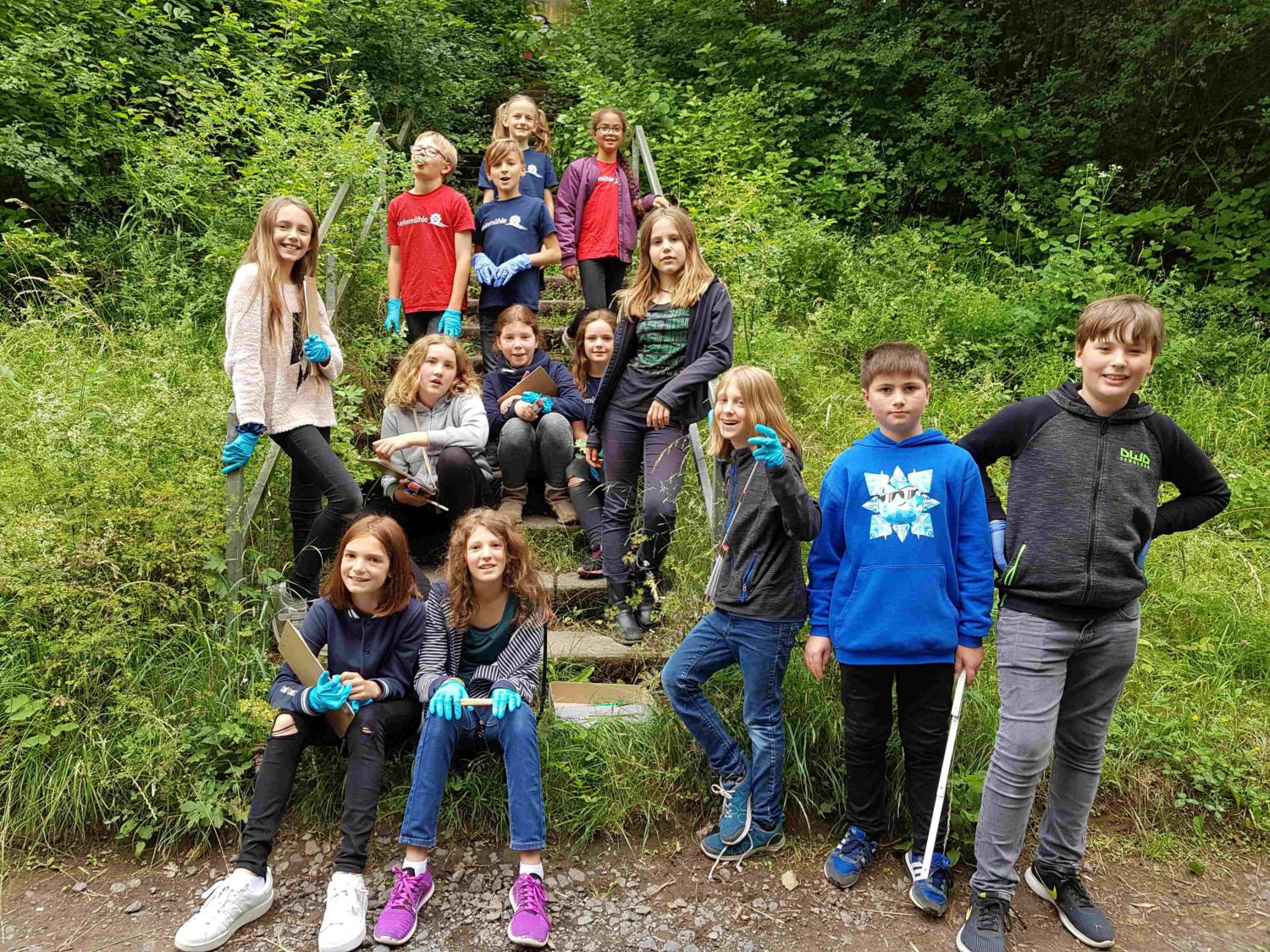
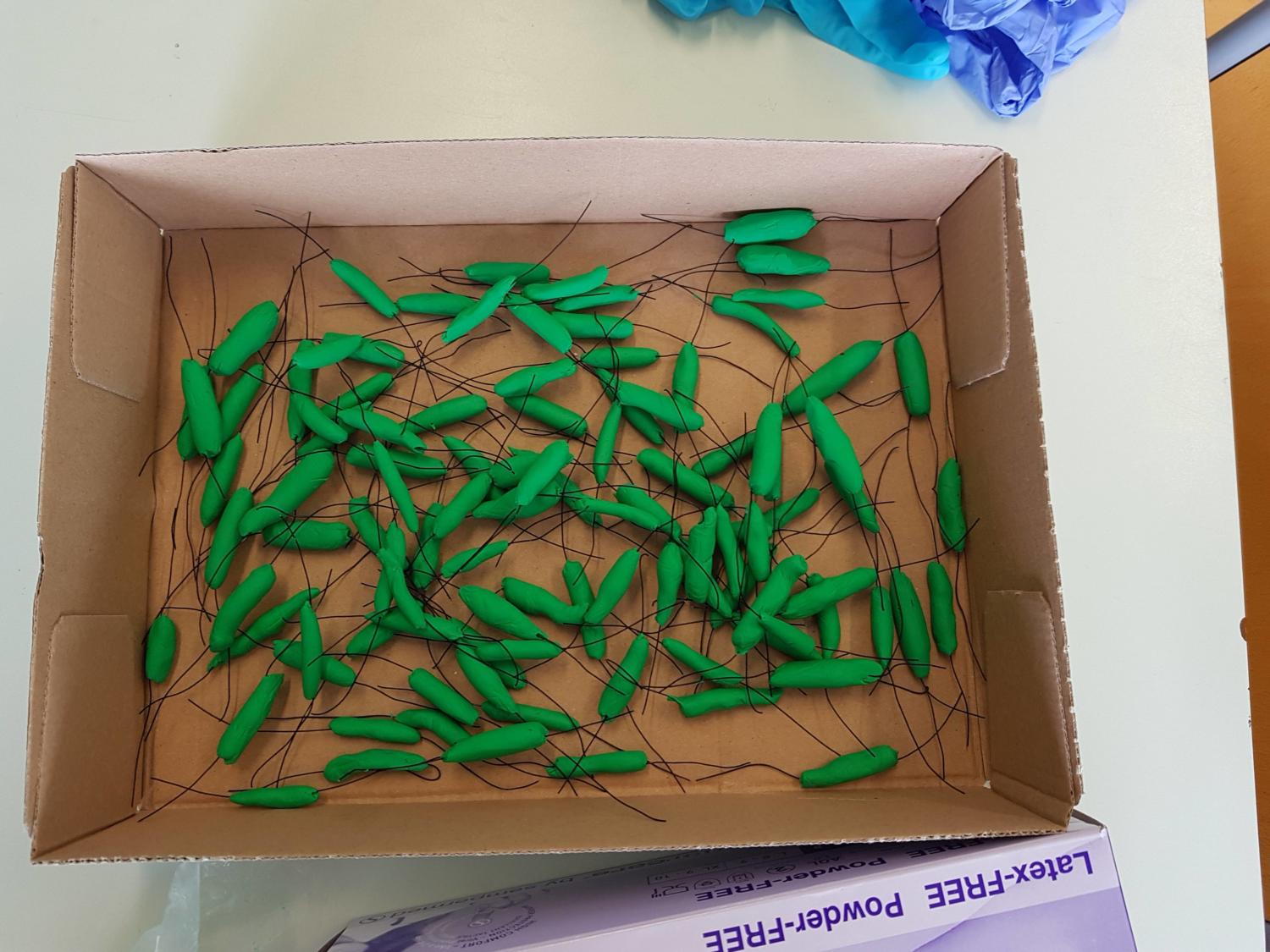
Malte Klimczak, a biology teacher at Steinmühle and a staff member at the University of Marburg’s student laboratory in the Botanical Garden, was looking for volunteers for an international climate project.
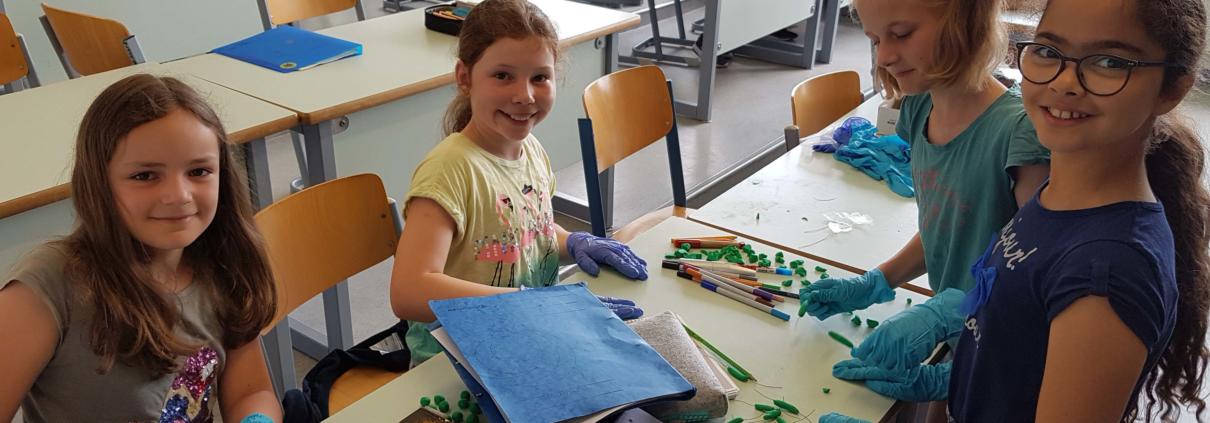
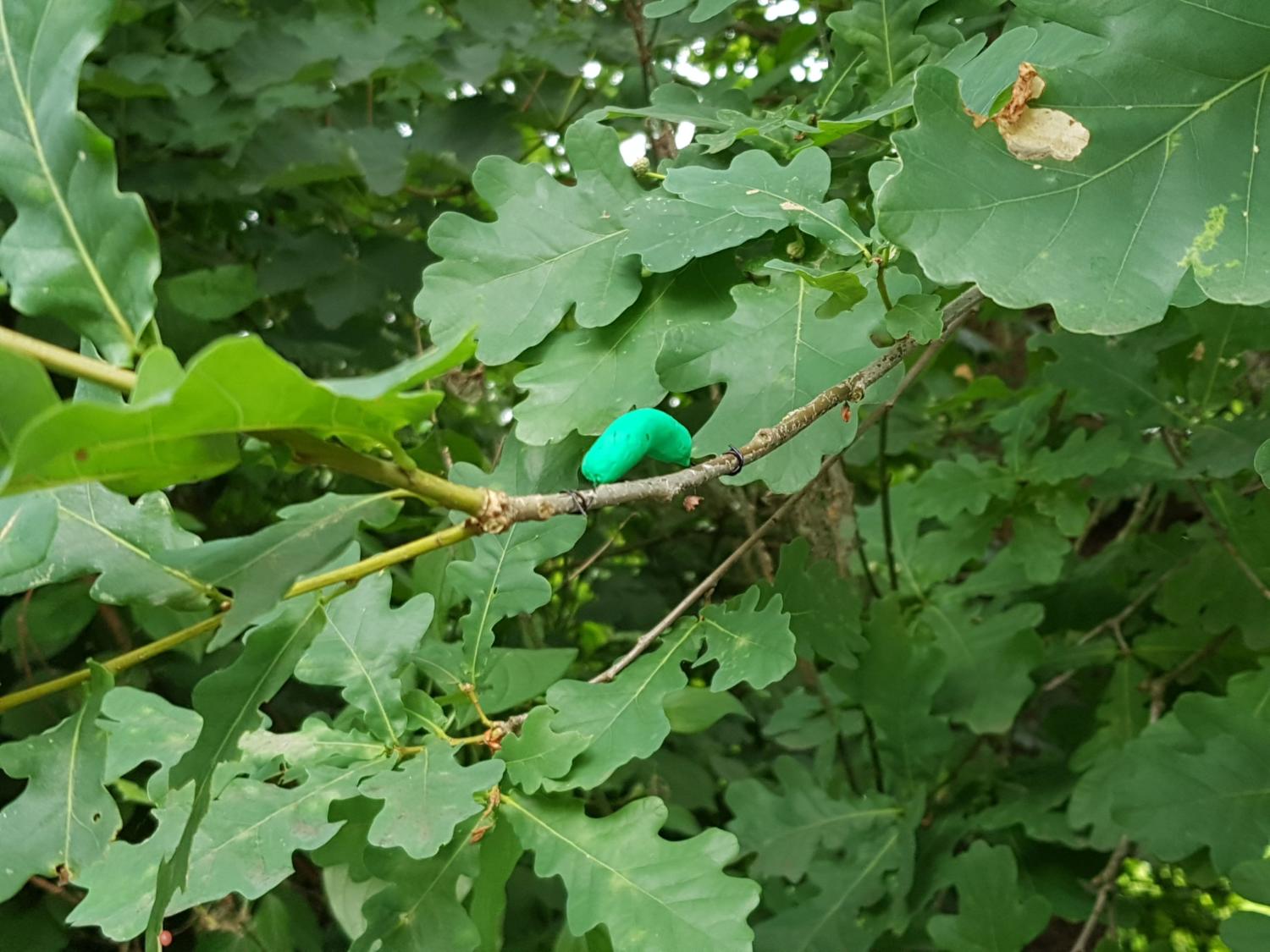
A large portion of Jutta Töhl-Borsdorf’s NaUnt class was immediately willing to make fake caterpillars and place them in several English oaks near the Steinmühle grounds.
After a certain period of time, genetic material is isolated from the feeding traces left by predators (e.g., birds and spiders). Analysis of this material will ultimately help determine the impact of climate change on Europe’s tree populations.

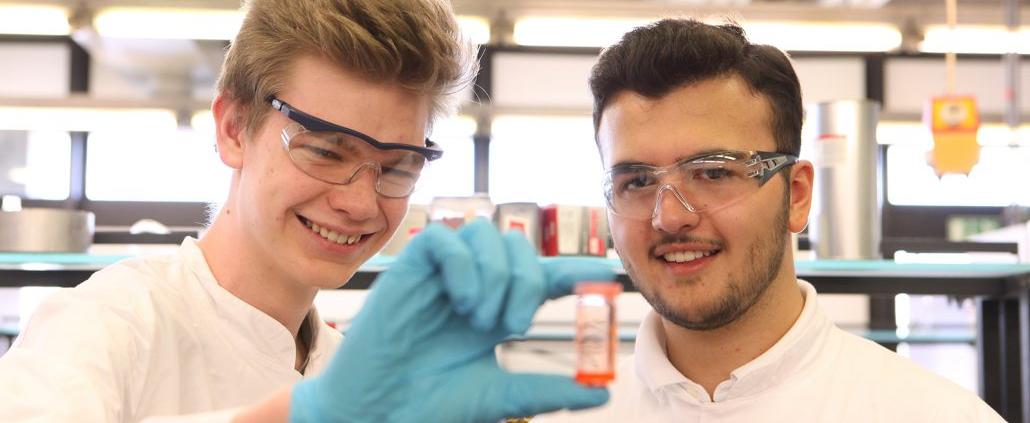
The 25th Inventors’ Lab, organized by the “Center for Chemistry” (ZFC) association based in Lorsch, South Hesse, held its finals at the Darmstadt-based chemical and pharmaceutical company Merck. Among the approximately 200 applicants from all over Hesse, a total of 16 highly gifted students from 16 schools made it to the finals, including Sam Tadjiky, a 12th-grade student at Steinmühlen High School.

In front of an audience of about 170 prominent figures from the business community, schools, universities, and government ministries, the student teams concluded the event by presenting their research ideas and proposed solutions under the overarching theme of “Organic Electronics.” The organizer honored the “stars of tomorrow” as “Hesse’s next generation of business leaders on the cusp of the future.”

Chemistry teacher Dr. Jutta Töhl-Borsdorf eagerly awaited the presentation by Sam Tadjiky, who is currently taking his Abitur exams. She had supported him with his application. Constanze Oestreicher-Gold, head of Subject Area III (Science and Mathematics), and Principal Björn Gemmer were also thrilled. Sam’s tutor, Elke Karasek (advanced math course), had even traveled to Darmstadt to follow everything up close. A week-long workshop culminated that day in a vivid presentation of the solutions to the problems that the young researchers had developed as part of the Inventors’ Lab.

Sam Tadjiky and his three team members focused on the production of organic semiconductors for use, among other things, as photovoltaic cells. Conventional cells are made of silicon—an efficient but expensive way to generate electricity. As an alternative, the team synthesized their own polymers, which actually worked as long as they ensured purity and took great care during the manufacturing process. The ingress of oxygen destabilizes the polymer chains—making it a labor-intensive process that, under ideal conditions, however, works and delivers the desired results. Research on this topic is still ongoing.

Sam, who is taking advanced courses in math and physics, said he was “not nervous during the presentation—more relaxed.” In any case, he had fun. He sees his application to the Inventors’ Lab as a step on the path to finding his career. He’s really into the STEM subjects—math, computer science, natural sciences, and technology. But he doesn’t plan to make the competition’s subject matter his career: “We’ll see. Computer science, maybe.”

About the Contest

The 25th Inventors’ Lab took place at Merck and at the Technical University of Darmstadt, Department of Chemistry (Prof. Matthias Rehahn). In addition, the event was supported by, among others, the Hessian Ministry of Education and Cultural Affairs, the Hessian Ministry of Economics, Energy, Transportation, and Regional Development, and the German Federal Environmental Foundation (DBU). The Inventors’ Lab is part of the “School 3.0 – Energy Transition in the Classroom” initiative.

In previous years, Steinmühlen students Jan-Eric Wichmann, Lisa Kemena, and Philipp Kreiter had already qualified to participate in the Inventors’ Lab.


Great results to start the season for Dustin Brömer: The 16-year-old rower from Steinmühlen brought home a gold medal from the U17 General Regatta in Mannheim. “Overall, the start of the season in Mannheim was very successful,” said Joshua Benkow of the RuS coaching staff.

“After Dustin’s long injury layoff and a lot of hard work afterward, we first had to see where we stood,” the coach explained. “We had a good opportunity to do that in Mannheim.” Fortunately, he said, they were able to pick up right where they left off before the injury. Dustin first placed third in the B-Junior lightweight single sculls and won the seeded heat the following day.

Training is now underway in preparation for the first international DRV junior regatta in Munich, which will take place from May 4 to 6.

Meanwhile, the coach and RuS’s second young talent, Lasse Jacob, had decided not to compete in Mannheim just yet. “Lasse will rejoin the regattas starting with the one in Cologne,” says Joshua Benkow, referring to the junior regatta from May 18 to 20. Health issues had also kept Lasse from competing for quite some time—and he has to balance all of this with his schoolwork.

Both of these talented rowers, Dustin and Lasse, can often be seen training at the Steinmühle boathouse these days, where these photos were taken.

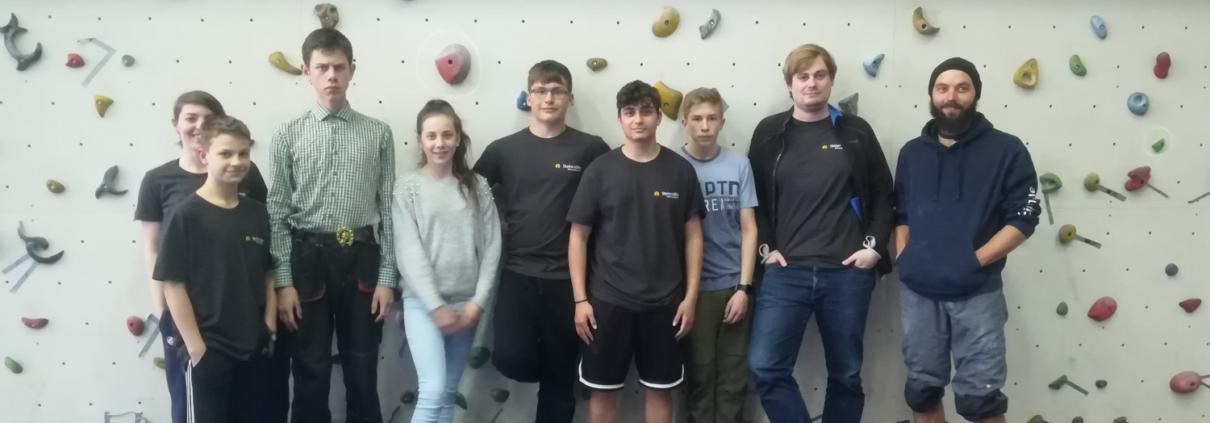
The best climber at Steinmühle Boarding School is Leon Krämer. At the 15th Bouldering Cup hosted by the German Boarding Schools Association, which took place this year at the Birklehof (Hinterzarten), the 15-year-old took second place in his U-16 competition category.

For the 15th time, young male and female boulderers from various boarding schools competed against each other in eight competition categories for the coveted challenge cup, which Landheim Schondorf ultimately took home to the Ammersee after securing the most individual victories. In addition to the Birklehof, which hosted the event, Schloss Bieberstein also provided participants.

14 different routes had to be conquered

In addition to Leon Krämer, Niko Adel, Maxim Dyck, Fynn Kraft, and Felix Müller from the Steinmühle boarding school also put in strong athletic performances. Former boarding school student Anna Müller, who had traveled to the event, also demonstrated her climbing skills.

They had to conquer 14 different routes and a table—all without a climbing rope or harness! This is what sets bouldering apart from rock climbing. However, when bouldering on climbing walls, athletes always remain at jumping height. From this height, they can jump off the wall without risk of injury if the situation requires it.

The athletes from the Steinmühle boarding school were accompanied to Hinterzarten by the teaching team of Charlotte Fuse and Nils Zeller. A “former student,” Christian Schäfer, was also there. In addition to the warm welcome and excellent organization, everyone noted the very harmonious atmosphere among students and staff, particularly during the evening game of Werewolf they played together.

The excitement for the 16th Boulder Cup is already building. Next year, Bieberstein Castle will host the tournament.

Bouldering has been an officially recognized sport in its own right since the 1970s, and will even become an Olympic discipline in Tokyo starting in 2020.