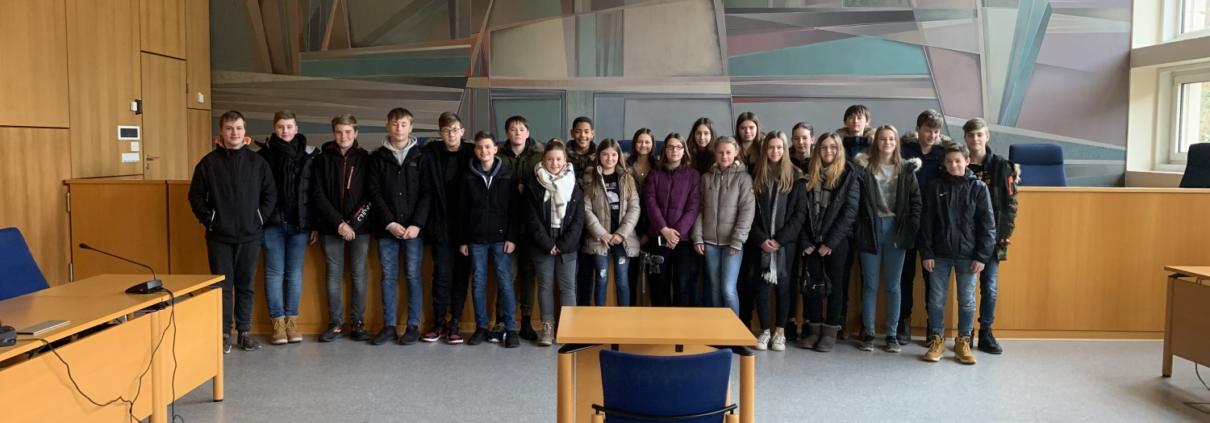
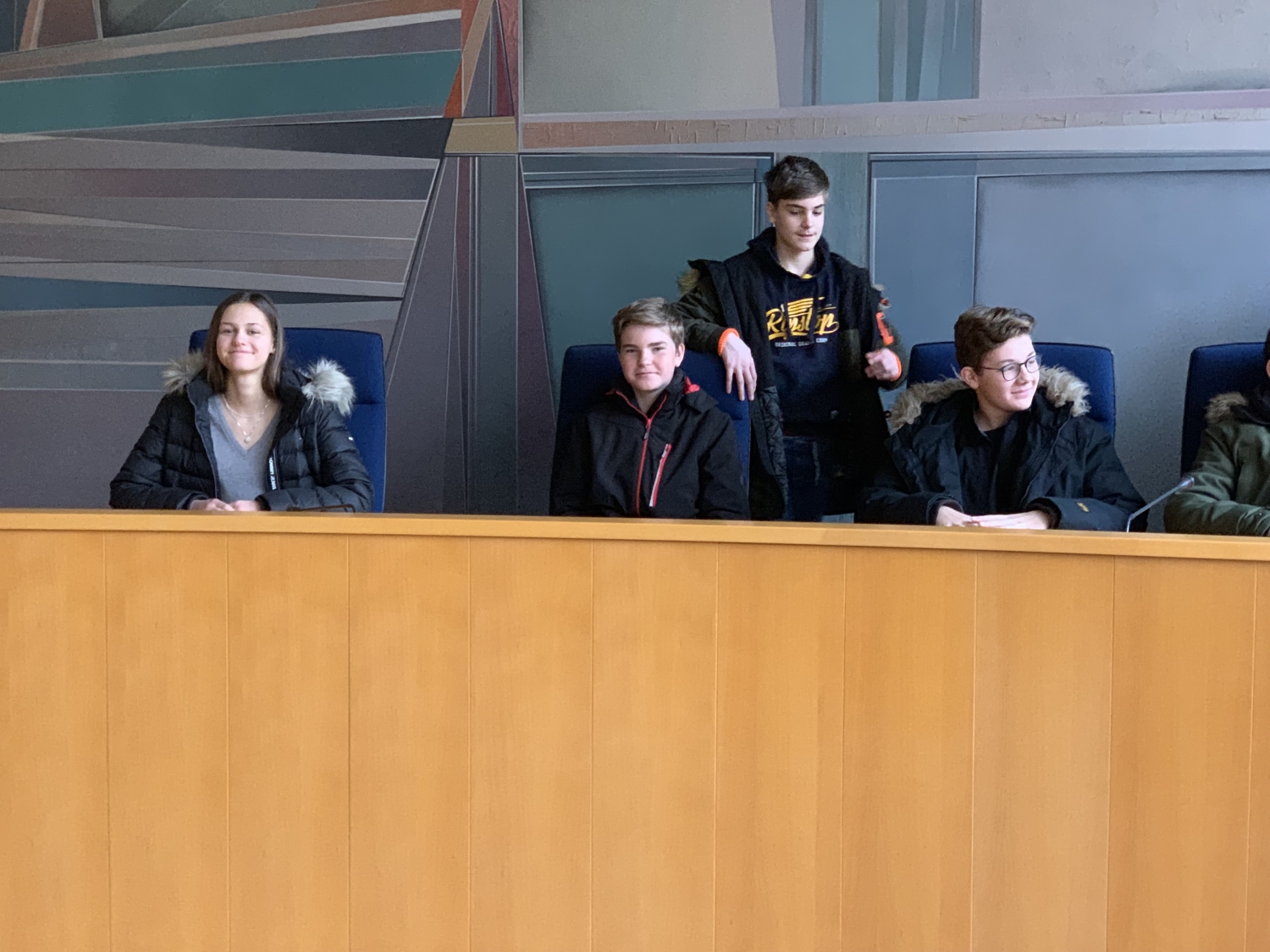
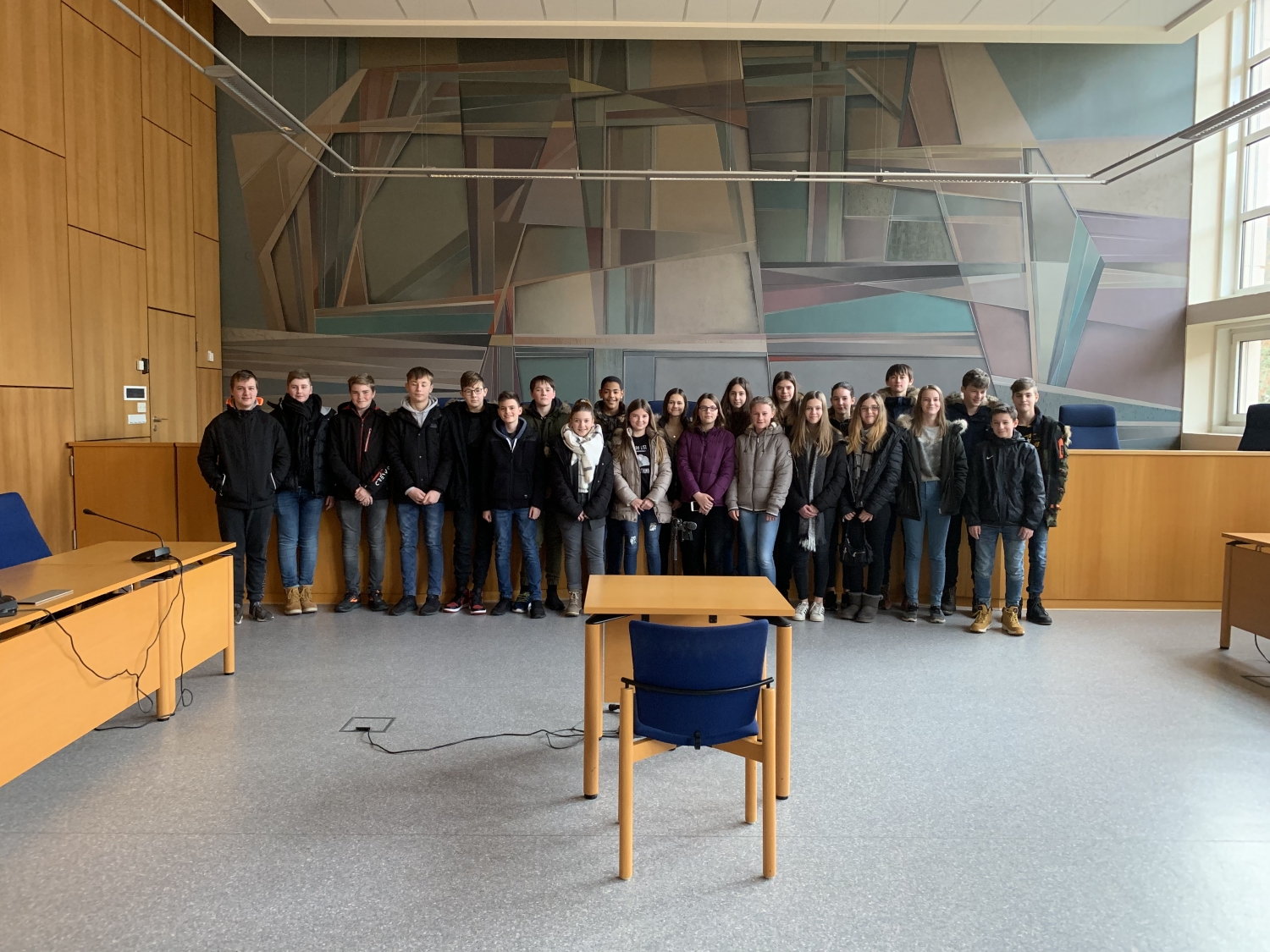
As part of the six-hour “Youth and Law” project, which ran over three weeks, Class 8c—taught by Steinmühlen teacher Dr. Claudia Röder—attended a court hearing at the Marburg Regional Court. The goal was to supplement the theoretical knowledge they had learned about court proceedings with real-life experience. After all, the media often convey certain ideas about what goes on in court. But is that really how it is?

The hearing concerned a juvenile criminal case involving assault. The group of students, whose field trip had been organized by Heike Schneider, a judge at the Regional Court, and Dr. Claudia Röder, was guided by Judge Thomas Rohner.

The students at Steinmühle found the discussion about whether the offense in question constituted minor or serious bodily injury particularly interesting. The parties to the trial also debated whether the male defendant should be sentenced under juvenile or adult criminal law. The arguments for and against were discussed at length, as they have a significant impact on the sentence.

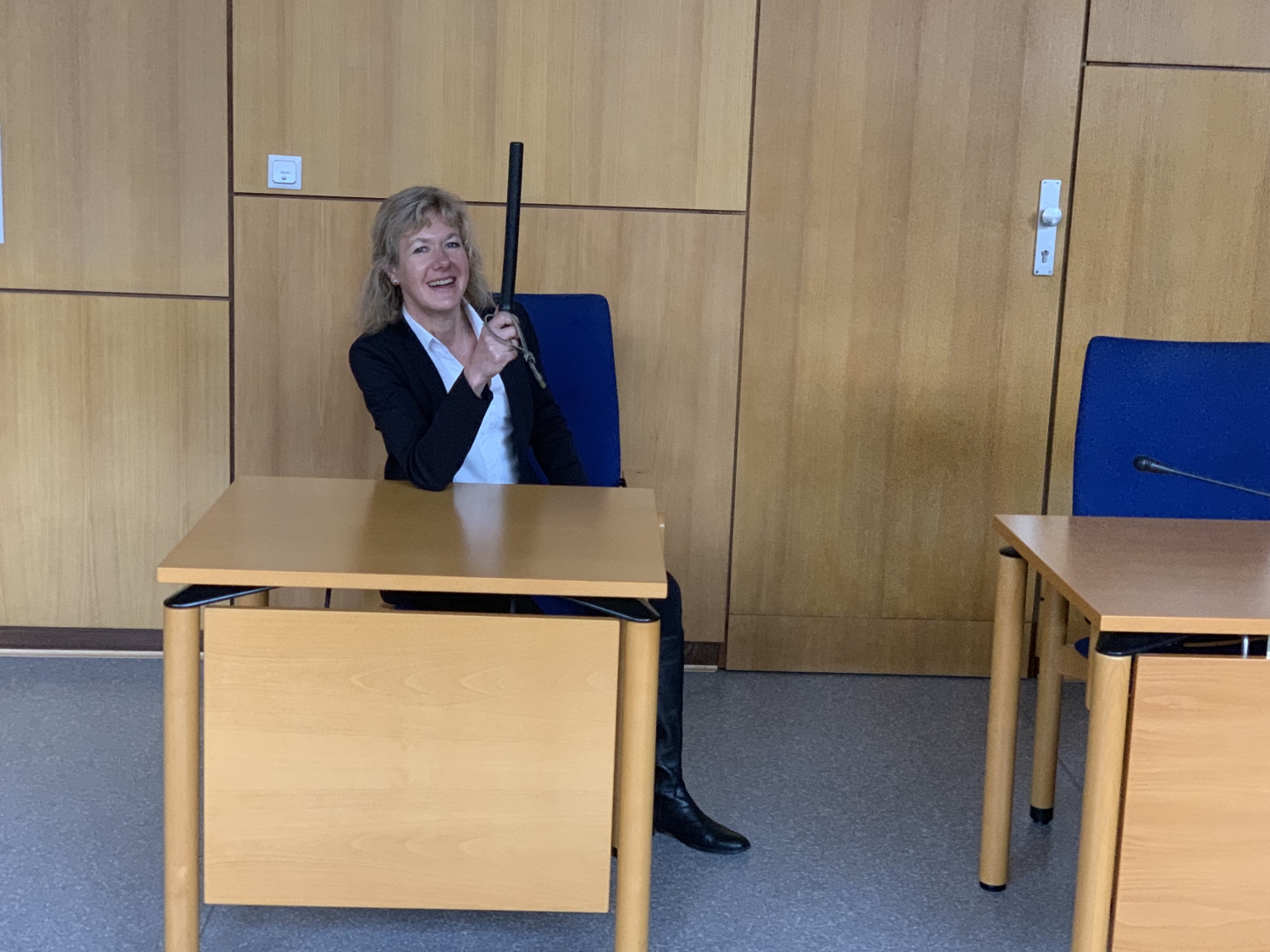
Afterward, the very interested teenagers were given the opportunity to ask the judge and the prosecutor questions. At the end of the visit, Judge Heike Schneider showed the guests from Steinmühle the jury courtroom at the regional court and talked about her work.

“How tall is the linden tree in our schoolyard?” The 9th-grade students answered this question together with trainees from the Marburg Office of Land Management (AfB) during the “Measuring the World” project-based learning session at Steinmühle. This collaboration between the professional world and the school has a long tradition. It took place for the ninth time and reached more than 200 students.

To measure the height of the schoolyard linden tree, the students set up an electronic tachymeter in the courtyard and used it to take precise measurements of the tree. Trainees Ronja Gies and Joshua Fedler from AfB Marburg had brought this professional measuring device with them. It is a measuring instrument that records horizontal directions (angles), vertical angles, and slant distances. Using the measurements and formulas from “plane trigonometry” (calculating unknown sides and angles in any plane triangle), the students calculated the height of the tree. The two trainees assisted them and answered their questions.

It didn’t take long for the students to come up with the answer: “The linden tree is 13.81 meters tall—so about 14 meters! That’s hardly any different from the height we measured with our school theodolites,” the students said. In the theoretical part of the lesson, the trainees from AfB Marburg asked the students where they had already encountered geodata—that is, data related to the Earth—in their daily lives. They then explained that the Earth is by no means a perfect sphere and covered everything from the Earth as a disk to a sphere, and on to the geoid and ellipsoid. This was followed by a brief historical overview of the Kurhessian Triangulation (1821–1839) and the work of the mathematician, astronomer, and physicist Christian Ludwig Gerling (July 10, 1788 – January 15, 1864) at the University of Marburg.


Geodata Relevant to Public Policy

“Today, geodata plays a key role in about 80 percent of all political decisions,” said Jörg Lipphardt, a trainer at AfB Marburg. Lipphardt introduced the students to the apprenticeship program for geomatics technicians and provided information about the promising career prospects for high school graduates at the Hessian Administration for Land Management and Geoinformation (HVBG), as well as future opportunities in the field of geoinformation.

In the “Project-Based Learning” core course at Steinmühle, students explore various topics through project-based work, engaging with the material in an action-oriented and hands-on manner. Incorporating a practical component with experts into the “Measuring the World” project was the wish of math and biology teacher Malte Klimczak, who conceived the project a few years ago together with his colleague Nicole Scholtes and approached the AfB Marburg with the idea.

“What better way is there to help students understand the value of learning than by interacting with experts for whom trigonometry is a daily tool? Motivation to learn comes naturally,” said Steffen Ullwer, the class’s project teacher.

“From our perspective, it’s actually a perfect example of a win-win situation,” the trainees added. “We had to prepare for today, and in doing so, we were able to review material that will be covered in our exam later on.”


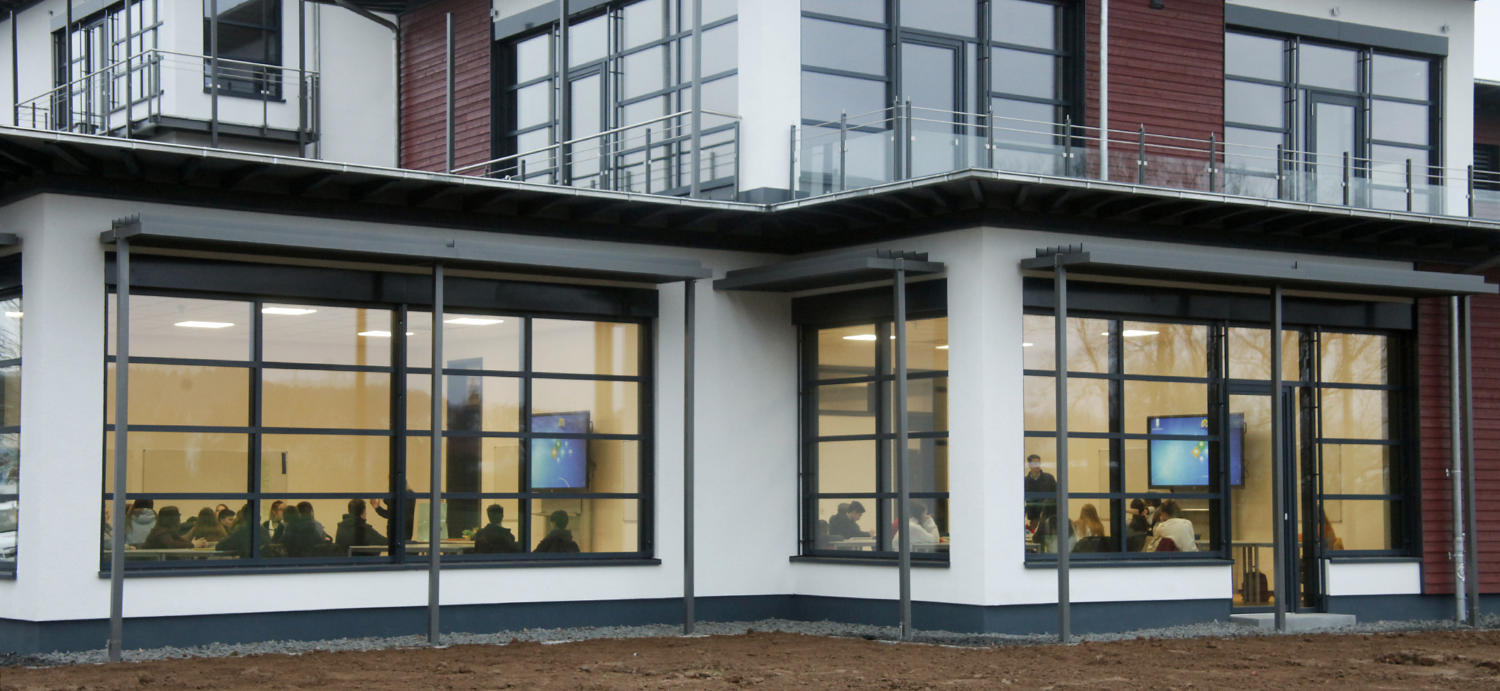
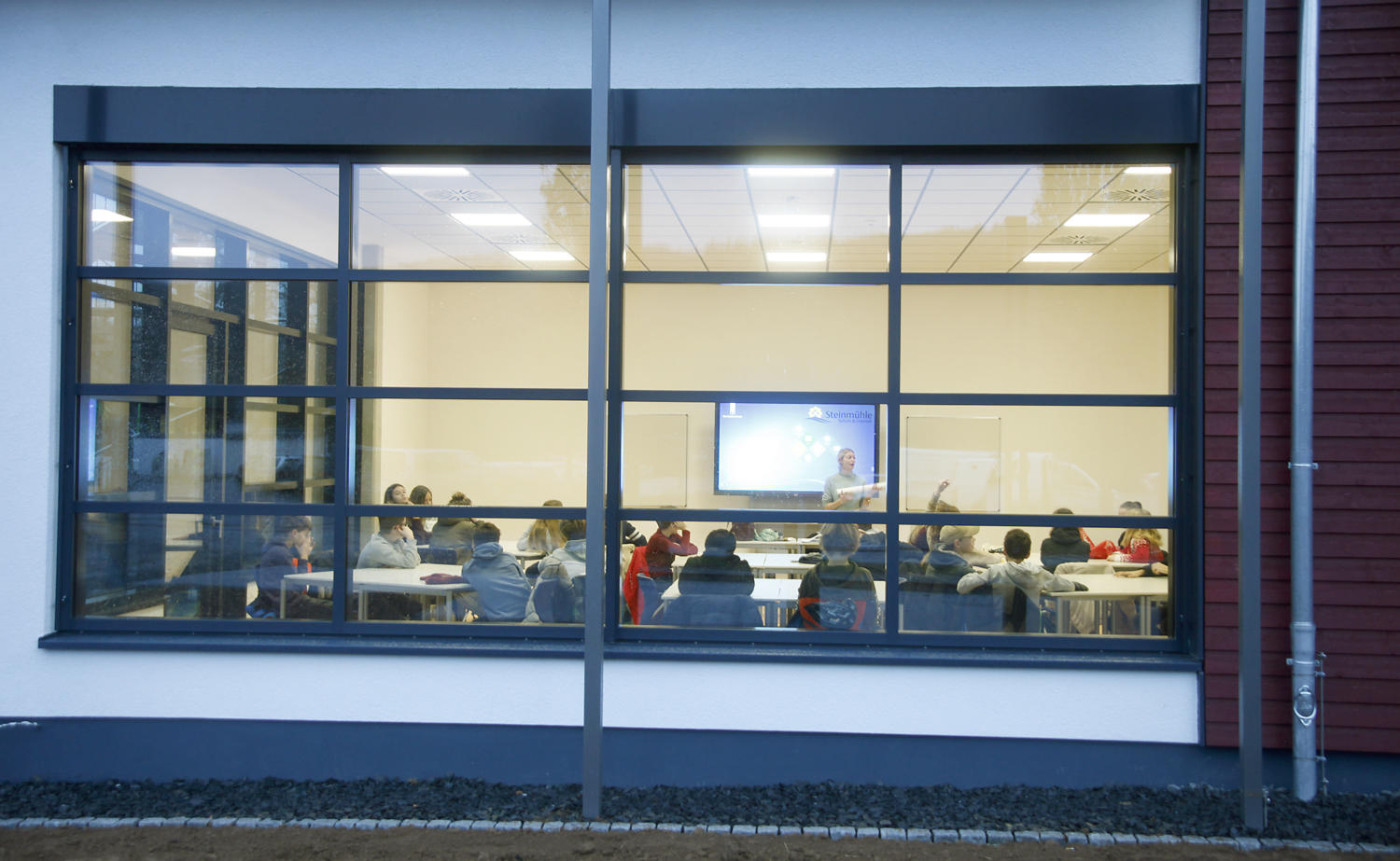
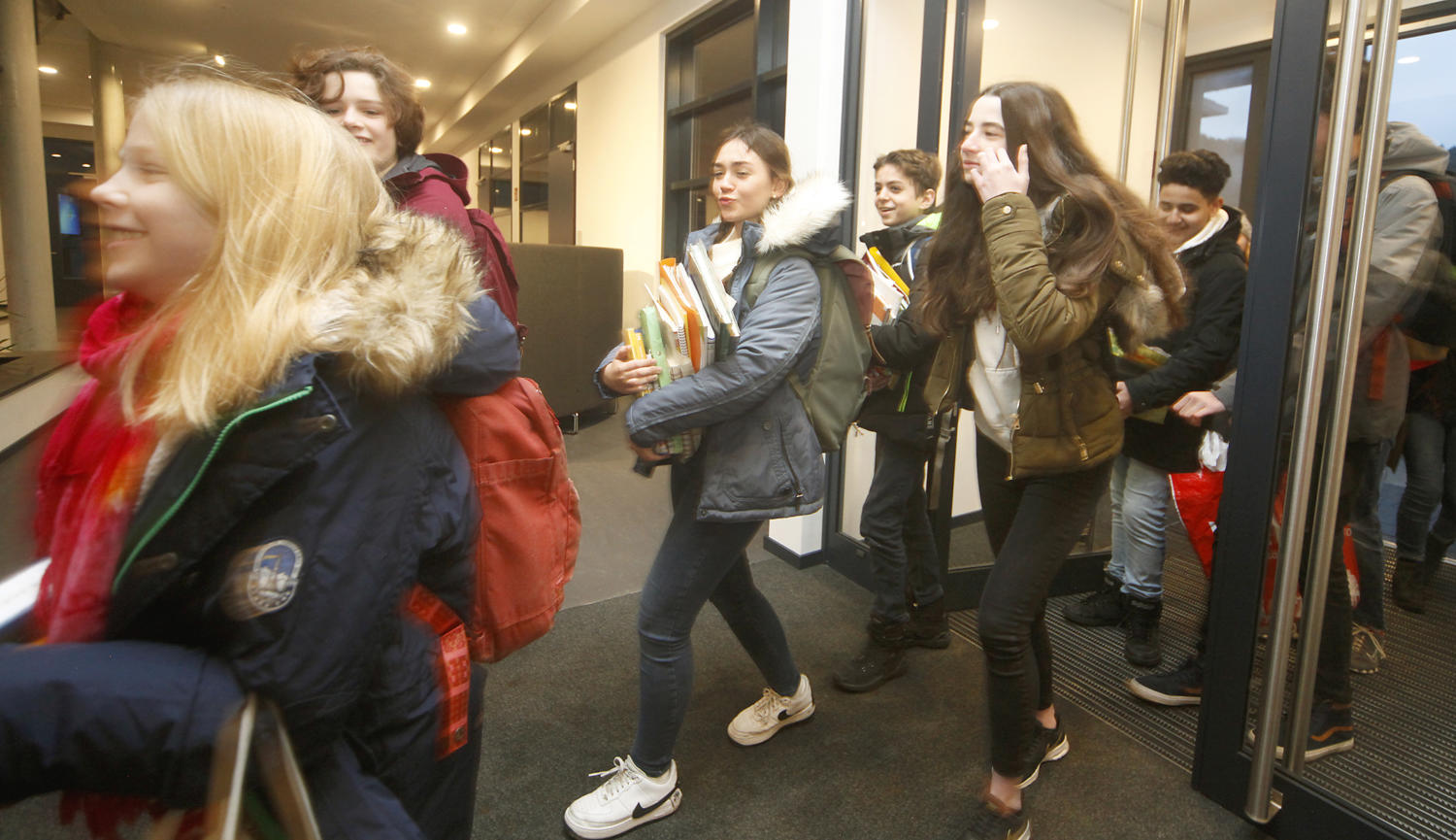
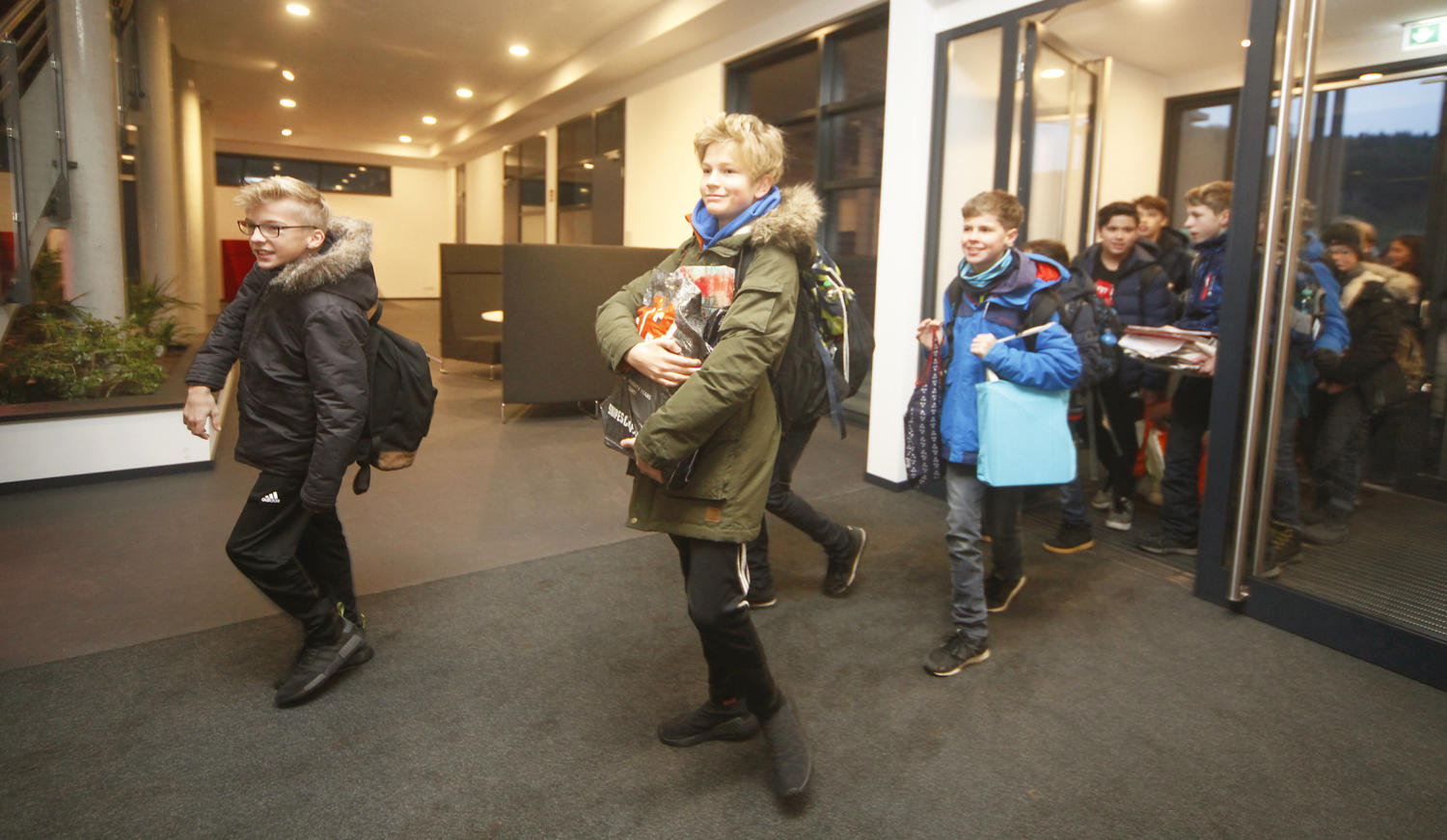
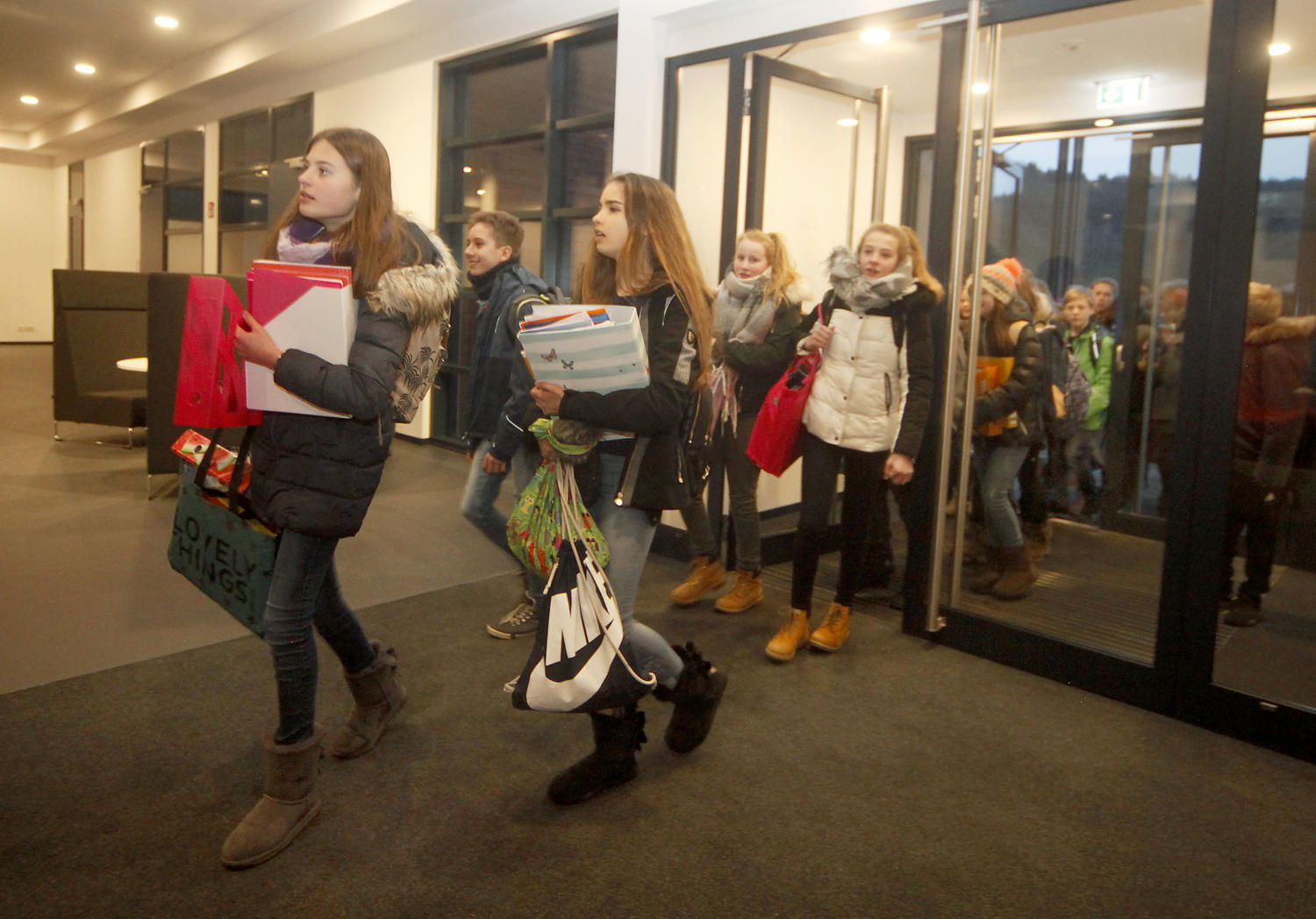
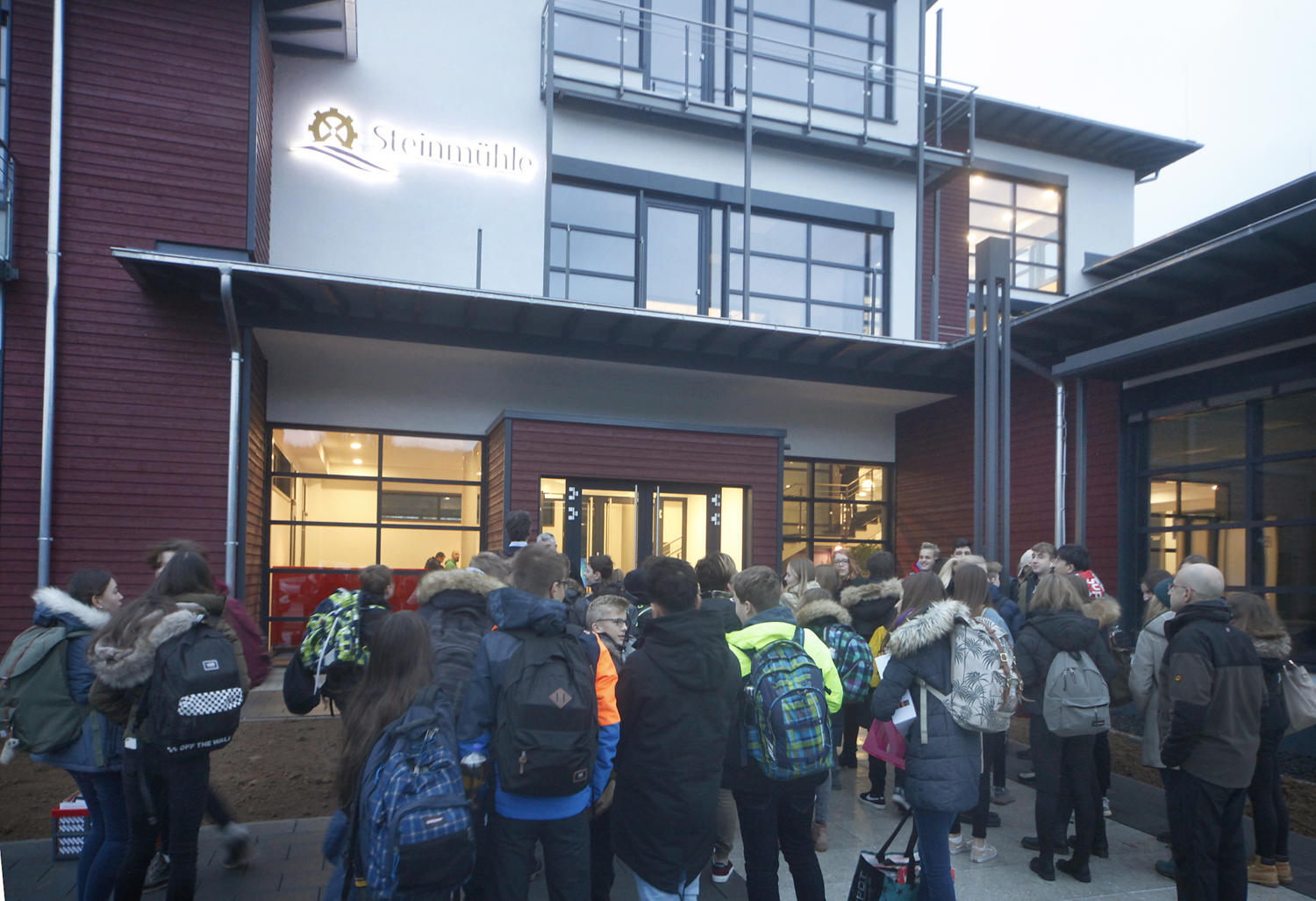
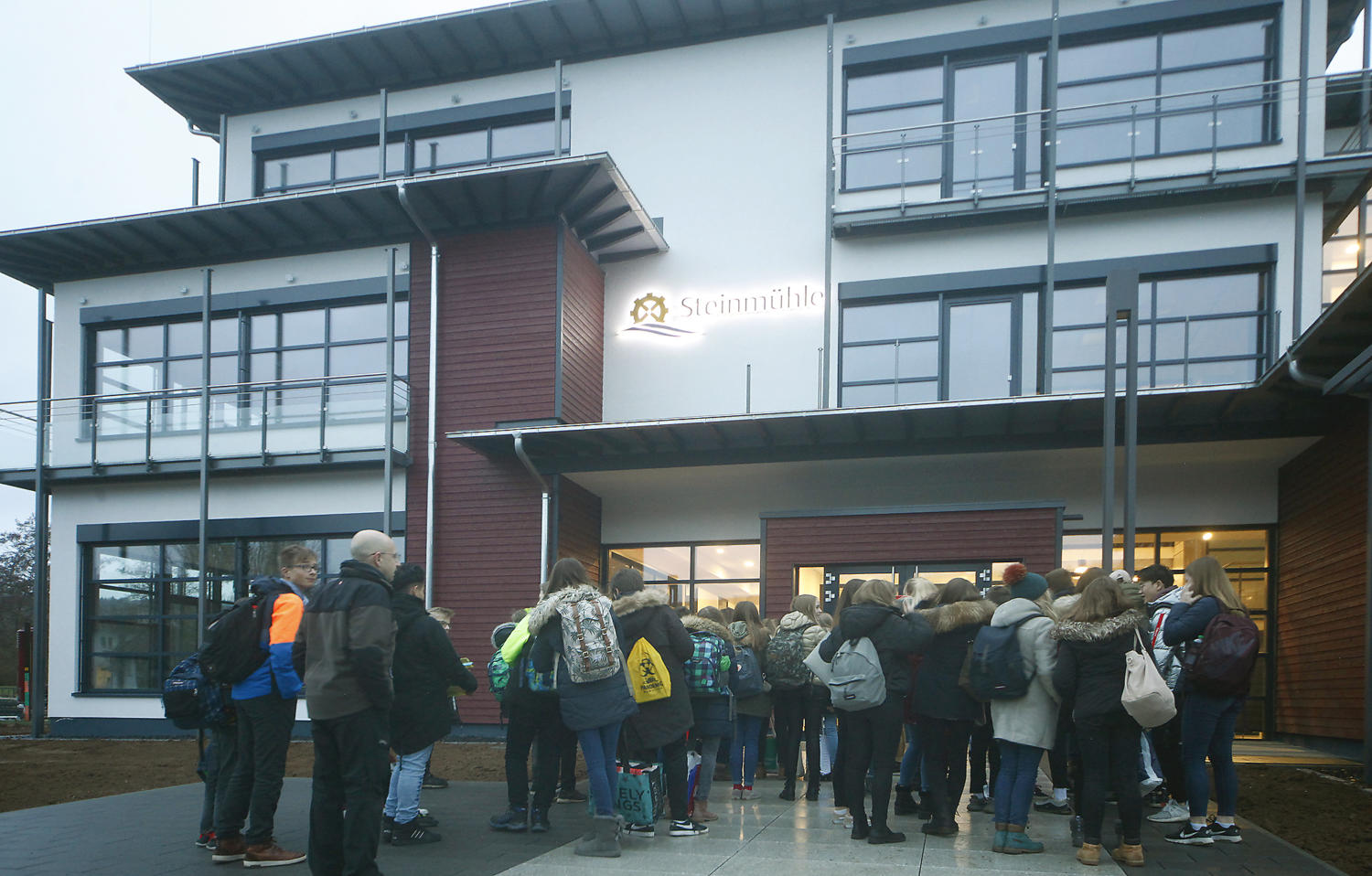
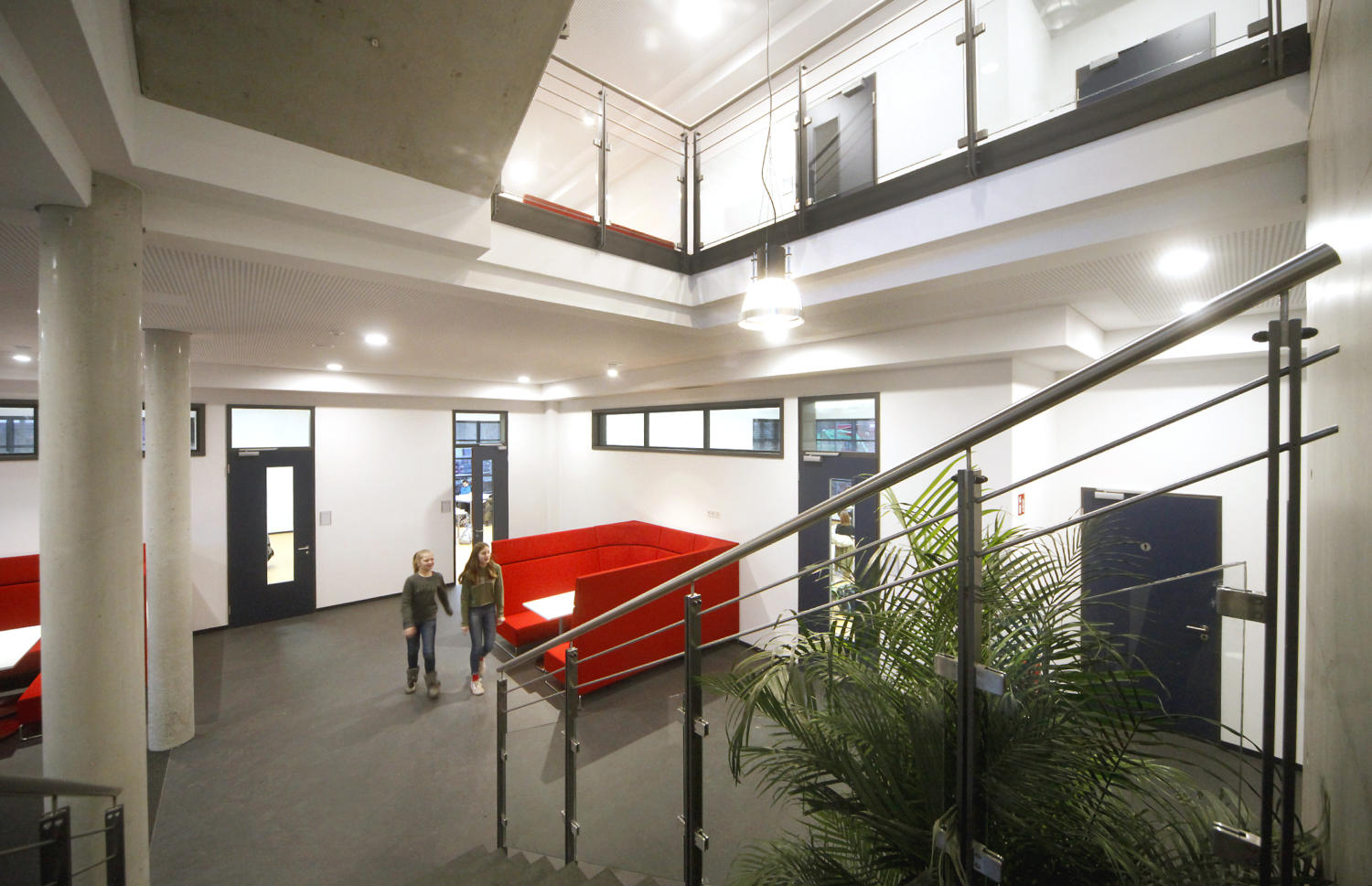
“We enter, filled with fire, O Heavenly One, into your sanctuary…”—the Steinmühle leadership team had been working toward this moment for a long time, and Principal Bernd Holly even had the European anthem played. Together with his colleague Björn Gemmer and Managing Director Dirk Konnertz, he waited—megaphone in hand—for the students in grades 7 through 10 on Monday around 8:30 a.m. in front of the new middle school building.

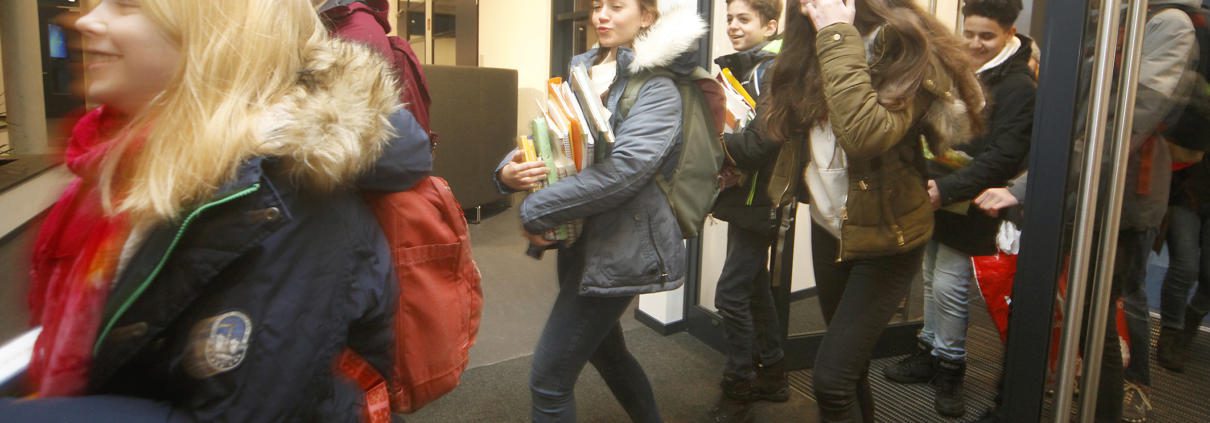
They streamed in, laden with their school supplies, due to the move from the main building—which was undergoing renovation—to the “Atrium.” Gently, they wiped their shoes, and then headed to their assigned classroom. There was something special about that moment.

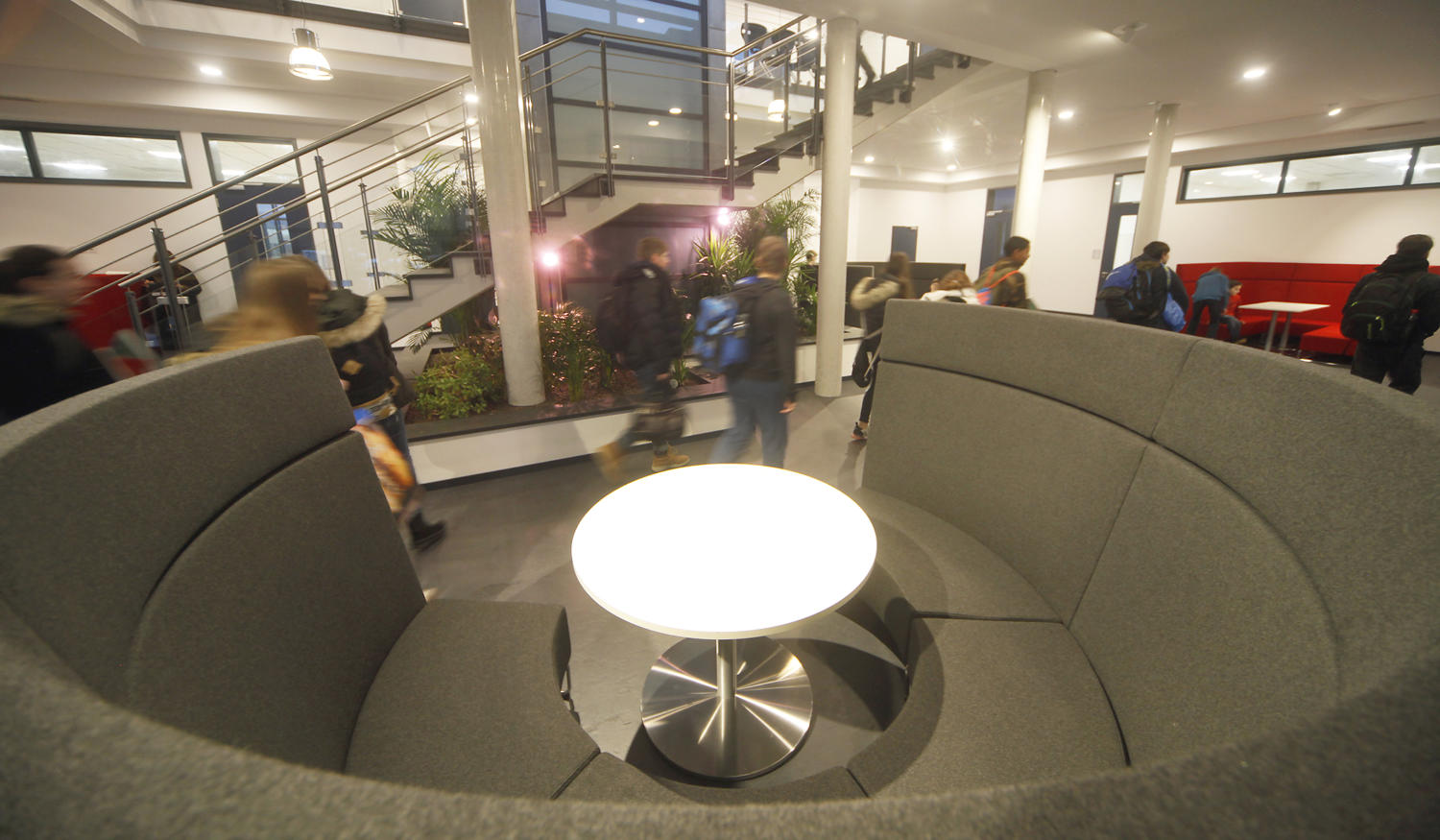
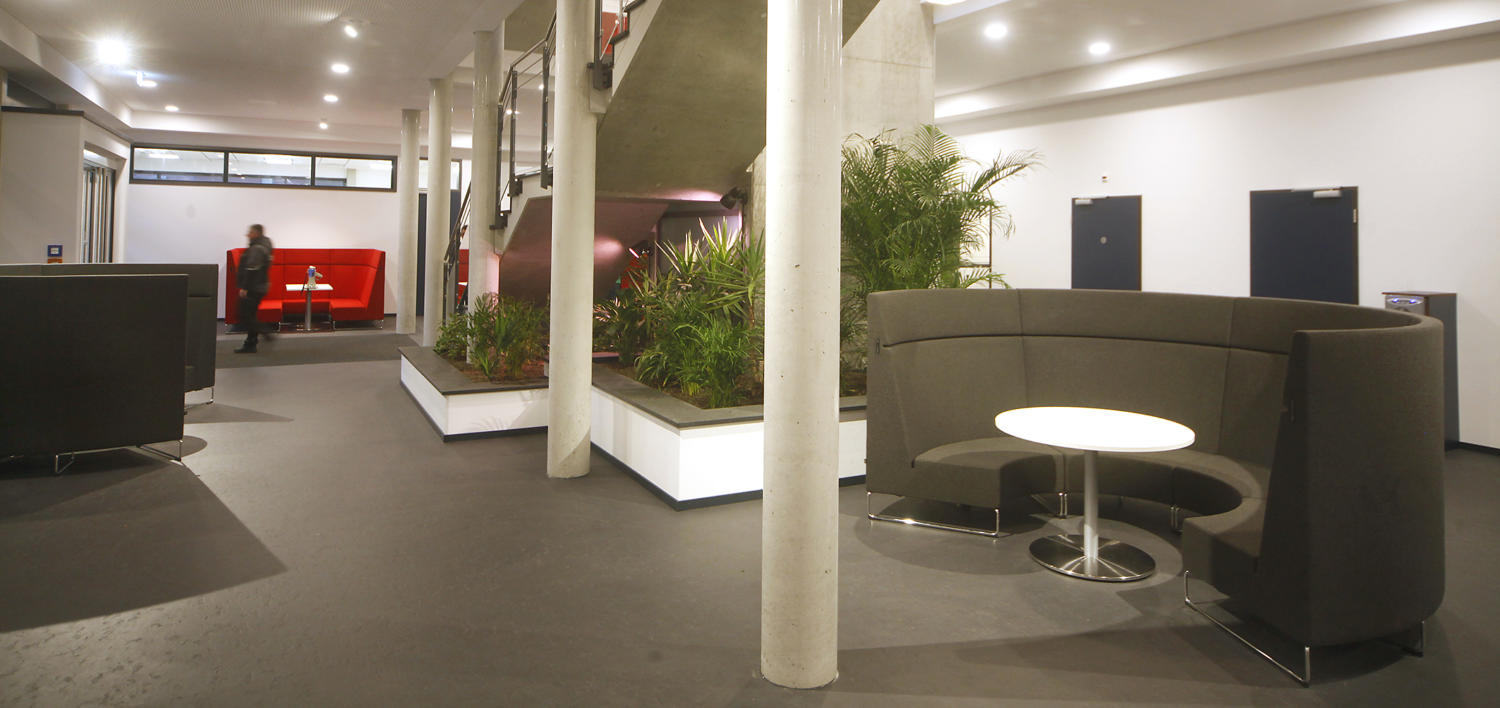
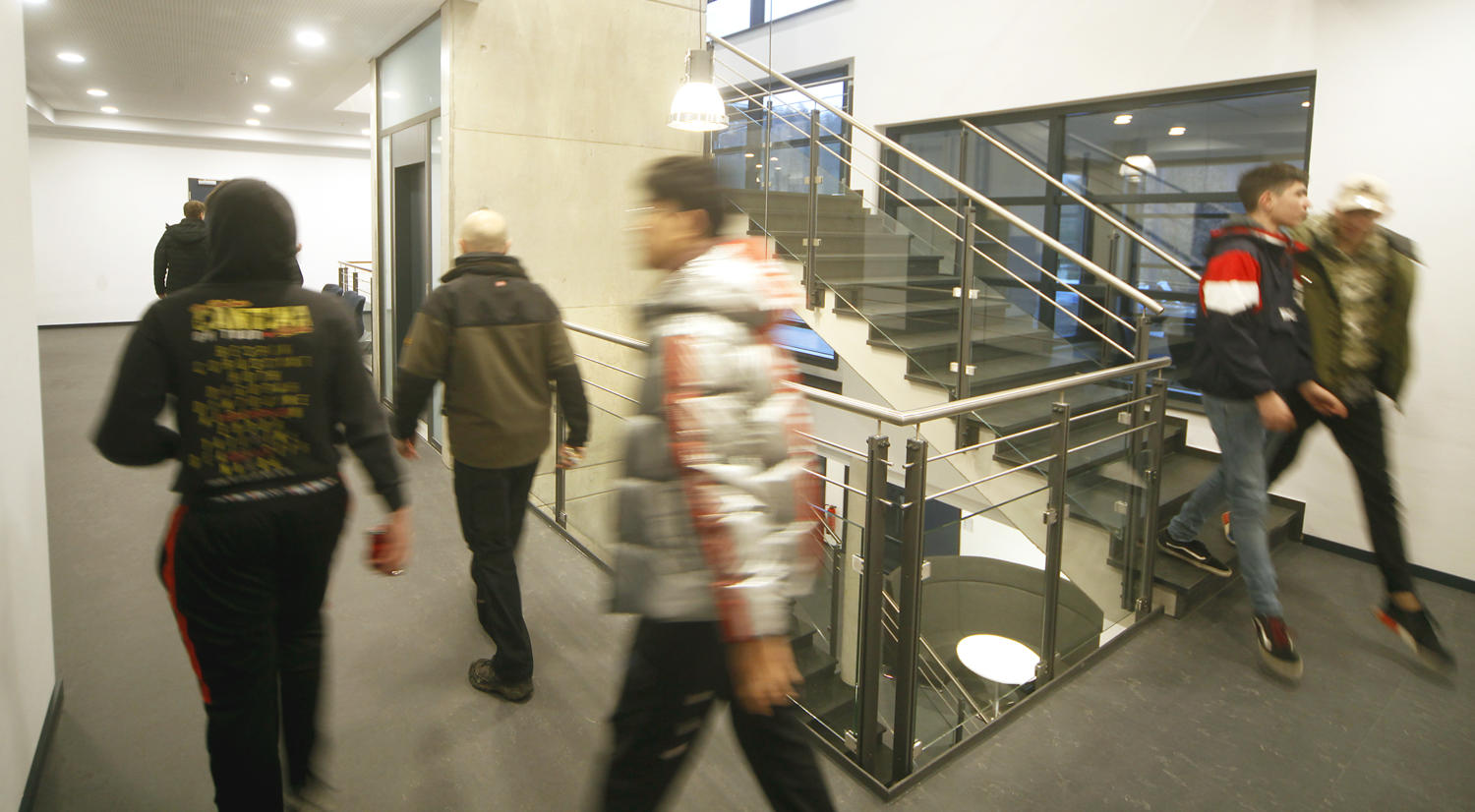
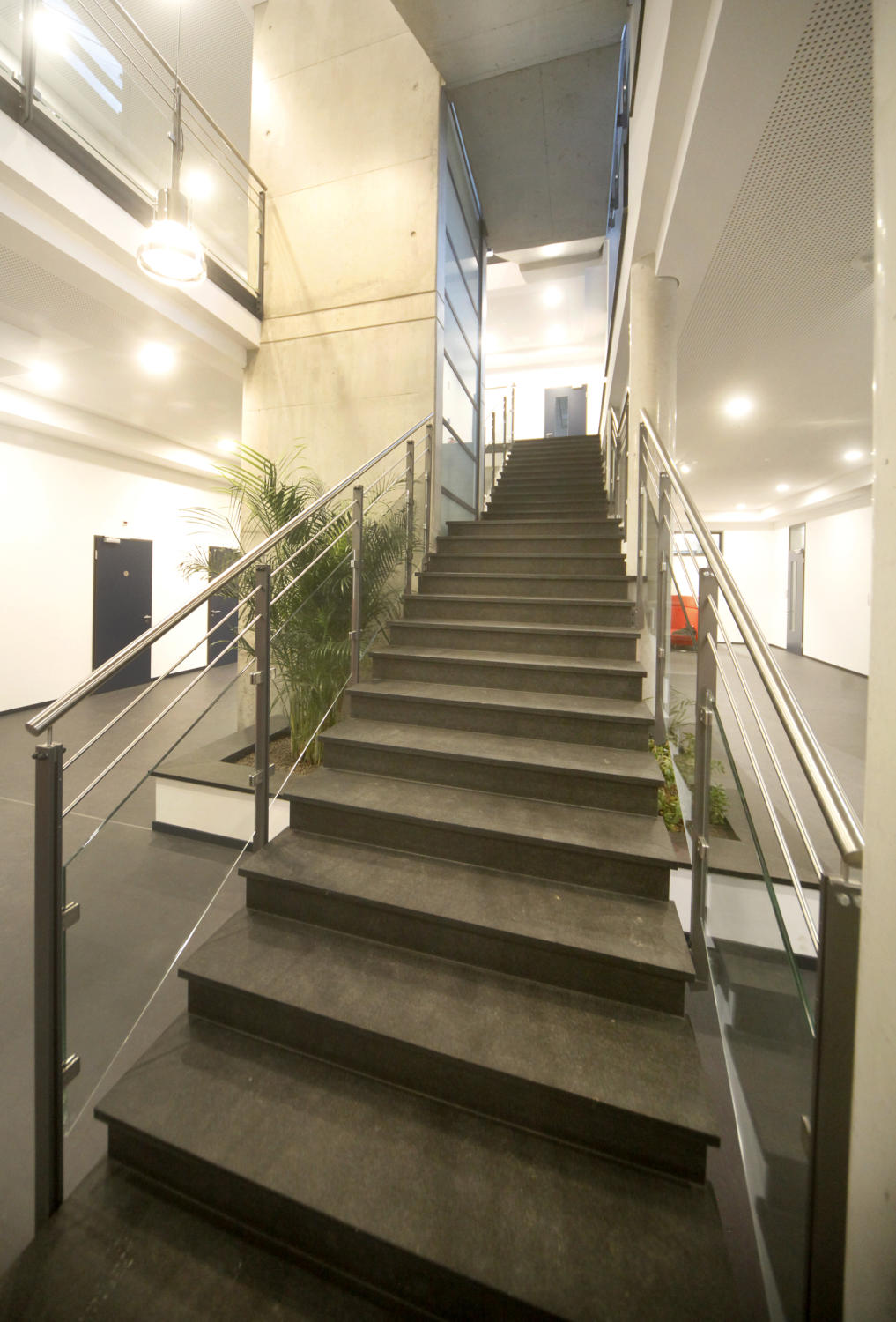
In his usual style, Christian Plaum, owner of the company Lichtwerk, filmed the scene. Up the stairs, astonished glances at the imposing seating arrangements. It took a moment to get your bearings in the building’s vast spaces. “Oh my God, this is so cool,” one student blurted out. There was no need to ask the students what they thought of the new building. The comments came spontaneously.


School classes fan out

“Awesome” – “So modern” – “Looks really cool” – “And an elevator, dude.” — Sometimes youth slang describes it best. “I think this is sooooo cool,” “All blue and red, how awesome,” “Check this out!” It was really impossible to miss that the furnishings and design also appealed to young people’s tastes. “The classrooms are much bigger,” “So many windows,” “Plants—ah, how cool.” During the long break, they set off on a bigger exploration. “Huge seating areas for a ton of people—you can sit there in massive groups.” When asked specifically what they liked best, they also had compliments for the bathroom designers: “What do I like best? The bathrooms!” —Yeah, why not.

“The interactive whiteboards are really great,” teachers Jennifer Bernhart and Julia Riemenschneider agreed. From the teachers’ perspective, this equipment paves the way for forward-looking, modern instruction.

While school operations are now in full swing, the atmosphere at the Gade construction company—for its managing director, Jochen Schröder, and his staff—is still one of hard work. The outdoor areas aren’t quite finished yet, and inside, small details such as soap dispensers and trash cans on the floors are still missing, as is the entrance grating. Caretakers Oleg Koch and Viktor Grenz can be seen darting back and forth. Their skills are in high demand until these final details are completed shortly.


Balanced Energy Budget

For architect Thomas Oesterle, the tension has eased somewhat, but it’s not quite over yet. There are still a few remaining tasks to be completed. But there’s light at the end of the tunnel—after all, a lot is supposed to happen this week. Then the heating plant will also be handed over to the building maintenance staff.

The designer is proud that he can present effective solutions even for key issues. “Doesn’t all that glazing consume a lot of energy?” Thomas Oesterle explains that triple-pane glazing, combined with thicker walls, compensates for heat loss and restores the energy balance. He also benefits personally from the electricity generated by the building’s photovoltaic system.

For an experienced planner, it goes without saying that all fire safety guidelines have been implemented using the most up-to-date methods. “There are escape routes to the outside from every room on each of the three floors.”


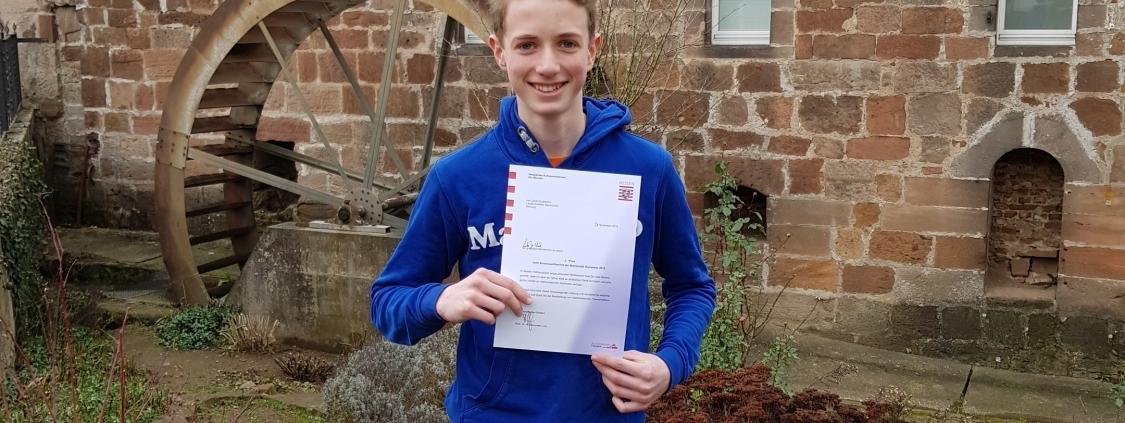
Isn’t that amazing? At the national round of the 2018 Math Olympiad in Würzburg, Steinmühlen student Jan Audretsch (9th grade) took second place! Jan received a personal letter of congratulations from Hesse’s Minister of Education and Cultural Affairs, Prof. Dr. Alexander Lorz. The letter reads, in part: “In this mathematically challenging competition, you have demonstrated that you possess a high degree of abstract thinking and a wide range of mathematical methods.” We really couldn’t have put it better ourselves.
Dear Jan, Steinmühle is incredibly proud of you. It’s almost unbelievable to achieve such a high ranking! At the same time, however, we already know that this wasn’t your last competition success, and according to the school administration and your math teacher, Constanze Oestreicher-Gold, we’ll soon have even more good news to share about you. Huge congratulations! Keep up the great work—we’re rooting for you!