A week of summer, sun, and surfing. That already sounds like vacation, doesn’t it!? But it wasn’t quite time for that yet… For the 12th-grade advanced sports class, however, it was already a reality—they went on a field trip! Early Saturday morning, they hopped on the TGV headed for the popular surfing town of Carcans-Plage in southern France.

After a long trip, we kicked off the evening by watching the soccer round of 16 match between Germany and Denmark at a local restaurant. The initially bad weather was more than made up for by the great atmosphere and joy over Germany’s victory.

The next day, feeling refreshed and well-rested, we set out for our first day of surfing. For some, it was their first time on a surfboard; others had already moved beyond the beginner stage and were giving their skills a thorough refresher. The great weather and excellent conditions sparked a love of surfing in most of us and allowed us to enjoy the rest of the day at the beach.


Surfing the “green waves”

The following surfing sessions led to more and more success, and we realized that with the right technique and a few tricks, you can make rapid progress. In the evenings, we sat together on the beach, built bonfires, and enjoyed the sunset on Carcans Plage. With our experienced surf instructor Tim, the bravest among us ventured out to ride the taller “green” waves, while others honed their basic skills in the “whitewater.” We also strengthened our class bond and spent a lot of time together through our group Spikeball, volleyball, and soccer tournaments.

Even though the trip was coming to an end at an ever-faster pace, our schedule was still packed. On the last evening, the sports class passionately cheered on our German national soccer team, wearing Germany jerseys and waving flags. The entire restaurant was filled with the spirit of Germany, and emotions ran high. The frustration and sadness over our national team’s elimination from the European Championship briefly dampened the mood, but it couldn’t take away the wonderful memories of a fantastic week of surfing!

Martha Mengel and Emiliya Yanets


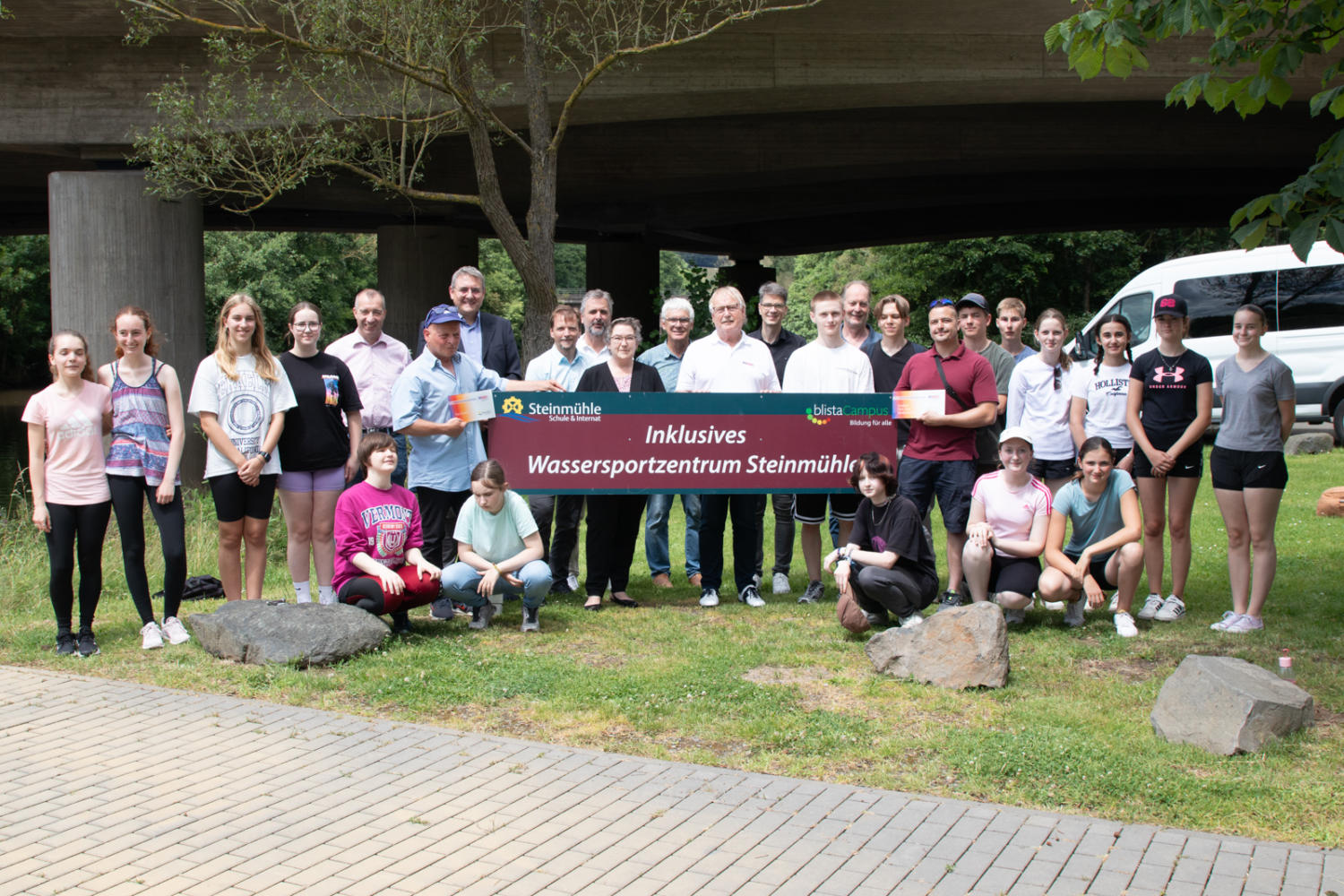
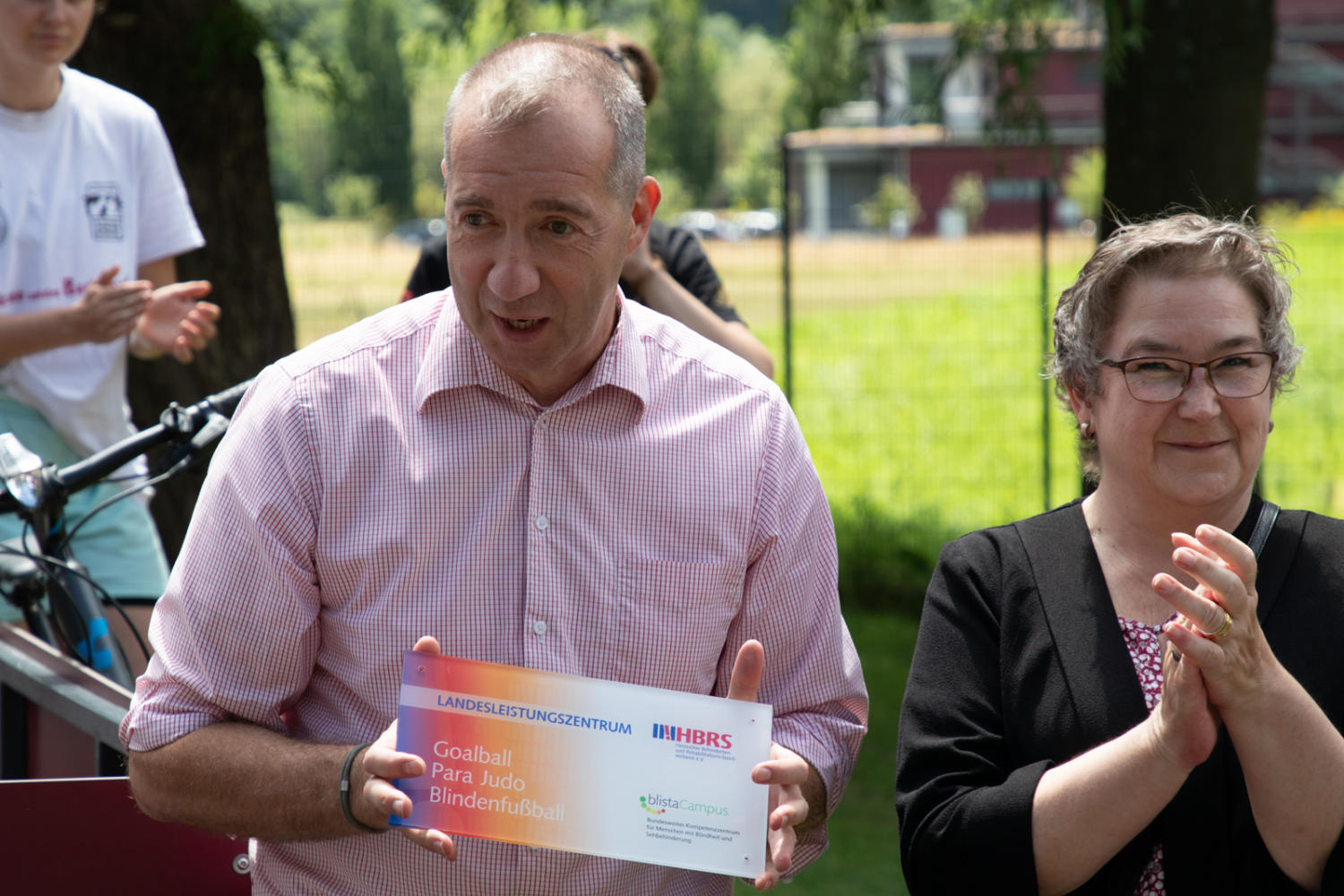
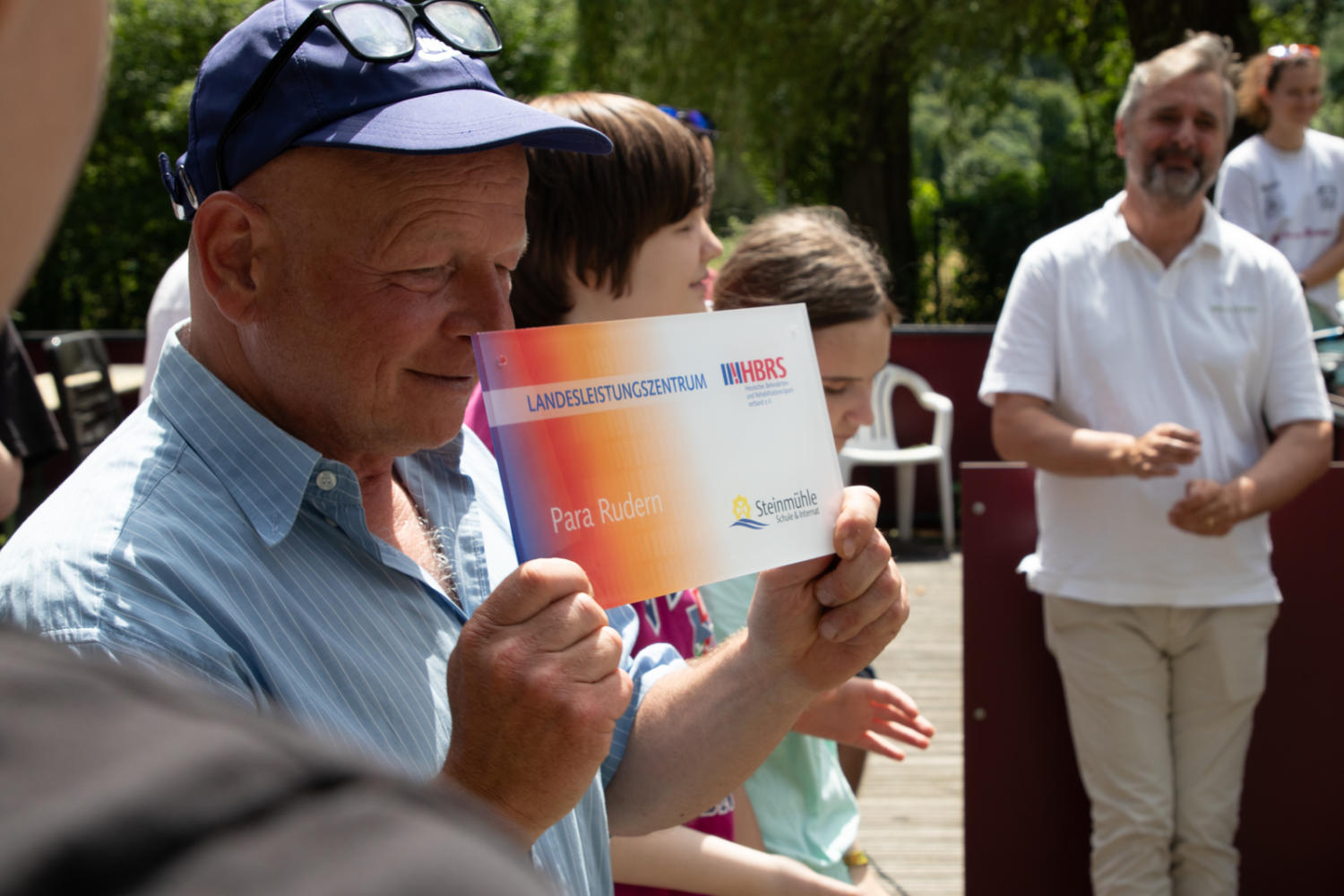
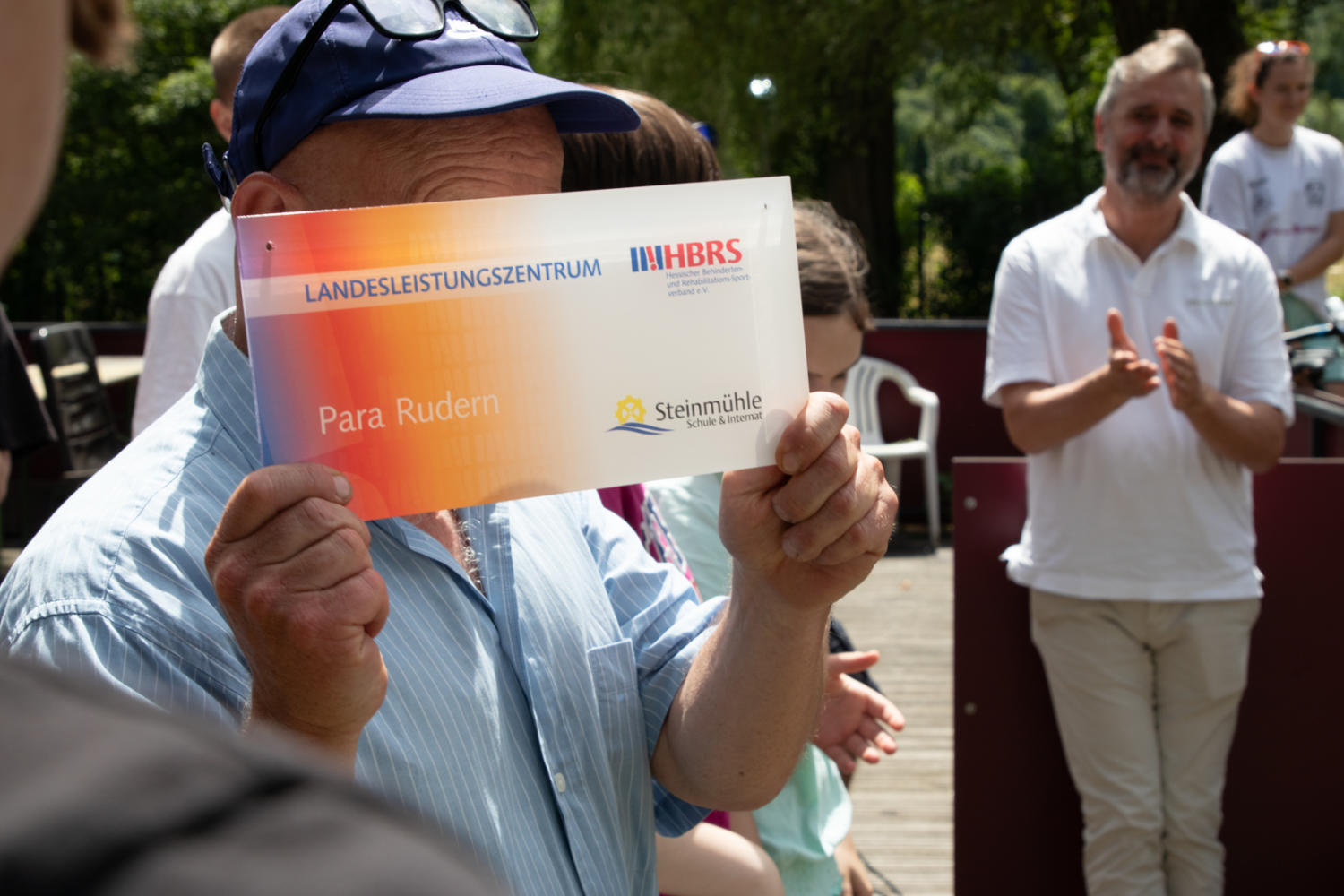
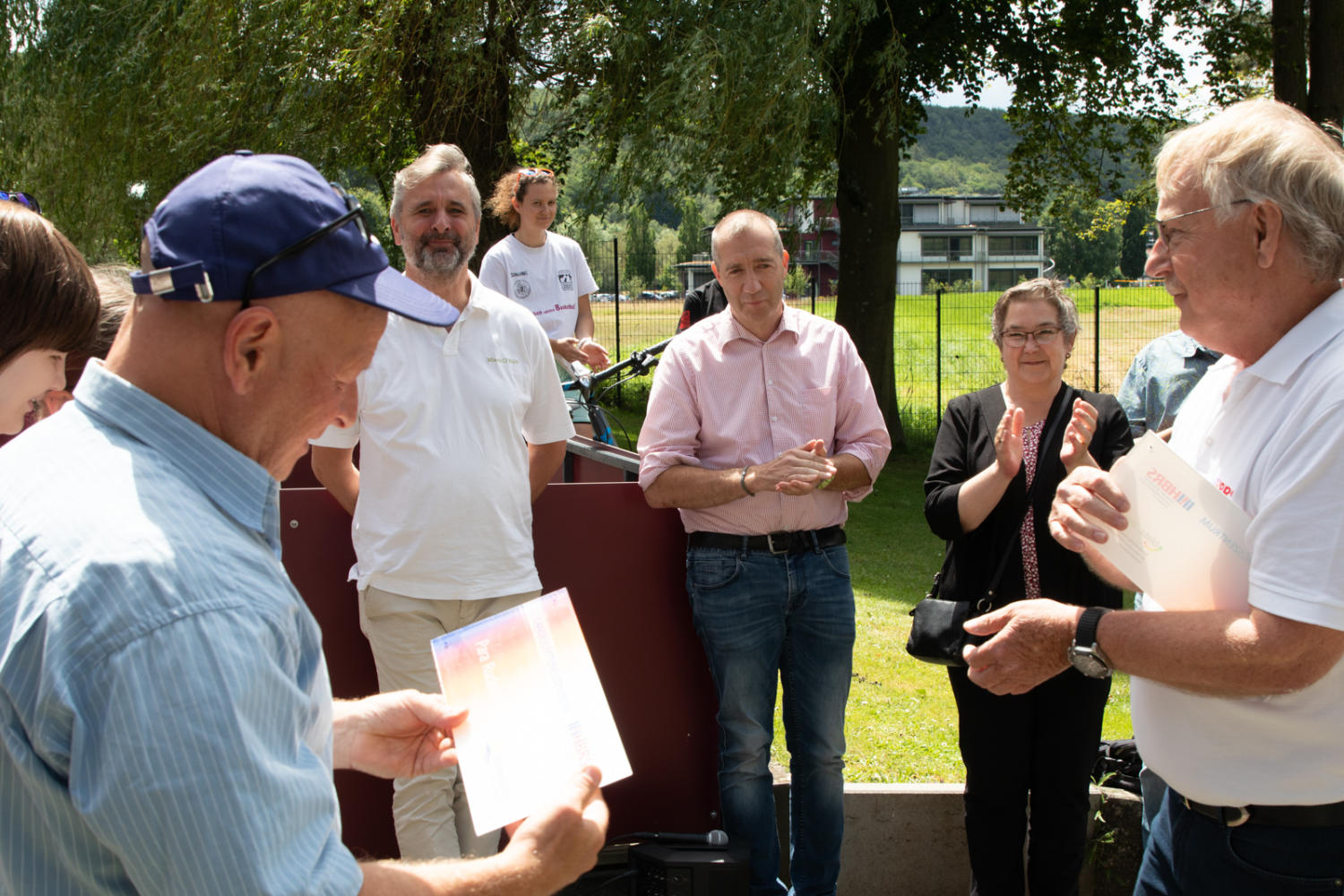
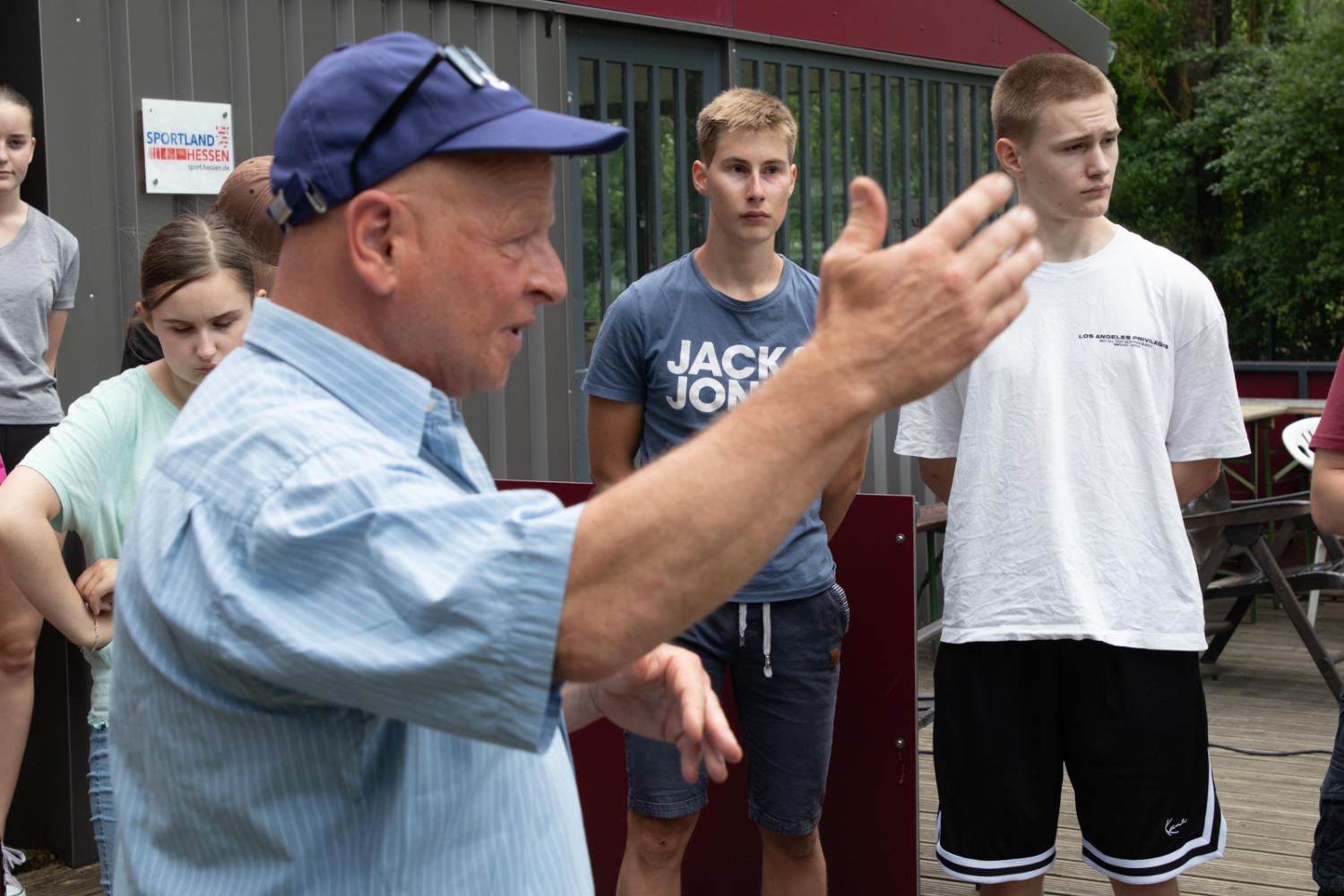
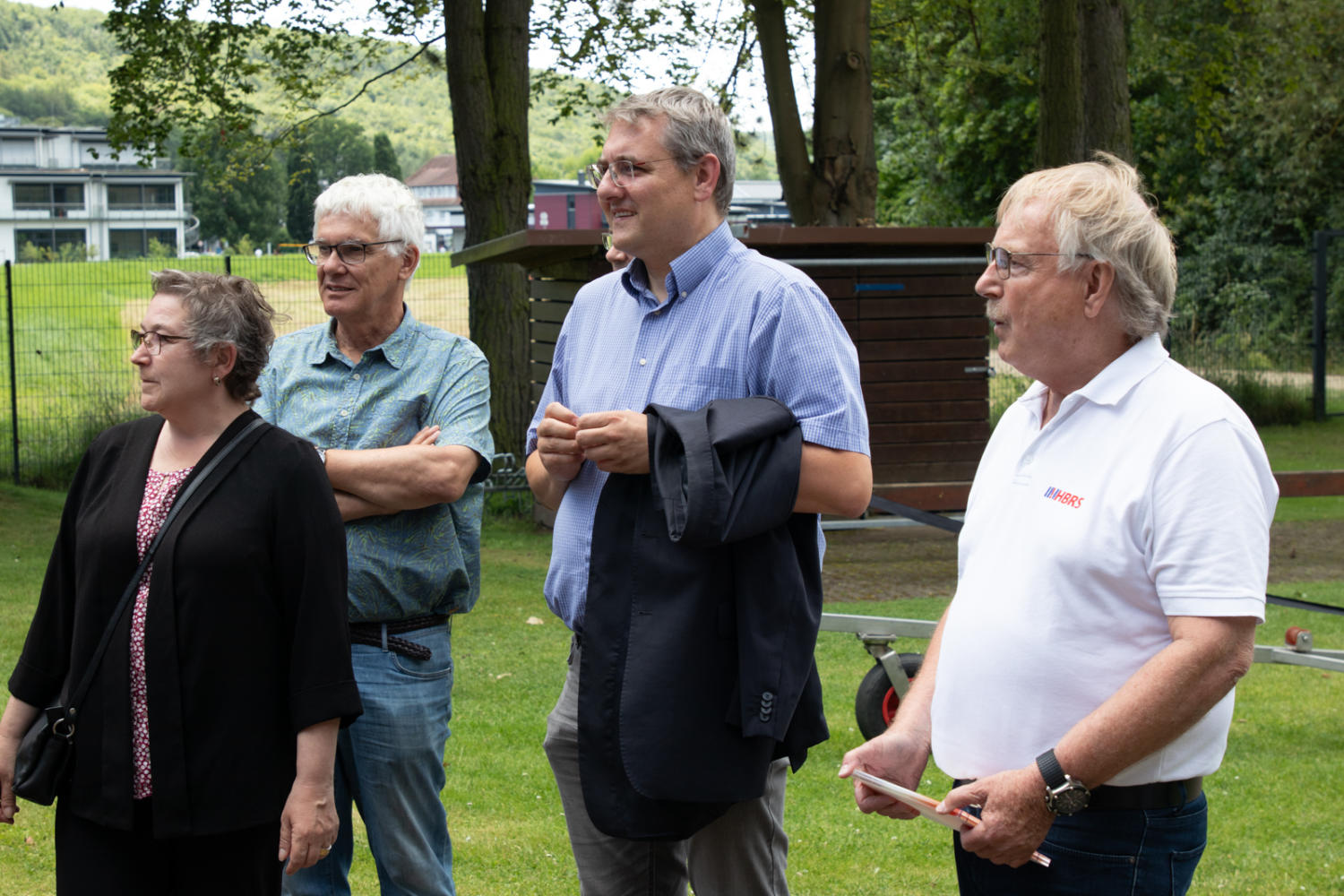
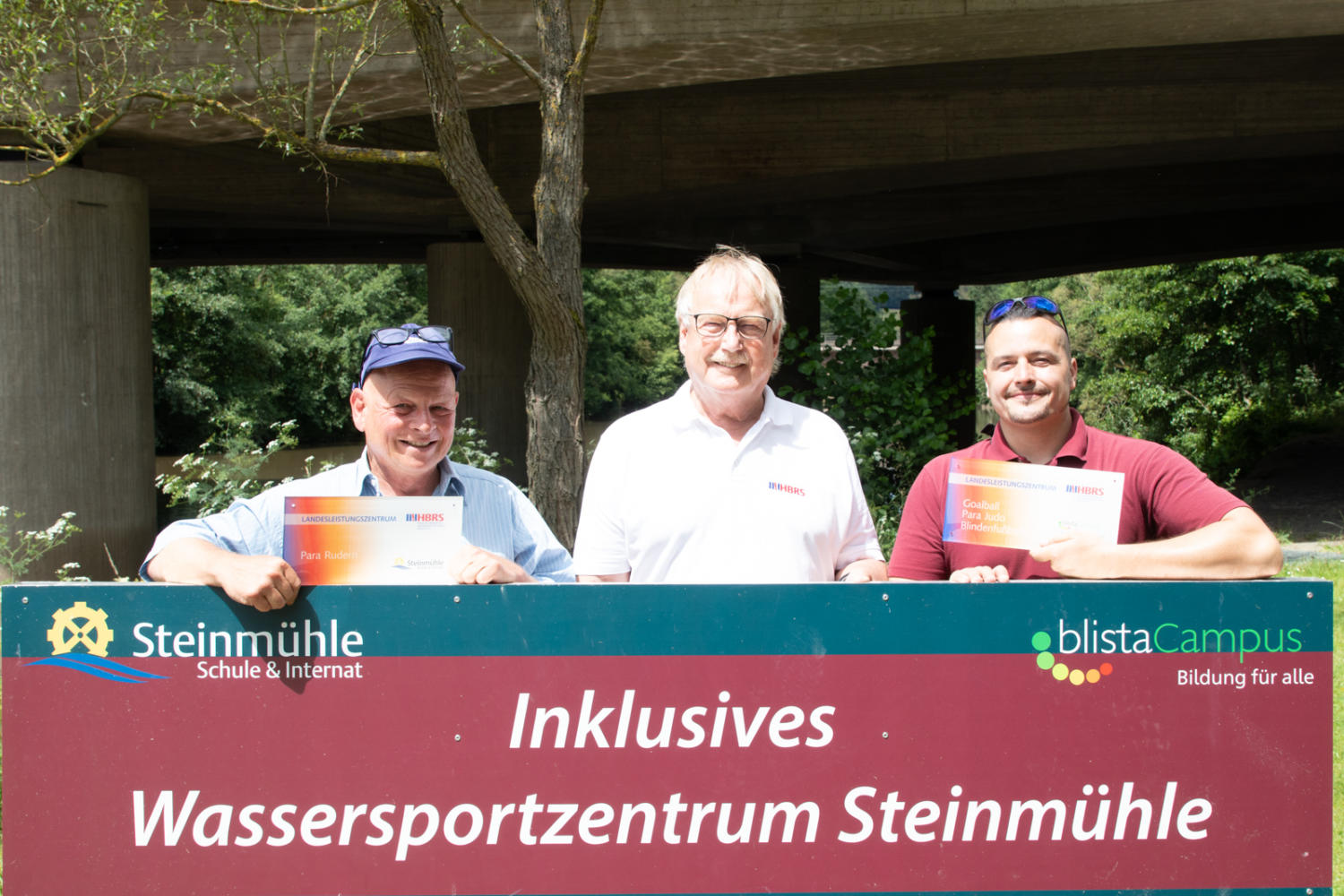
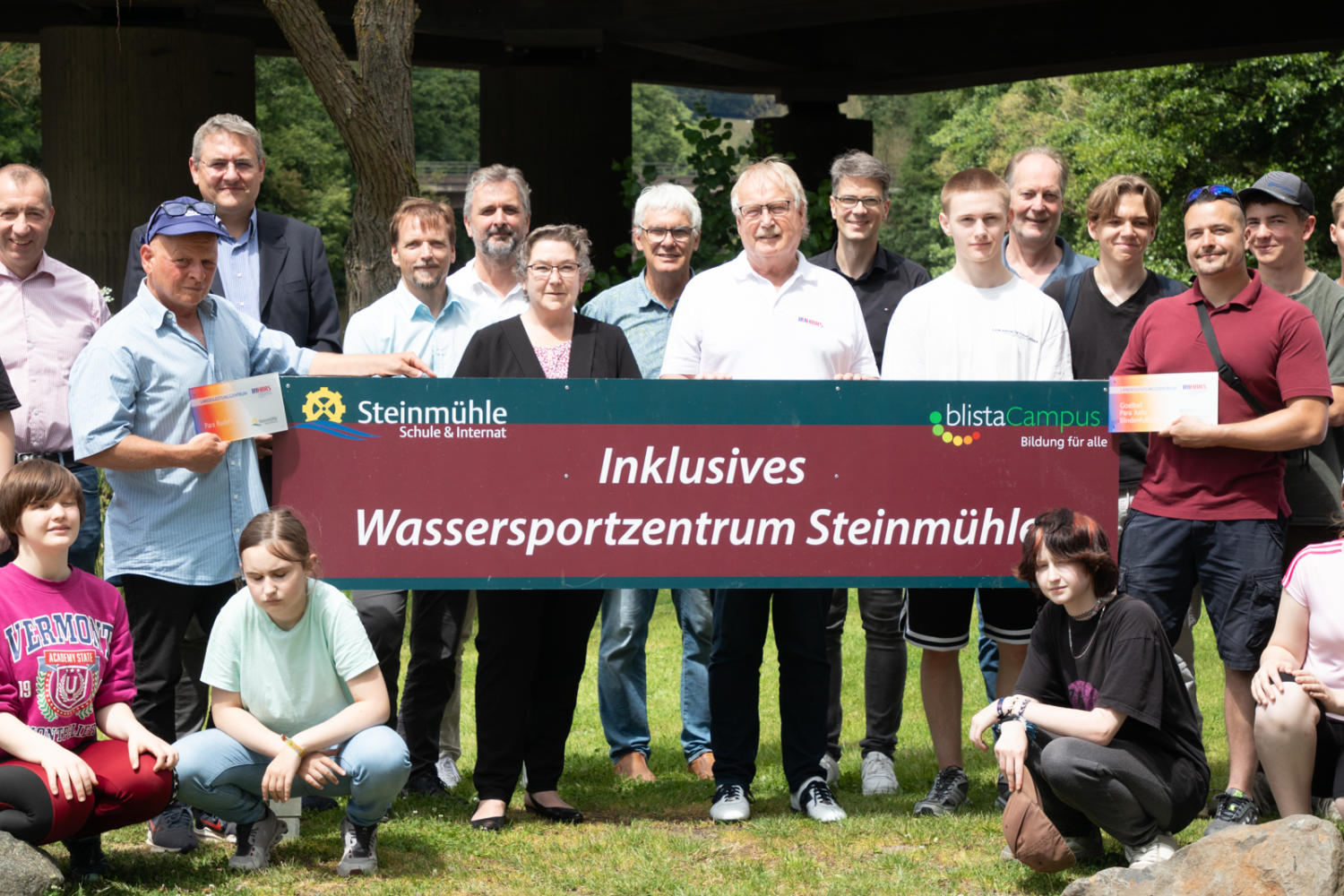
The Hessian Association for Sports for People with Disabilities and Rehabilitation (HBRS) took advantage of the Steinmühle’s major sports festival on Friday, June 28, and the presence of its sports partners at the event to officially designate Steinmühle as a “State Training Center for Para Rowing.” HBRS President Heinz Wagner presented the official award in front of the Steinmühle boathouse to rowing instructor and coach Martin Strohmenger, who had been instrumental in driving this development forward with the support and backing of Steinmühle Managing Director Dirk Konnertz (in the background). The plaque now complements the existing sign reading “Steinmühle Inclusive Water Sports Center,” which was officially unveiled exactly one year ago at the summer festival of the “Rudern und Sport Steinmühle” club. Both of Steinmühle’s designations are closely linked to its partner, blista, the German Institute for the Blind in Marburg. For years now, inclusive rowing involving sighted and visually impaired rowers has been a vibrant and successful program. Their joint inclusive water sports program also includes canoeing. Other sports for people with physical disabilities are offered jointly as well. On the same day, blista received the official designation “State Training Center for Goalball, Para Judo, and Blind Soccer” from the HBRS president.

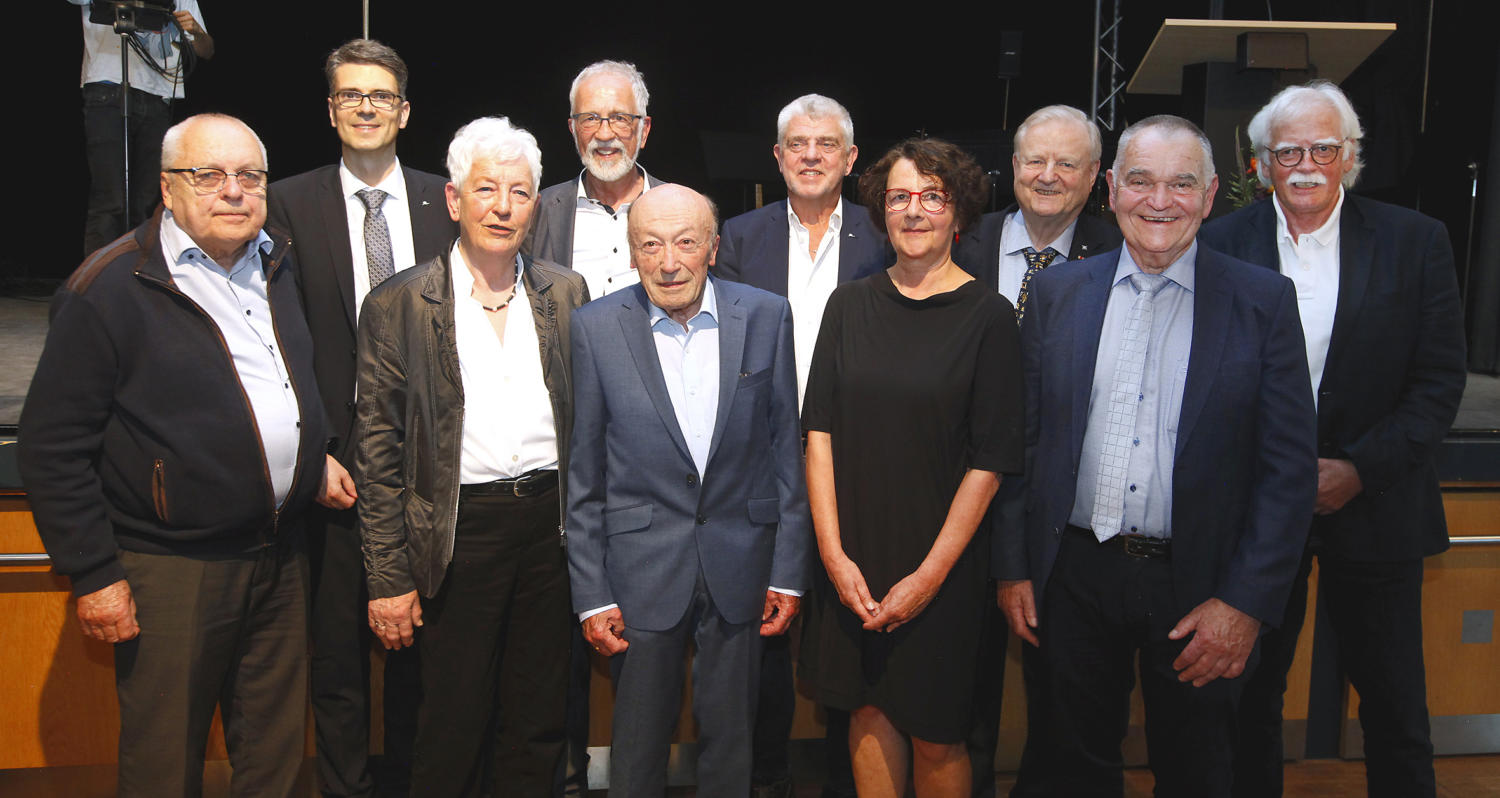
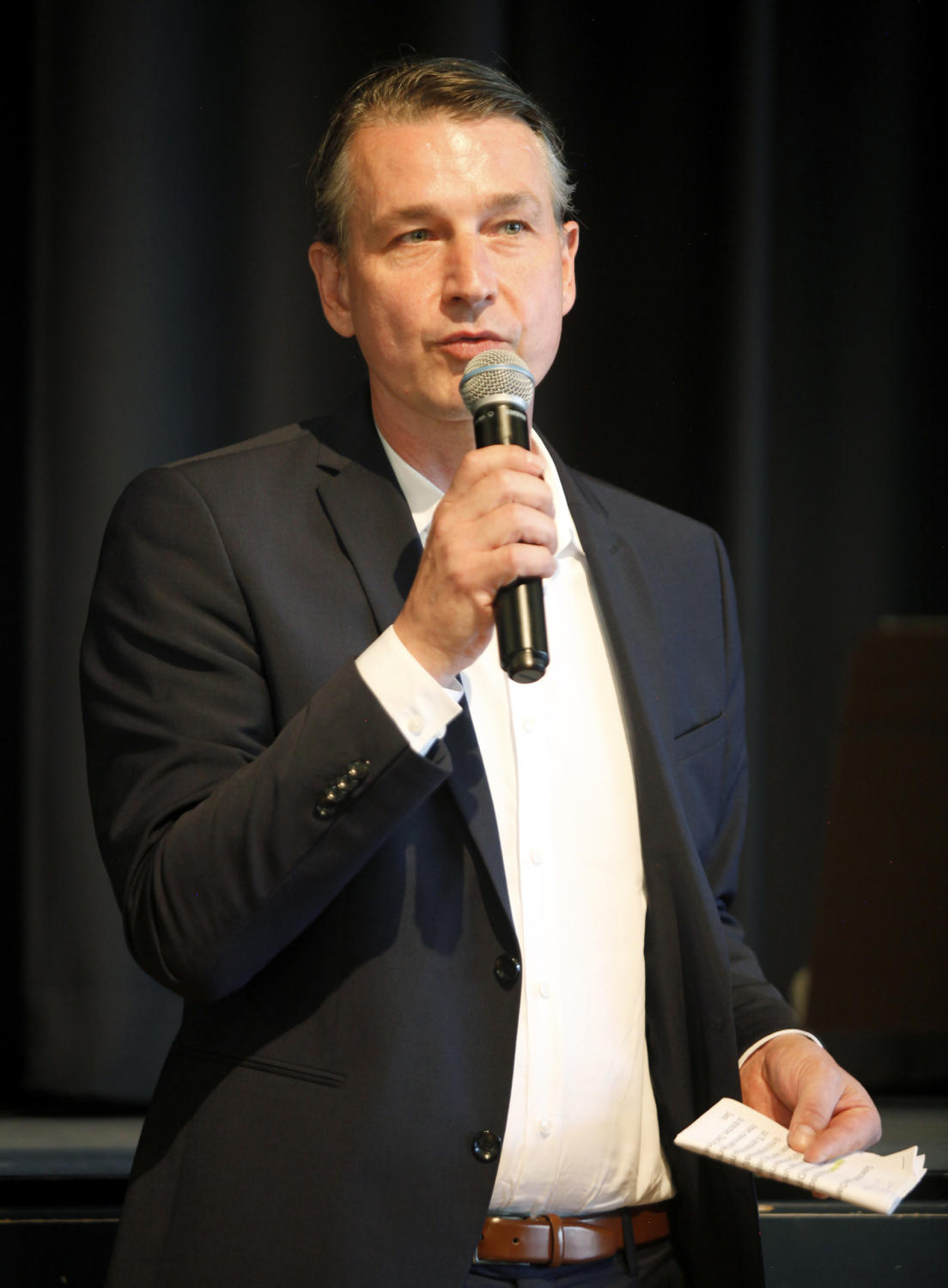
Together with several visually impaired and sighted athletes, Steinmühle, blista, and guests celebrated the awards and paid tribute to them: blista Board Member Patrick Temmesfeld, City Councilwoman and Head of the Sports Department Kirsten Dinnebier, Björn Backes, head of the City of Marburg’s Sports Department, blista Principal Peter Audretsch, Steinmühle Principal Björn Gemmer, Michael Neirich, rowing coordinator at Steinmühle, Janosch Briel, sports coordinator at blista; and Claus Duncker, finance director of RuS Steinmühle and former blista board member.

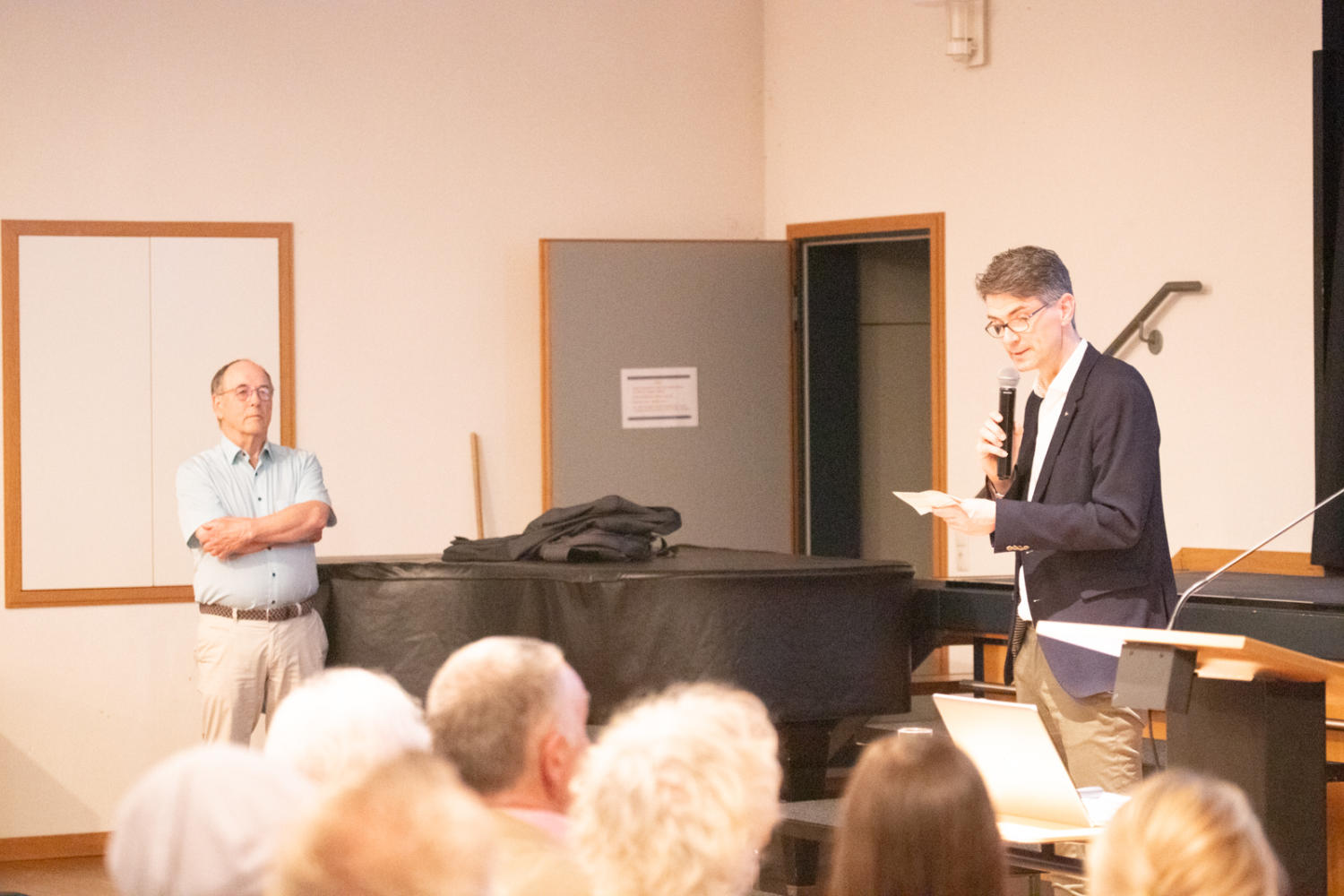
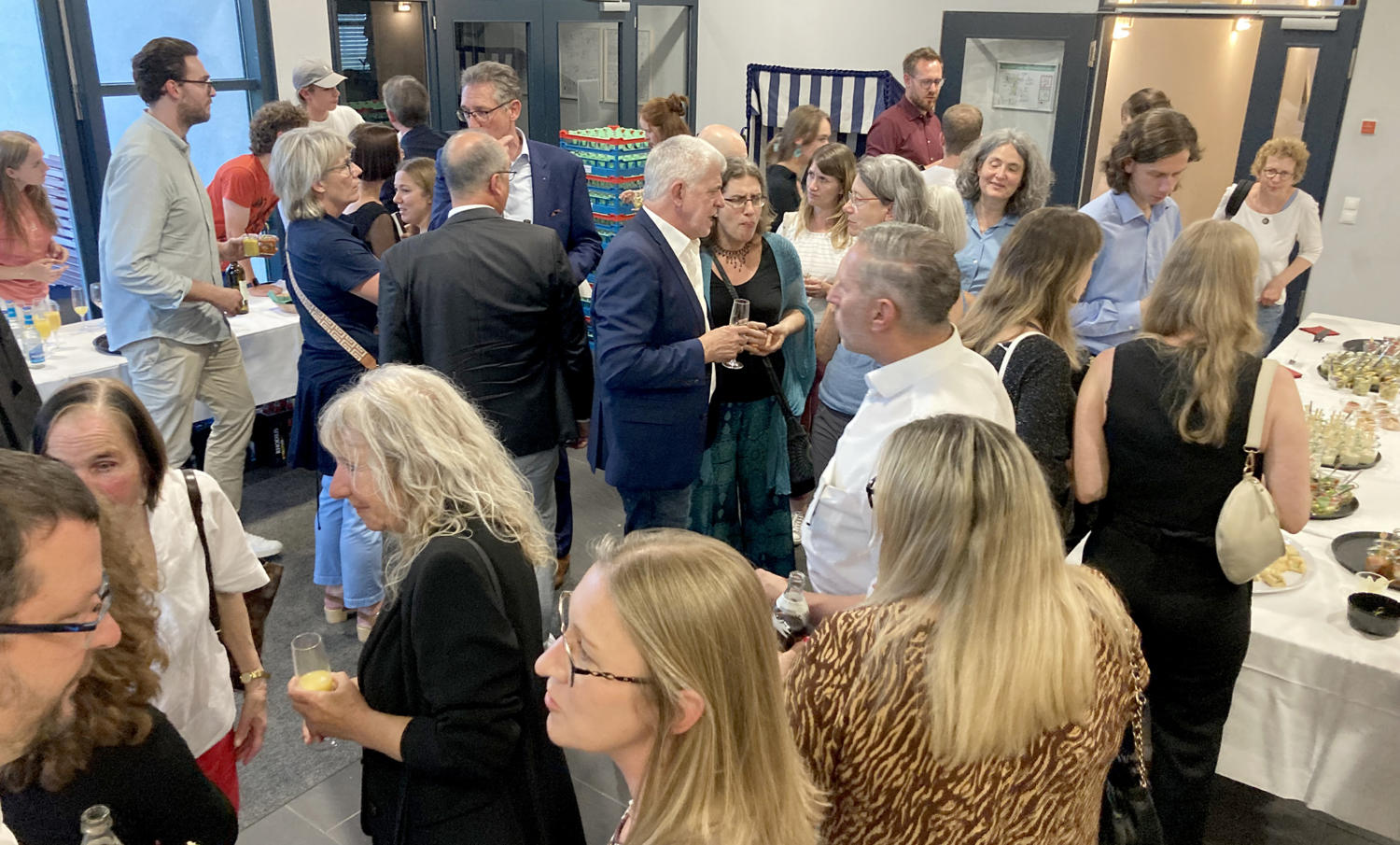
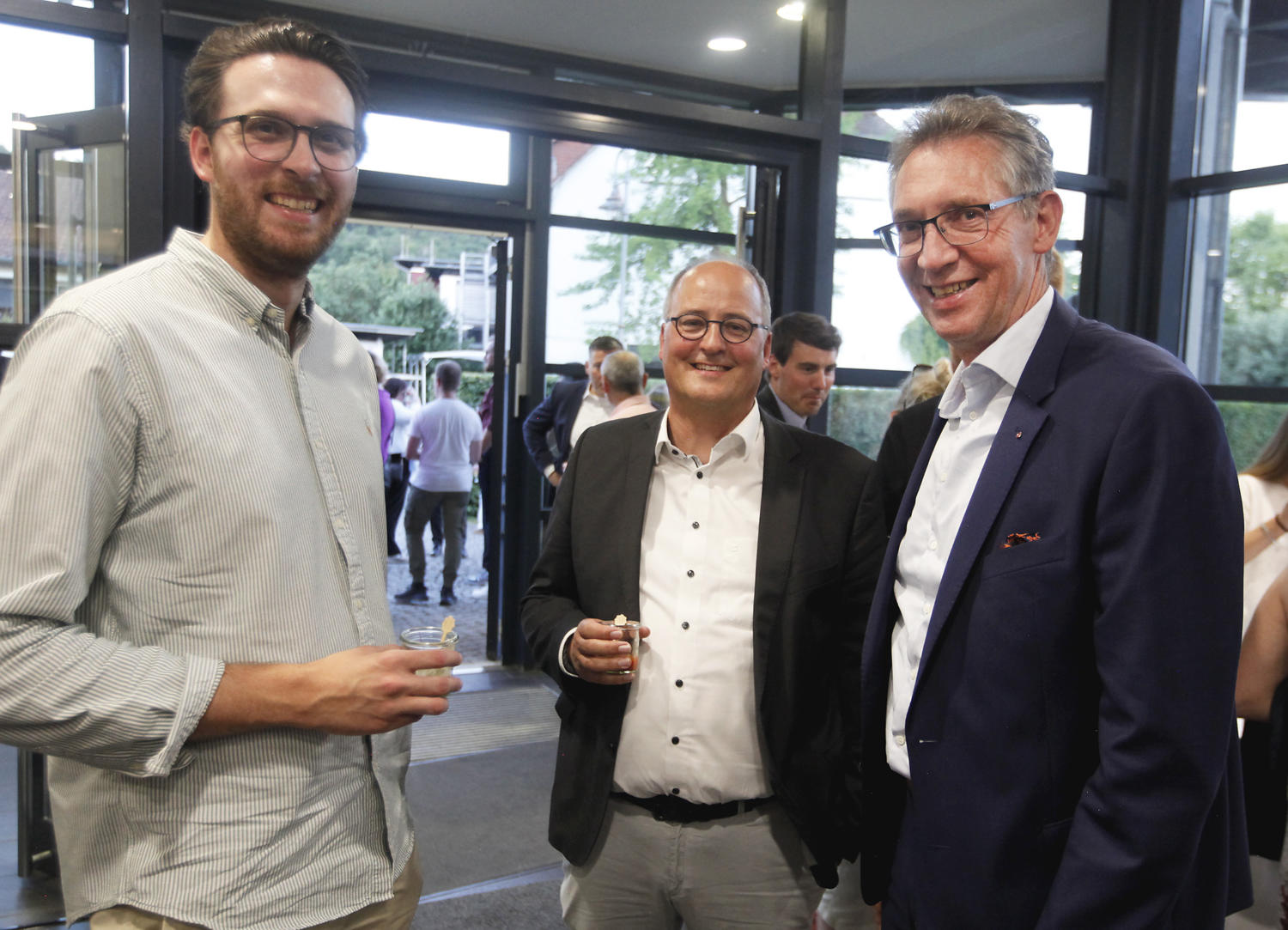
The numerous invited guests brought plenty of praise with them when they gathered for the ceremony in the forum of the host institution, the Steinmühle School and Boarding School. It was a true anniversary worth celebrating, as the educational institution in southern Marburg turned 75 and marked the occasion with a week of festivities. Many well-wishers attended: from the school community, other schools, the school district office, the political sphere, various associations, and top officials from the Ministry of Education and Cultural Affairs. The Steinmühle and its leadership, however, remained humble and grateful.

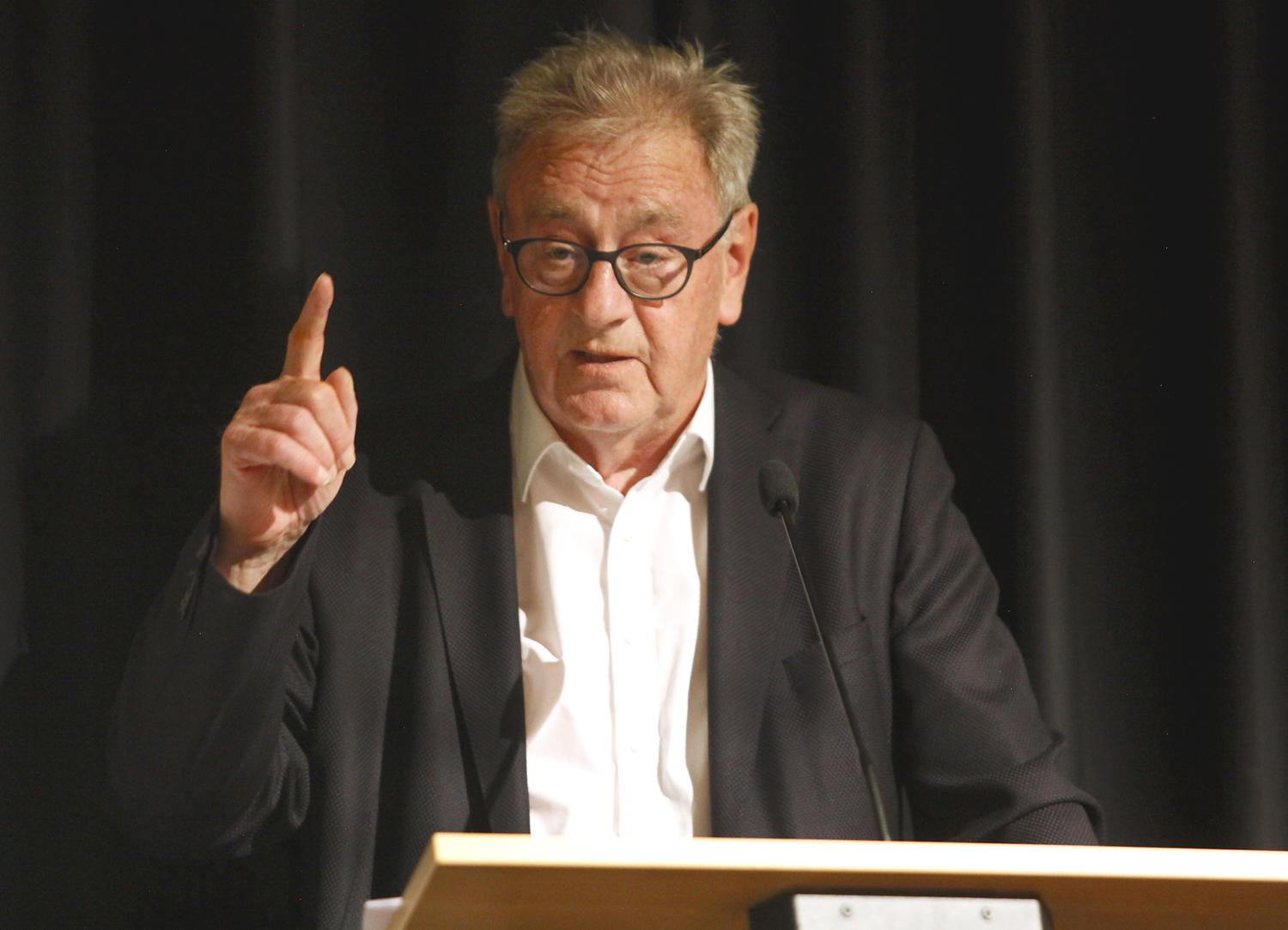
“We are here in a place of learning and life,” noted Egon Vaupel, chairman of the Steinmühle Marburg support association. At Steinmühle, he said, investments are made in education, training, and integration. These are the most important building blocks for the success of an institution that is known far beyond the district’s borders. However, he added, it is also important not only to acknowledge successes but also to admit mistakes.

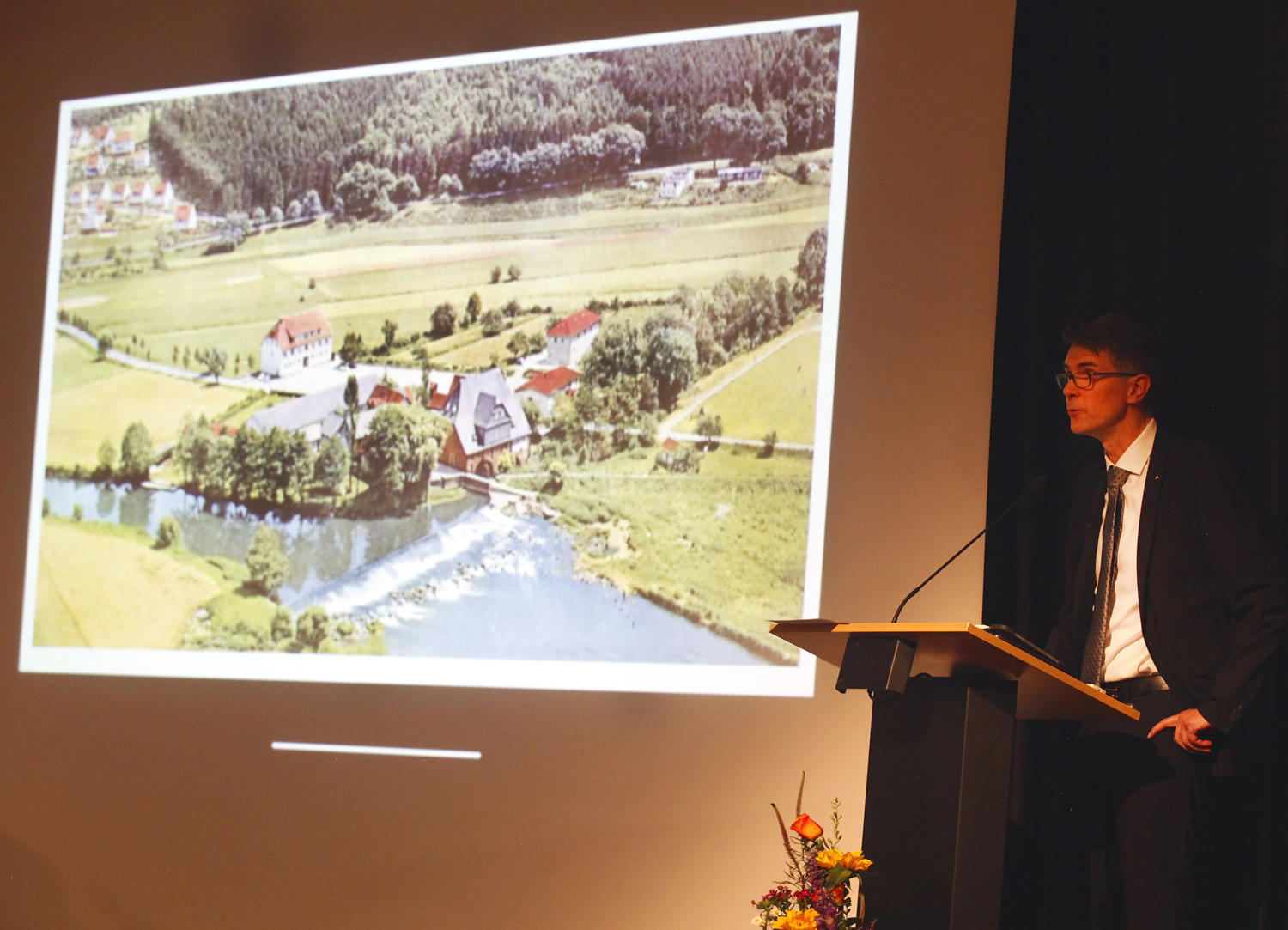
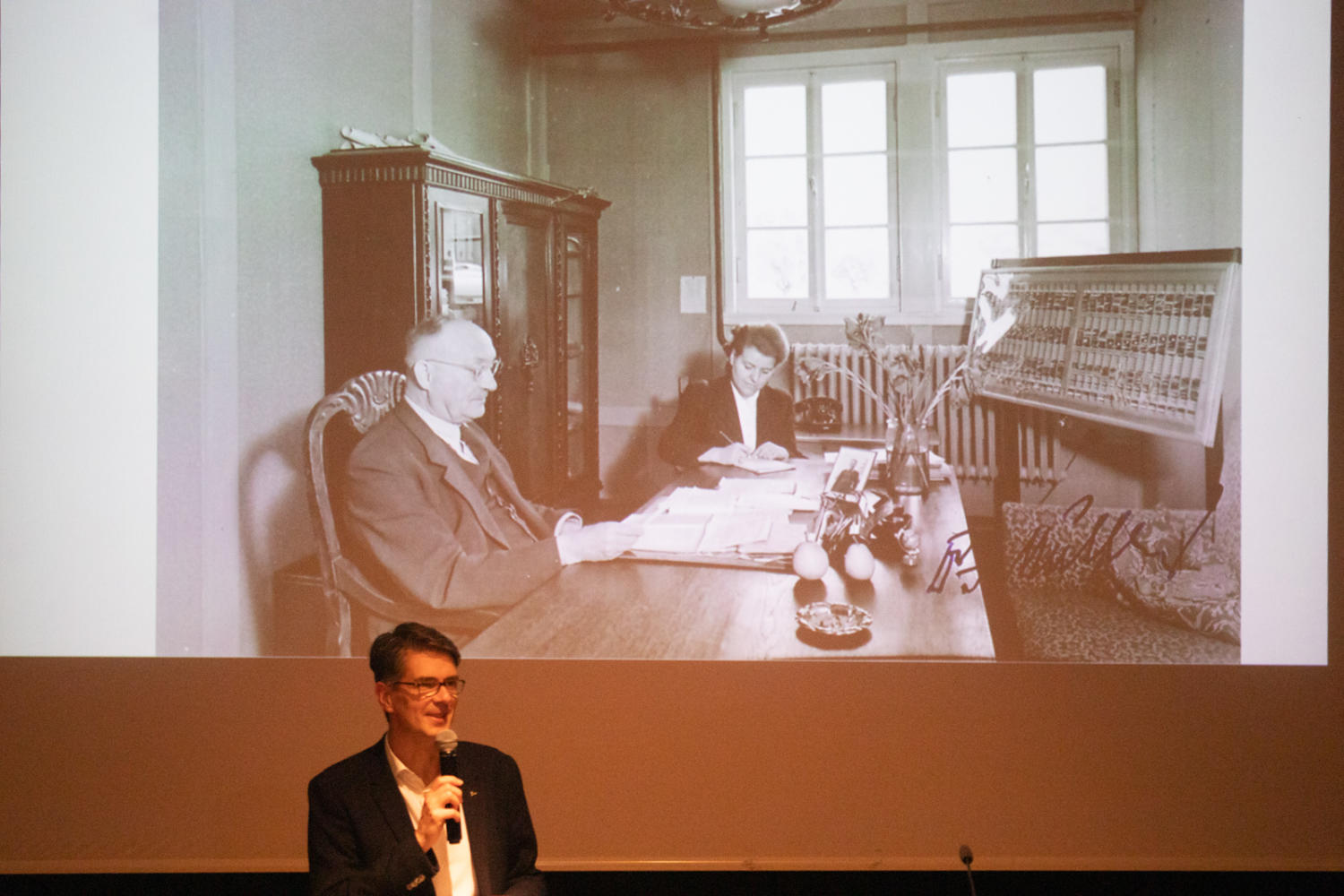
Principal Björn Gemmer provided a retrospective, in words and pictures, of the most important historical milestones at Steinmühle in the period after 1949. The founder, Joseph Müller, and the educator, Gerhard Buurman, were brought together through their activities in the Association of German Private Schools. Buurman invested 40,000 German marks in the Steinmühle, which had 123 students on May 10, 1949. As an independently operated school and boarding school, the then “Landschulheim Steinmühle” received state recognition in 1955. In 1973, Steinmühle had 226 boarding students—more than ever before and more than ever since. Currently, the total number of students is 820, of whom about 100 live in the boarding school and the rest are day students from the city. Around 1,000 people are currently active on campus, including all staff members.


Significant Investment in Internationalization

Over the years, the Steinmühle has had many success stories, but it has also been involved in the occasional scandal that the press eagerly picked up on, such as when students helped a citizen of the GDR escape during a class trip in the 1980s. To this day, the school has retained, to some extent, the image of being “a school for the rich”—due to the fact that the private school operator charges tuition, and hardly any boarding school accommodates young people for free.

What is less well known is that Steinmühle enrolls 20 percent of its boarding students through youth welfare services, and the efforts it has made since the 1980s to take in refugees, most recently in 2015. Significant investment has also been made in Steinmühle’s international character. In Class 6i of the International High School track, in addition to German and English, the students also speak Russian, Ukrainian, Arabic, Turkish, Polish, Italian, Dutch, Portuguese, Flemish, Persian, Marathi, and Kurdish at home.


Praise for Sustainability

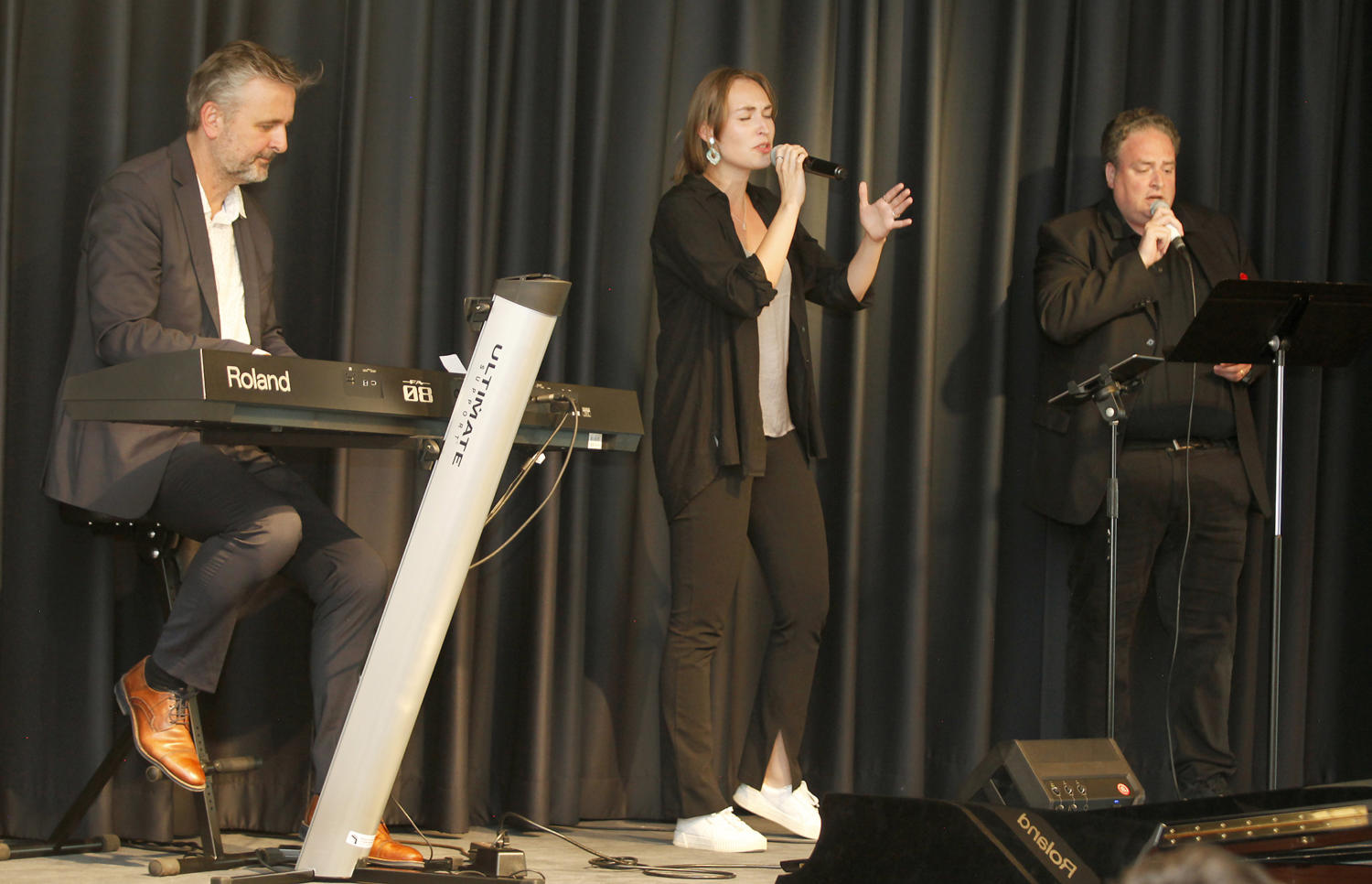
Much to the delight of Dirk Konnertz, the school and boarding school’s director, many former colleagues and alumni had also come to see what had become of “their” Steinmühle. Everyone praised the school’s diverse curriculum—particularly in the natural sciences—as well as its commitment to environmental protection and sustainability, and its active construction and modernization efforts. Among the alumni was Felix Müller, a 2023 Steinmühle high school graduate who is now a student at the Mozarteum in Salzburg; together with Gabrielle Sans on the piano, he provided the musical accompaniment for the event. Together with singer and teacher Anna Prokop and tenor Daniel Sans, Dirk Konnertz brought the evening to a musical close on the keyboard; at the very end, the event offered a unique opportunity to take a group photo of all the school principals from past years up to the present.

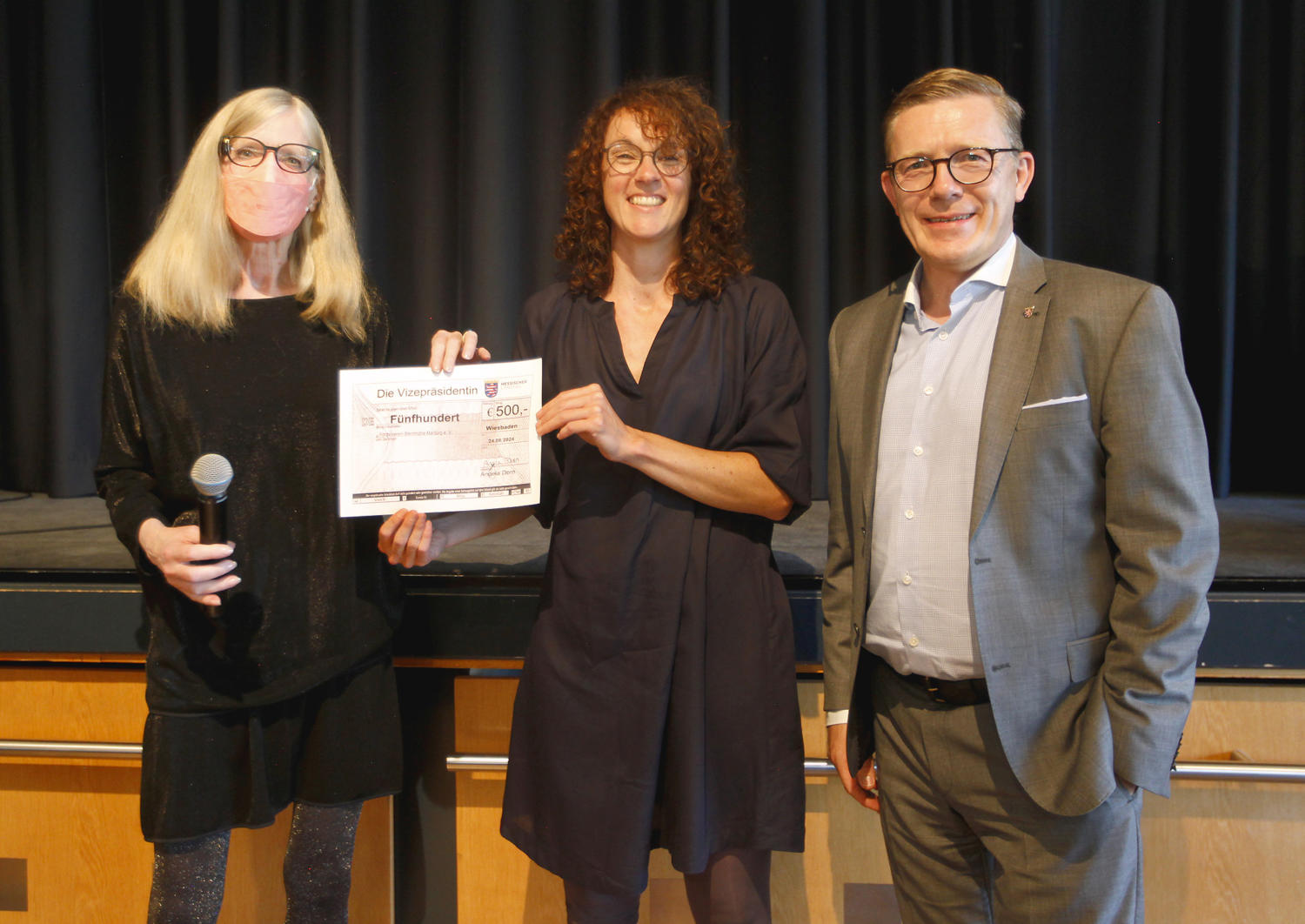
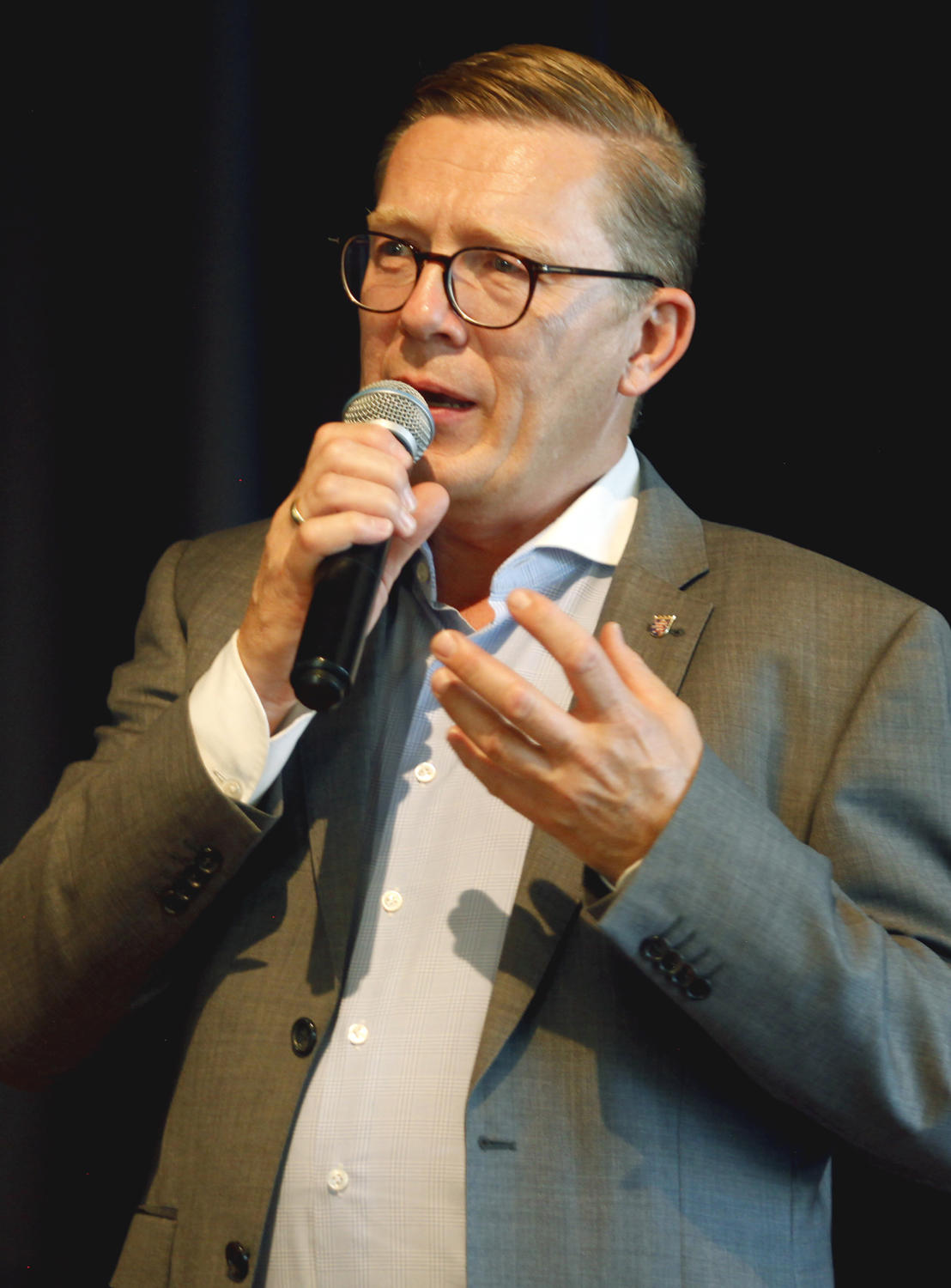
The Steinmühle welcomed the following guests: Dr. Manuel Lösel (State Secretary, Hessian Ministry of Culture, Education, and Opportunity), Christoph Aßmann (Director of the State School Authority), Michael Röhrig (Director of the Marburg Teacher Training Seminar for High Schools), Dirk Bamberger (Member of the State Parliament), Angela Dorn (Member of the State Parliament and Vice President of the Hessian State Parliament), Nadine Bernshausen (Mayor), Peter Hesse (Head of the Cappel Local Council), Dr. Falk Raschke (Executive Director of the Association of German Private Schools in Hesse), Hans-Martin Meth (Vice Chair of the Boarding Schools Association), Jasmine Weidenbach (Chair of the Steinmühle Support Association), Bianca Zenker (Chair of the School Parents’ Council), Joela Schwing and Lennart Holly (student representatives).

Steinmühle also welcomed: the Buurman family, principals from nearby schools, former and current faculty members from the school and boarding school, former and current students, parents, friends, and supporters of Steinmühle.
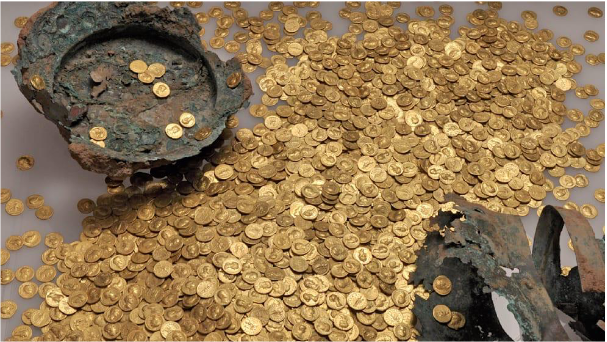
For the 9th-grade Latin field trip, we traveled to Germany’s oldest city, Trier. After a long train ride and a brief detour to the beautiful city of Luxembourg, we checked into our hostel, which was located right in the city center, just a few hundred meters from the Porta Nigra. After getting an overview of tranquil Trier through a city scavenger hunt, we had the chance to explore the city on our own. The next day, a “Roman slave girl” guided us through the city. She took us to many places where traces of Roman life are still visible. We also gained deeper insights into Roman life through a guided tour of the Rhineland State Museum in Trier, featuring mosaics, sculptures, and everyday objects. The tour ended with a look at the gold treasure that was discovered in 1993 during the construction of an underground parking garage in Trier. In addition to the Porta Nigra, we also visited the Basilica of Constantine and the thermal baths. Our visit to Trier was rounded off with a private theatrical tour of the amphitheater. Isaac Boateng used a dramatic performance to tell us the story of a gladiator who attended a gladiator school in Trier and took part in fights in the amphitheater.

Nele Heinemann and Lotta Ritter


This year’s Latin field trip took us to the historic city of Trier, considered Germany’s oldest city. There, at the Rheinisches Landesmuseum, a truly impressive exhibit awaited us: the Trier Gold Coin Hoard.
This sensational discovery is one of the largest and most significant coin hoards ever found worldwide. It was discovered in 1993 during excavation work in Trier and handed over to the museum. In total, the hoard comprises 2,650 gold coins that were minted during the Roman Empire between 63 and 196 AD.

From Emperor Nero to Marcus Aurelius, the coins feature the portraits of 27 famous Romans. The discovery gives us a fascinating glimpse into just how splendid Trier was during the Roman Empire. The gold used in these coins alone is worth several million euros today.

However, something so valuable also attracts shady characters. In October 2019, two masked men attempted to steal the treasure by force. Fortunately, the robbery failed because the thieves were unable to break the display case’s security glass. Since then, security measures have been strengthened, and the “
” gold treasure of Trier can now continue to be admired by interested visitors.

My conclusion:
Trier is great! If you ever find yourself there, immerse yourself in the history and richness of a city that was once almost as resplendent as mighty Rome itself.

Clara Victoria Meinrad


After ten years of “retirement,” the stone mill wheel was set in motion again

After decades of constant, round-the-clock rotation, the millwheel of the stone mill could no longer hide the signs of wear and tear: Both the left and right bearings had practically disintegrated; they had “worn out.” The worst part of this situation was the terrible squeaking that constantly echoed through the neighborhood. Ten years ago, a decision was finally made: We’ll block the millwheel; we’ll shut it down.

No matter how bustling the activity on the Steinmühle grounds became from then on, its millwheel—the actual symbol featured in the school and boarding school’s logo—stood still. Every now and then, voices were raised calling for the millwheel to be brought back to life. At first, to no avail.

A few months ago, a change began to take shape. At that time, Principal Björn Gemmer also suggested that people please take care of the traditional millwheel. With the upcoming anniversary, the time seemed right to take this step: “Steinmühle Moves” and “Steinmühle Runs” were the slogans used in recent promotional campaigns. — But the millwheel—was that supposed to stay put?

“We got to work on it,” recalls Till Buurman, referring to the challenging undertaking that could only be accomplished as a team. The mill wheel had to be lifted out using a hydraulic tool from the auto body repair trade, the kind normally used to straighten dented cars. Once it was jacked up, the old bearings were removed and new ones installed. The wheel was then put back in place—a meticulous process that required strength, patience, and skill.

That makes the excitement over the revitalized landmark all the greater across the entire Steinmühlen campus. And it’s not just the school administration and management who are thrilled to see things in motion everywhere—in the school and the boarding school—and even when looking at the mill building.


To mark German Diversity Day on May 28, which promotes diversity and inclusion in organizations, Steinmühle actively addressed the topic of diversity both in the classroom and as a school community. To mark the occasion, a special program was held in the schoolyard during the second long break that day, featuring live band music, a flash mob, presentations, and performances. The students supported the event by wearing T-shirts with designs representing the theme of diversity. Even elementary school students joined in the fun! Once again, the Student Council made a strong showing at this event. Art teacher Ines Vielhaben hosted the activities in the schoolyard and was delighted by the presence of various colleagues. “We need everyone! Because diversity enriches our lives,” explained middle school principal Frank Wemme. Earlier, students had written down on colorful slips of paper what diversity means to them personally and why it is important. In this way, the event became a cross-grade-level activity with practical applications for everyday life.


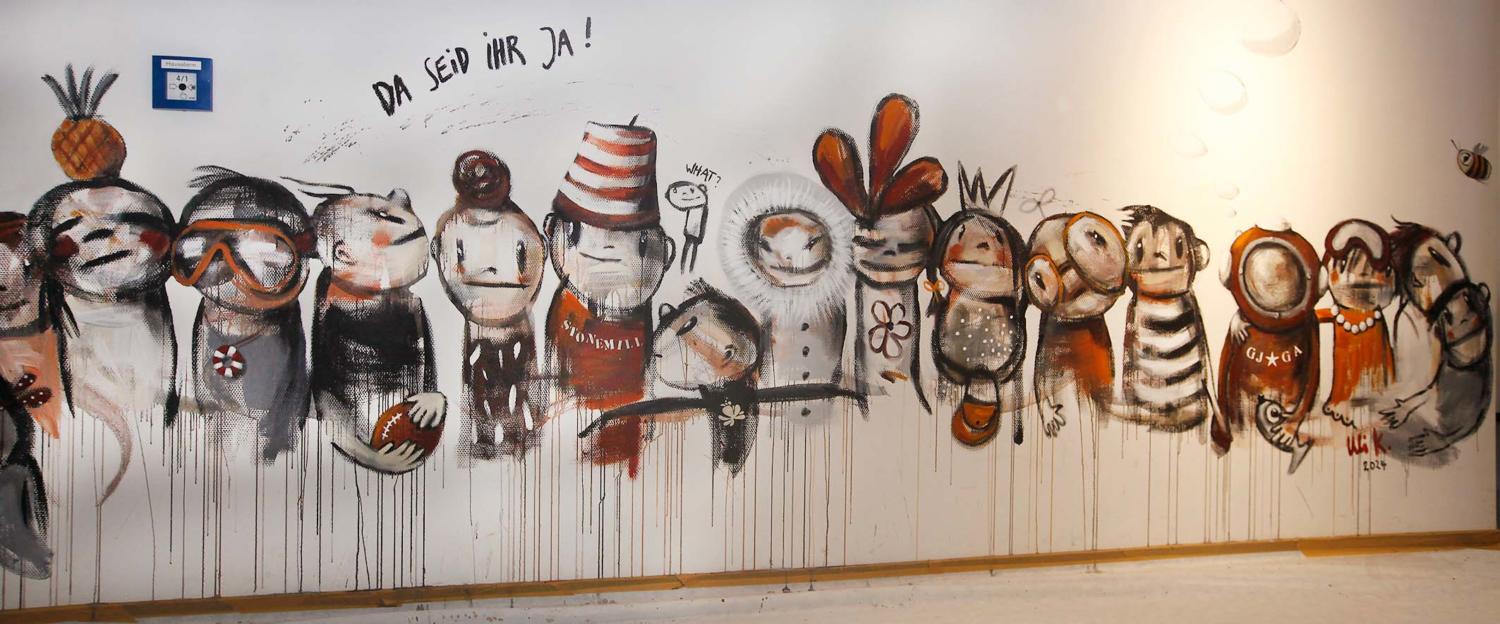
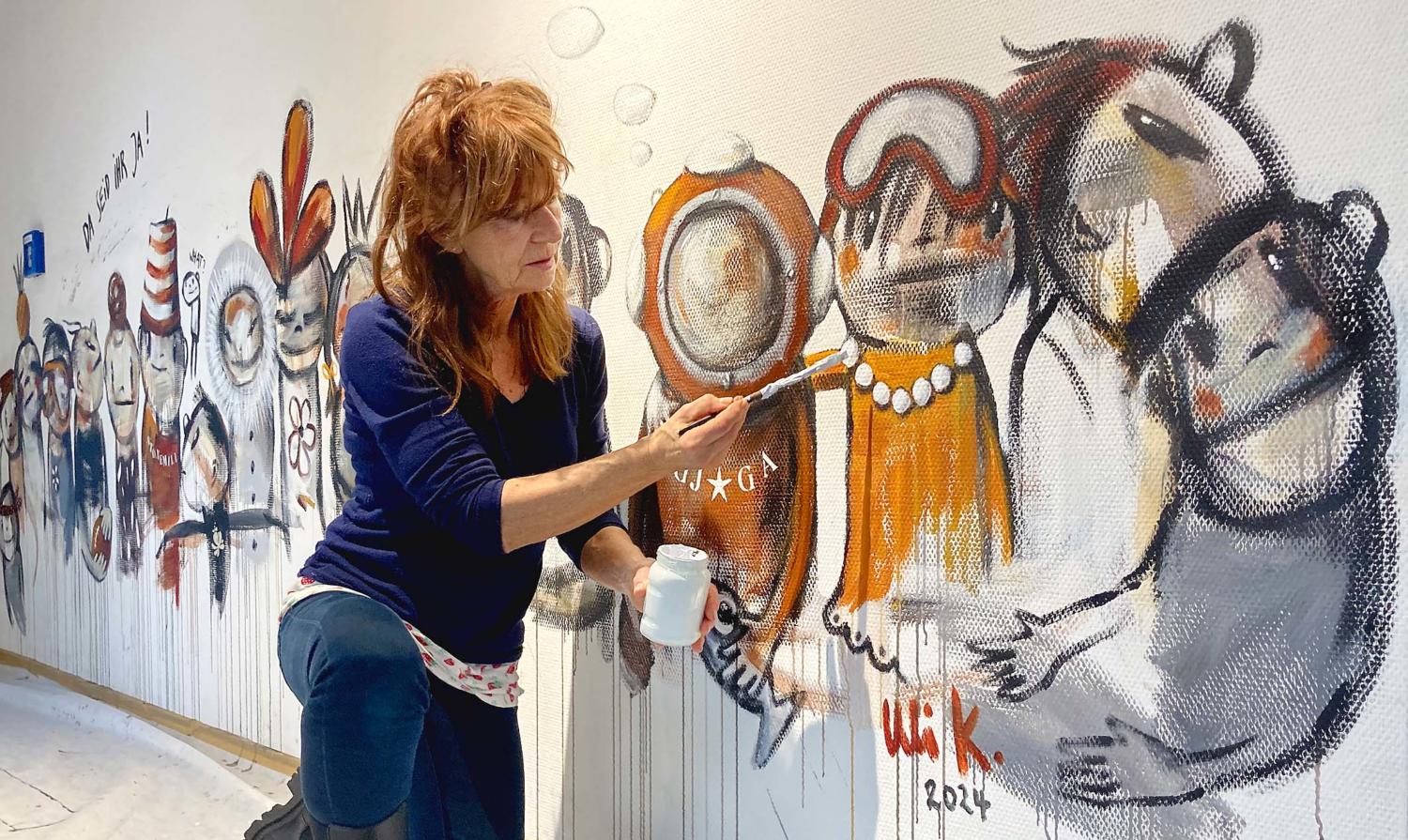
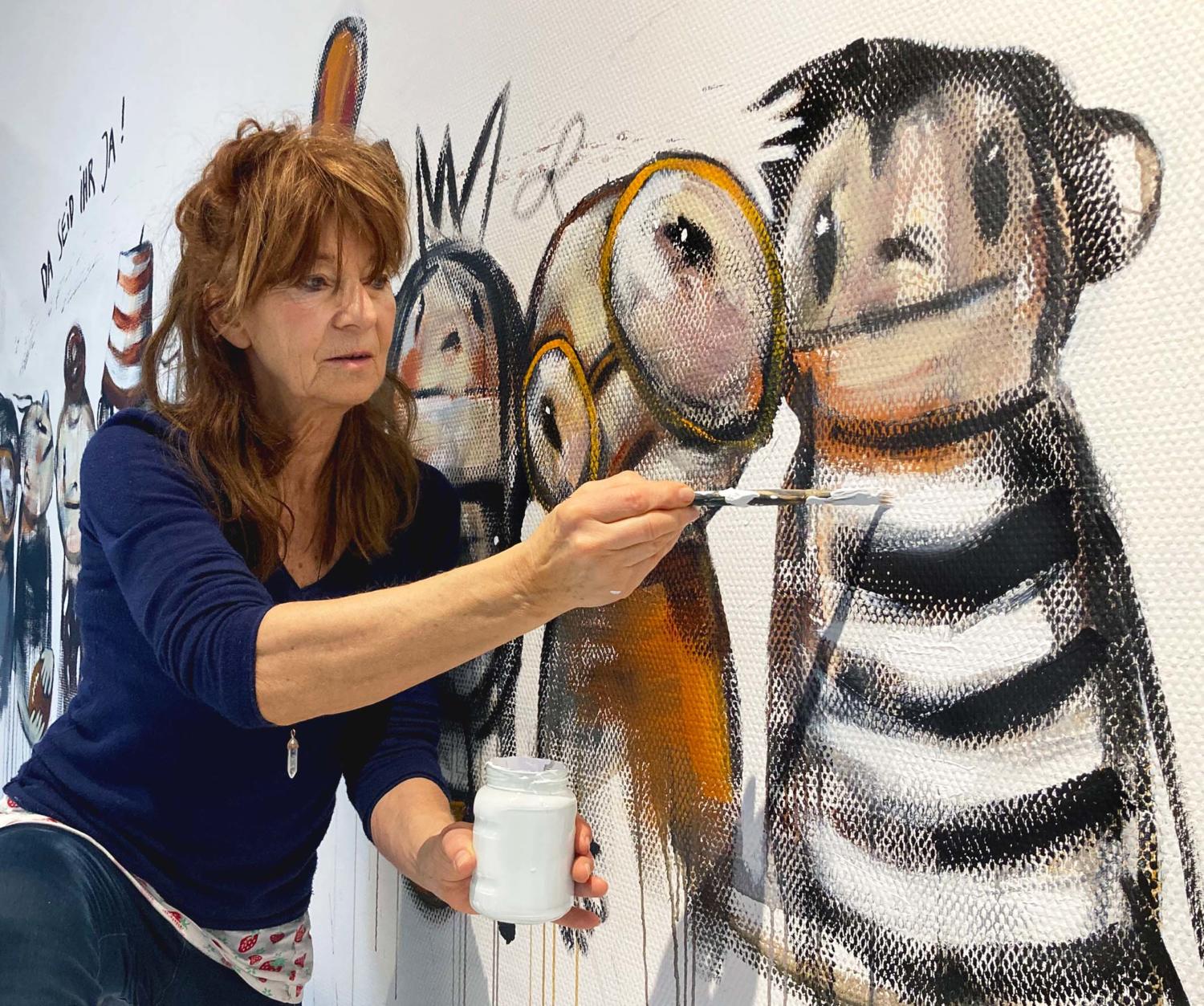
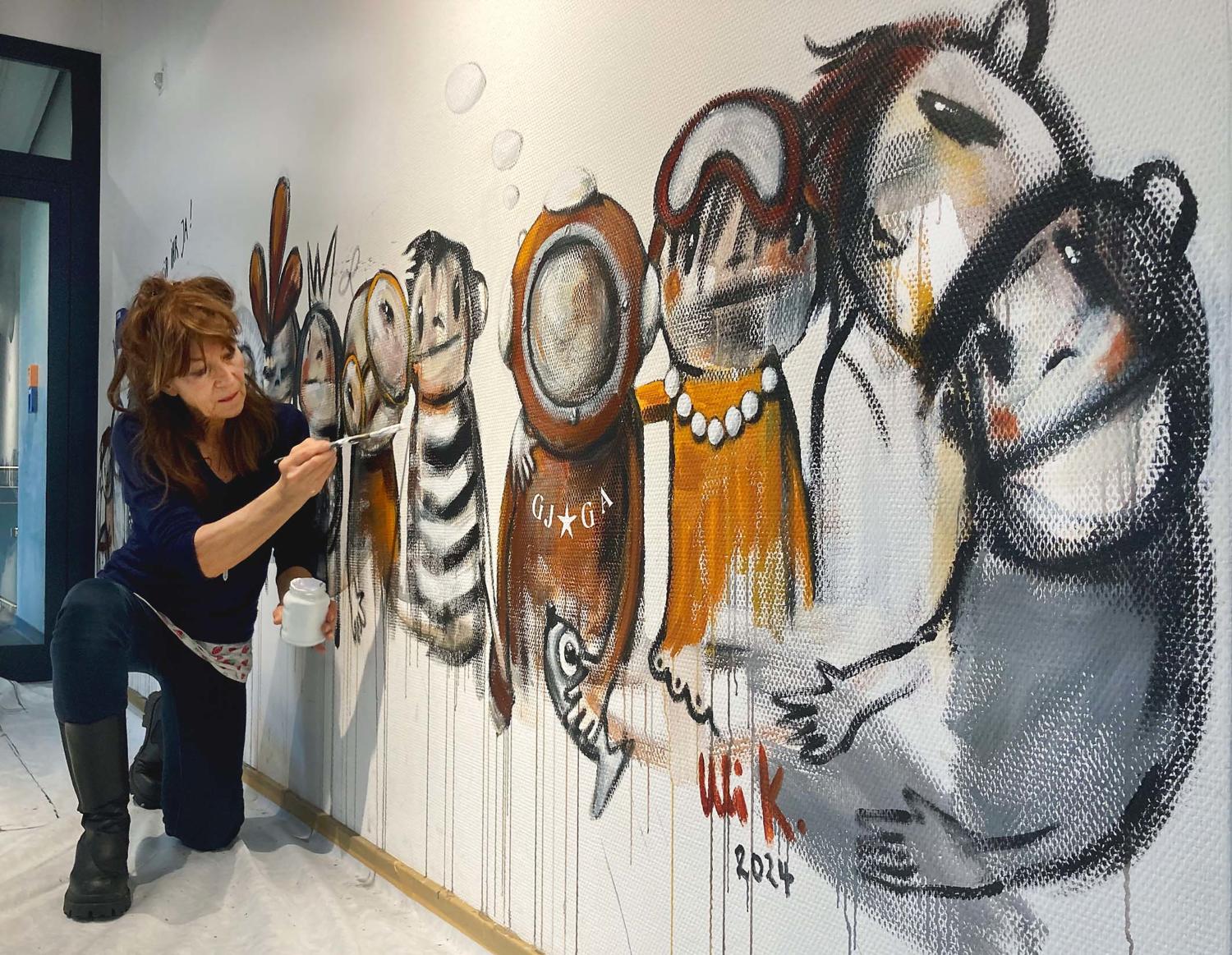
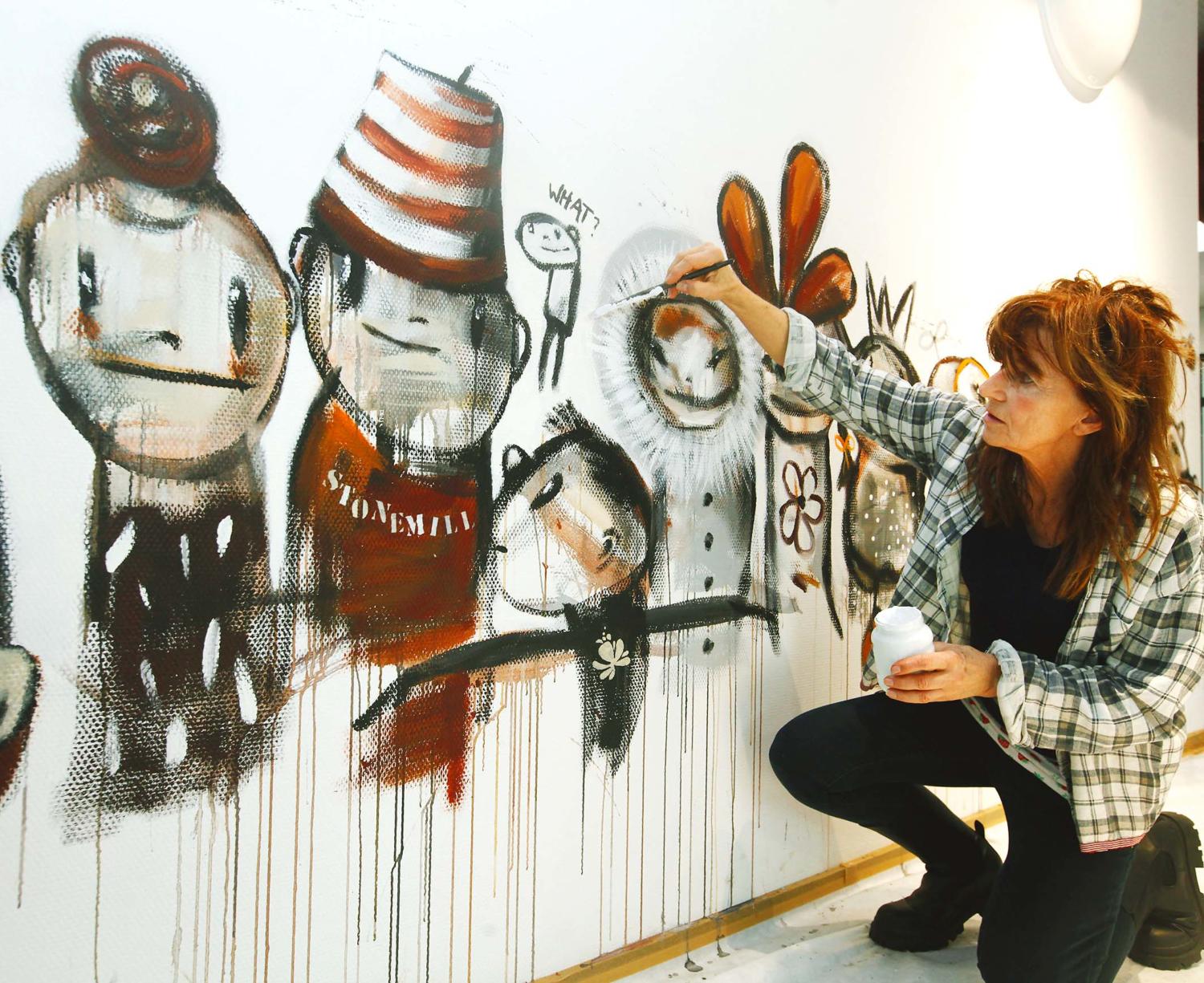
Turning barren into vibrant: Since February, a cheerful painting has adorned the formerly white wall at the elementary school, spanning a width of about five meters. Ulrike Krappen, the Marburg-based artist, was at work here, using paint and brushstrokes to conjure up a completely different atmosphere. Following a suggestion from Managing Director Dirk Konnertz to add some splashes of color to the interior of the Steinmühle as well, and after consulting with elementary school teachers Janine Küster and Lorraine Herrmann during the creative process, the artwork was completed in three to four days. Ulrike Krappen uses acrylic paints, sometimes wood stain and oil pastels, for her paintings. In the end, the painting depicted many heads at eye level—swimmers, divers, an Eskimo—international figures with whom the individual students could identify. “It was a pleasant experience,” Ulrike Krappen recalls, “a great atmosphere in which I was given free rein—with music and sandwiches.” The artist, who spends about six months each year in the south of France, waived her fee in support of a good cause. She offers most of her paintings for sale on her website.

Willi Stehling? The one who teaches the wind instrument class…? The one from the ski course…? The one who writes books…? The one who gives lectures? The one who taught geography…? The one from the 5th-grade choir…? The one who taught swimming…? The one who works as a tour guide?

– That’s all correct. The versatile retired teacher returns to the Steinmühle regularly—to have coffee with other alumni, but also to give lectures. History is what fascinates him, and to share the history of Marburg and take people on a journey into the past of our university town, Stehling also works as a city tour guide. He has already written several books to share his wealth of knowledge, preserve details, and give readers a sense of just how many interesting events have taken place in our historically rich city.

Historian Stehling’s connection to the Steinmühle, his former employer, virtually inevitably led him to compile a chronicle to mark its 75th anniversary. It was obvious that Stehling would put the earliest details of the Steinmühle into words: the history of the Steinmühle building, the origins of the rural school camp, and the prehistory and early history of the school and boarding school.

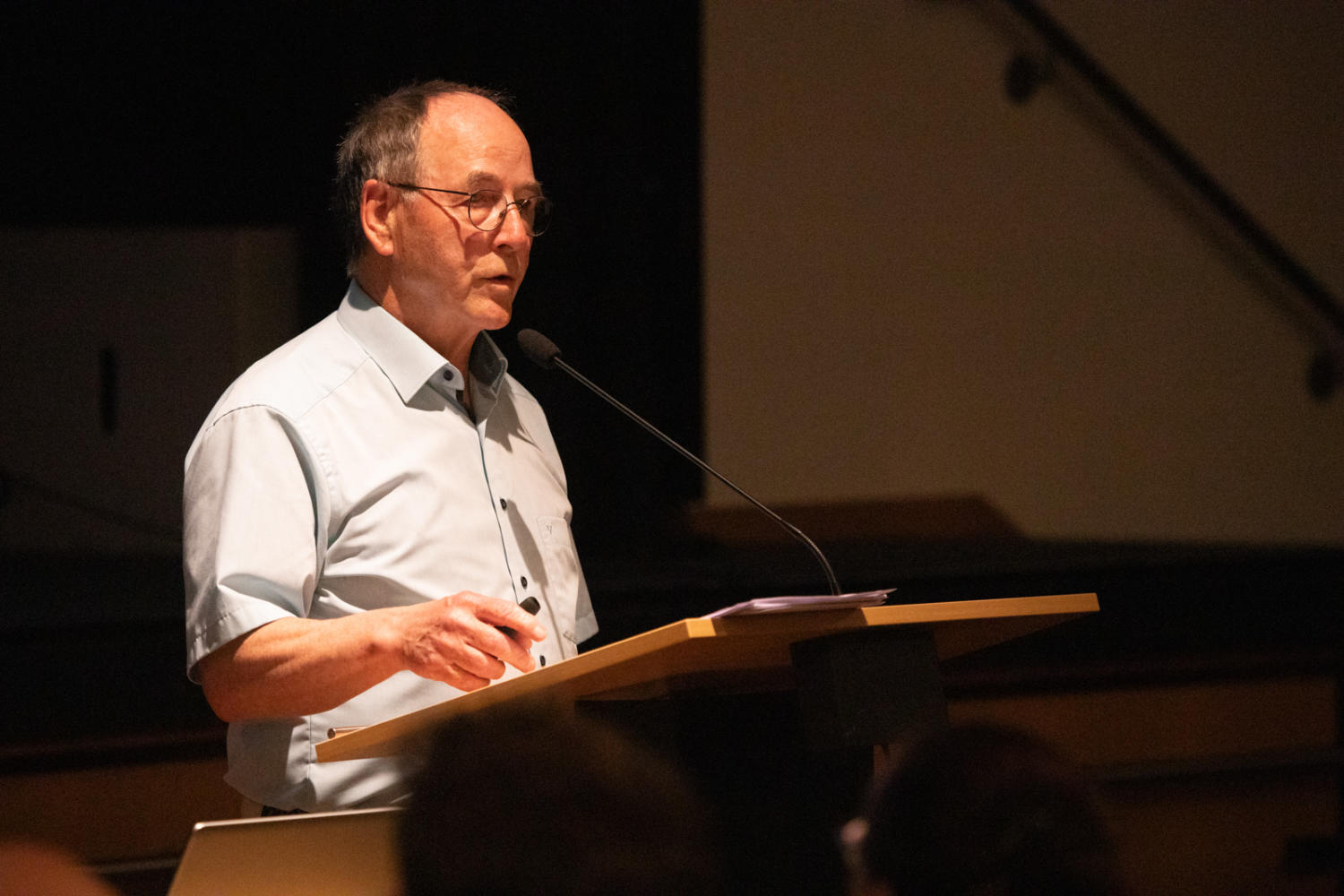
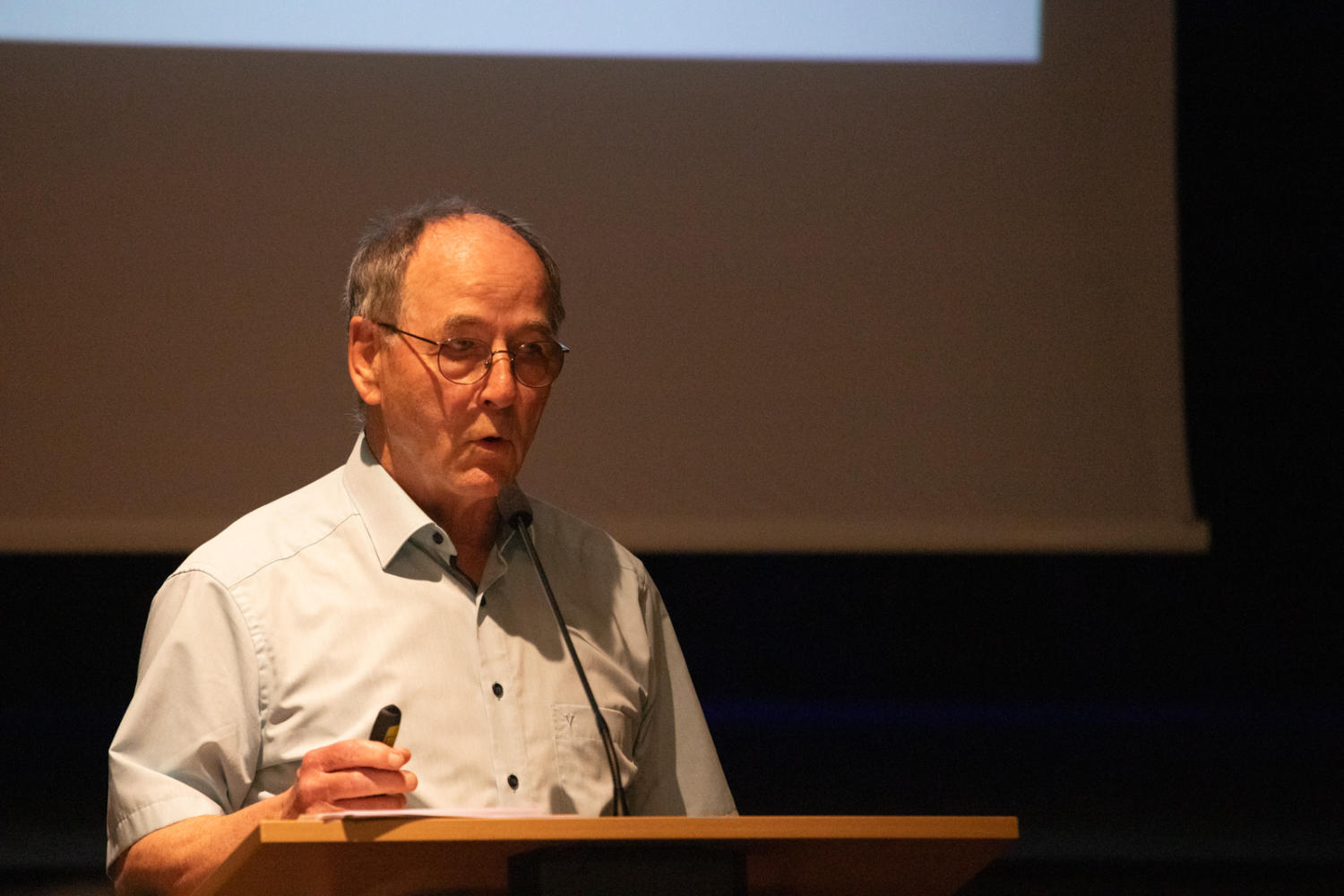
The Steinmühle celebrated its anniversary as a school on May 10, 1049. 75 years and two days later, Willi Stehling stood in the Steinmühle auditorium and gave a lecture on “Dr. Joseph Müller and His Private Schools in Marburg”—a historical retrospective tracing the school’s origins, without which it is difficult to understand Steinmühle.

Founder Joseph Müller and educator Gerhard Buurman were brought together through their activities in the Association of German Private Schools. Buurman invested 40,000 Deutschmarks in Steinmühle, which had 123 students on May 10, 1949. As an independently operated school and boarding school, the then “Landschulheim Steinmühle” received state recognition in 1955. In 1973, the Steinmühle had 226 boarding students—more than ever before and more than ever since.
 

Excellent research

To compile a work that not only presents facts spanning 75 years but is also an enjoyable read, one needs not only historical research but also archival work done with passion. This was accomplished by Edeltraud Buurman, the wife of Frerich Buurman, the son of Gerhard Buurman. It was a magnificently accomplished—and by no means easy—task that brought to light just how much activity, life, and movement have taken place on the Steinmühlen campus over the past 75 years.
 

Direction, Organization, Overview

The lead role in conceptualizing this 187-page work was entrusted to the person who already keeps track of everything in day-to-day school life: Principal Björn Gemmer. Alongside Willi Stehling and numerous individual authors, he also contributed a great many pieces to the overall work, ensured the correct sequence and proper alignment of text and photos, and made the layout process run smoothly.

After a busy anniversary season filled with numerous events, the Steinmühle is now taking a summer break before kicking off its “75 plus 1” year.

Currently, the school has a total of 820 students, of whom about 100 live in the boarding school and the rest are day students from the city. There are currently about 1,000 people on campus, including all staff members.

The Duke of Edinburgh’s International Award is a new elective course offered at Steinmühle for students aged 14 and older. The program is offered in over 130 countries and was developed to encourage young people to learn new skills, get involved in community service, promote physical fitness, and experience adventure. Upon successful completion at the end of the school year, participants receive the Duke of Edinburgh’s Award, which consists of a pin and a certificate and is internationally recognized. The program consists of four main areas: Service, Skills, Fitness, and Expedition. By participating in various activities within these areas, participants can earn Bronze, Silver, and Gold awards, each of which has different requirements and presents an increasing level of challenge. Steinmühle will begin with the Bronze level in the coming school year. Everything is documented in an online record book and ultimately verified by assessors. At the end of the school year, the nature expedition takes place. In groups of 4–7 students, the students must independently carry out a two-day, one-night expedition in nature—without technical aids—to complete a specific “research assignment” or expedition goal. The expedition is unaccompanied, meaning the students set out together on foot along a route they have chosen themselves—armed with a map and a backpack—and then spend the night in a tent before continuing the next day. At the end, they give a final presentation on their expedition and present their research findings. Prerequisites for the expedition are participation in expedition training and the completion of a shortened trial expedition.
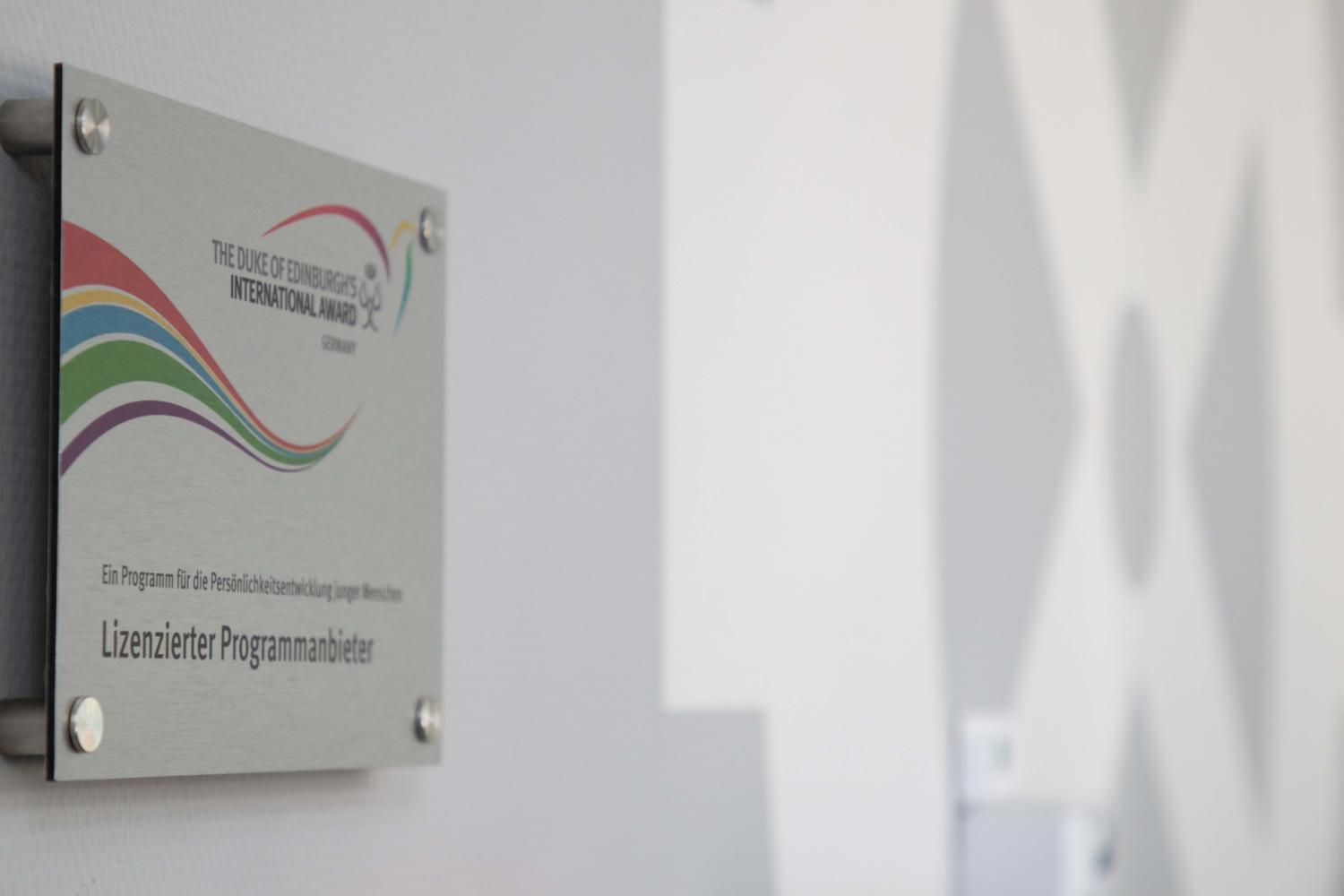
Theresa Großer, along with René Schulenberg, Marc Bepperling, and Linda Hörner, will serve as Award Leaders in the coming school year. To prepare for this role, the team attended a training session together with Aylin Yüzgülen-Bienek. Currently, 25 students from the upcoming 8th, 9th, and 10th grades have registered. Principal Björn Gemmer thanked Theresa Großer for overseeing the certification process that Steinmühle had to complete to offer the program, and Frank Wemme for implementing it as part of the elective curriculum.

More information about the program is available at https://duke-award.de/

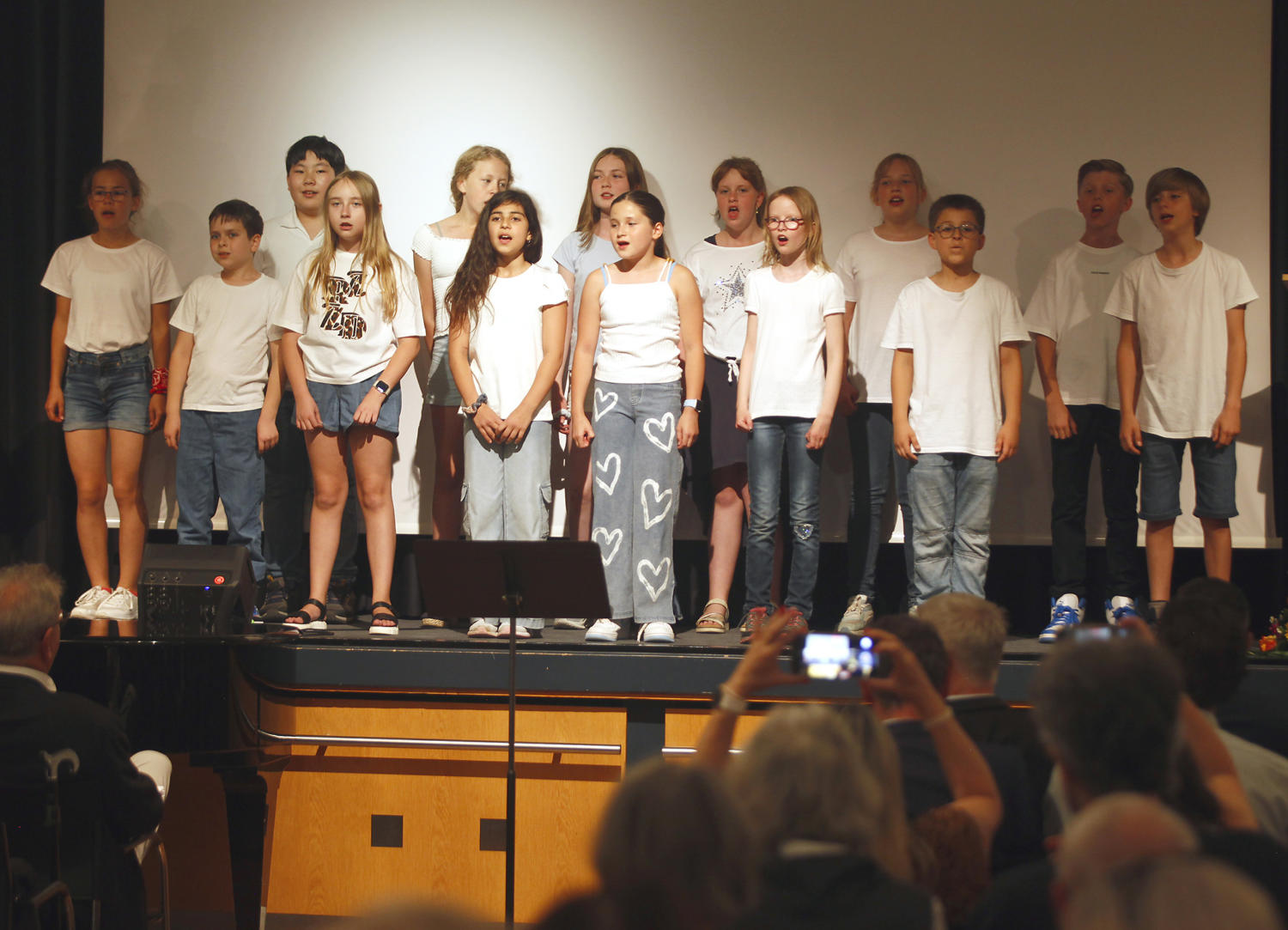
It always starts with an idea—and that alone was already fantastic. The annual musical by the 5th-grade classes, this time part of the Steinmühlen Festival Week, was meant to explore history. The team led by director Ulrike Wilmsmeyer—consisting of Anna Prokop, Daniel Sans, and Frank Wemme—had our school’s 5th-grade choir perform a colorful mix of songs spanning 75 years of Steinmühlen history. With its 88 singers on the Forum stage, it was a spectacular event!

It always takes many minds and many hands to make what we later see and hear possible in the first place. That was especially true this time. Weeks earlier, Jasmine Weidenbach, president of the Steinmühle Support Association, had already been thinking about the visual impact of the young singers performing. Wearing their light-colored T-shirts printed with the logo, they presented themselves as a large group on stage, and everyone knew right away: This is where the music is! Class 6i had designed the posters, and Kira Gräser, a parent, had arranged for makeup, costumes, and stage decorations. As always, the custodial team had reliably taken care of the seating arrangements and all logistical requirements in advance. Now nothing could go wrong.

In addition to presenting music from the past 75 years, the fifth-grade classes also told a story—namely, that of a chaotic family with a stressed-out mother who, in light of her upcoming anniversary presentation, has to rely on the help of her parents (Grandma and Grandpa) and her two children. Unfortunately, things still go a bit wrong…

The Best Hits from Every Decade

The set list also reflected the events that the Steinmühle has experienced over the past few decades.

The great thing about the musical performances was that everyone in the audience knew the songs being performed. The song “Hurra hurra, die Schule brennt” referred to the fire that destroyed the school building in 1967, but despite this serious background, it still came across as a bit humorous. And when the fifth-graders on stage sing the lyrics to “Dancing Queen” as if it were the most natural thing in the world, belting it out at the top of their lungs, that’s when you really realize just what legends ABBA truly are. Performances like “Yellow Submarine” and “Wind of Change” also tied into the Steinmühlen chronicle, as one dealt with a hydroelectric power plant and flooding, and the other with the bus escape operation in the 1980s. Other stories from Steinmühlen’s history—including its numerous construction phases—were brought to life on stage through music featuring many big hits. “Aquarius (Let the Sunshine In)” was performed twice—including as an encore for this magnificent overall performance. The program also featured music by the Musical Band, composed of young musicians from grades 6 through 13, as well as a performance by two former students on the saxophone and trombone. In addition to the music, the audience was treated to four dance routines that had been choreographed during physical education classes in the four grades. The “Sound & Light” club, made up of students from grade 9, handled the lighting and sound.

“I had such a great time!” said Principal Björn Gemmer, who once again praised the dedication of everyone involved after the event. And he certainly spoke for everyone when he said that.