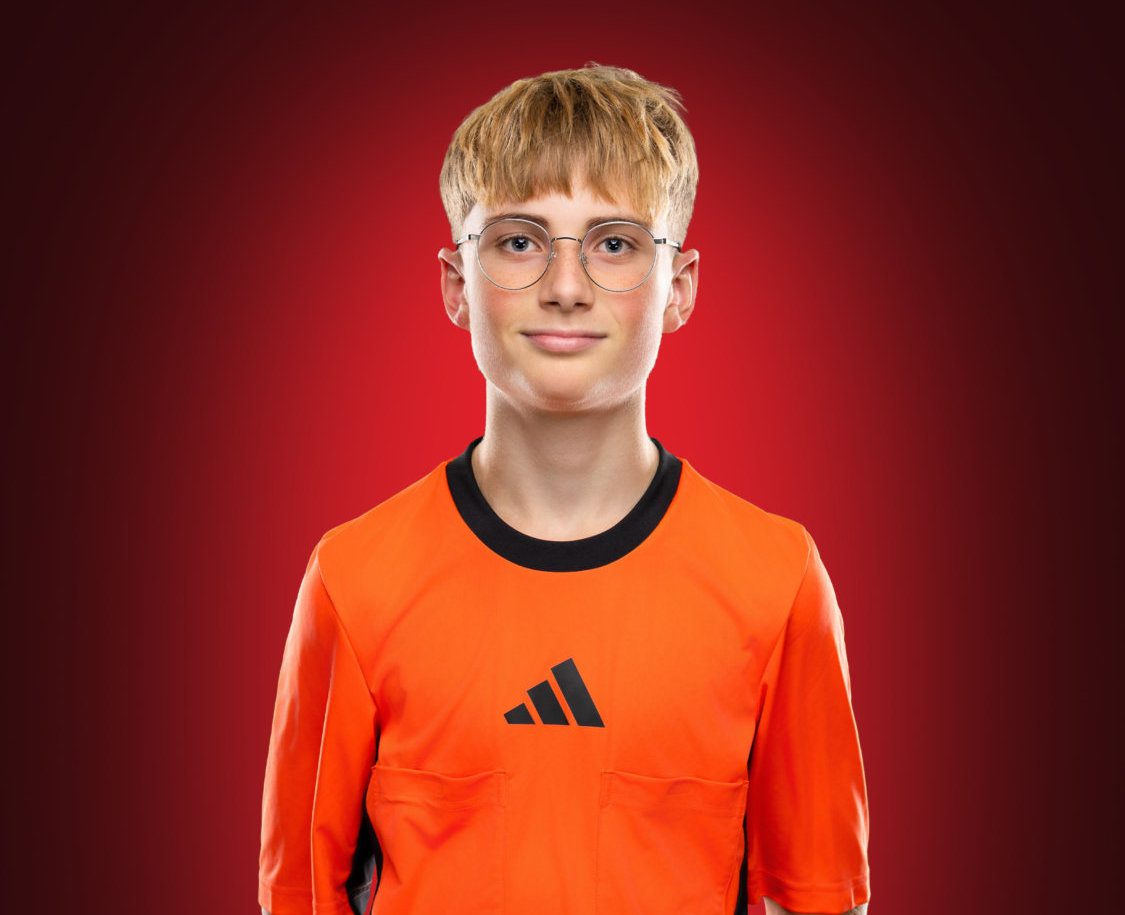


“At some point, there was this moment when I thought, ‘I want to be a referee.'”
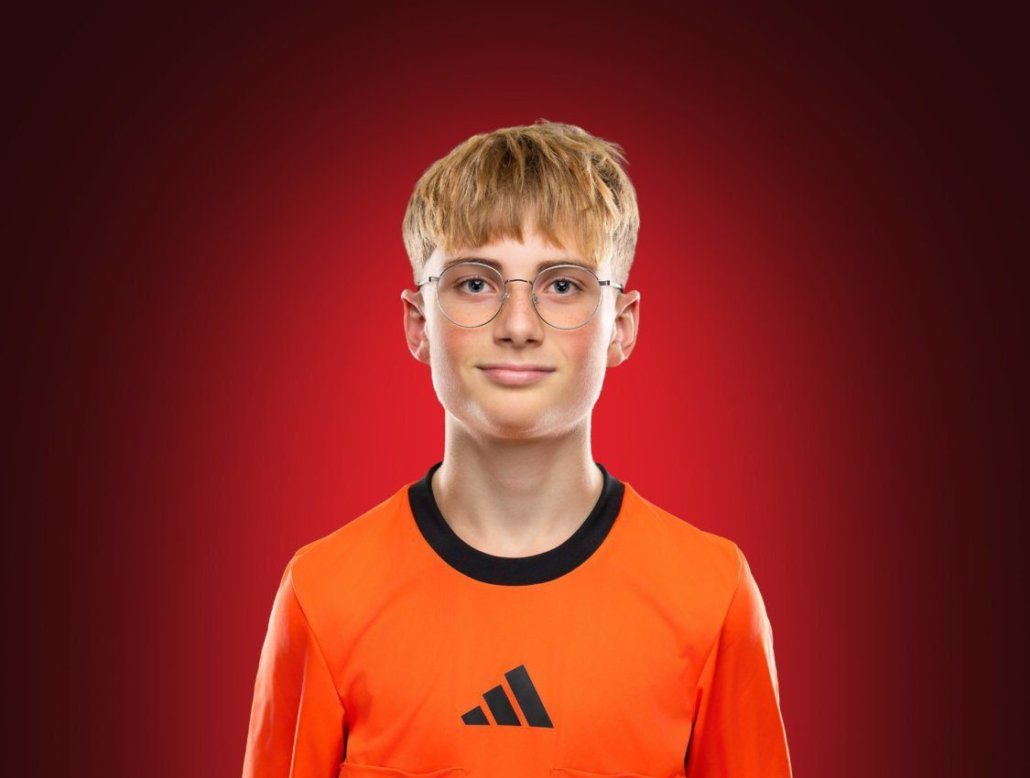
Boys, whether young or old, sometimes dream of soccer: one day being a goal-scorer like Harry Kane, or a goalkeeper like Manuel Neuer. Lars Hübl, a student at Steinmühlen School, also envisions a career in soccer—just in a different role. He dreams of becoming a Bundesliga referee.
“I don’t really know how it happened. At some point, there was just this moment. From then on, I knew: I want to be a referee.” Coming from a 13-year-old, those words sound confident and definitive.
Lars had this “inspiration”—that’s what we call it—six years ago. Whether he was watching soccer or playing soccer, that determination suddenly took hold. And as we all know, where there’s a will, there’s a way.
Support from Parents
To say that Lars has dreams is only partly true. Some time ago, the teenager began putting his dreams into action. At the age of 11, he earned his official referee certification after completing a 12-hour course. The written exam consisted of 30 questions on the rules that had to be answered. For Lars Hübl, this was no problem.
The young referee first began officiating in the U-10 league and later moved on to the U-15 Group League, the third-highest league in youth soccer. Lars Hübl works the time commitment required for this into his weekly school schedule. His parents support his hobby, which can certainly be described as unusual.
The young man has some reservations about the word “hobby.” The sport is taken very seriously. As part of a three-person team, he takes the field alongside assistant referees for many games. It’s not uncommon for his colleagues to already be of legal age.
“Self-confidence and assertiveness are important”
How does that make you feel?
“Great!” Lars says. But he remains realistic. Because he knows: “The most important things are self-confidence and assertiveness.”
He does that. He attends seminars, listens, and contributes his thoughts. He’s an active player for FV Wehrda, where he also serves as a referee for the club, of course.
“It’s possible,” Lars said, “that I’ll focus on it one hundred percent.”
The active, athletic aspect of the referee’s job is by no means neglected. “That’s often underestimated,” the student laughs. He knows you have to be fast and you have to run. You easily cover 6 to 7 kilometers per game.
Lars Hübl has something that even older teenagers often lack: he has a vision. “I want to get into men’s soccer as soon as possible,” he says, explaining at the same time that underage referees are not uncommon there.
“I asked myself: Is this what I want?”
His young age can sometimes be a challenge during games—namely, when aggressive parents from the opposing team yell at him. “The first time it happened, I asked myself, ‘Is this what I want?’” Lars recalls.
By now, however, he’s come to terms with it; he doesn’t take it personally, but looks at it from a psychological perspective. “You’re just to blame for everything when things aren’t going well for your opponent.”
He himself has a level-headed disposition. He enjoys his role as a mediator between players on opposing teams. He’s quite comfortable with the career prospects of being a referee. Starting in the 3rd Division, the German Football Association (DFB) pays fixed salaries. Lars himself sees himself, ideally, in the Bundesliga one day.
Since professional athletes typically have a long-term civilian career to fall back on, Lars already has his sights set on one. “I might end up in sports management.” With his favorite subjects being math and physical education—why not?
Incidentally, he also has a valuable supporter at school who is helping him pursue his goal of becoming a referee: his teacher, Phillip Knaack. Both actively share a passion for the role of referee.
Angela Heinemann