The first round of the 17th International Junior Science Olympiad took place between early December and mid-January. During this round, children and teenagers up to age 15 had the opportunity to conduct, document, and analyze experiments on a specific topic—this year, “ink.” This competition offers students an accessible introduction to STEM subjects (science, technology, engineering, and mathematics) and is designed to spark an interest in inquiry-based learning—particularly in an interdisciplinary context—that goes far beyond the standard school curriculum.

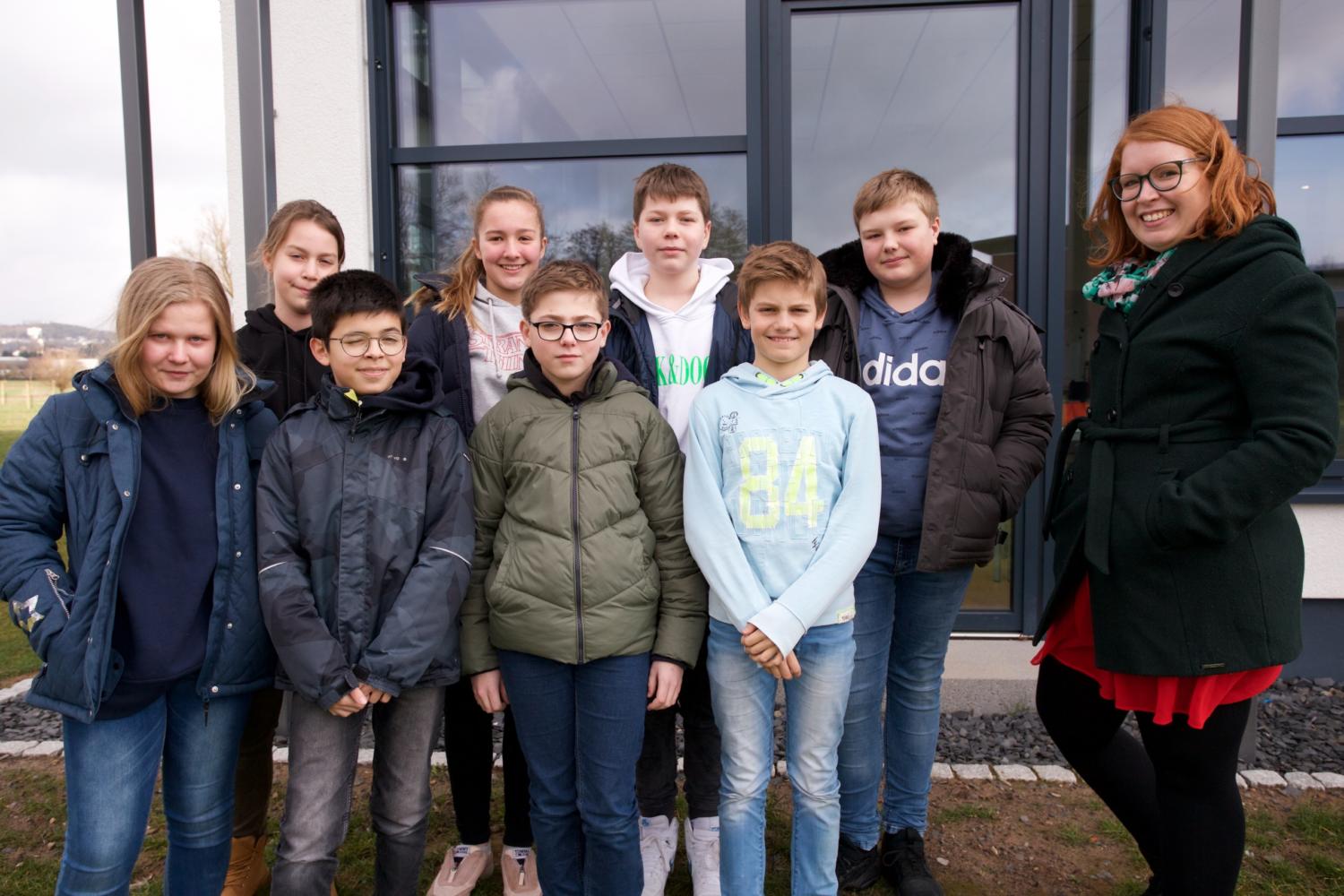
A total of 10 students took on the challenge at the Steinmühle under the guidance of their NaUnt teacher, Julia Riemenschneider: Liliane Albrecht, Mats Egbring, Maximilian Glock, Lilian Gräser, Max Krug, Antonia Kurlinsky, Stella Preiß, Konrad Rothmann, Jonathan Wolff, and Philipp Zielen. Alongside their regular classes, they worked with great enthusiasm on the experiments, which they conducted and documented using only everyday materials. The tasks posed a particularly significant challenge, especially for the youngest participants in the competition. Despite this, they were able to successfully complete the experiments on their own, demonstrating great enthusiasm for STEM subjects.
Julia Riemenschneider
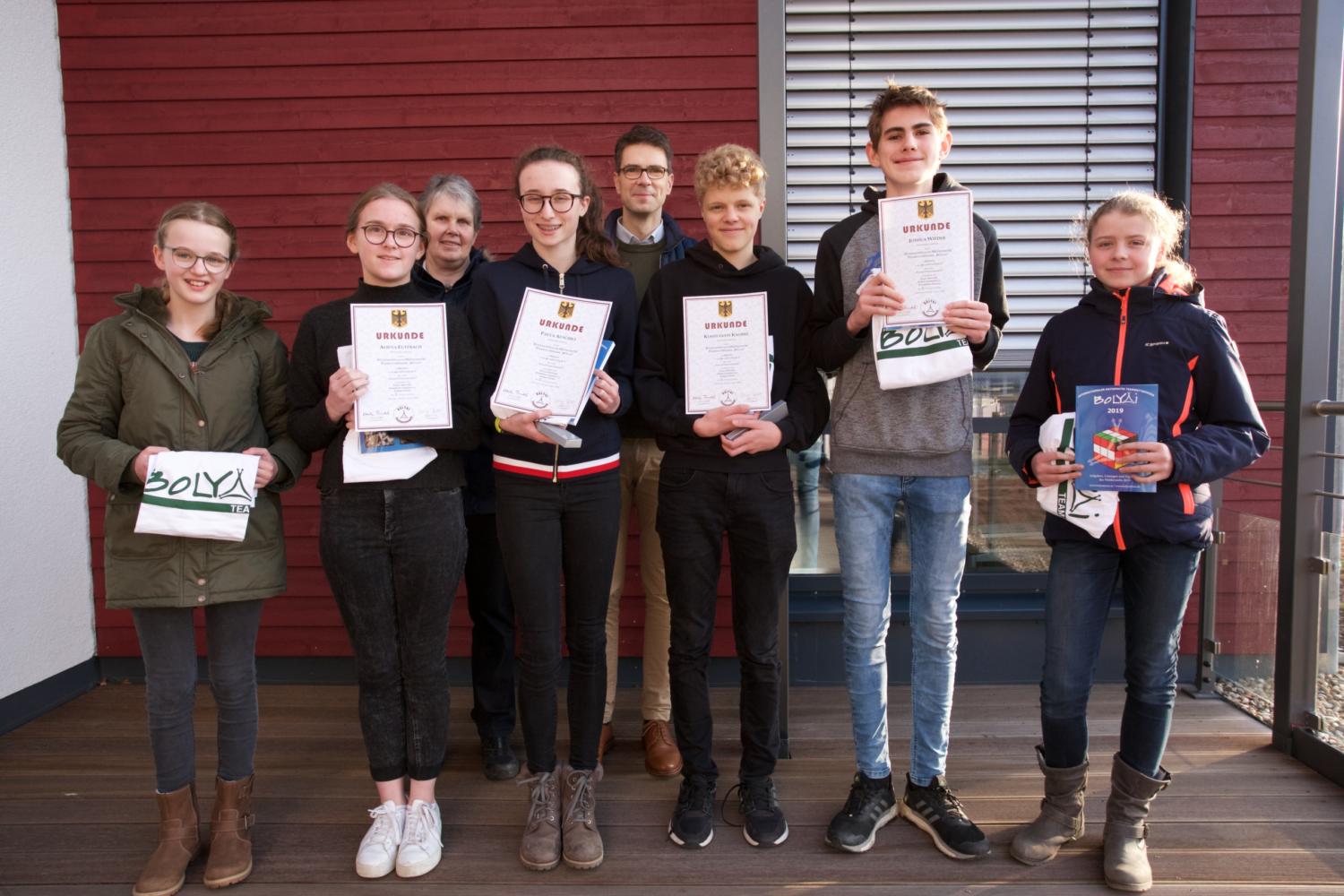
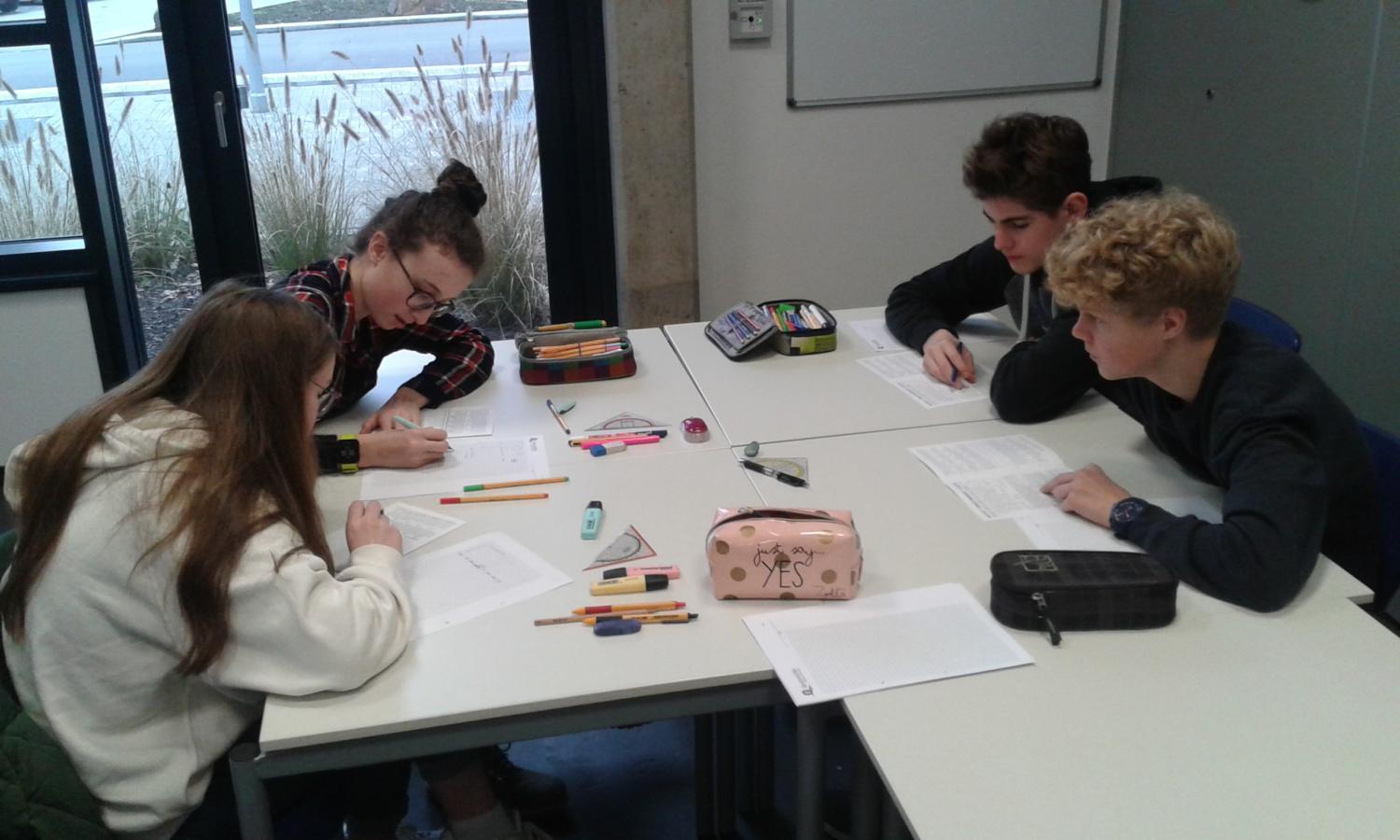
“Can you guys double-check if what we’ve checked off here is right?” “I’m on a hot lead for Problem 8 right now.” “How do you factor again?” “You cross out something at the top and something at the bottom.” “I know the p-q formula. Am I smart or am I not smart?”—Those were the actual words of Aliena, Paula, Joshua, and Konstantin from Class 9a as they worked on the problems for the Bolyai Team Math Competition.

What is not allowed in regular class exams or tests is, in fact, encouraged in this new math competition: Two to four students from the same grade form a team and work together to determine which of five given answers is correct for a math puzzle. Anything is possible, ranging from “none” to “all 5 answers.”

“The ability to work together is a core value in our lives”—that’s the motto of this competition, which originated in Hungary and has only been offered in Germany for the past five years. The two girls and two boys from class 9a agreed to participate in Bolyai without a moment’s hesitation. They spent more time discussing their team name. They ultimately competed as the Amazon Ants (“They’re the strongest animals in the world relative to their body weight,” Joshua had explained) and were very successful. Out of 61 participating teams in Hesse, they took second place and received certificates, T-shirts, and the 2019 Bolyai Competition yearbook containing all the problems and solutions.

Just like last year, Teresa Dinges (6b) and Sophia Rogosch (6c), along with two students from the Gymnasium Philippinum, competed in the Bolyai Competition as “Die Mathemagier.” They were just as successful as last year and took second place among 103 participating groups of sixth graders in Hesse.

Congratulations to both successful math teams!
Gisela Opper

For the past 25 years, bands from Marburg and the surrounding area, as well as from the sister cities of Northampton, Poitiers, Maribor, Sfax, Eisenach, and Sibiu, have been invited to Marburg for a weekend in March to play their music at the MaNo Festival in pubs and clubs. All guest bands introduce themselves to the Marburg audience with a few songs on Thursday evening.

For the first time, one of the co-organizers, Antje Schmidt, came up with the idea of announcing the bands during the concert using posters instead of a host to mark the anniversary year. A collaboration with a high school class at Steinmühle was established to design the posters.

In the art class, the “assignment” of the eleven bands was conducted just like on popular talent shows: the bands’ songs were played, and the students who were the first to press the fictional buzzer got to design the poster for that band. Decisions regarding color contrasts, brushstrokes, composition, and typography were incorporated into the concept and sketches before the art room was transformed into a painting studio.

“It’s especially the way each poster is individually tailored to the sounds and rhythms of each band that makes these student posters so appealing,” comments art teacher Ines Vielhaben. “We’re really curious to see if the musicians like our designs.”

The posters for the guest bands at the MaNo Festival will be unveiled to the bands and the audience at the Waggonhalle on Thursday.

A tense calm hangs in the air during the final round of the Marburg Student Chess Championship. You can’t even hear the clocks ticking—electronics have made their way here, too. Full concentration on opponents and the board. A large group of students comes through the door and quietly gathers around the first table of the 5th/6th-grade group to watch their top players compete on the top boards. And they aren’t disappointed—the game is thrilling and ultimately ends with their classmate’s victory and his title win in this group. Applause!

The School Chess Individual Championship, organized by the Chess Club and Steinmühle, was well attended again this year. A total of 59 students from 13 schools in the Marburg district took part and competed in three categories (up to 4th grade, 5th and 6th grades, and 7th grade and above) to determine their champions. The event was sponsored by Sparkasse Marburg-Biedenkopf. City Councilwoman Kirsten Dinnebier served as the event’s patron and personally welcomed the participants.

Among the winners were some new faces and some familiar ones. The winner in the category for grades up to 4 was Mark Scherer from the Erich Kästner School, with 6 out of a possible 6 points. In the 5th and 6th grade category, Philipp Dubinker from the Steinmühle School took first place, also with 6 out of 6 points. Finally, in the “older” category, Jakob Wolf from the Elisabethschule won once again.

The organization, which is now well-established, ran smoothly. The next major chess event on the horizon is the schools’ team championship, which will take place this summer.

Text and photo: Helge Neidhardt, Schachklub Marburg e.V.

This is what winners look like: (from left) Jakob Wolf (Grades 7 and up, Elisabethschule), Mark Scherer (up to Grade 4, Erich-Kästner-Schule), Philipp Dubinker (Grades 5/6, Steinmühle, Class 5b)

2020 Winter Teepee Camp

There was no snow, but everyone was in high spirits

This year, too, a total of 10 students and two educators set out to answer the call of the wild and set up their winter teepee camp in the wooded area of the “Zum Oertzwinkel” campground in Kreutzen near Münster. Even though this year’s winter camp had to make do without winter, the conditions still held their own charm for the campers. Bright sunshine, cool and clear nights, and pleasant temperatures provided the perfect setting and kept everyone in good spirits.

A Unique Atmosphere

While shooting with a bow and arrow during the day gave participants a glimpse of what life in the wild must have been like back then, the evening brought a unique and incomparable atmosphere as the campfire was lit— without which no real winter camping trip would be complete and which is what makes the experience of nature truly authentic. In the steady glow of the flames and accompanied by the crackling of the embers, we sang, cooked, ate, and—above all—laughed a lot with old friends and new acquaintances.

“Sturmfrei” with a Twist

On Sunday, our adventurers also demonstrated perfect timing. Just as they had stowed away their belongings and were ready to head home, Storm “Sabine” began whistling through the treetops at the campground. When we arrived home, exhausted but happy, and learned that we’d have the day off on Monday because “Sabine” had “blown” the classes off the schedule, an unforgettable weekend came to a perfect end.