

Sustainability Forum, 11th Edition: A Polarizing Debate with Local Politicians on MOVE 35
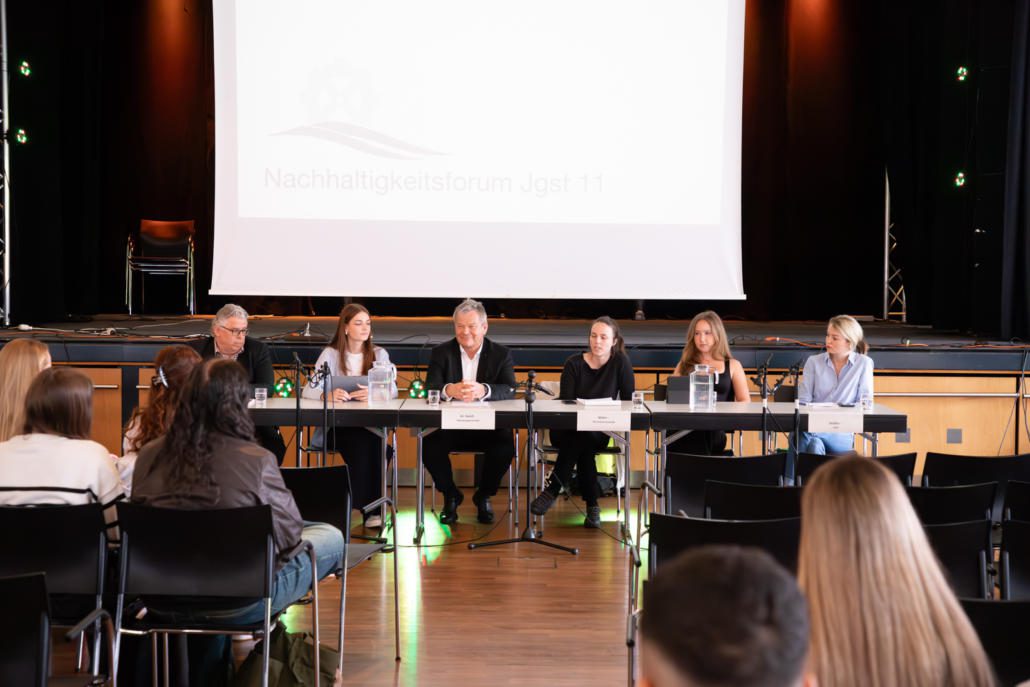
It wasn’t the most relaxed event the Steinmühle had ever seen, clearly due to the topic:
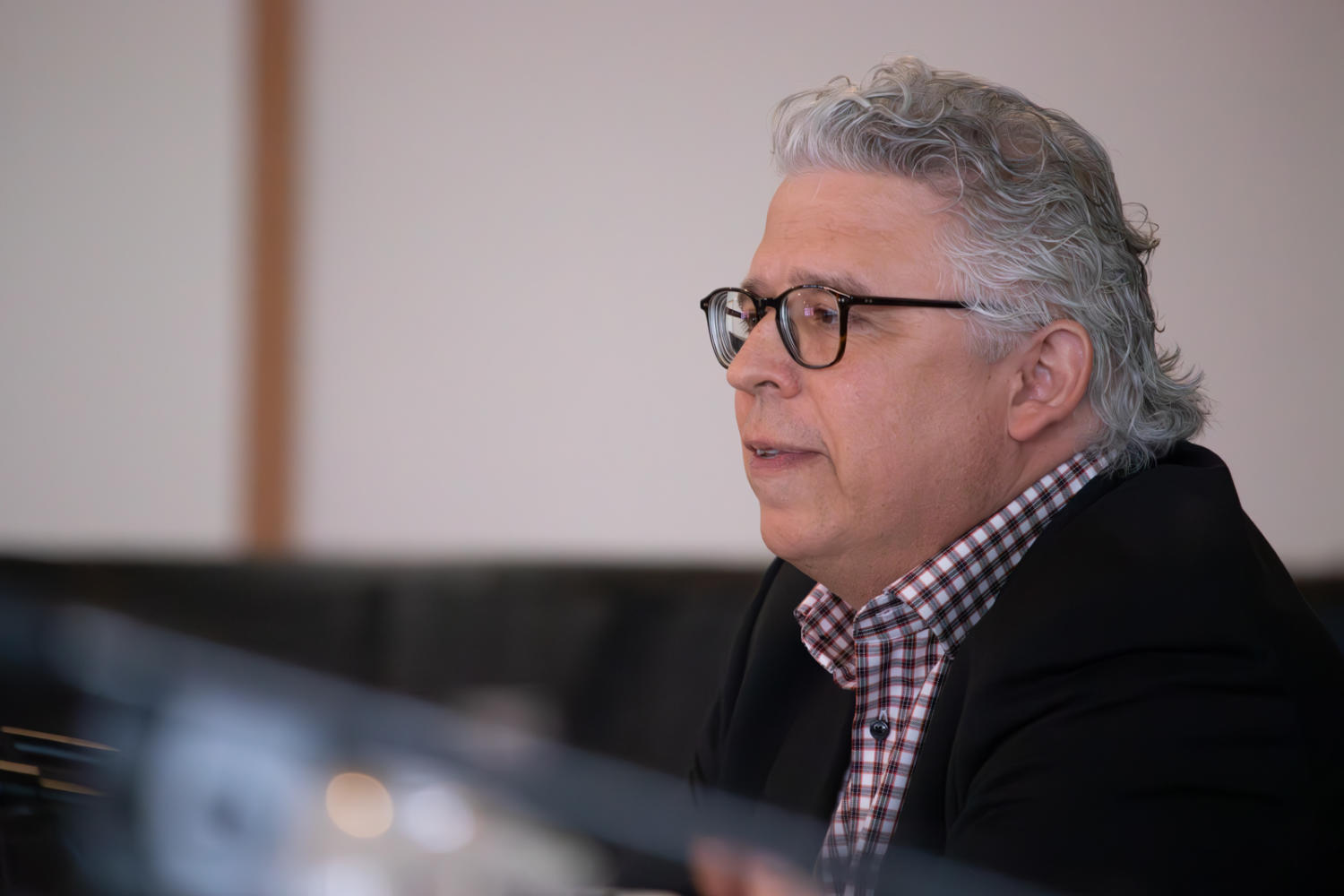
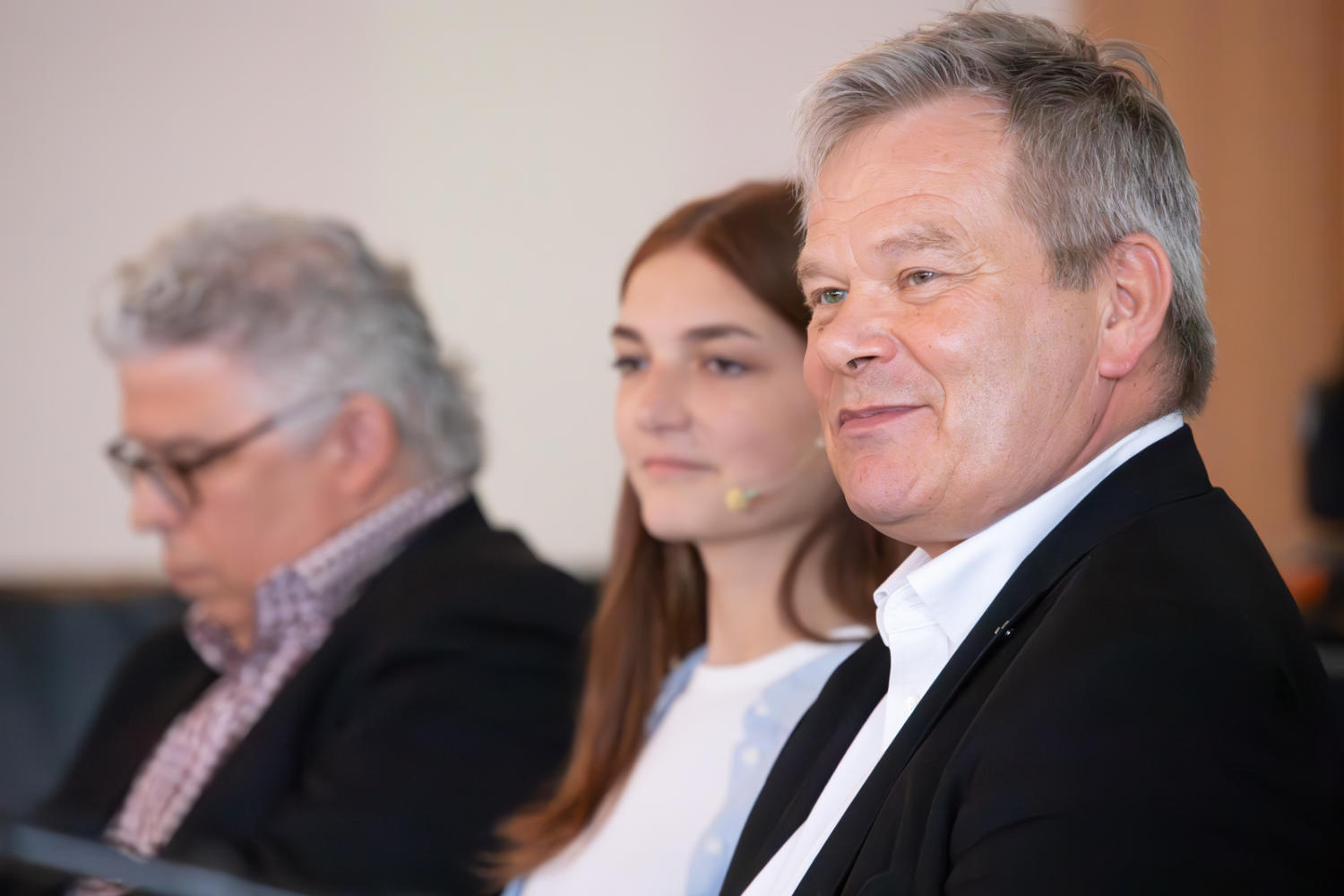
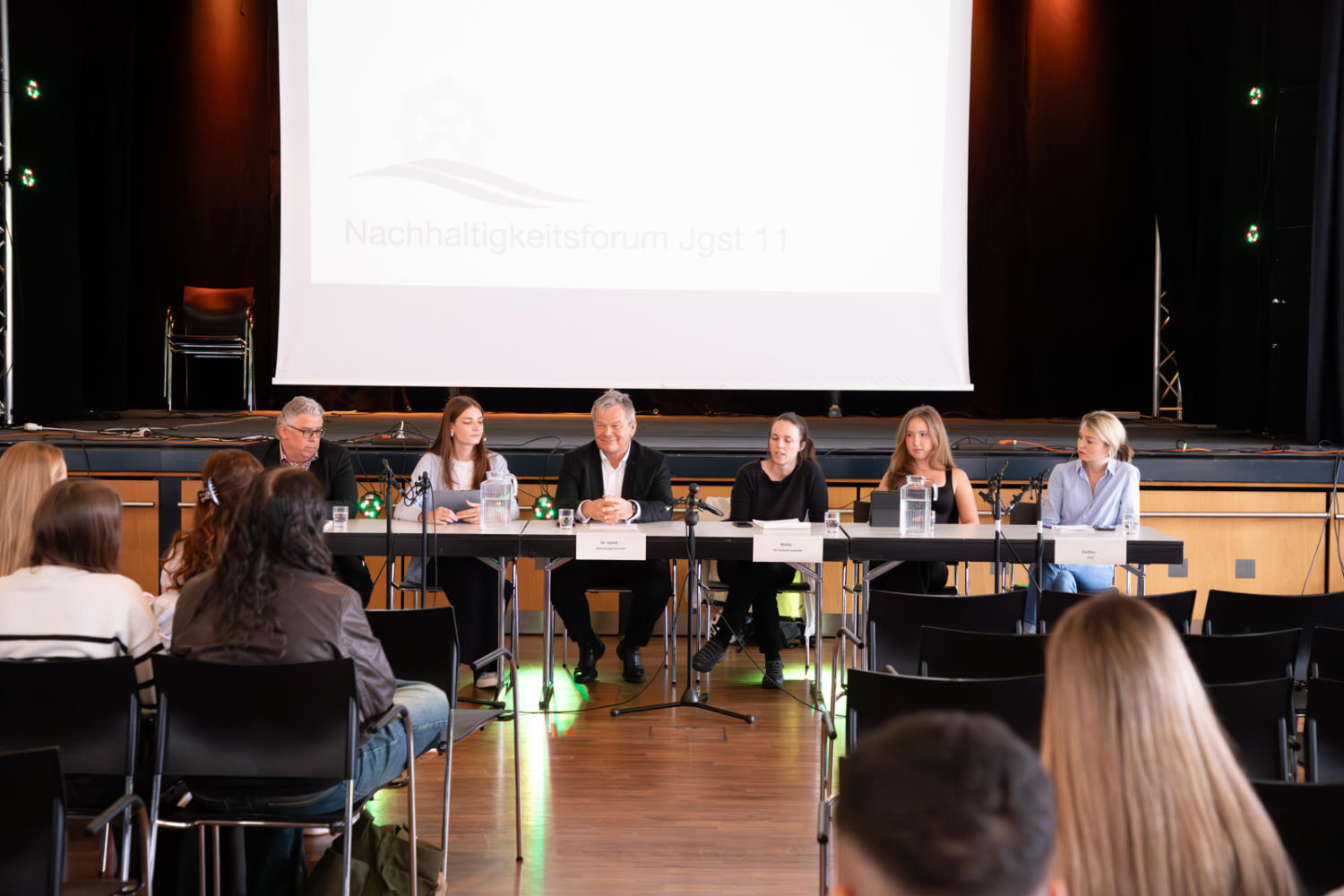
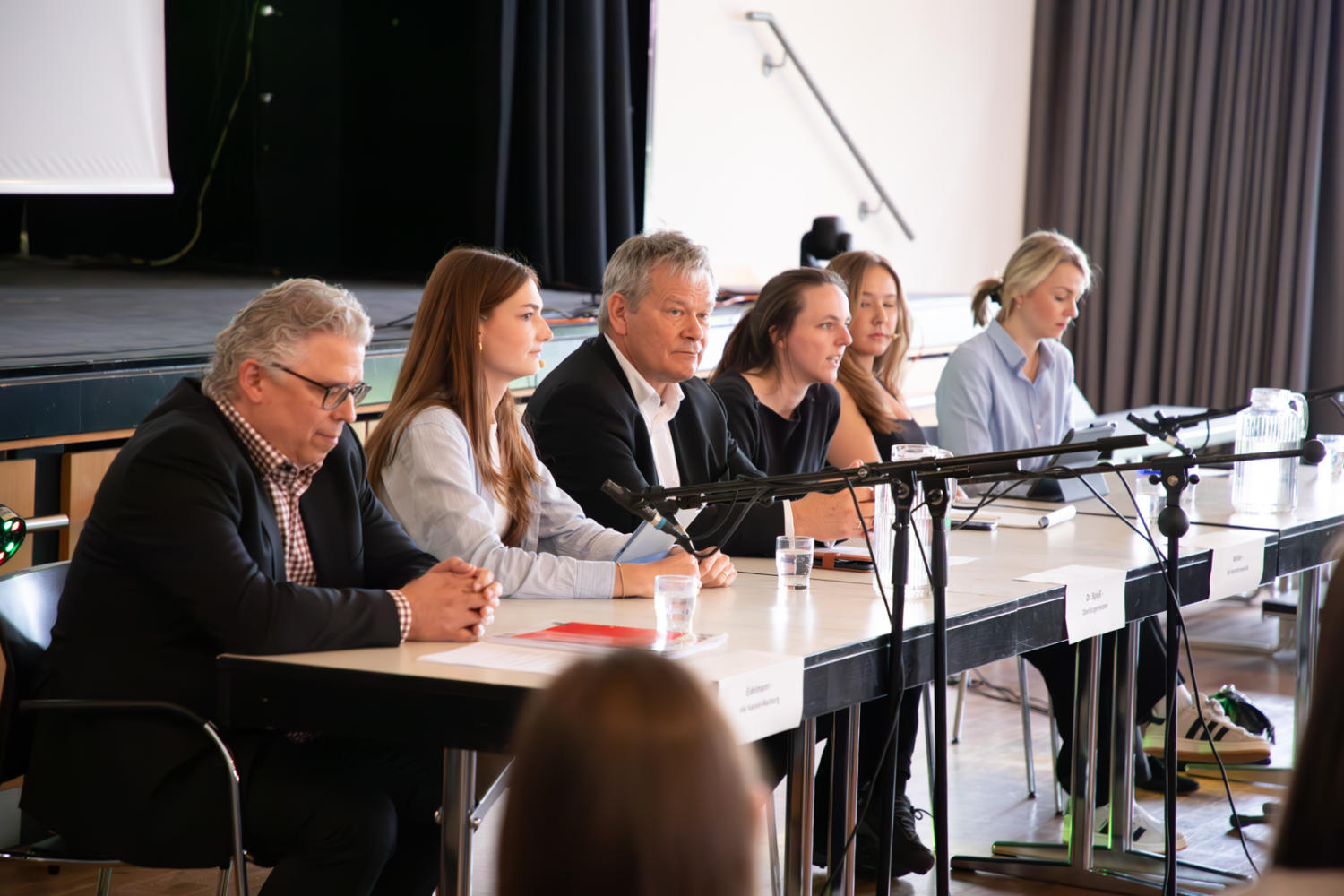
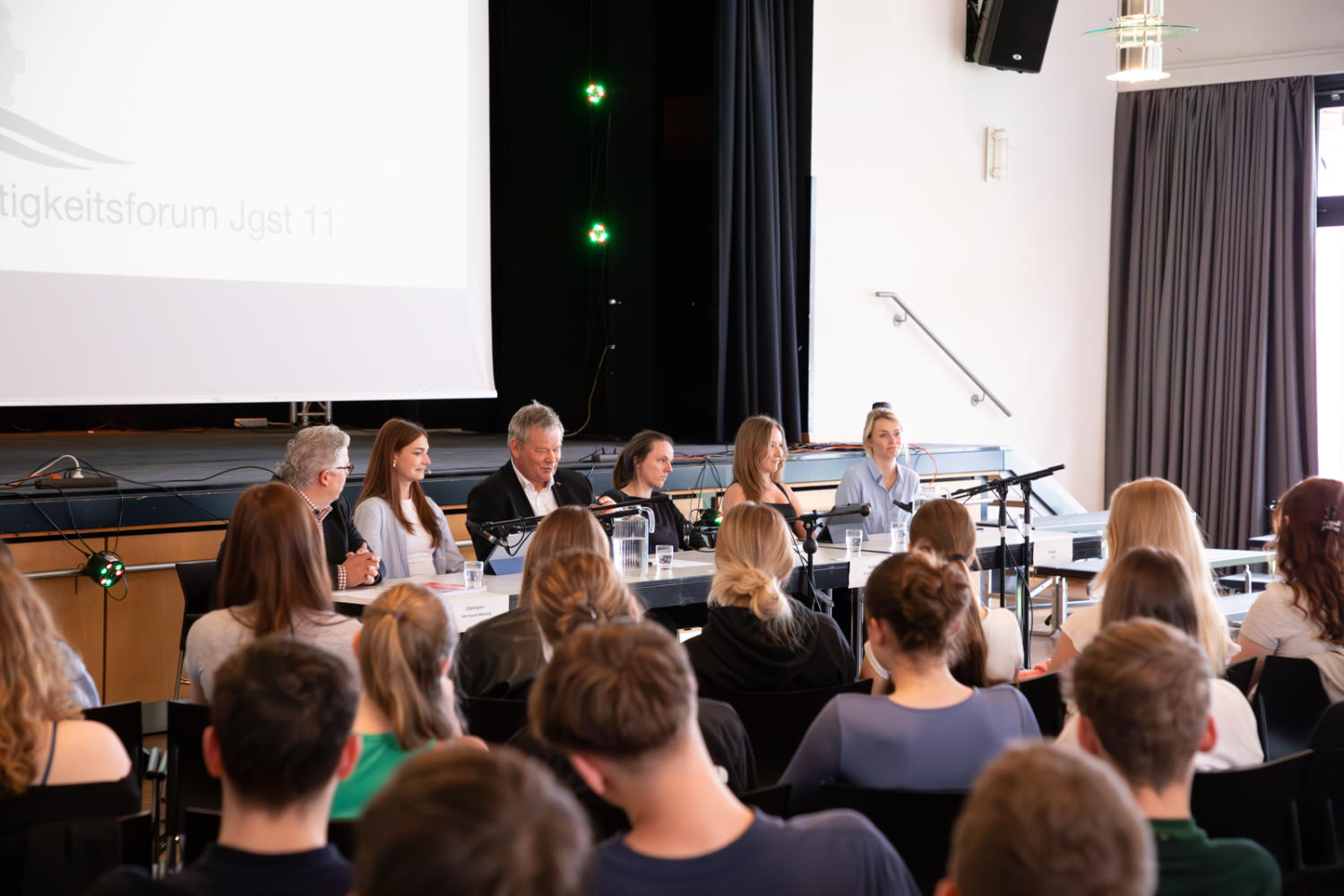
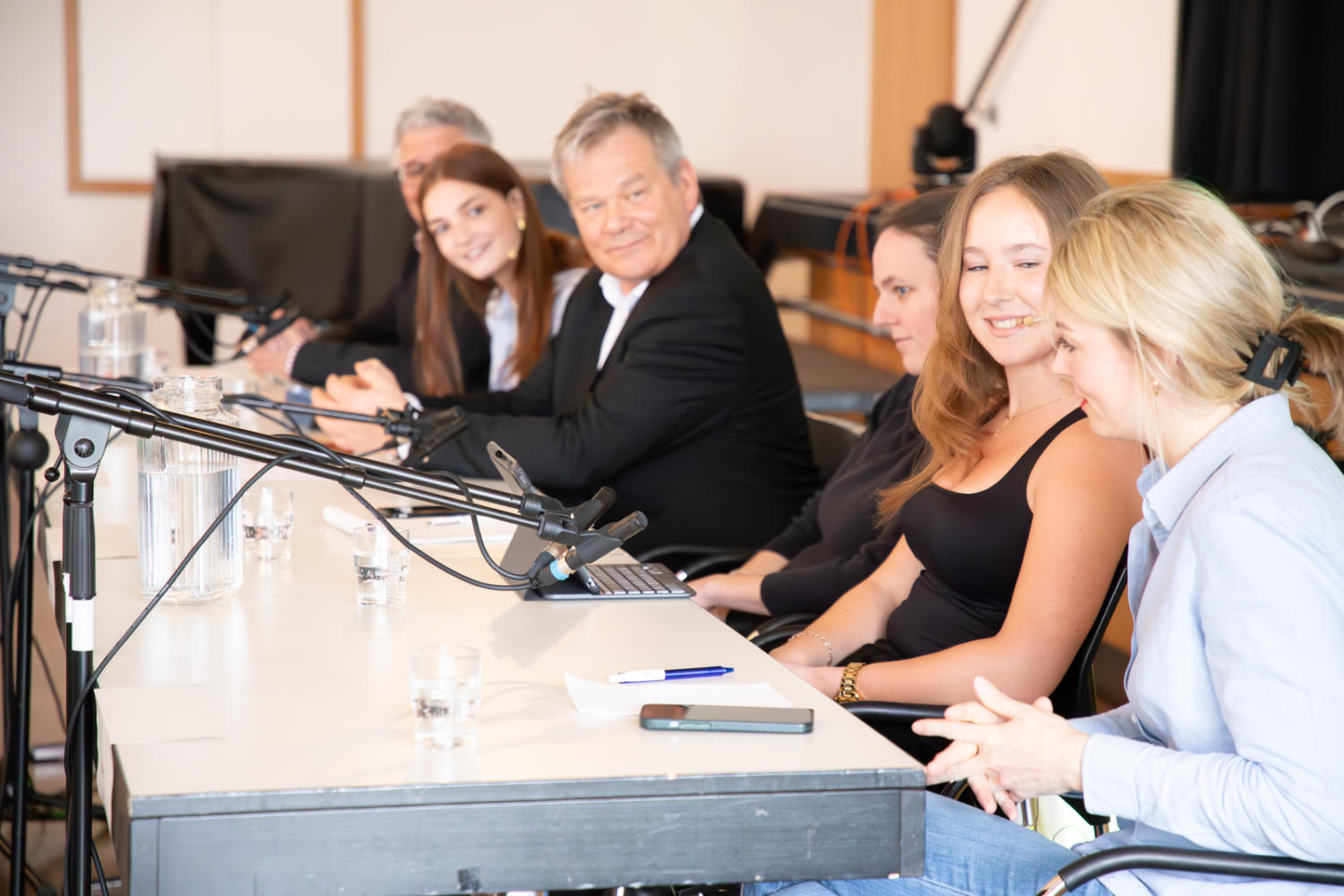
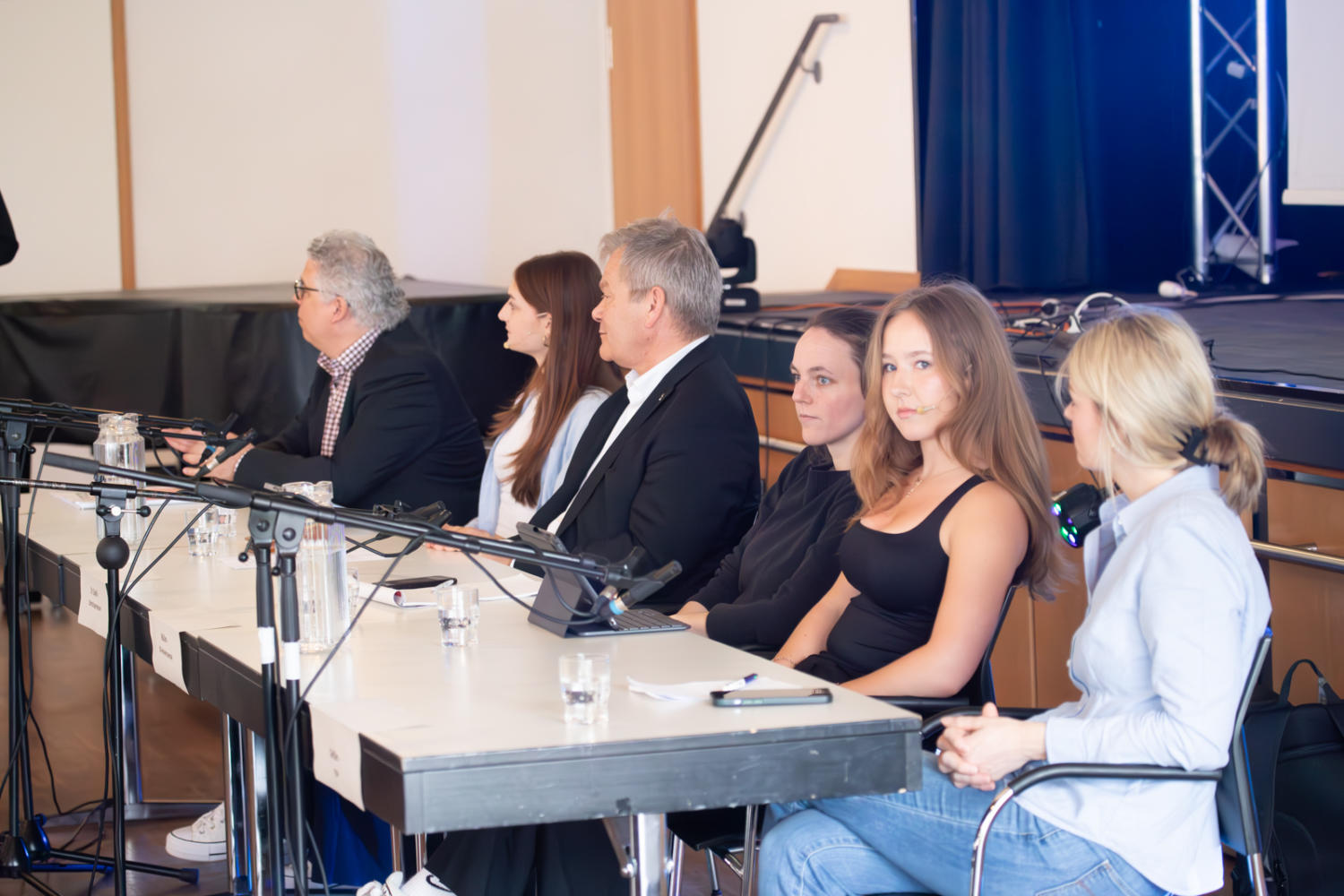
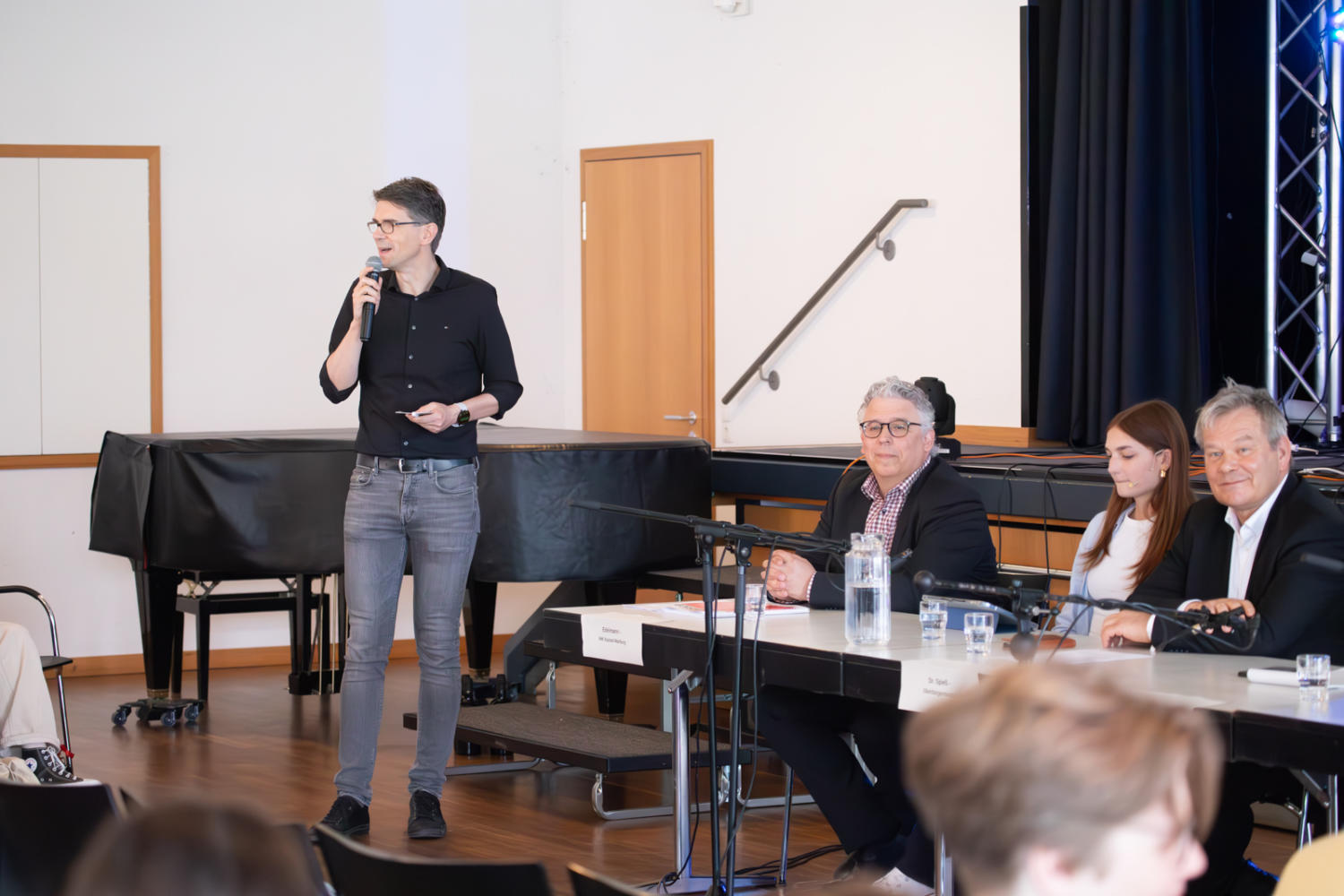
Mayor Dr. Thomas Spies and Sara Müller of the citizens’ initiative “Verkehrswende” discussed the MOVE 35 transportation plan with Oskar Edelmann, deputy executive director of the Kassel-Marburg Chamber of Commerce and Industry, and Lisa Deißler of the CDU/FDP/BfM parliamentary group.
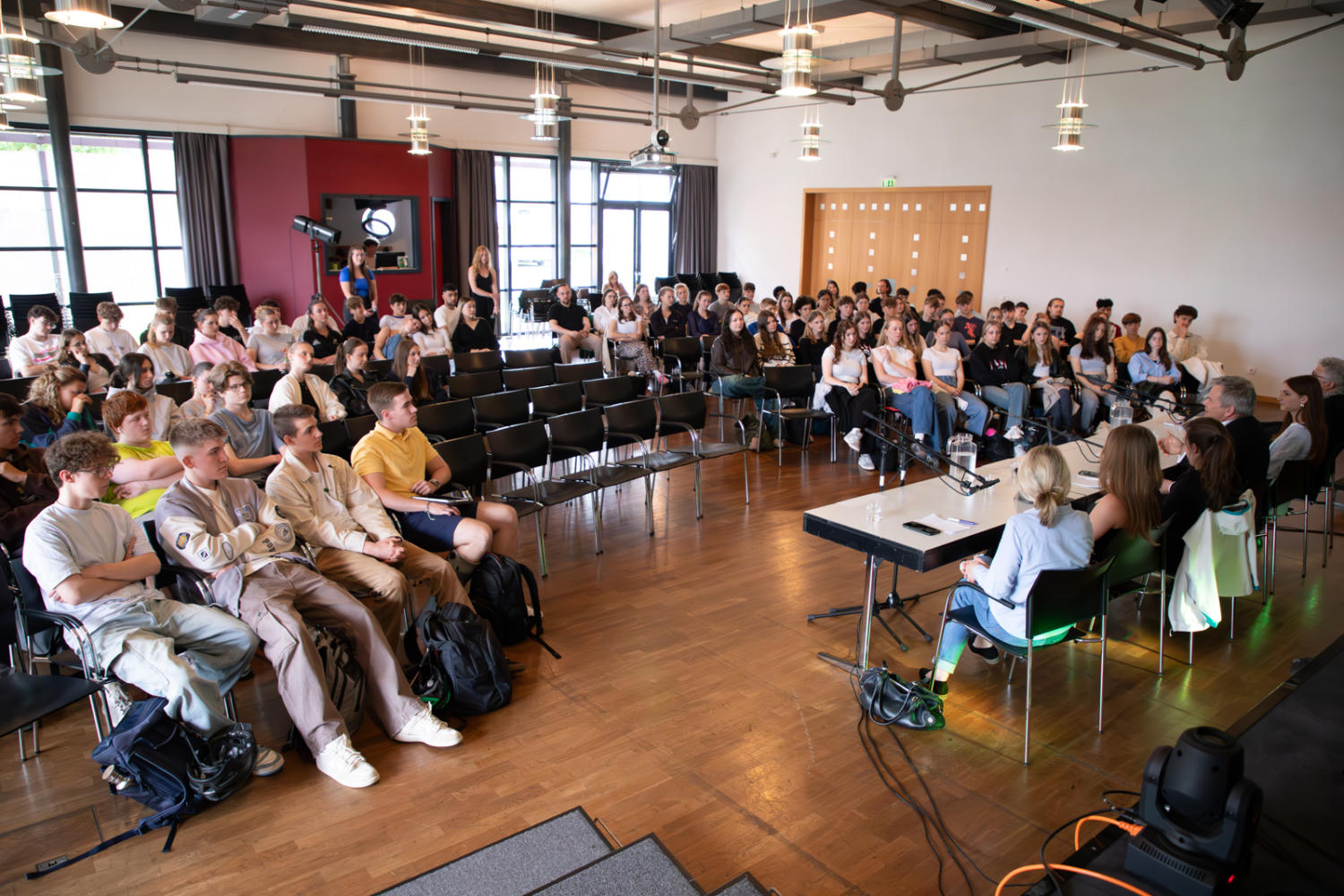
Everyone was suddenly faced with questions from the 11th-grade class at Steinmühle.
Ecology vs. Economy. — Or Can They Go Hand in Hand After All?
Against the backdrop of climate change and the international and national agreements ratified in this context, transportation and mobility are central issues that are the subject of heated debate. Are ecology and the economy an irreconcilable contradiction?
A variety of topics will be incorporated into the 250-page MOVE 35 concept if it is implemented. This quickly became apparent from the statements made by the panelists.
“They want to rush this through here, and accessibility to Marburg’s outlying neighborhoods is being neglected,” stated Lisa Deißler, reaffirming her faction’s “no” vote due to various shortcomings: “There are no concrete plans.” Sara Müller’s approach was quite different. “We have declared a climate emergency for Marburg,” she reminded the audience, “Voting ‘yes’ on MOVE 35 is a climate necessity.” Mayor Dr. Thomas Spies began his statement by noting, “Mobility isn’t just about moving machines.” Unfortunately, he said, every transportation debate is framed as a debate about car traffic—when it’s really just about how people get from one place to another.
“Many business owners are concerned”
This argument didn’t really take hold—at least not with Chamber of Industry and Commerce representative Oskar Edelmann. For him, it was clear: “First, we need to expand public transportation; only then can we consider mandatory measures against car use.” The representative of the local business community spoke of the deep concerns local business owners have about the reduction of parking spaces and one-way street regulations: “More business owners than ever before are worried.”
The mayor acknowledged that mobility is essential and dismissed the claim that the city wants to ban cars as “nonsense.” Of course, a certain level of accessibility is needed, but it must be balanced fairly. According to the Chamber of Industry and Commerce representative, removing parking spaces creates an environmental contradiction: “More traffic searching for parking generates more CO2.” Furthermore, there is no need to impose restrictions on drivers in order to expand public transportation and bike lanes. Furthermore, people often don’t come into the city for personal enjoyment: “You have to keep in mind that Marburg has 29,000 commuters every day.”
“How do the municipal utilities plan to handle putting even more buses into service? We’re already short on bus drivers,” one student asked. Sara Müller sees the solution in using smaller vehicles, at least for the outlying neighborhoods. These could be operated without a bus driver’s license—a passenger transport permit would suffice.
Lisa Deißler cast serious doubt on the intention expressed by MOVE supporters to create “neighborhood parking garages” and asked where these were supposed to be located. Incorporating some questions from students, those present also discussed the topics of impervious surfaces, possible changes to the bus route system, carsharing, and community buses.
“Opponents spread bad vibes”
In the end, what remained of the event were mutual accusations among the panelists that the other side had failed to take entrepreneurs and the district into account (quote from Edelmann), had distorted the facts, and had spread bad vibes (quote from Spies).
Whether department store owner Ahrens or the company Pharmaserv was for or against MOVE 35 could not be definitively determined during the event, as each panelist claimed the position that suited them best.
The majority of the 11th-graders seemed to oppose the proposal—which is hardly surprising for students at a private school whose parents tend to be more economically minded. Whether they will be in the majority or minority in Marburg will become clear after the vote on June 9.
The Sustainability Forum at the school—as the event is officially titled—has a long tradition at Steinmühle. The panel discussion was organized by the Political Science Department, primarily by Carmen Bastian. She also serves as Steinmühle’s Ecology Coordinator and Environmental Officer.