

Laboratory-produced antibiotics have become indispensable
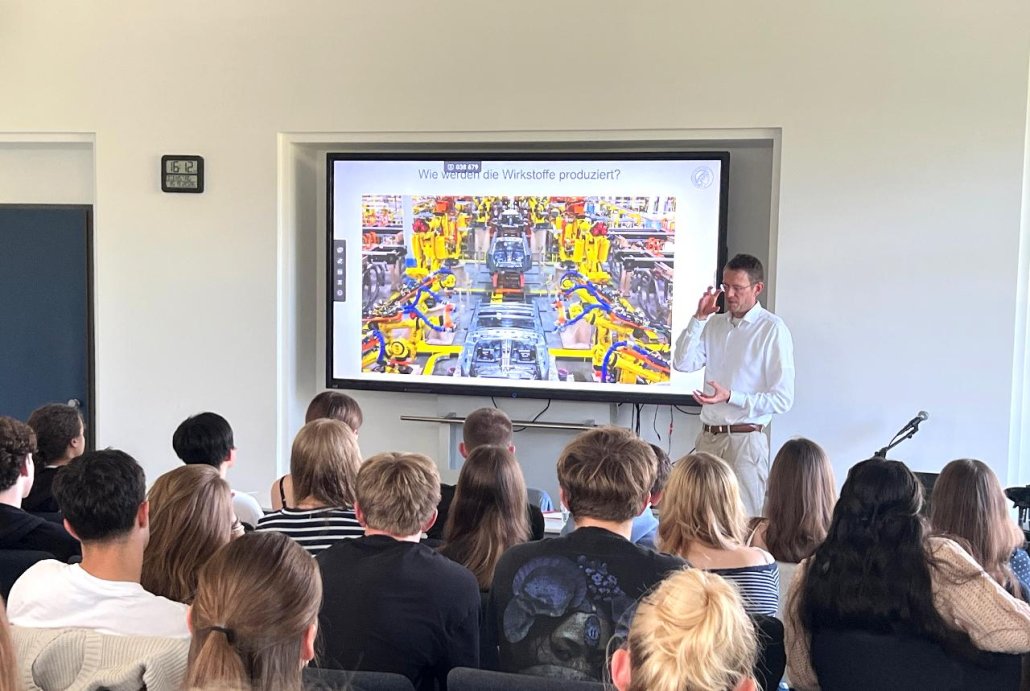
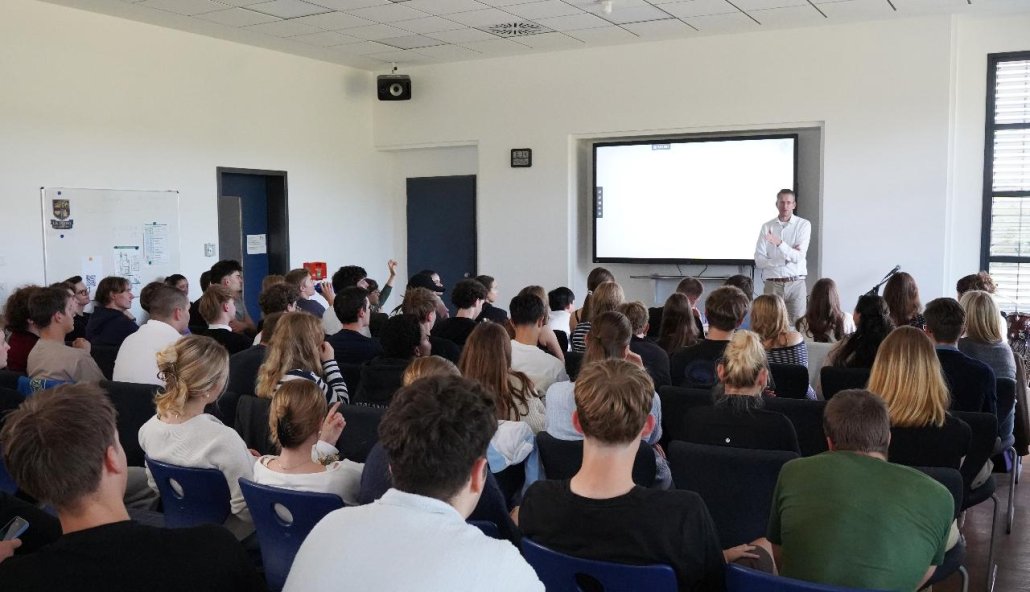
Prof. Dr. Helge Bode, director of the Max Planck Institute for Terrestrial Microbiology in Marburg, drew an interested audience during his recent lecture at the Steinmühle.
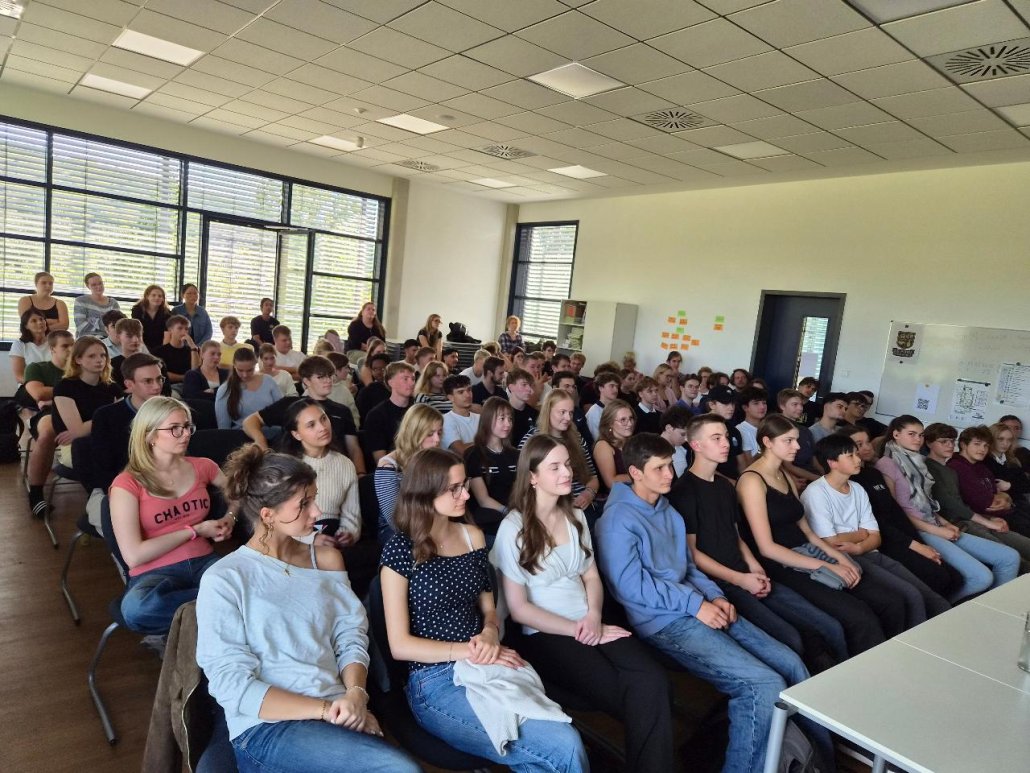
In attendance were 85 students in grades 12 and 13 who are taking biology as an advanced course, numerous students enrolled in the introductory course, and participants in the plus-MINT talent development program.
What was it about?
Many drugs are originally produced by microorganisms
In his lecture titled “New Antibiotics,” Bode explained that many of our most important drugs—such as antibiotics, immunosuppressants for transplants, and chemotherapy drugs for cancer—did not originally come from chemistry labs, but are produced by microorganisms. In nature, bacteria typically use these substances as defensive weapons against competitors.
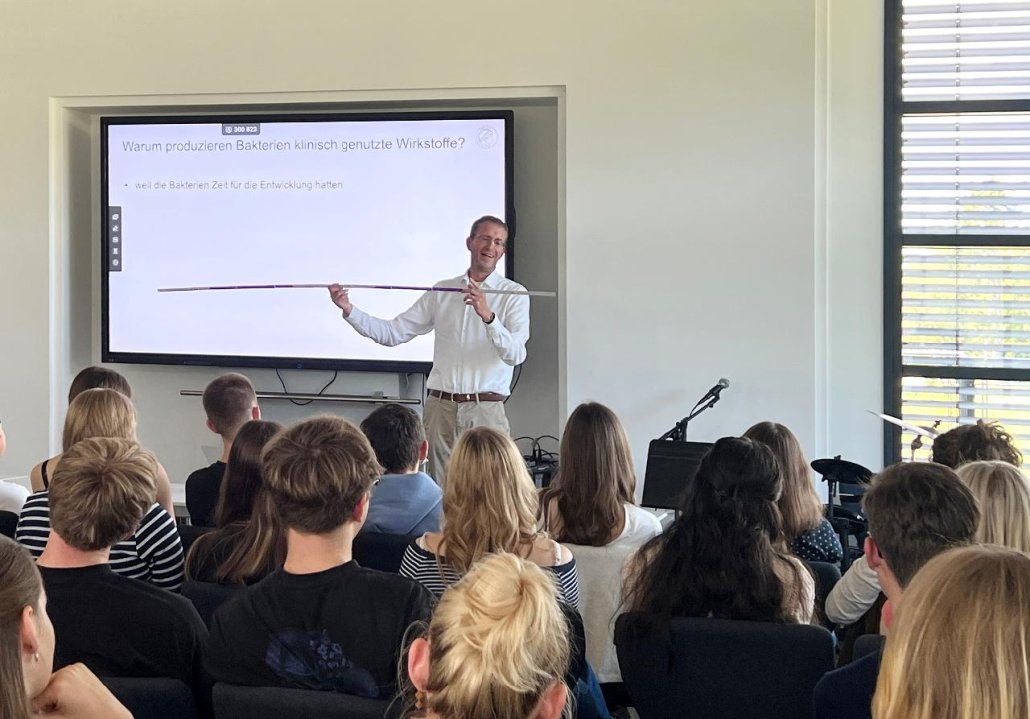
He went on to explain that bacteria produce these complex active compounds via specialized molecular assembly lines (known as non-ribosomal peptide synthetases or polyketide synthetases). You can think of these enzymes as Lego bricks or a construction set in which various proteins assemble chemical building blocks step by step.
More and more pathogens are becoming resistant
Concerns have been raised that more and more pathogens are becoming resistant to conventional drugs, meaning it is no longer enough to simply search for new compounds in nature. This is precisely where Helge Bode’s research comes in: His research group decodes the genetic building blocks of bacteria, breaks down the individual “Lego bricks,” and reassembles them in the lab. By reprogramming these bacterial “assembly lines,” they create entirely new, artificial molecules that have never existed in nature—tailor-made antibiotics to combat resistant pathogens.
Tailored antibiotics are urgently needed
Bode pointed out that these new antibiotics are urgently needed, as people are becoming increasingly resistant to existing antibiotics—not least because of the widespread use of antibiotics in factory farming.
Following the one-hour lecture, the audience asked numerous interesting and thought-provoking questions, prompting Prof. Bode to expressly praise the Steinmühlen students for their ability to concentrate and their interest.
The presentation was part of the “Microbes@School” lecture series initiated by the Central Hesse Student Research Center.
(Gem) // Photos: MPI Marburg, Geisel