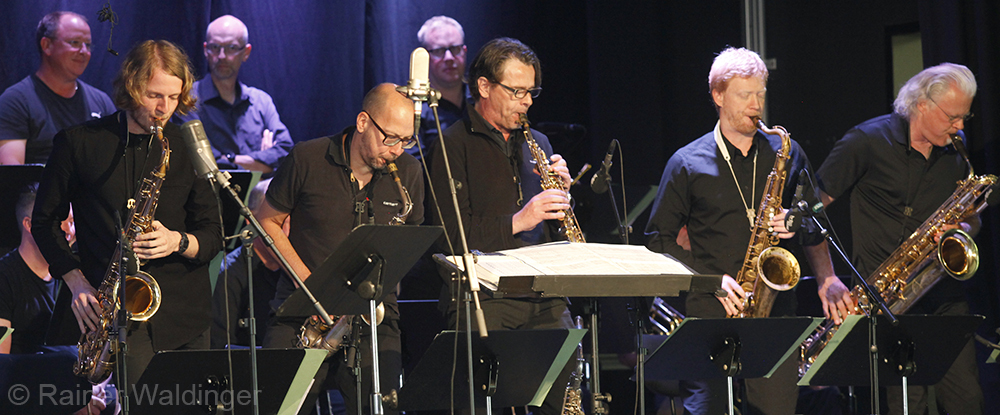
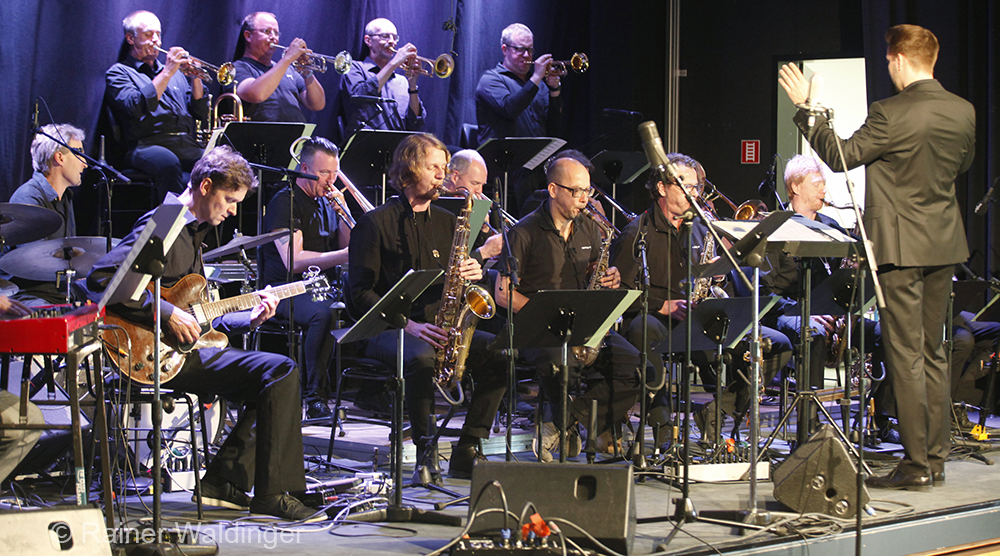
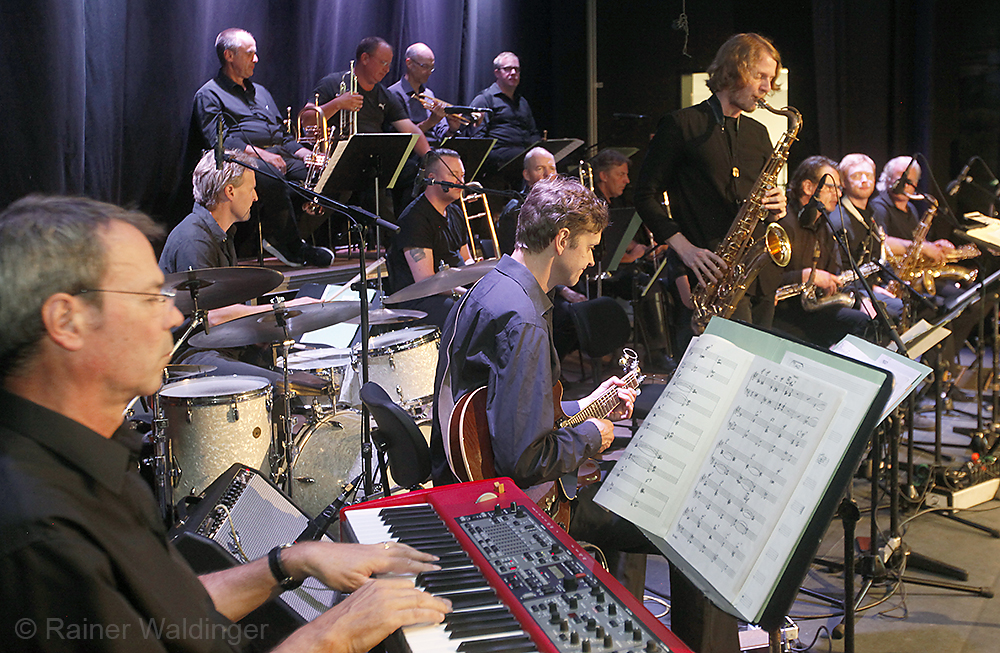
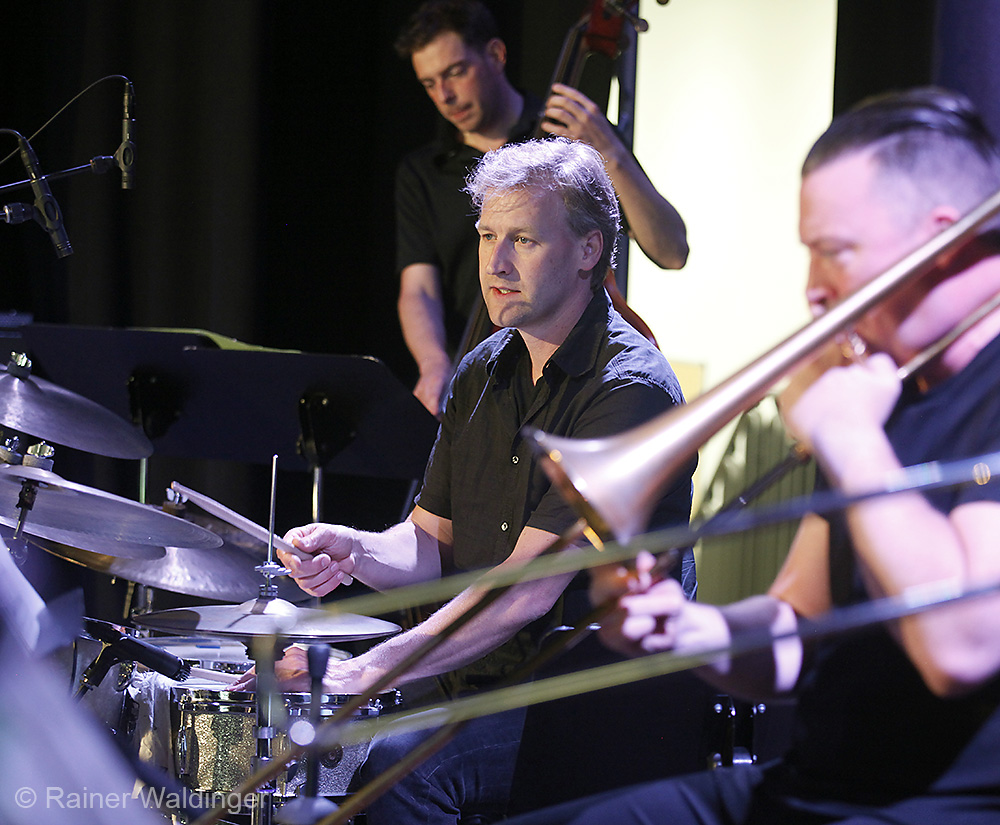
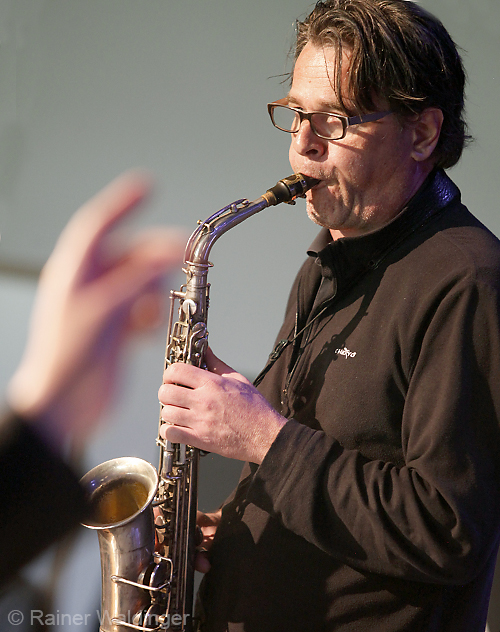
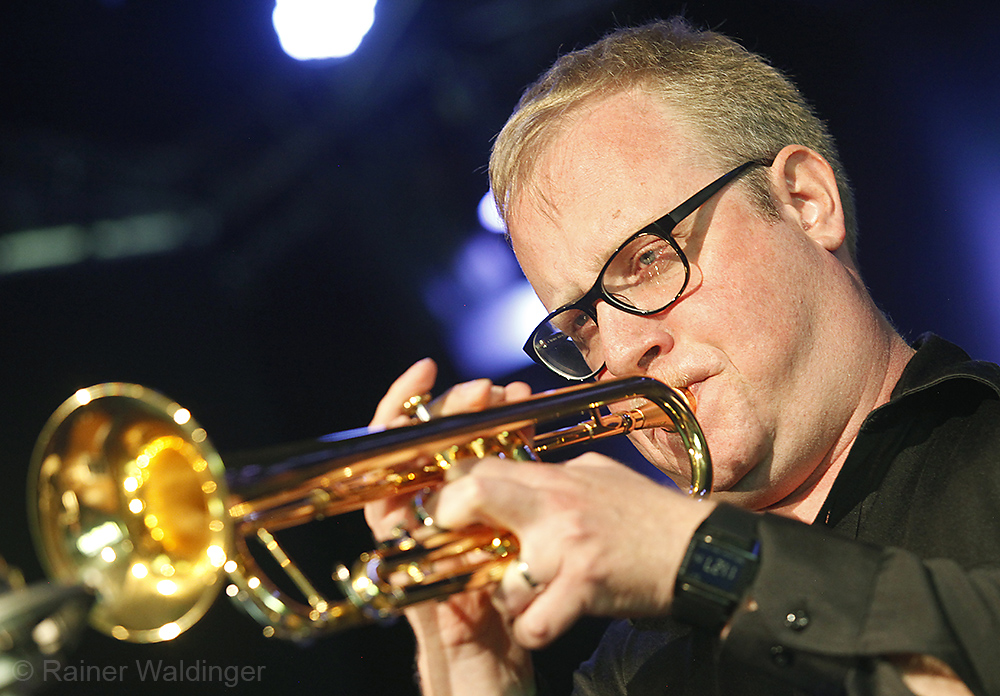
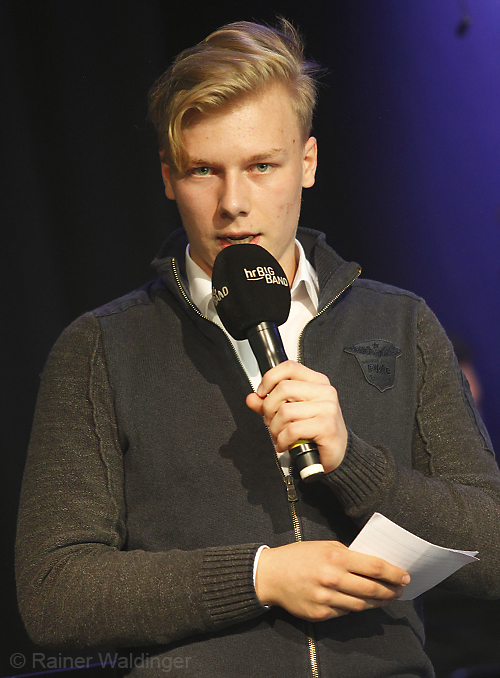
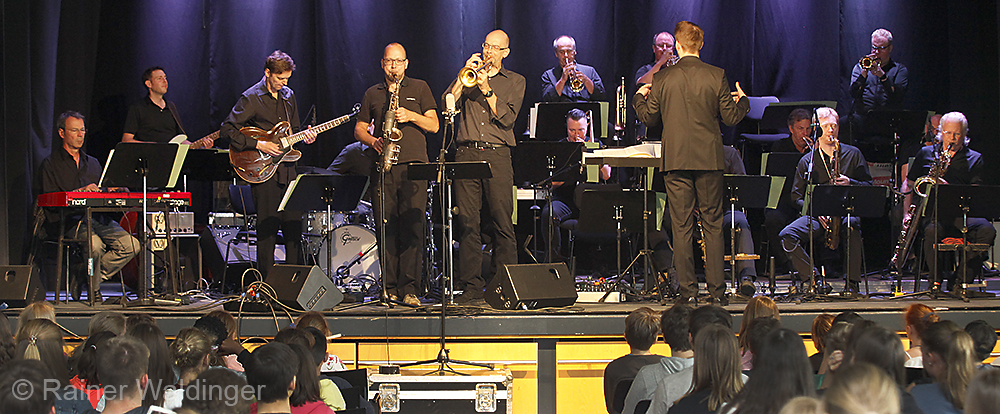
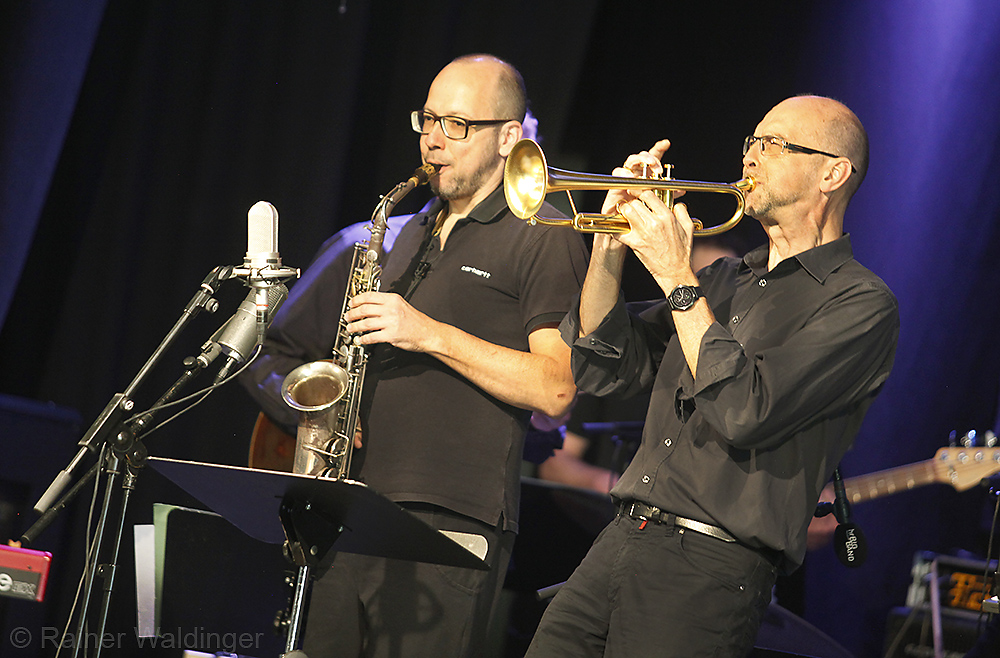
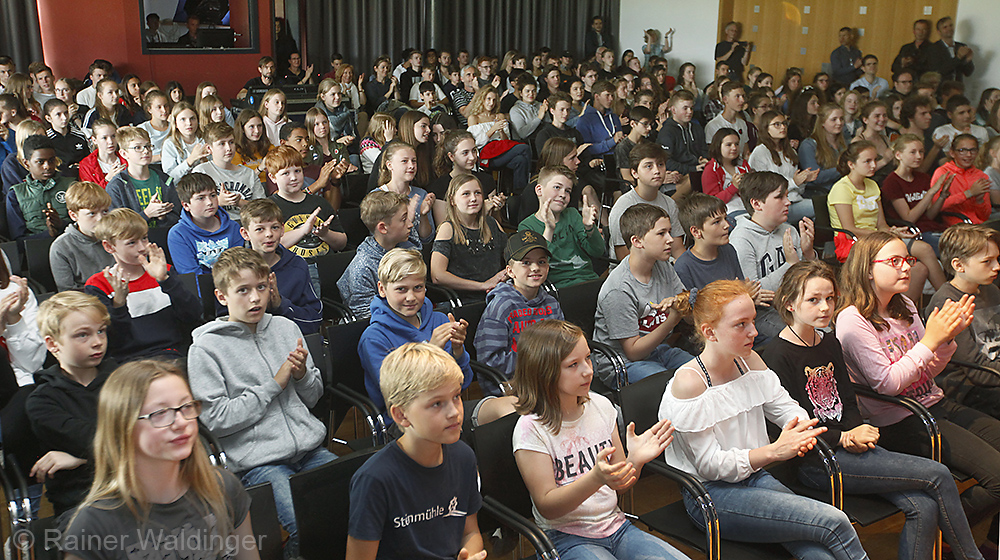
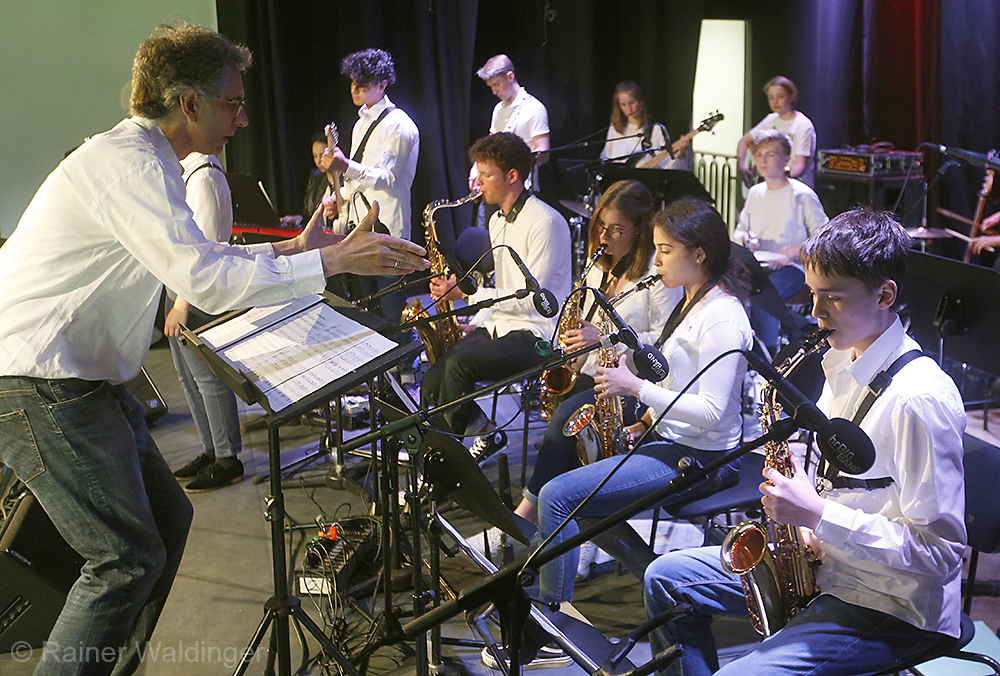
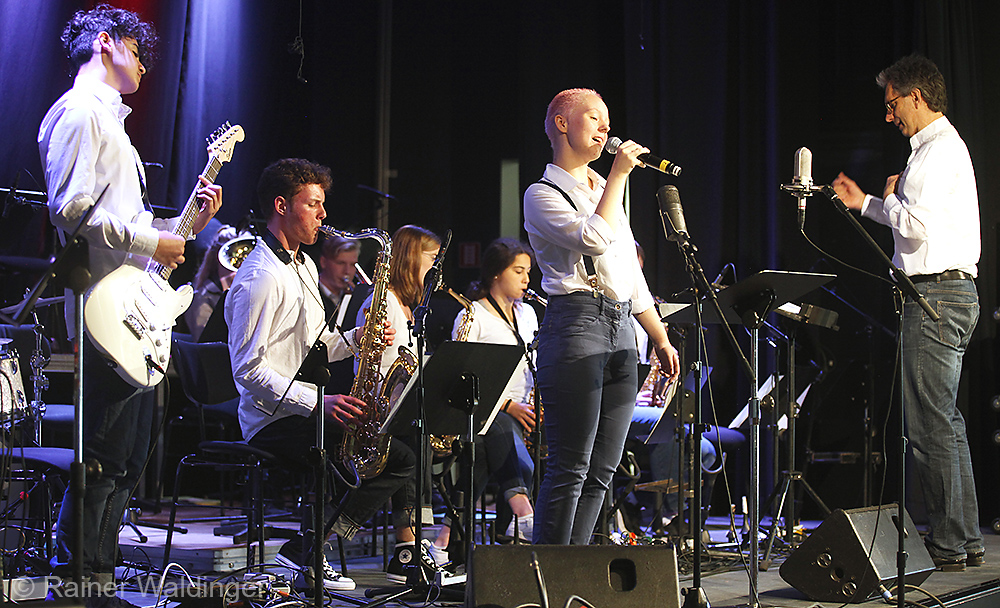
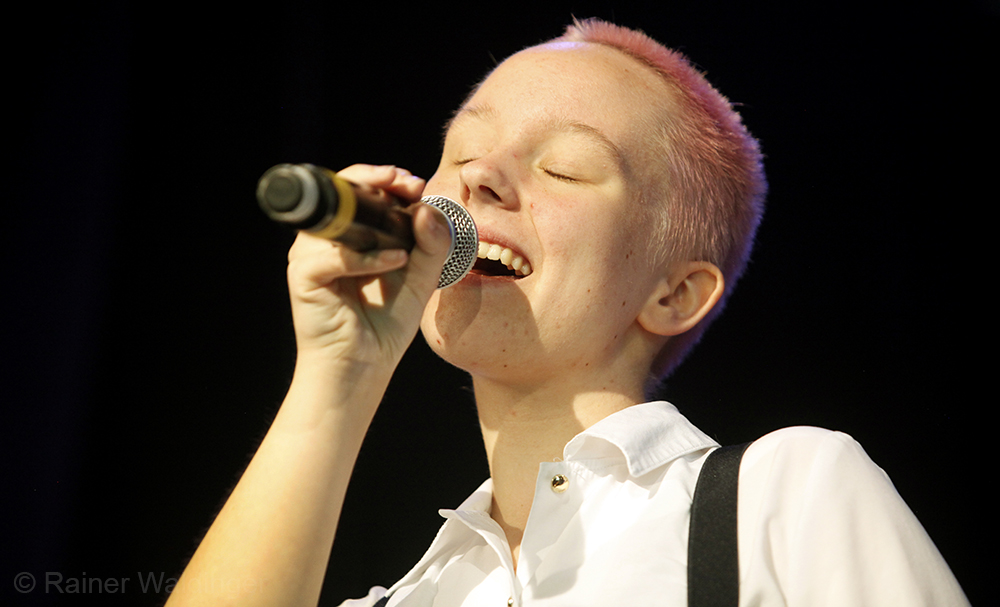
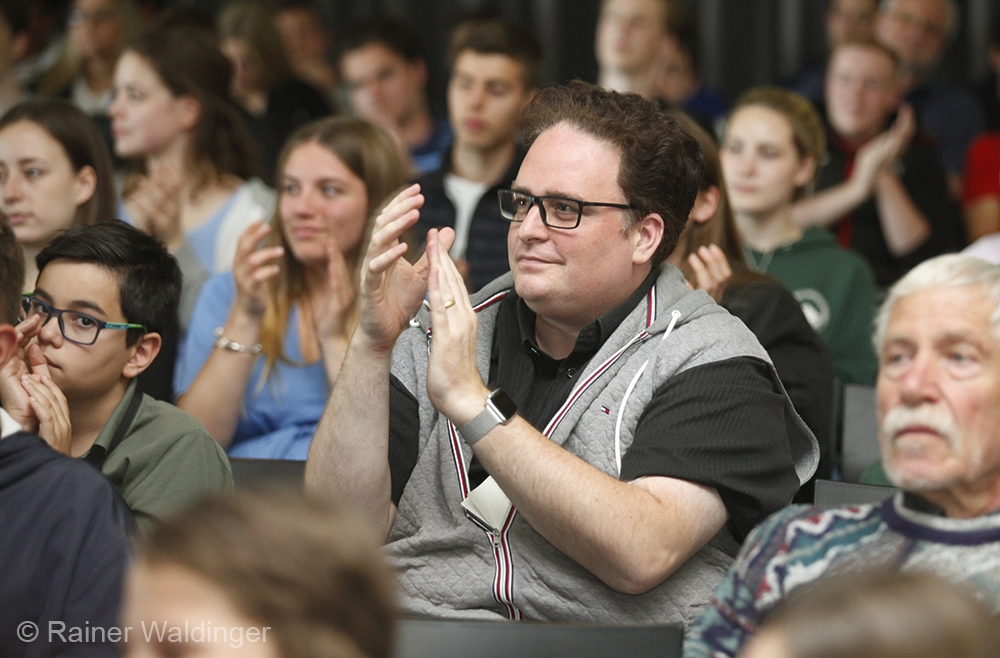
The hr Big Band has a reputation: whoever’s in it is the real deal. No wonder the ensemble’s announcement that they would be performing at the Steinmühle was met with great anticipation. An incredible atmosphere filled the Forum during the event on the Friday before Pentecost. And let anyone try to say again that jazz is only for older people.

Bouncing, snapping—the place was rocking. Even the youngest students were caught up in the rhythm. Somehow, the songs seemed familiar, and the names sounded familiar too: Steely Dan, Miles Davis, Duke Ellington, Thad Jones. These were great artists whose music was being performed here.


“Advanced Course” on Jazz

Well before the event, some members of the Steinmühlen Jazz Ensemble had taken on another task: hosting the event. Students Talea Funk, Samuel Ruff, Tom Herfert, and Marit Winterstein had traveled to Frankfurt specifically to attend a workshop at Hessischer Rundfunk, where professionals taught them how to host a jazz concert. These quick learners had quickly taken the tips to heart. Without any visible nervousness, but with deep respect for the ensemble and its performance, the Steinmühlen musicians guided the audience through the morning’s program.

They provided the audience with insights into the pieces performed by the professionals. The band members interviewed them on various topics. Not only did the audience get to hear some lively jazz, but they also learned something new. It was a crash course in jazz music for everyone in attendance.

The hr Big Band’s visit to Steinmühle is, in a sense, part of a mission. Since it’s well known that opportunities to experience good jazz music in schools are generally few and far between, the hr Big Band goes on school tours throughout Hesse at regular intervals.

This time, the Steinmühle was on the itinerary. It was the last stop on our tour through our state. The big band professionals certainly couldn’t have known or anticipated that jazz at the Steinmühle isn’t just something people talk about, but is firmly established as part of the venue’s active music program. However, they probably enjoyed performing in front of a few “connoisseurs of the scene.”

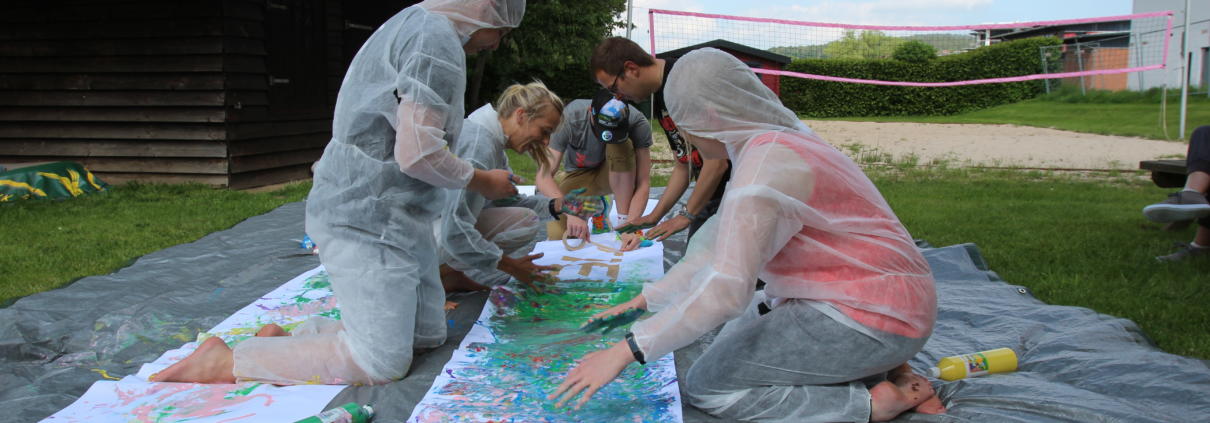
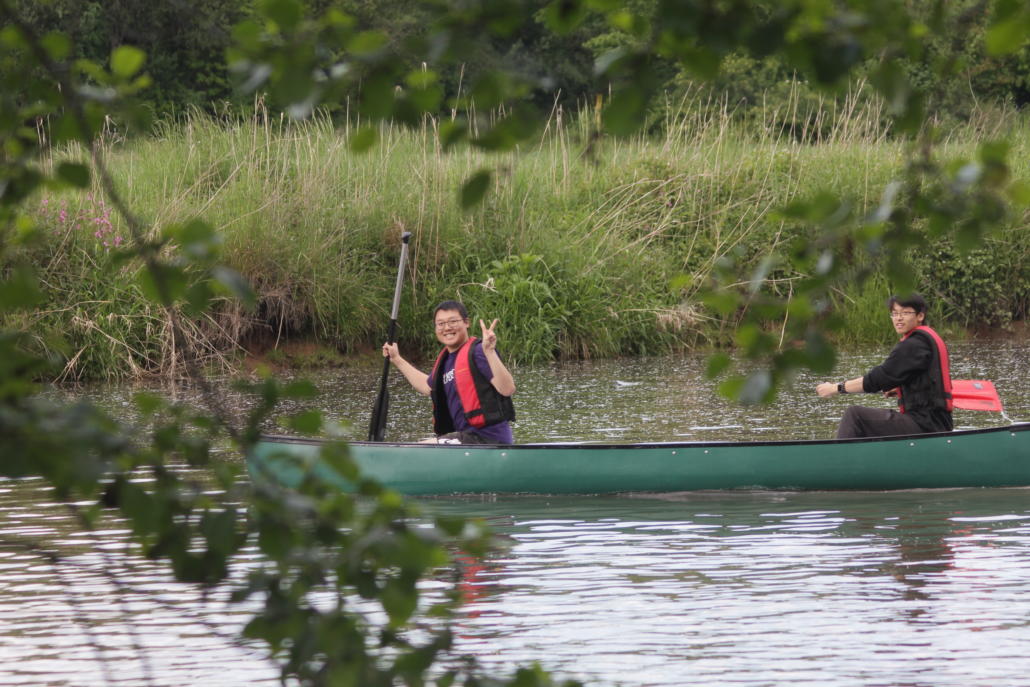
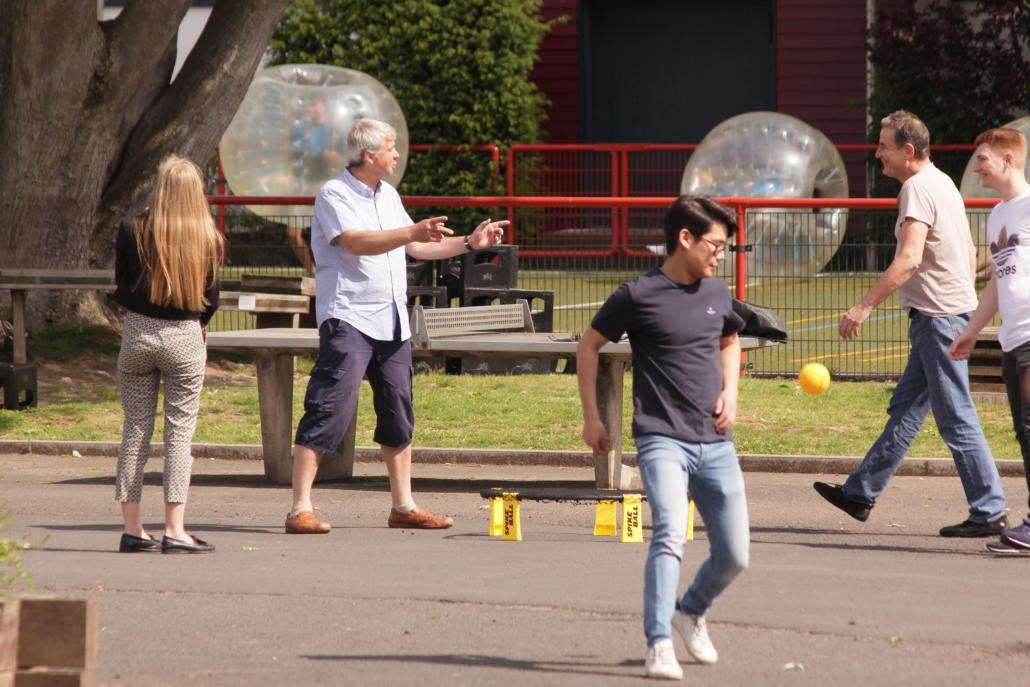
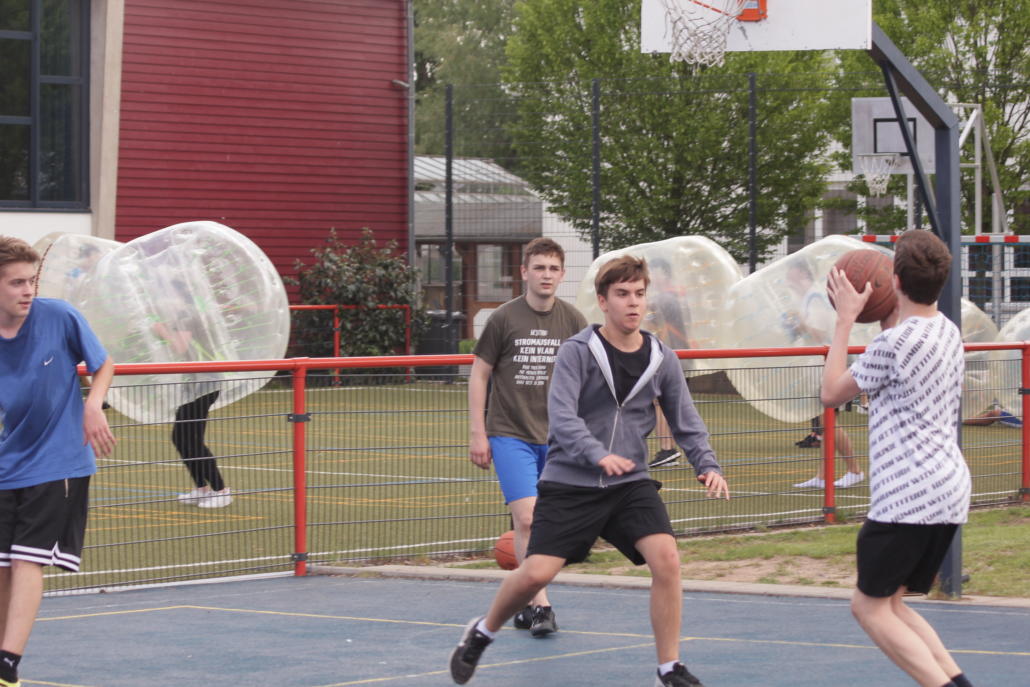
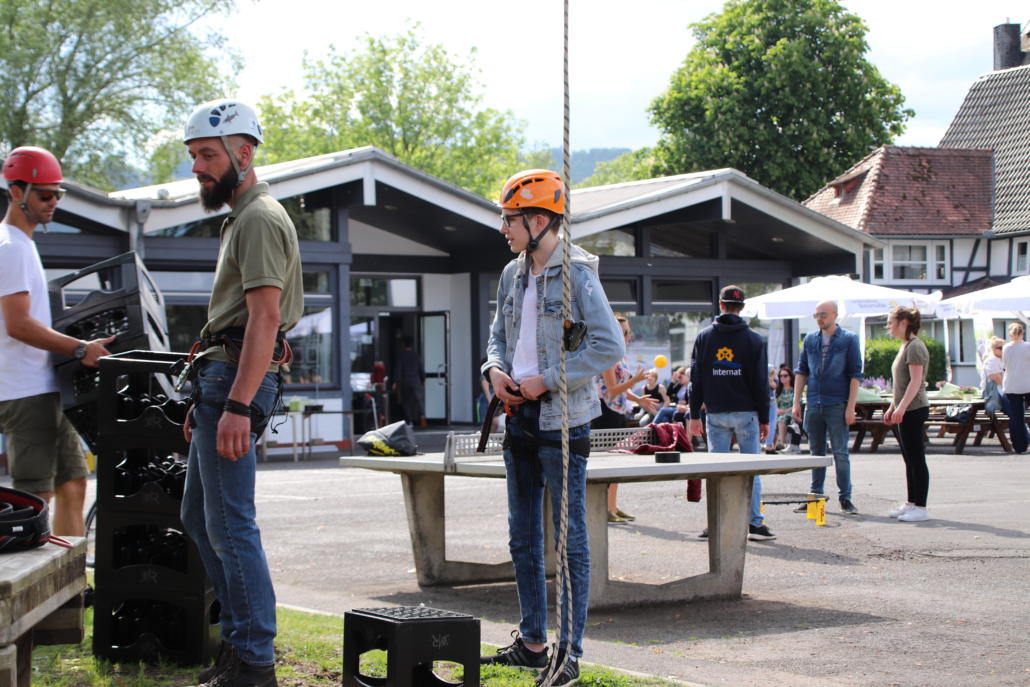
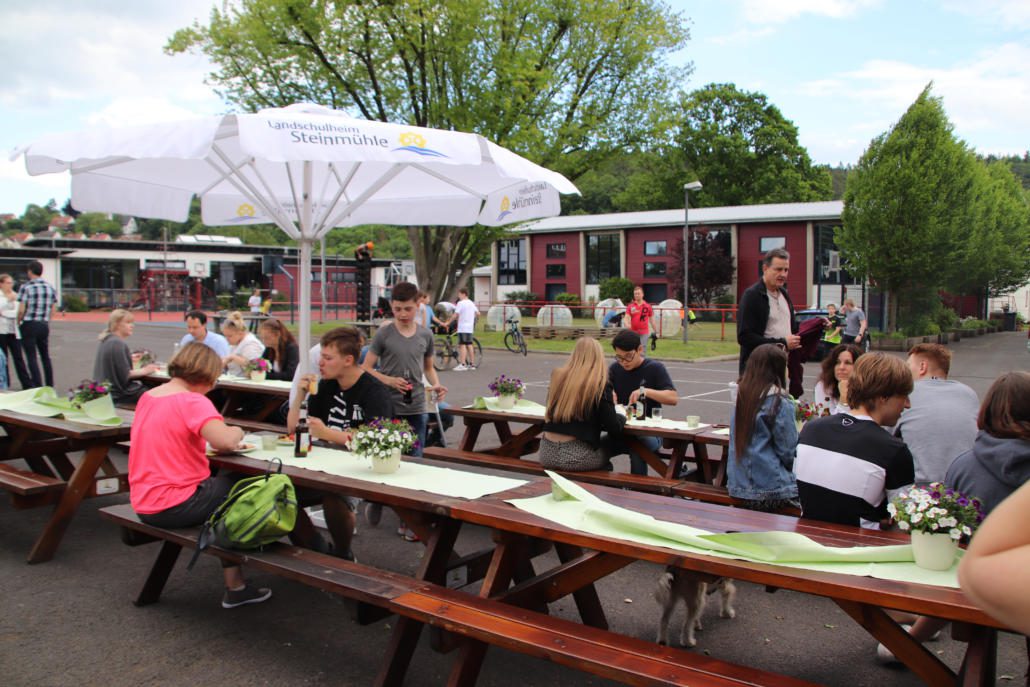
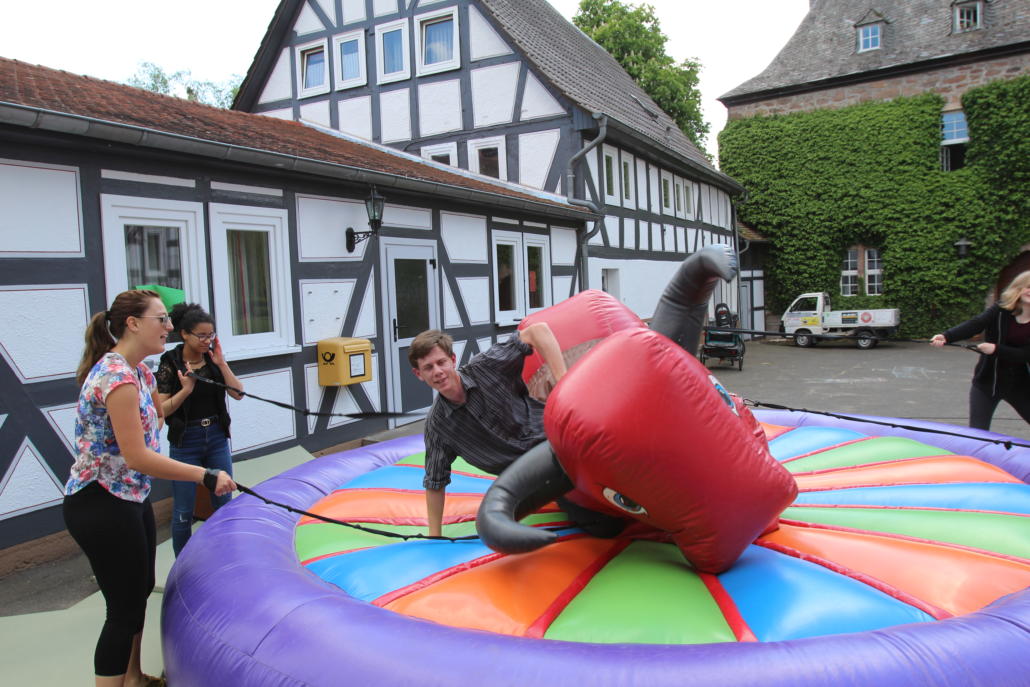
The weather was on our side for the annual Family Day at Steinmühle Boarding School. The families of all boarding school students were invited to spend a few pleasant hours together in a relaxed atmosphere. A variety of activities kept everyone entertained: from canoeing on the Lahn to finger painting for young visitors, bull riding, and bubble balls, all the way to box climbing—everyone had a great time while the sun shone brightly. The day concluded with a barbecue buffet, where the chefs showcased their skills.

This traditional event focuses on general interaction. For parents and families, the gathering always offers an opportunity to get to know one another and network.


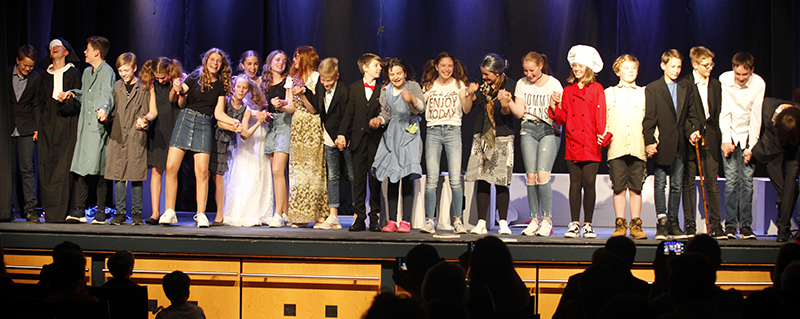
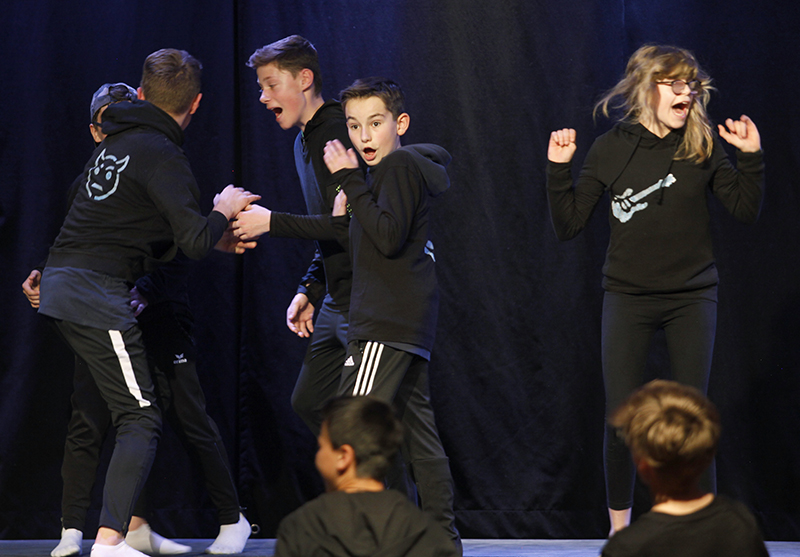
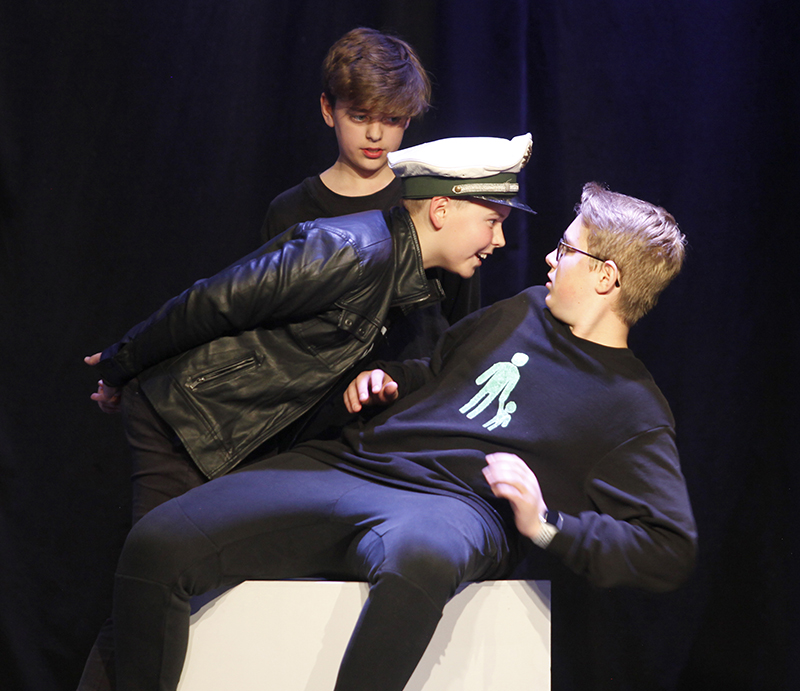
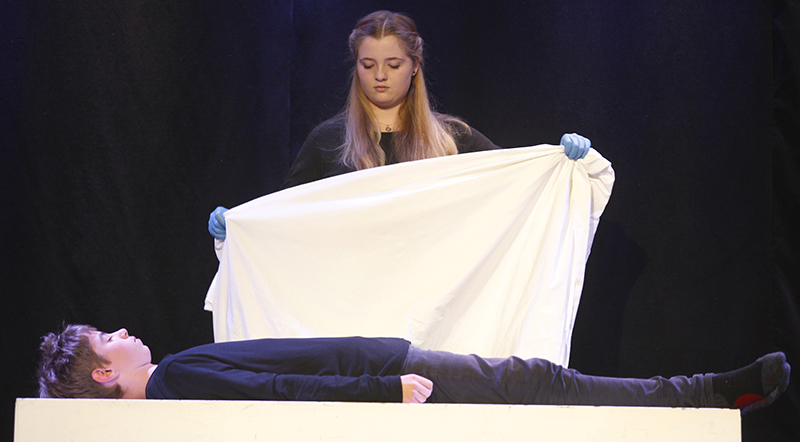
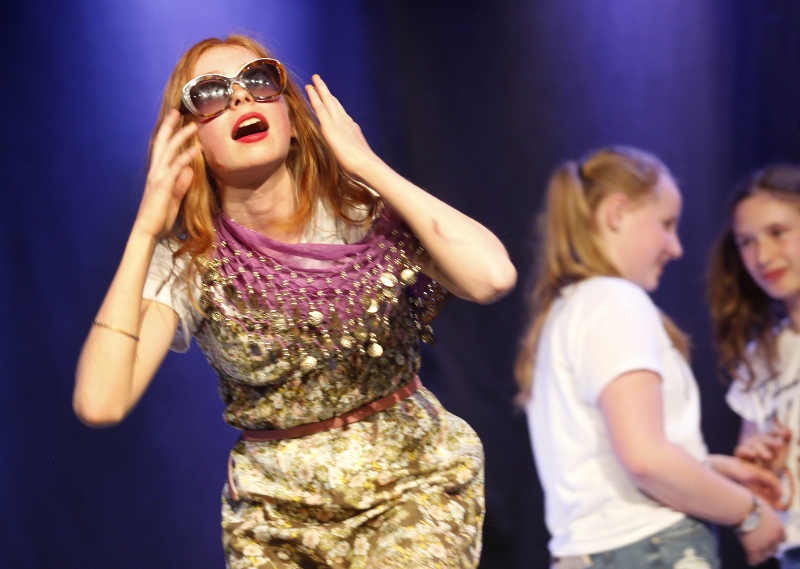
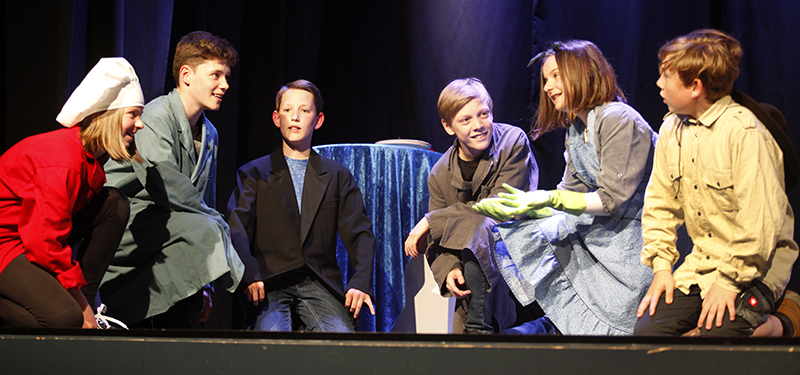
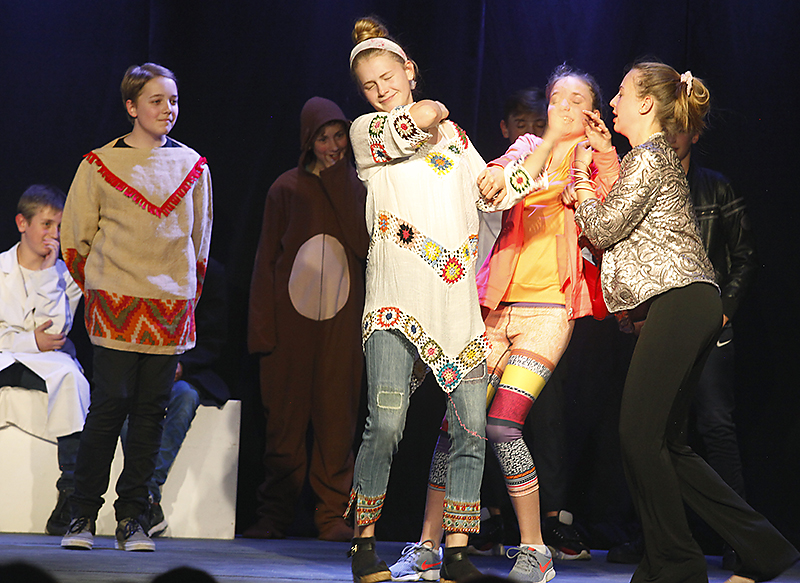
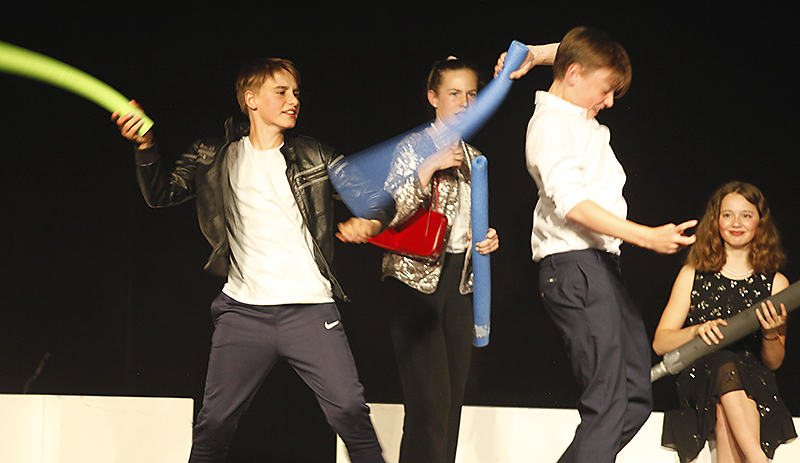
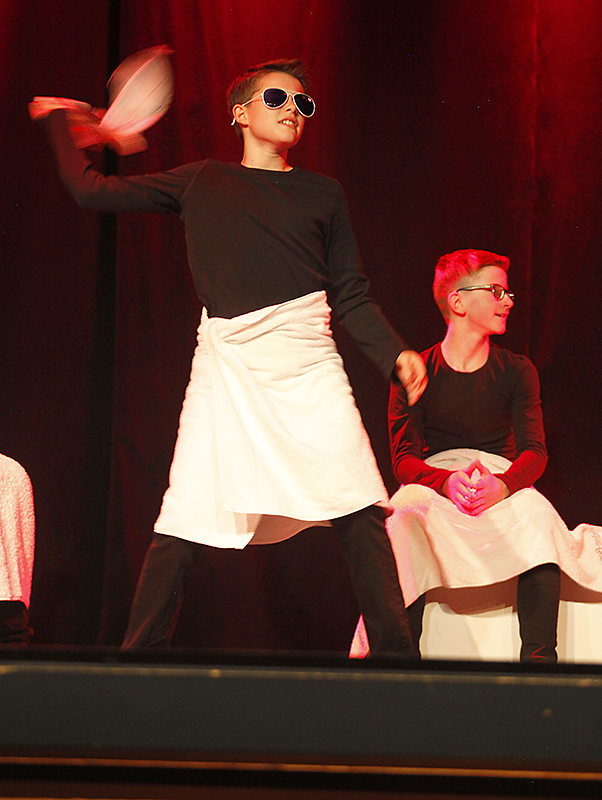
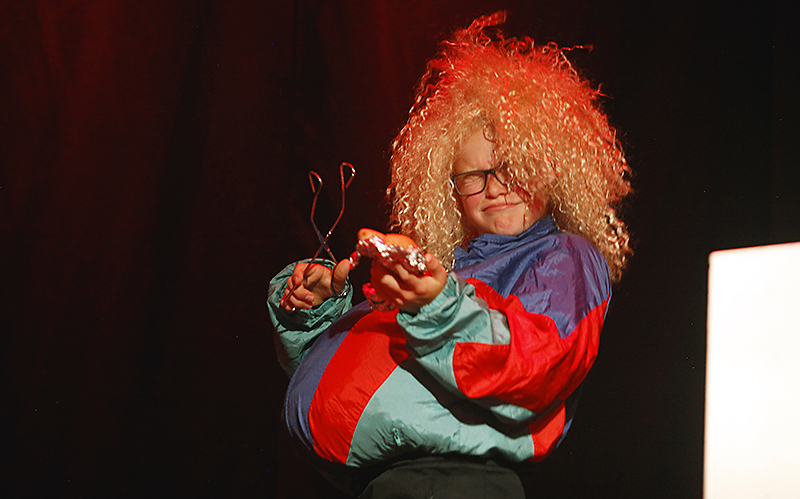
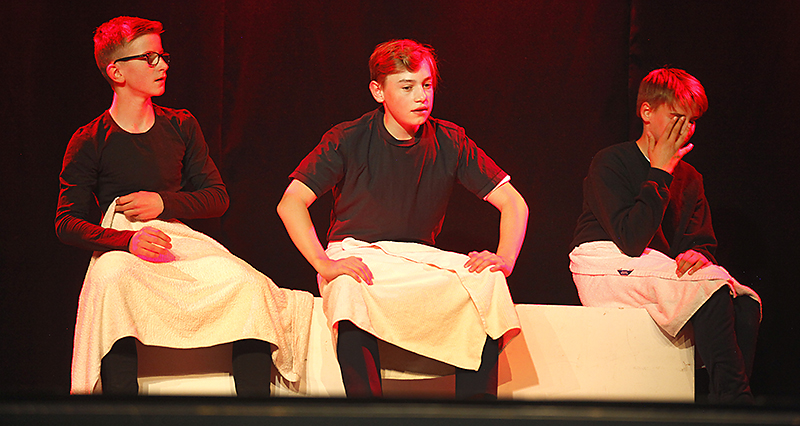
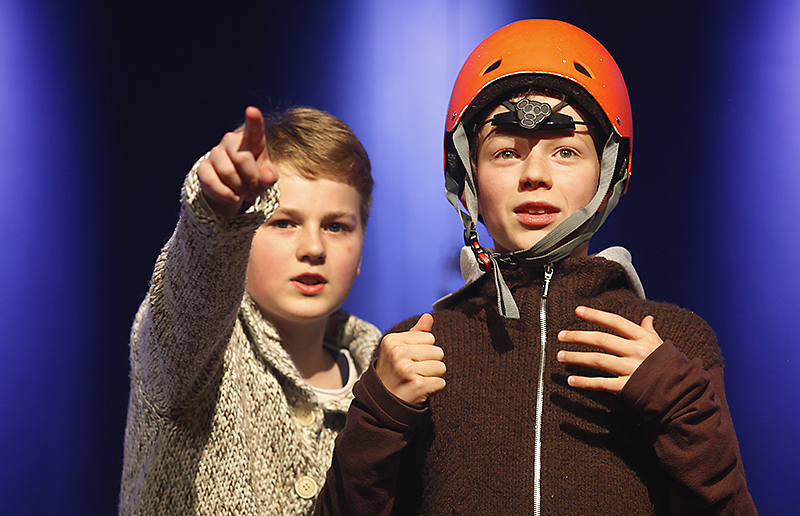
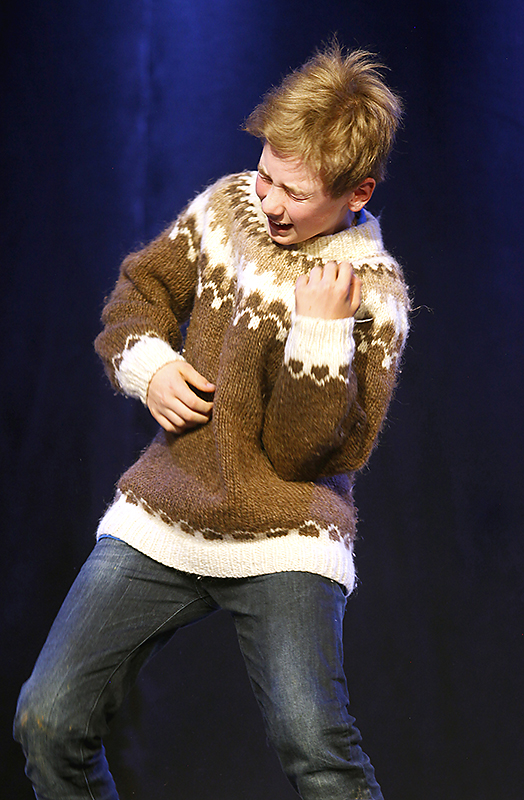
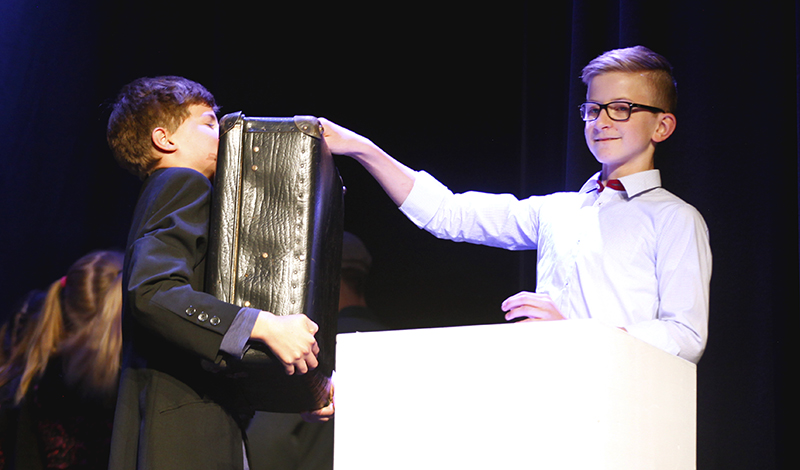
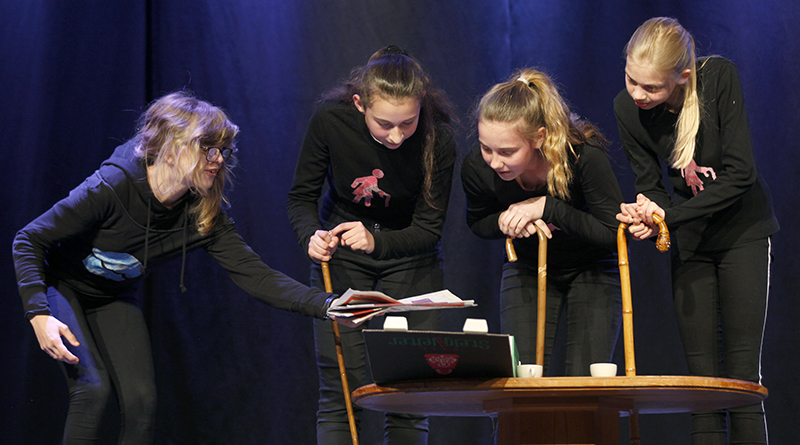
The audience has probably never laughed so heartily at a performance by the 7th-grade theater workshop—and they laughed all evening long. The atmosphere in the packed Forum was lively from start to finish, with the audience applauding seamlessly from one scene to the next. – This is the best sign that the students, teachers, and the professional actors assisting with the direction did everything just right.

Classes 7b, 7c, and 7a performed their plays in exactly that order. “False Suspicion” was the title of the play that Class 7b had rehearsed under the direction of Ines Vielhaben and Daniel Sempf. In a brilliant way, the young ensemble managed to transform a current and rather serious topic into an entertaining stage play: A murder had taken place during a demonstration by supporters of a united Europe against advocates of a unified Germany. With expressive acting, plenty of wit, and obvious enjoyment of the performance, they succeeded in presenting the case and its resolution in such a way that they perfectly struck the right humorous note with the mostly adult audience, despite the not-so-funny real-life context.

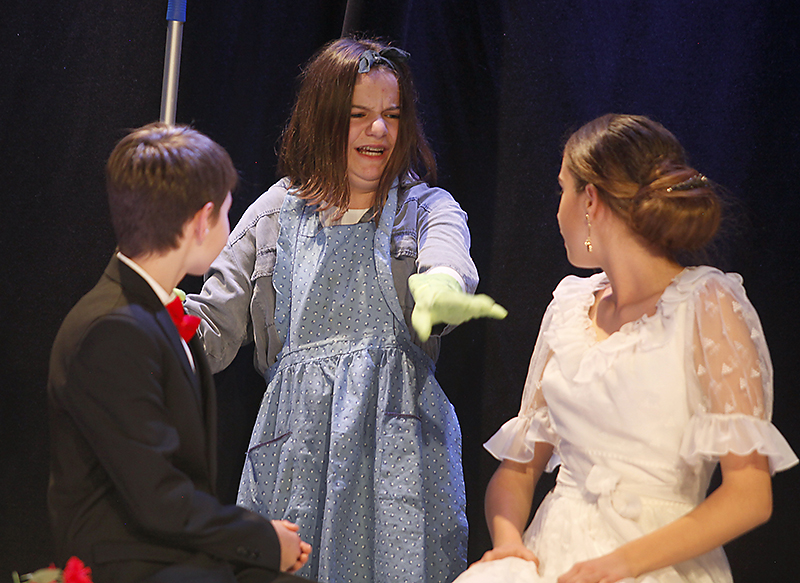
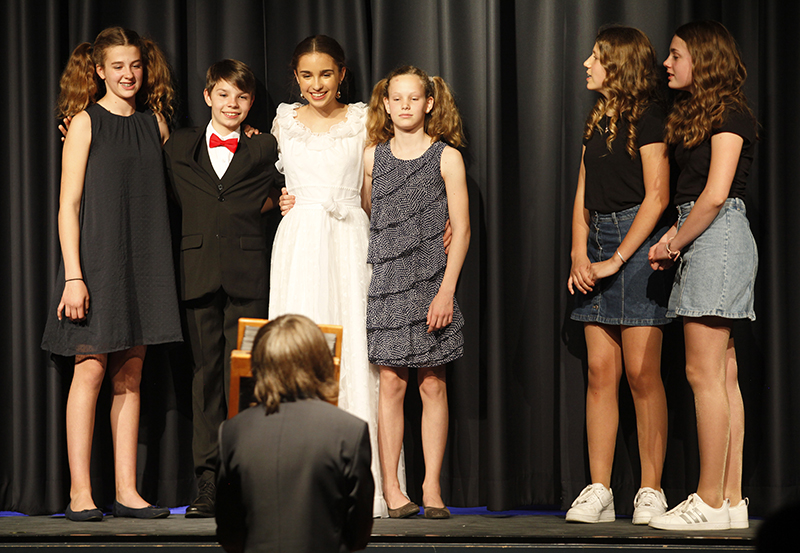
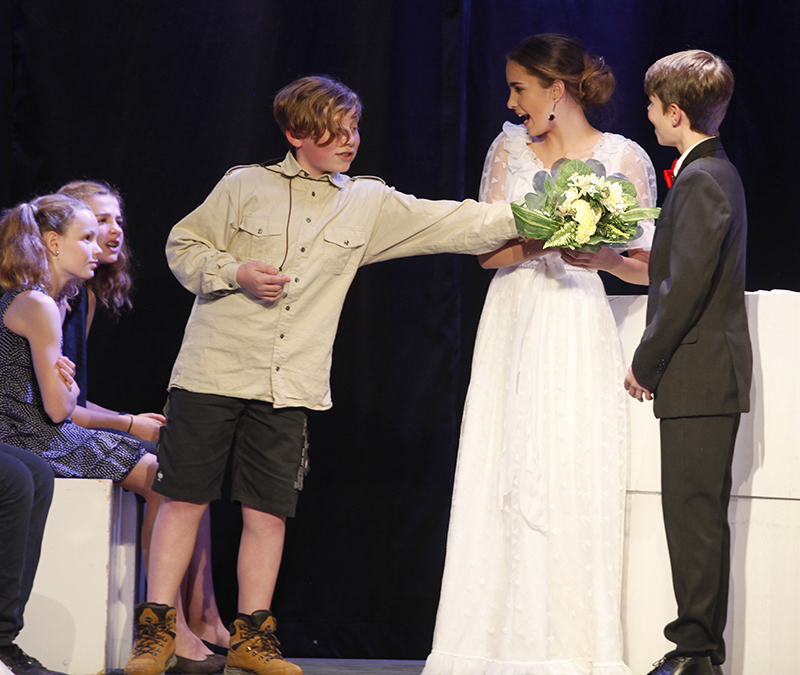
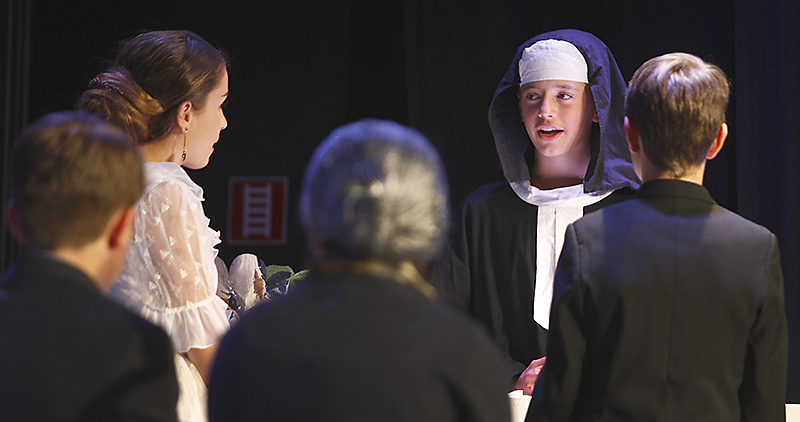
“Once and Never Again” was the title of the play by Class 7c, which had been brought to the stage under the direction of Lisa Braun and Michael Pietsch. It dealt with the hurdles a long-term couple had to overcome while planning their wedding. Almost everything went wrong; no one did their job with the necessary care—leaving behind a rather stressed-out bride whose nerves frayed with every mishap. Of course, when you’re the one in trouble, you don’t have to worry about the mockery: the audience’s amusement grew in direct proportion to the chaos. A great performance by Class 7c, which received a lot of applause.

The presentation that Melisande Lauginiger and Michael Köckritz had prepared with Class 7a depicted scenes from “real” family life. Three families—each different enough in their own right and dealing with various internal conflicts—come together at a family therapy center. There, they learn that things aren’t going smoothly elsewhere either and even form personal connections—only to end up asking themselves whether the therapist at the center might actually be the craziest one of all. The question “Uh, is this the bar?” was the anticipated way out of the chaos—and at the same time, the title of the production.

After the three performances, the audience left the Steinmühlenforum visibly entertained and in high spirits. That evening had once again shown that, when it comes to theater, the Steinmühle couldn’t ask for anything better than the fantastic dedication of their fellow students, the enjoyment all seventh graders took in the experience, and the acting guidance they received from professional actors Daniel Sempf, Michael Pietsch, and Michael Köckritz.

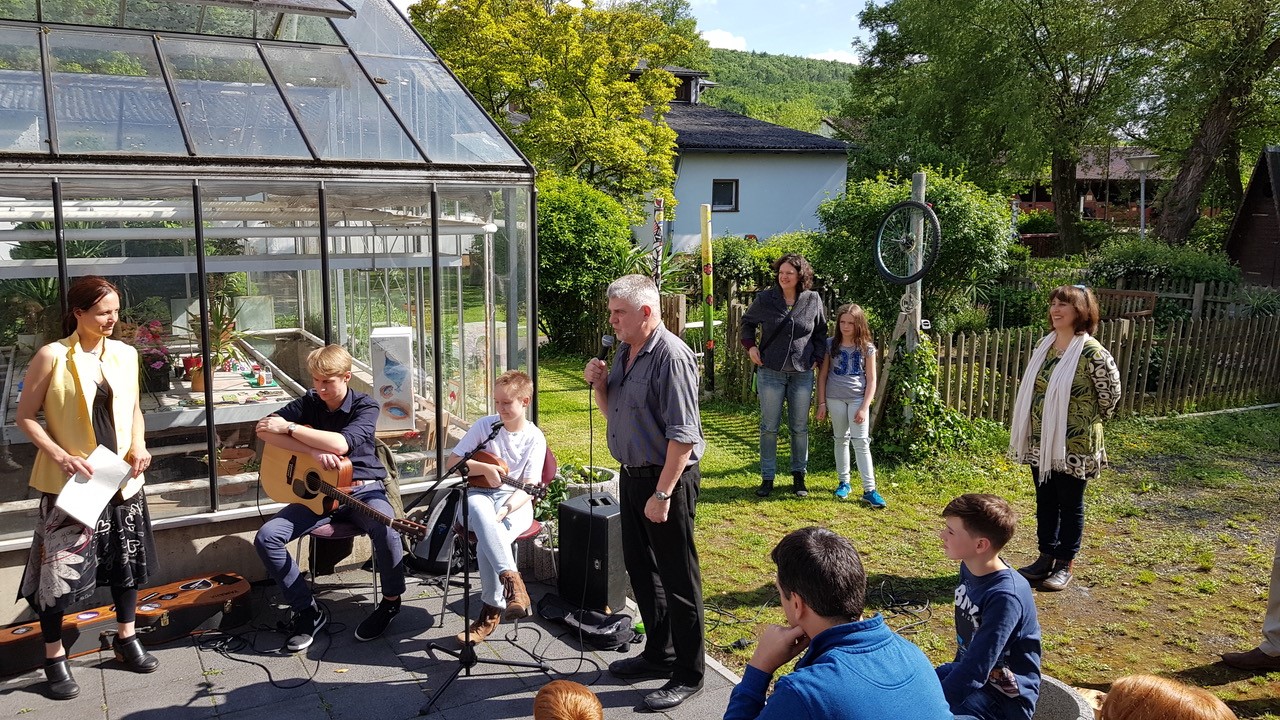
At the opening of this year’s art exhibition in the Steinmühle greenhouse, more than 50 visitors marveled at the three-dimensional artworks created by nine art groups consisting of students of various ages—from 5th grade through the E-phase. Classmates, parents, teachers, and Steinmühle staff enjoyed the art and nature in the beautiful, natural setting of the greenhouse and the school garden.

The opening was accompanied by musical performances from the two talented musicians, Talea Funk and Fynn Konnertz. The event was rounded out by culinary delights from the elective course (WU) Party Service, led by Fido Wagler.
Where do we come from? Who are we? Who will we be? How will we live?

Students in Ines Vielhaben’s E-Phase class have explicitly explored this theme through their sculptures, which greet guests at the entrance to the greenhouse. How much of the instinctive, animalistic lies within humans? What identity or identities will people create in the future? Into what kind of avatars or cyborgs will they evolve?
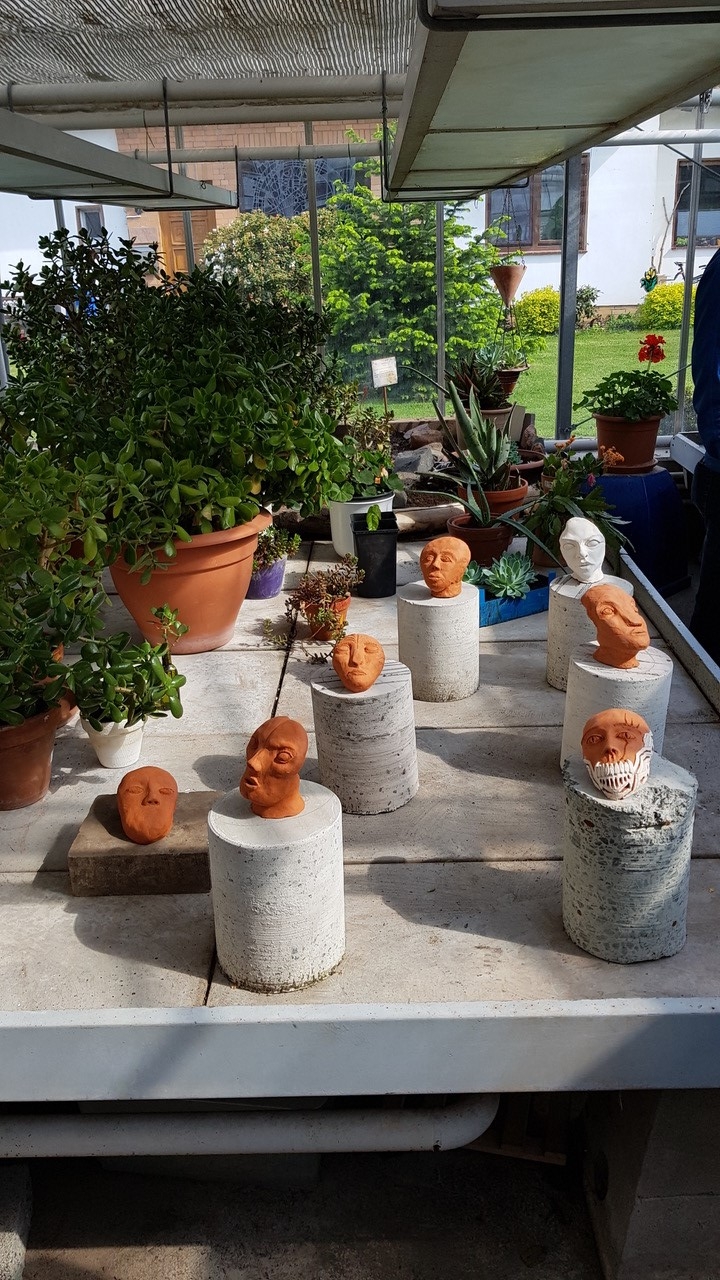
The modeling course always took human forms and proportions as its starting point, since they were the models all around us in the clay workshop. But these had to be distorted, elongated, or compressed—depending on whether the goal was to create a monkey, a human, or a cyborg.

The surrealist boxes from the same grade level are on display . The project began in Art Room 507, which the treasure chests were intended not only to enhance artistically but also to personalize.

Formally, these boxes draw inspiration from the works of Mexican artist Frida Kahlo and Belgian surrealist René Magritte. Here, a dreamlike imaginary world and reality are interwoven in equal measure. They were created by the art class under the direction of Heike Rabben-Martin.

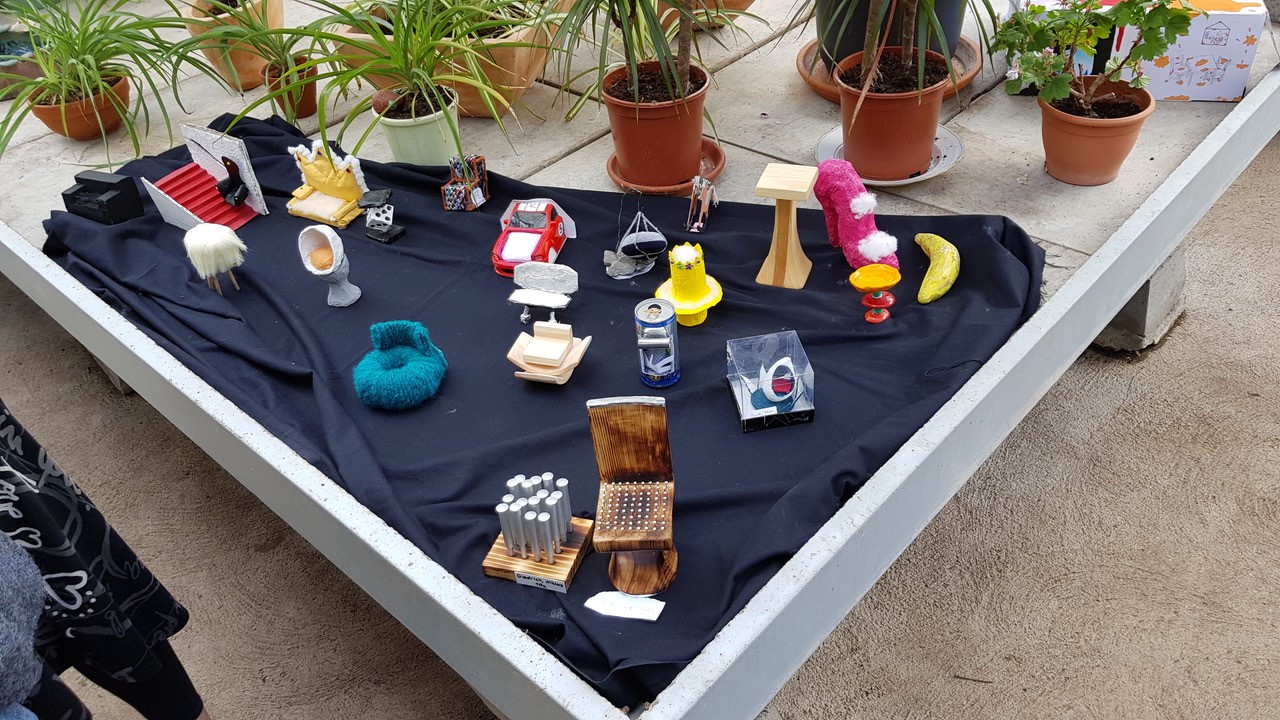
In Dr. Sabine Kraft’s class, the young designers from classes 10b and 10c are presenting models of seating furniture, some of which are futuristic: The teams turned their designs—which were initially developed as thumbnail sketches—into models.

The groups, working in the field of industrial design, chose “seating furniture” as their theme. The finished product had to meet one additional requirement: it had to fit in the palm of the hand! Otherwise, they had complete freedom in choosing the material, shape, and type of seating.
A little theory made it easier for the young artists to make their decision. As a result, the three key aspects of a successful design object were discussed beforehand.

  • Practical function: The usability of a design object from the user’s perspective.
  • Aesthetic function: The main criterion is the interplay between primary and secondary forms, as well as color, material, and surface, as perceived by the viewer.
  • Symbolic function: It determines, for example, whether the product can convey a higher status or merely give the impression of it, and how it is perceived by others—from the owner’s perspective.

Finally, we cut and assembled, hammered and glued like crazy. Some attempts didn’t go as planned and had to be redone.


Architecture in the Style of Hundertwasser

Class 10a chose an architecture theme with the intention of trying their hand at model-making in the style of Hundertwasser. First, the teams of architects built a scale model out of matchboxes, which they covered with plaster and smoothed out. With this prepared surface, they were ready to get started!

Above all, avoiding right angles—but of course also colors, shapes, and a variety of ornaments—were the design elements that inspired the working groups. With each “construction phase,” the groups continually developed new ideas, which they brought to life creatively.

Friedensreich Hundertwasser would have been delighted to see how much “his” unconventional views continue to inspire young architects even today.

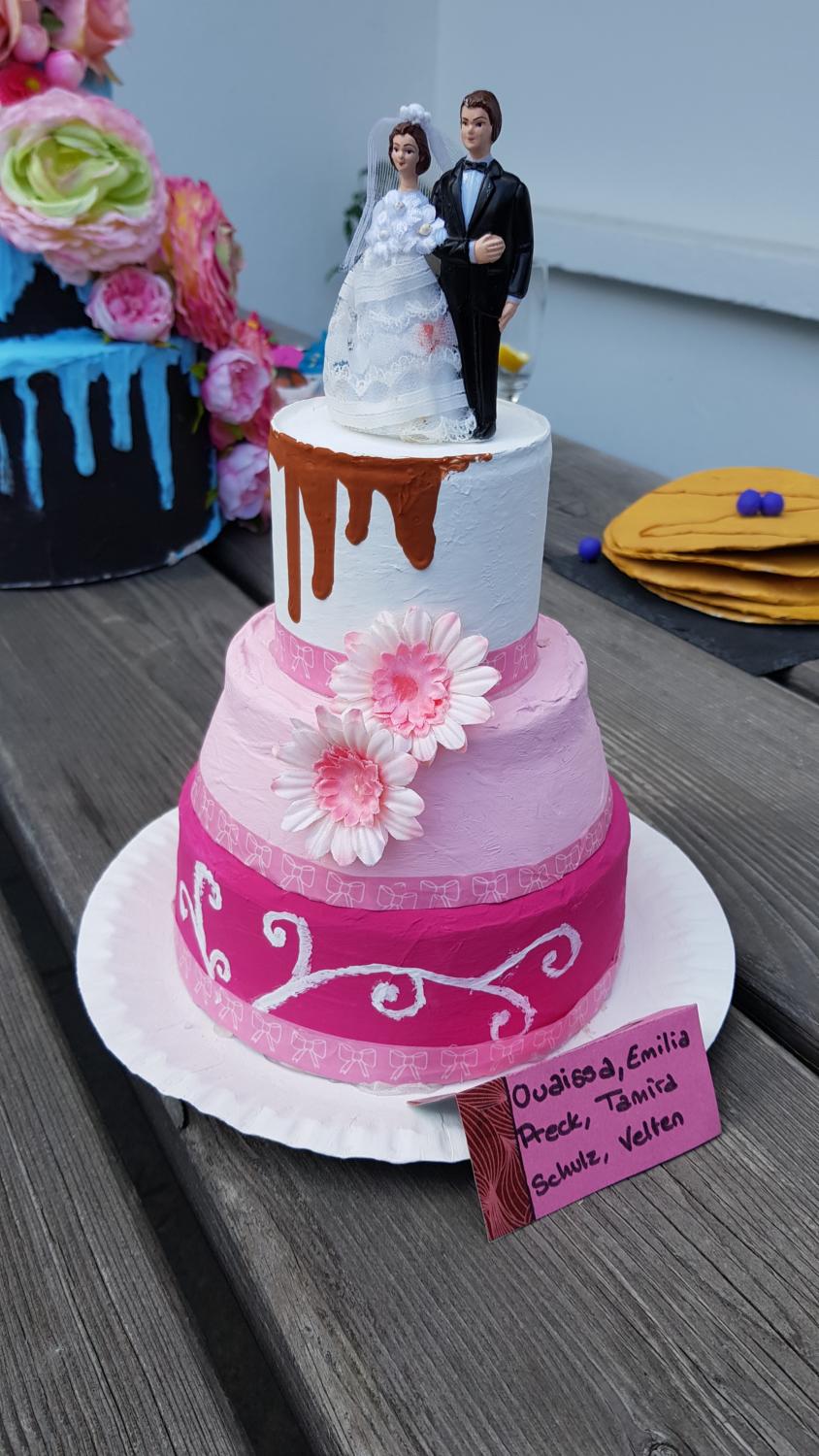
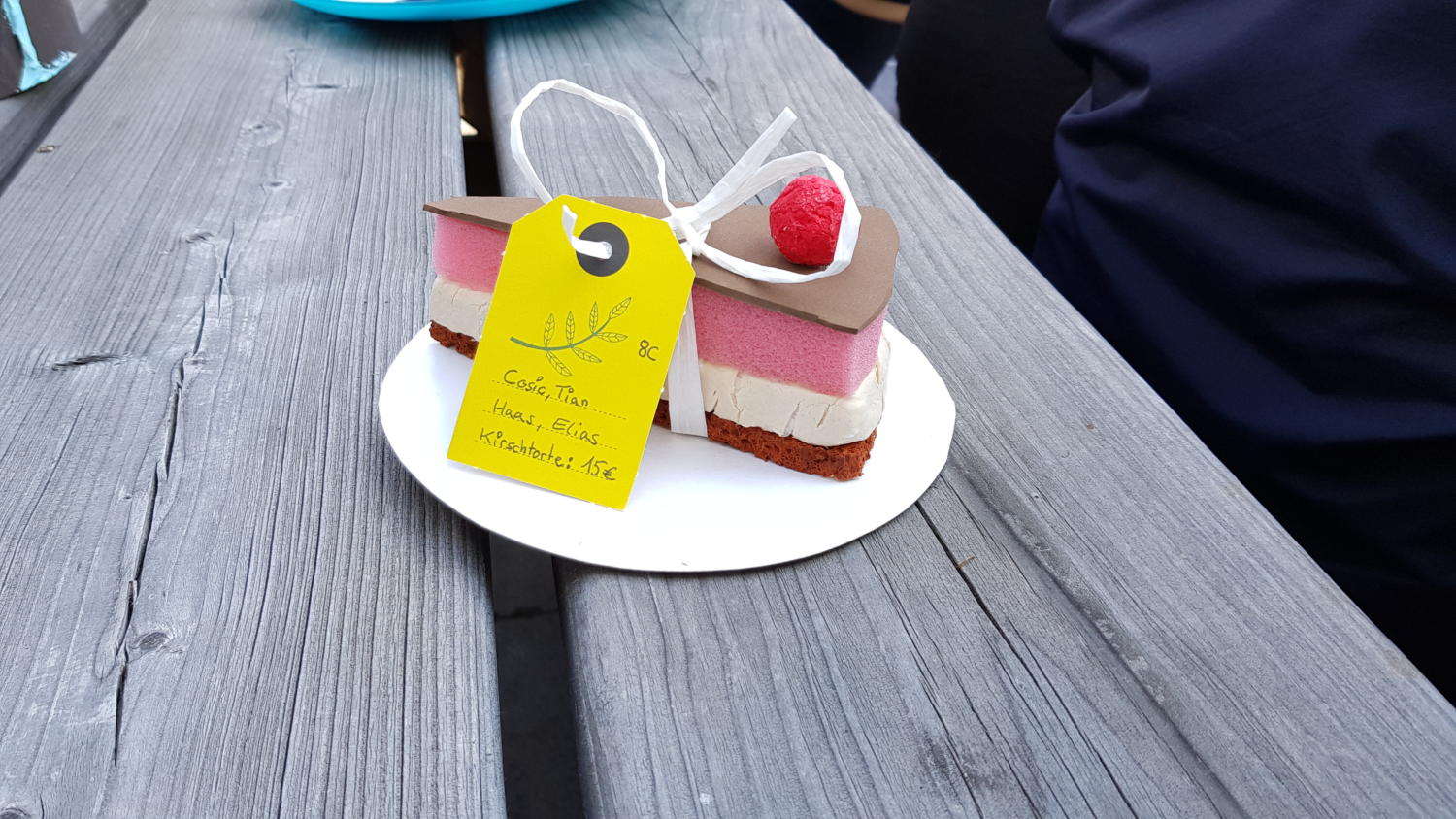
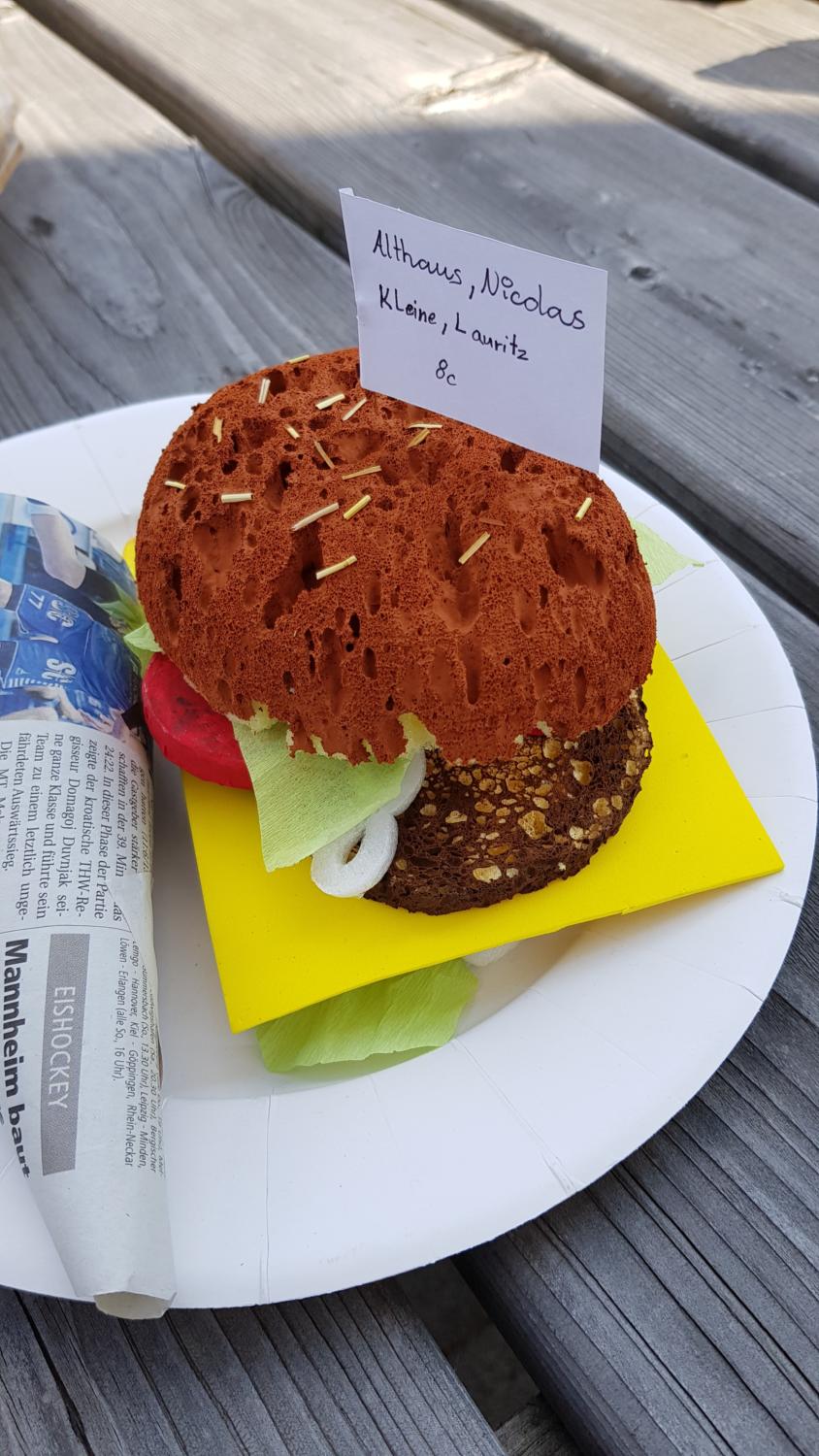
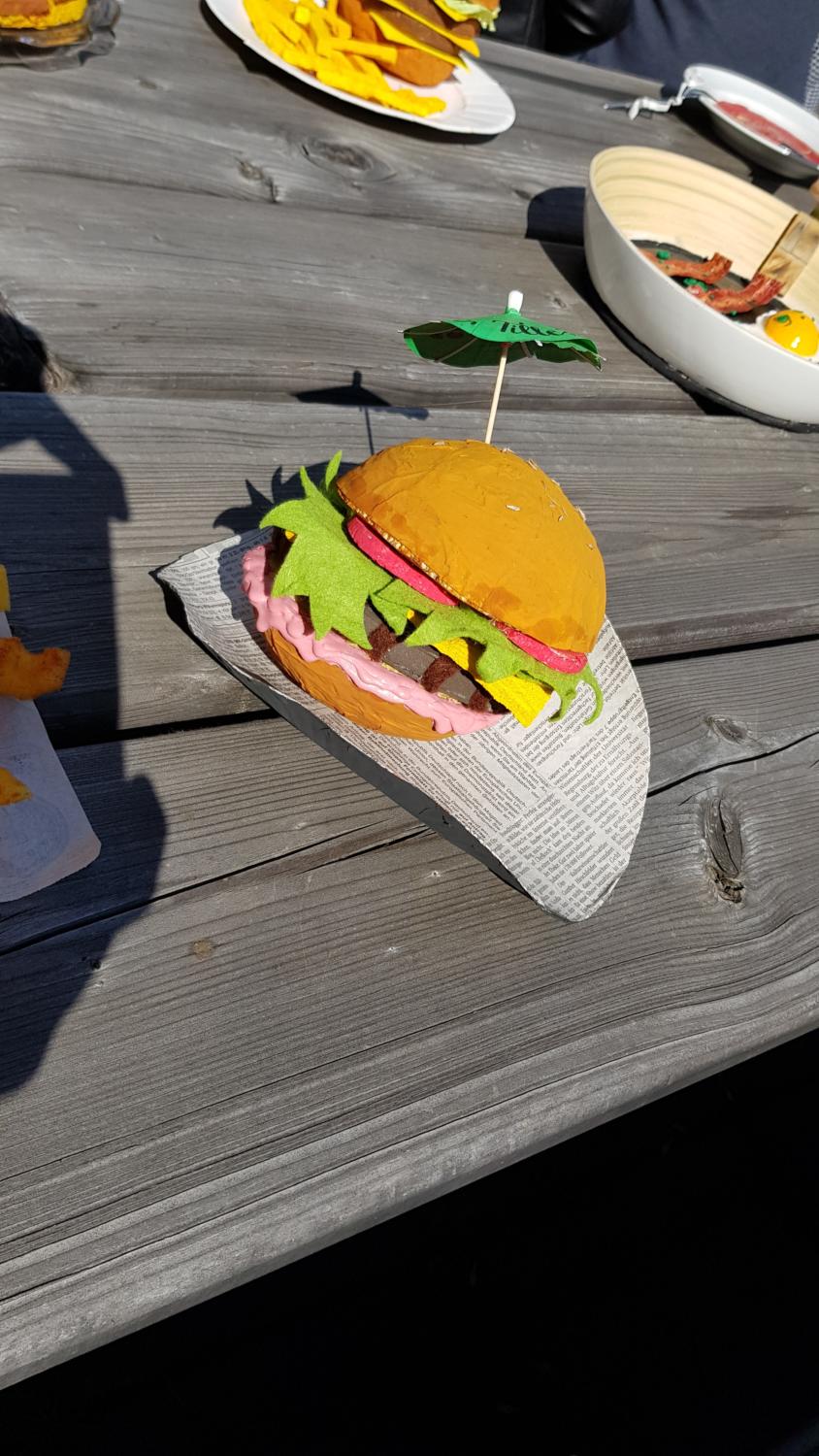
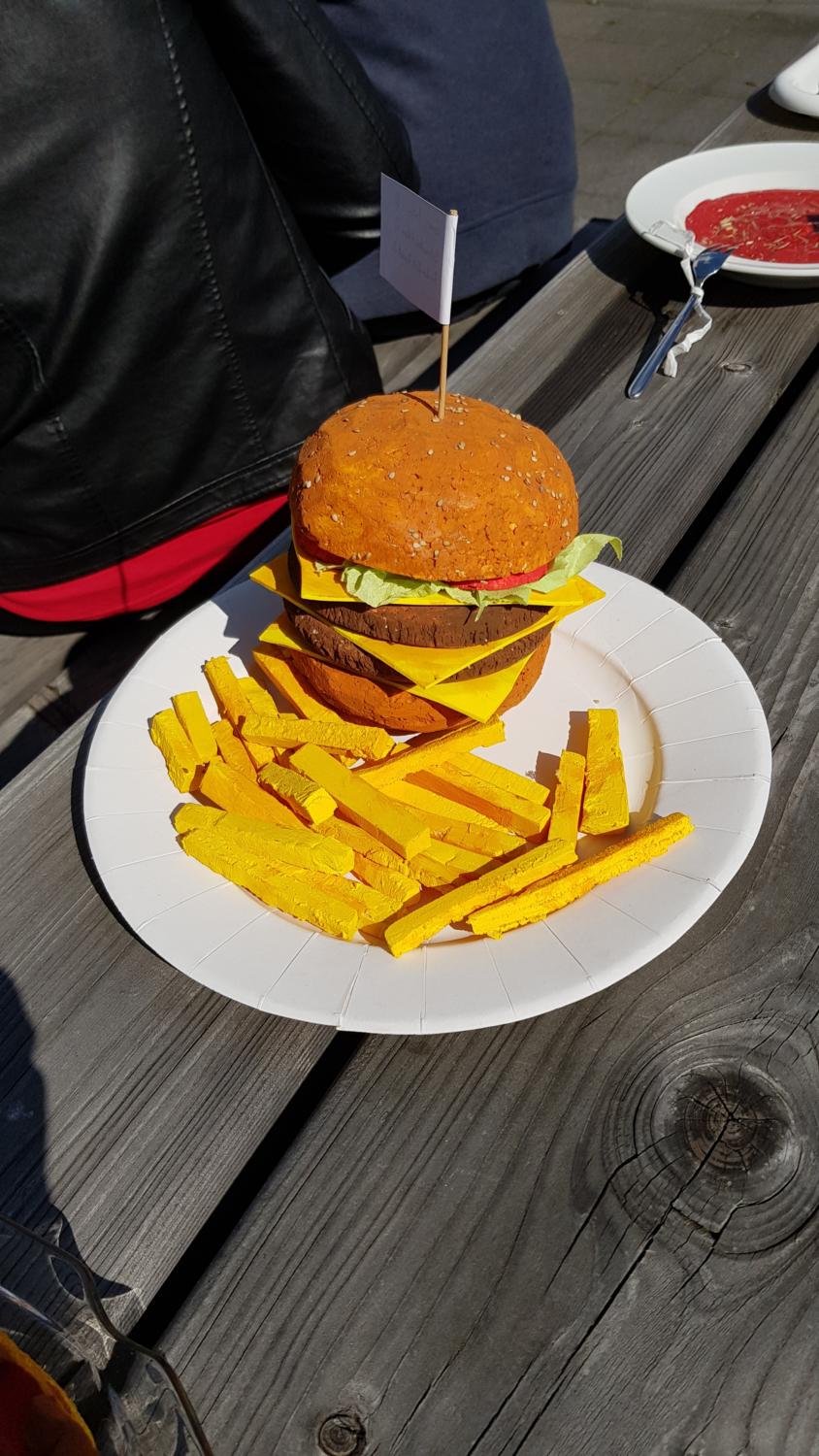
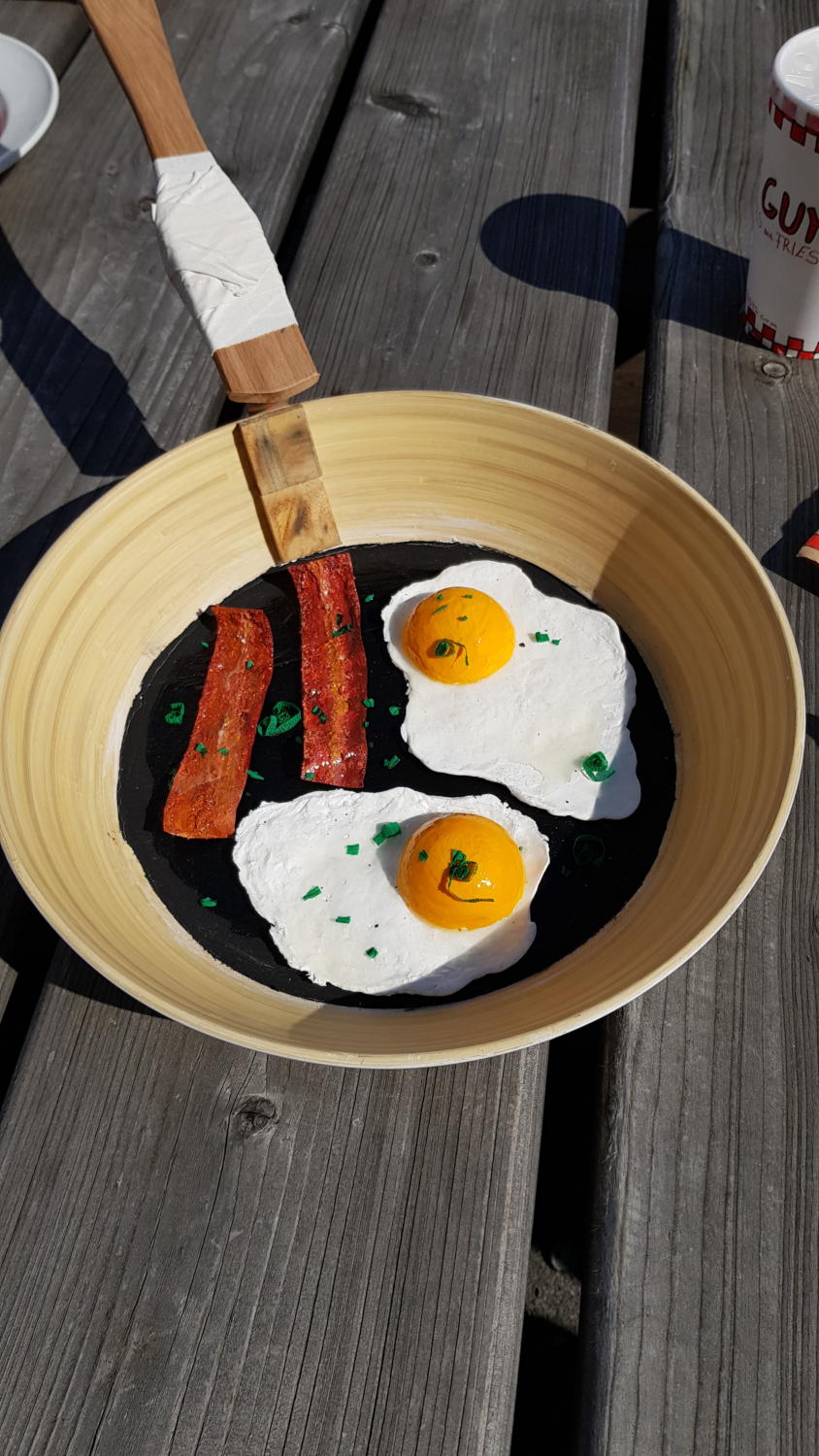
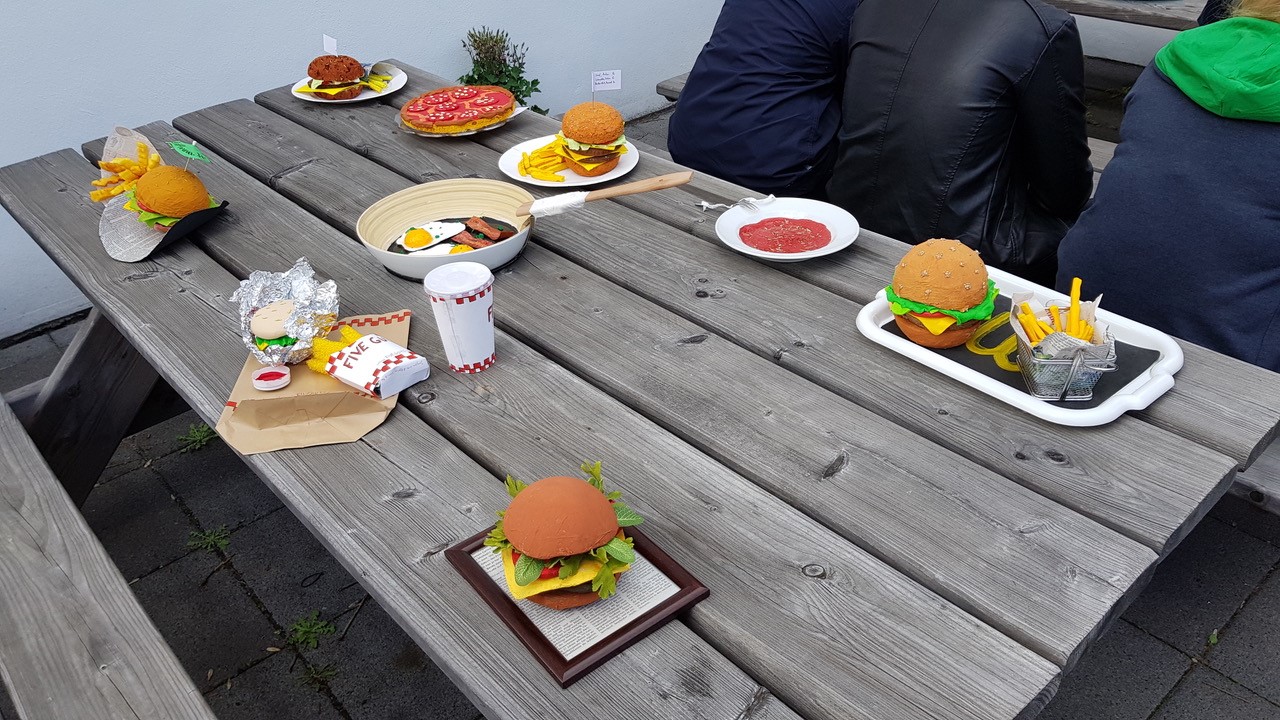
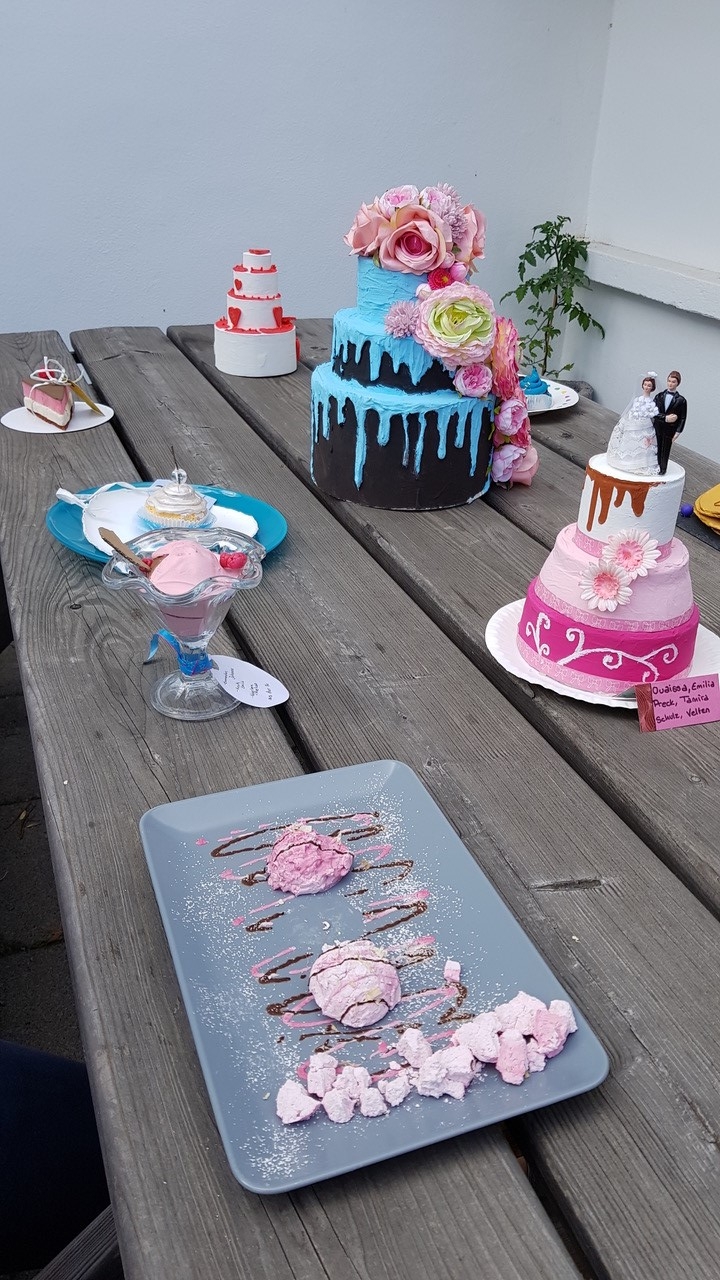
One of the highlights of this year’s exhibition is definitely the food-styling mannequins created by the 8th-grade students.
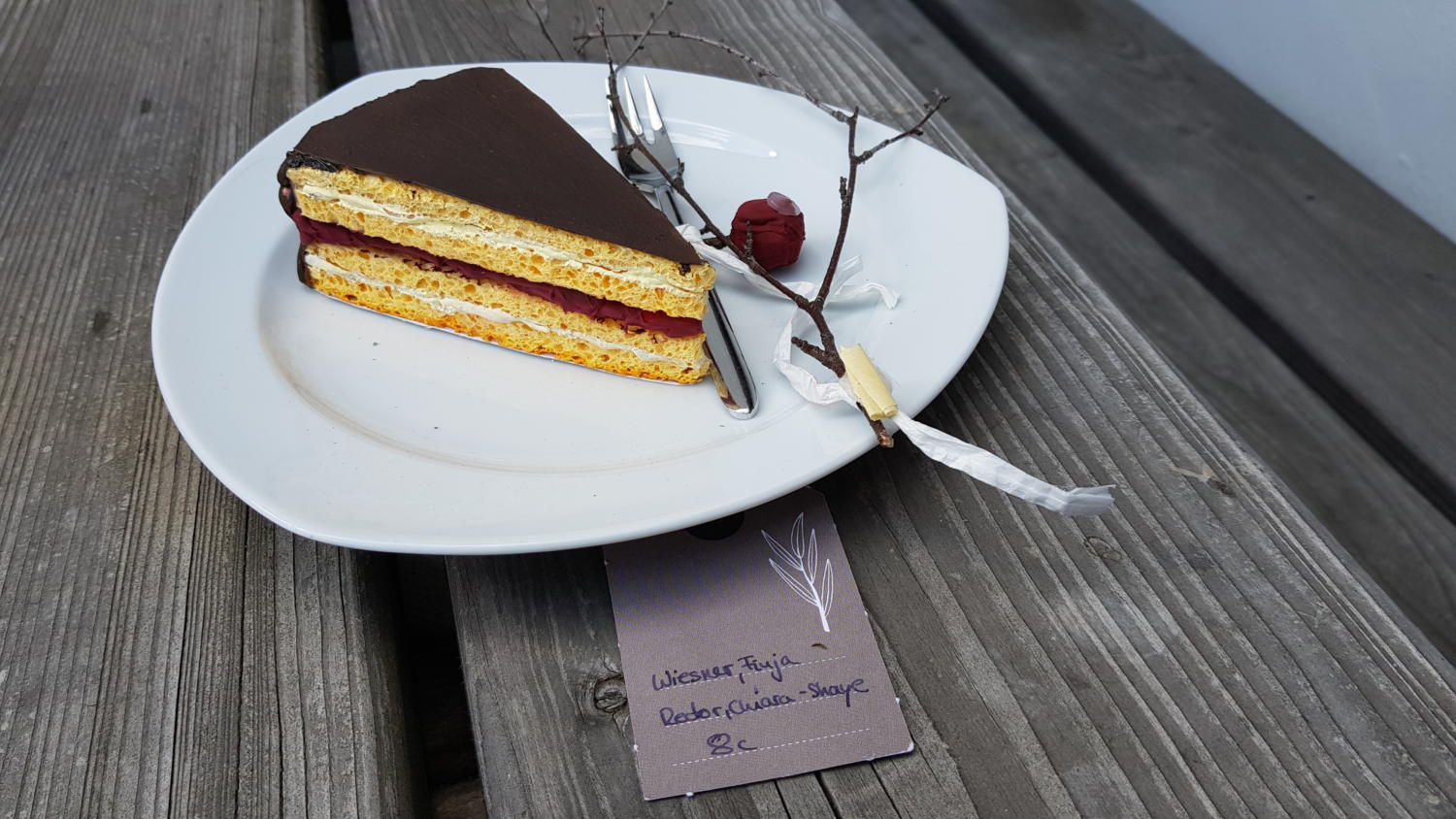
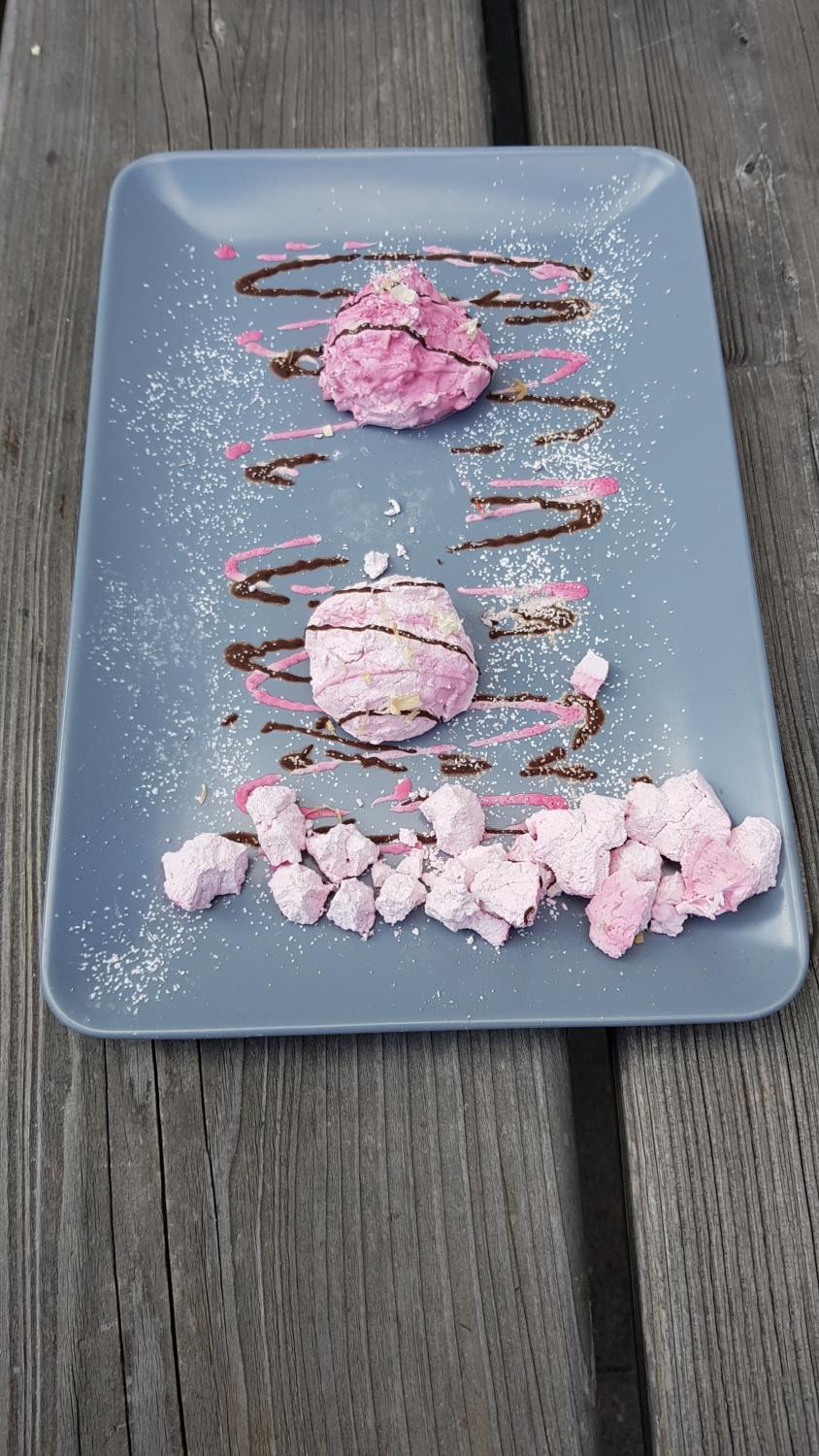
 

Food styling refers to the preparation of food for promotional purposes. Images of (seemingly) freshly prepared food are in high demand, particularly in the fields of packaging design and audiovisual media.

Food photography can be very time-consuming. Therefore, the products used must remain visually appealing and “crisp” over an extended period of time. For this reason, using “dummies” is more efficient than using real food or baked goods. The latter would quickly lose their appetizing appearance. With the mock-ups, however, texture and color—signs of freshness—are preserved. Another advantage of mock-ups is that they can be reused. Using them is therefore also more economical than wasting edible food for advertising. The food stylists from classes 8a and 8c experimented with various materials and used them to artificially recreate the ingredients and components of their favorite dishes in their projects. The student teams’ preferences are clear: burgers with fries, pizza, and desserts top the list!

Our youngest artists from Class 5a created magic cauldrons that would surely be a big hit on Diagon Alley. Based on their designs, they shaped the vessels using simple construction techniques and decorated them imaginatively. In addition, the fifth graders modeled animals on ceramic tiles. Using indentations and raised areas, they carved the shapes out of the tile’s surface or pressed them into it. They were also tasked with accentuating the animal relief with an appropriate surface finish.


 

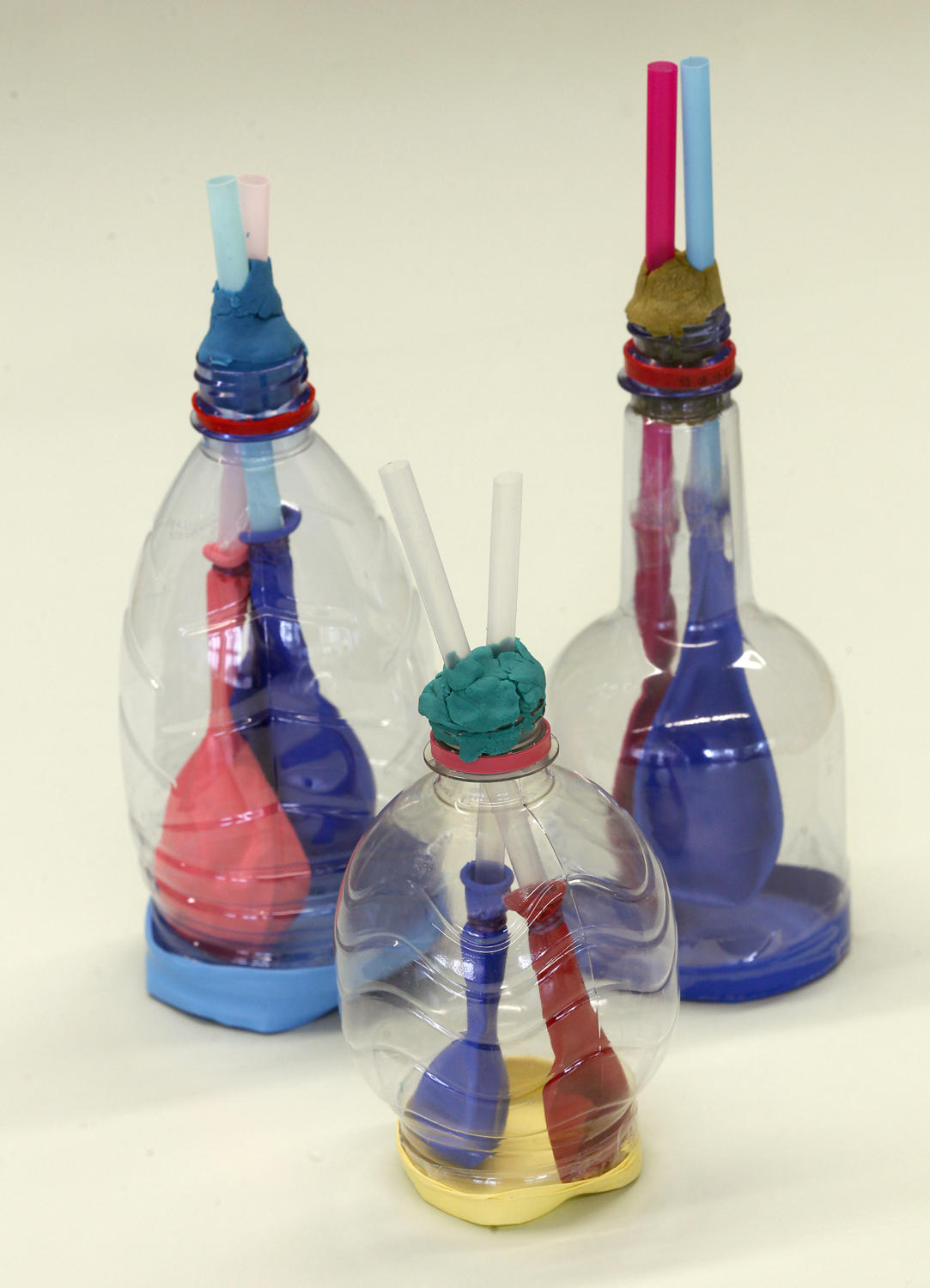
How does human respiration work? And how do fish manage to live underwater without suffocating? Students in 5th grade learned about this in NaUnt, the science class taught by biology teacher Heike Rabben-Martin. Lenja Kissling from class 5b wrote an essay about how the group approached the topic:

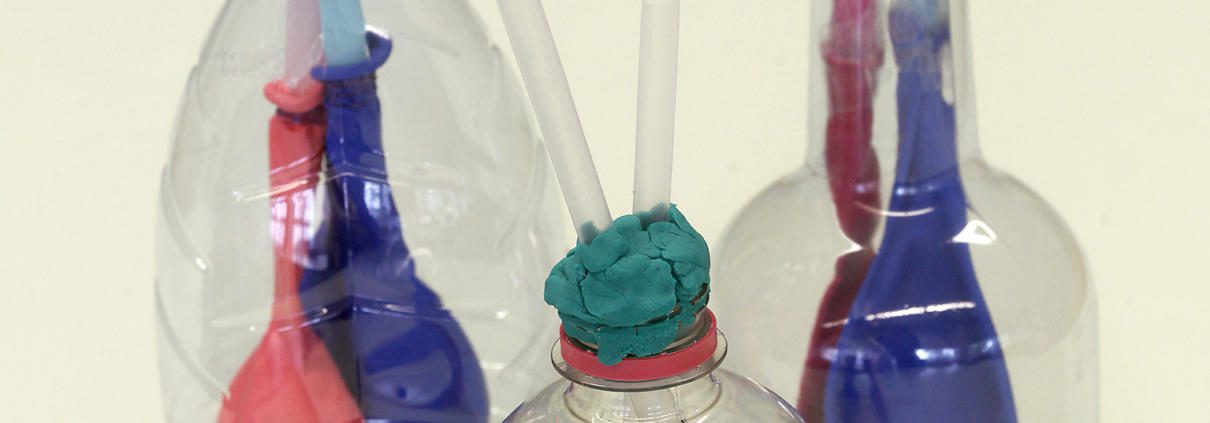
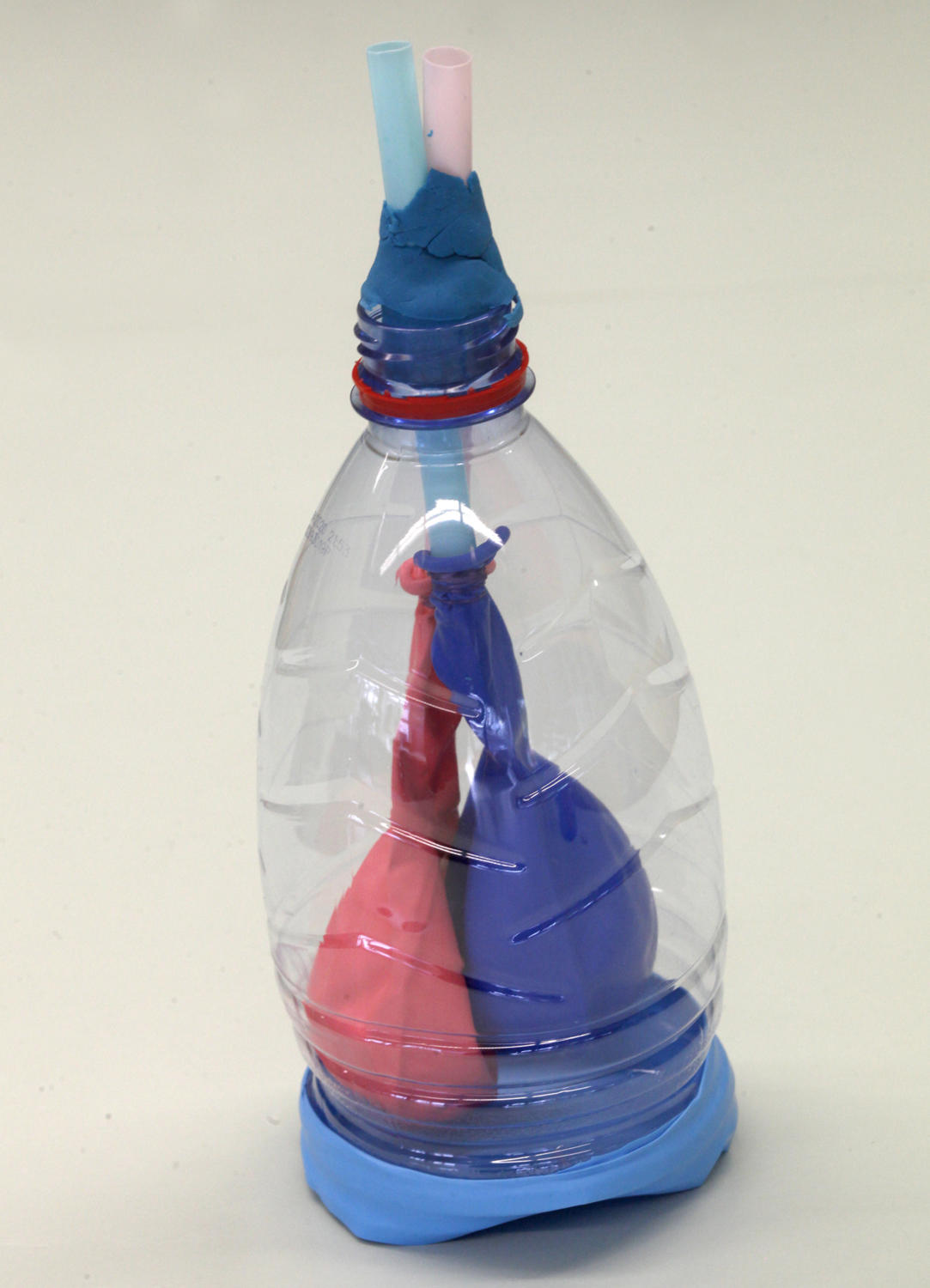
“At the beginning, we built a simple model of human respiration in NaUnt, which you can clearly see in the photo. We, as pulmonary breathers, take in air into our lungs. The ambient air contains only 21 percent oxygen. However, our lungs are able to absorb this oxygen from the air and release it into our bloodstream.

The lungs fill with air when we inhale and empty again when we exhale. The diaphragm contracts when we inhale and relaxes when we exhale. When we inhale, oxygen-rich air is drawn into the lungs through the mouth or nose and down the windpipe, and oxygen-poor air leaves our body via the same route.

The researchers then studied the fish’s respiration to determine how they manage to live underwater without suffocating.

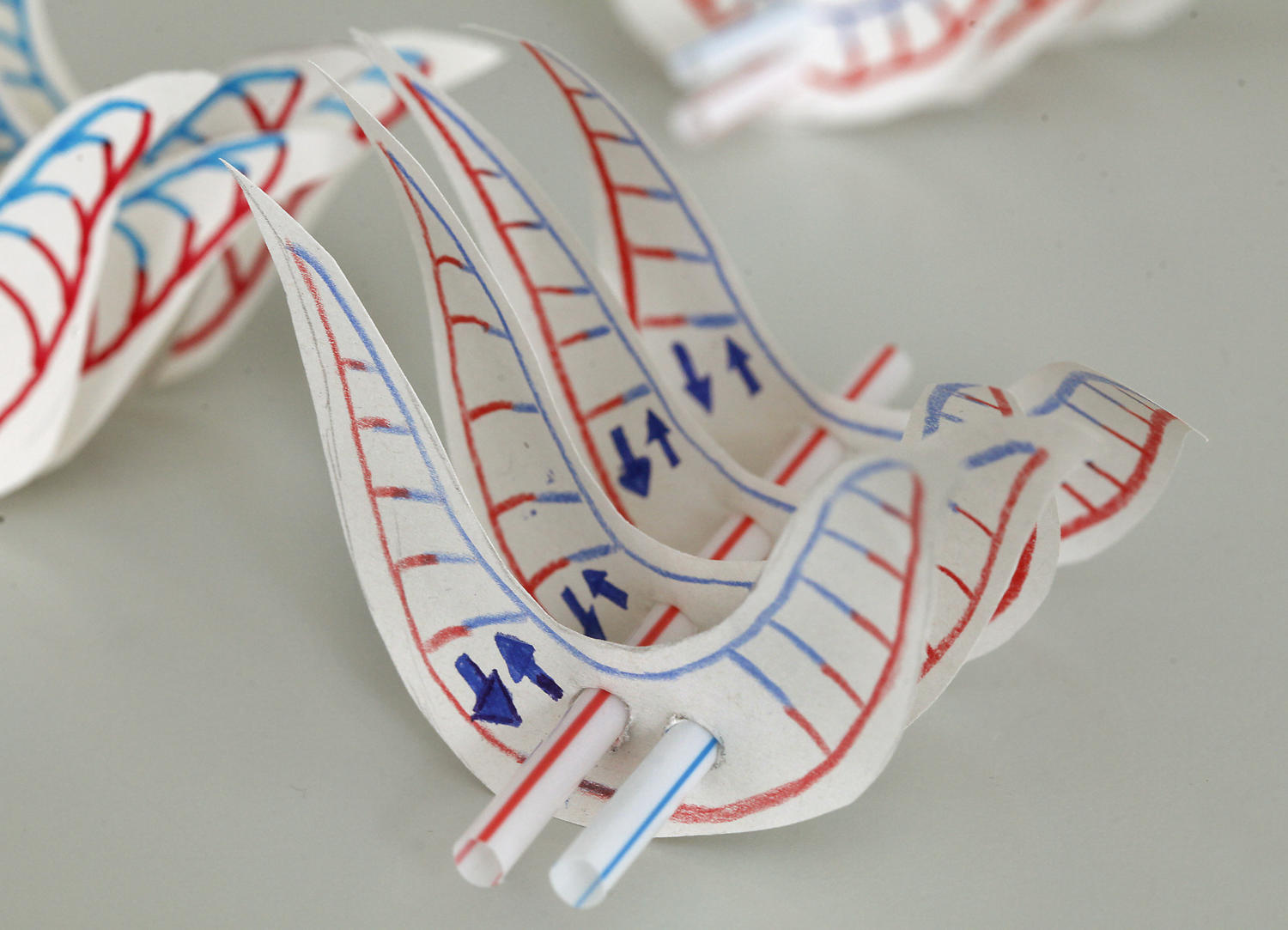
In class, we learned that the main organ fish use to breathe is their gills. Fish open their mouths, allowing water to flow in. When they close their mouths, the water flows back out through the gills. The gills absorb the dissolved oxygen from the water, and the water that exits the gills contains less oxygen.

“To better understand the structure and function of gills, we made a model of fish gills in class, as shown in the photo.”

Traditionally, Steinmühle Boarding School sets out on its experiential education trips in May. Students can choose from a variety of trips, which are selected and organized by the teachers. The groups left Steinmühle last Friday after lunch and returned to the boarding school on Sunday evening. They then immediately began sharing their experiences.


Hiking in the Thuringian Forest

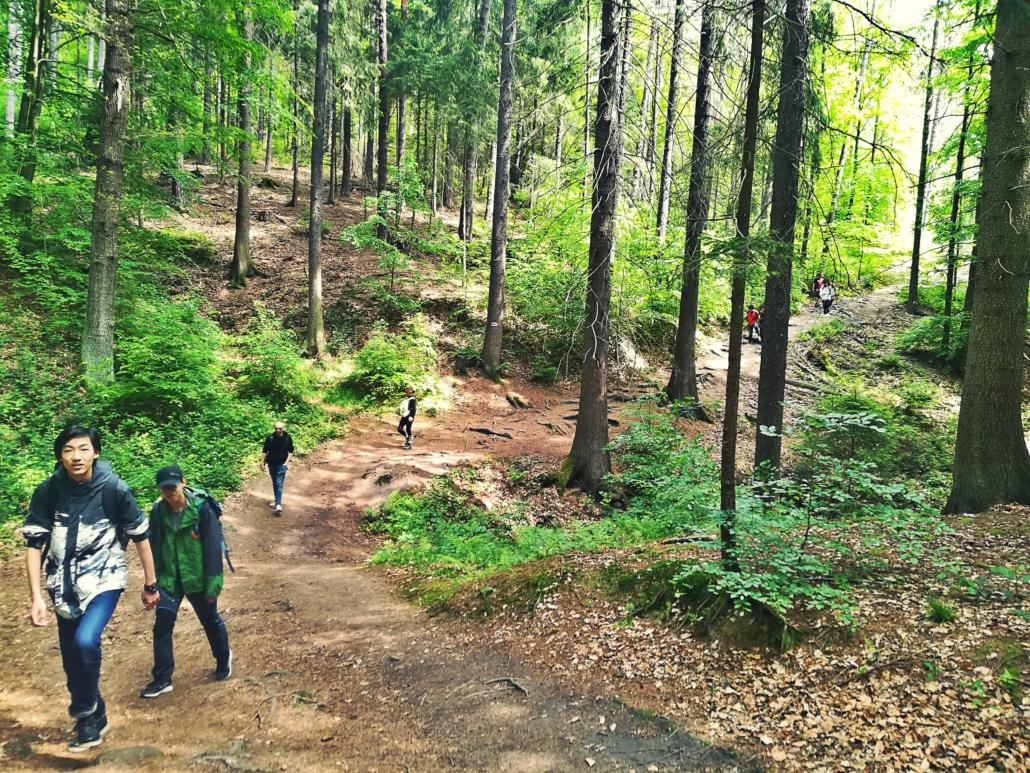
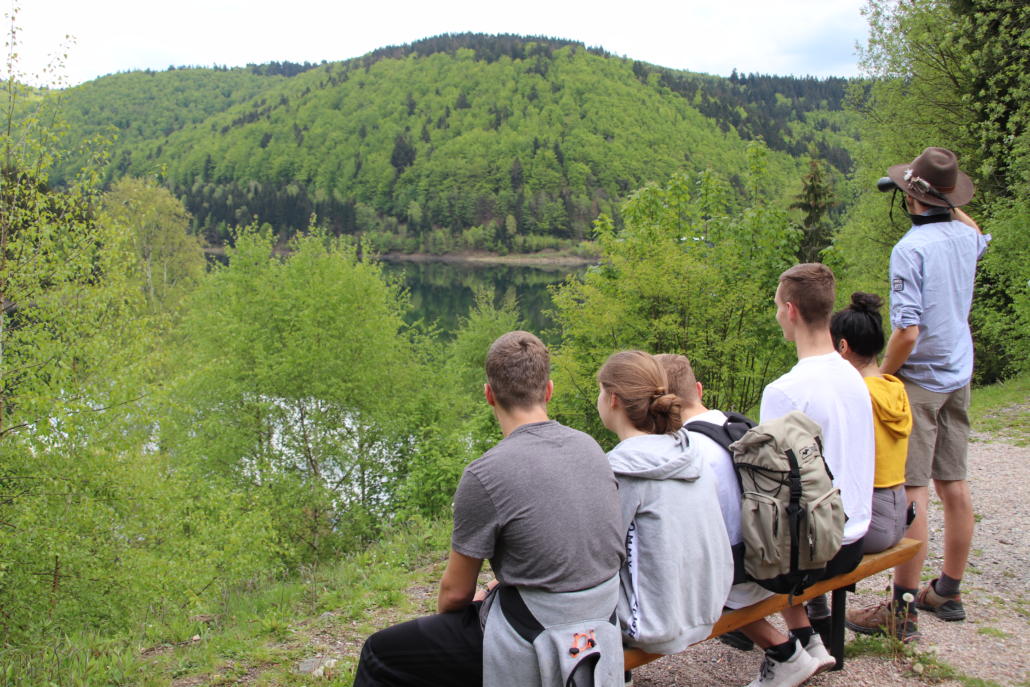
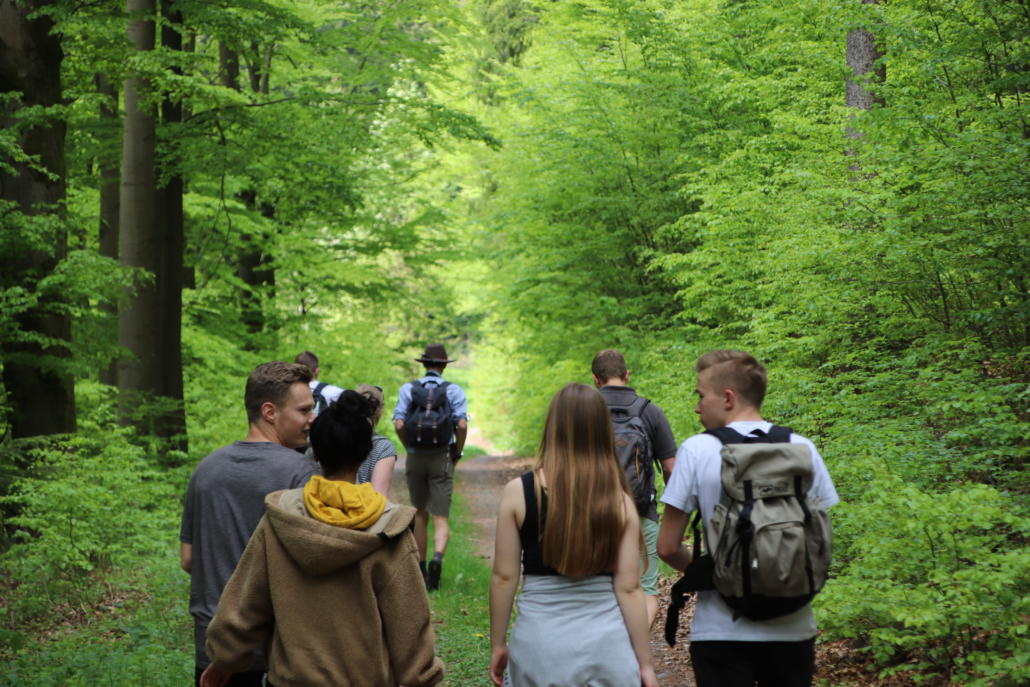
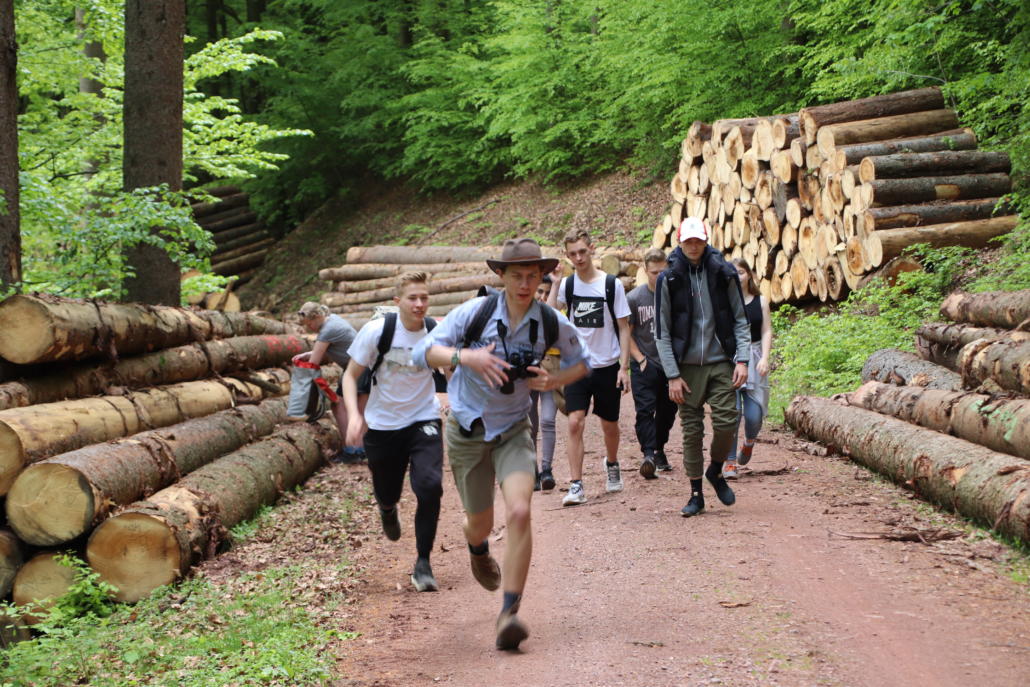
The group’s destination was a self-catering vacation rental in Großbreitenbach where they would cook together. During their stay, the team went on a hike of about 20 kilometers along the Thuringian Forest High Trail to the highest point of the Rennsteig, the 948-meter-high Schneekopf. There, they took a break to enjoy the magnificent view.

The students enjoyed the scenery during the day and spent the evening doing activities together. Finally, there was one more highlight: On Sunday, the group headed to the Avenida Therme in Hohenfelden near Erfurt before heading back toward Marburg.


Climbing in Franconia

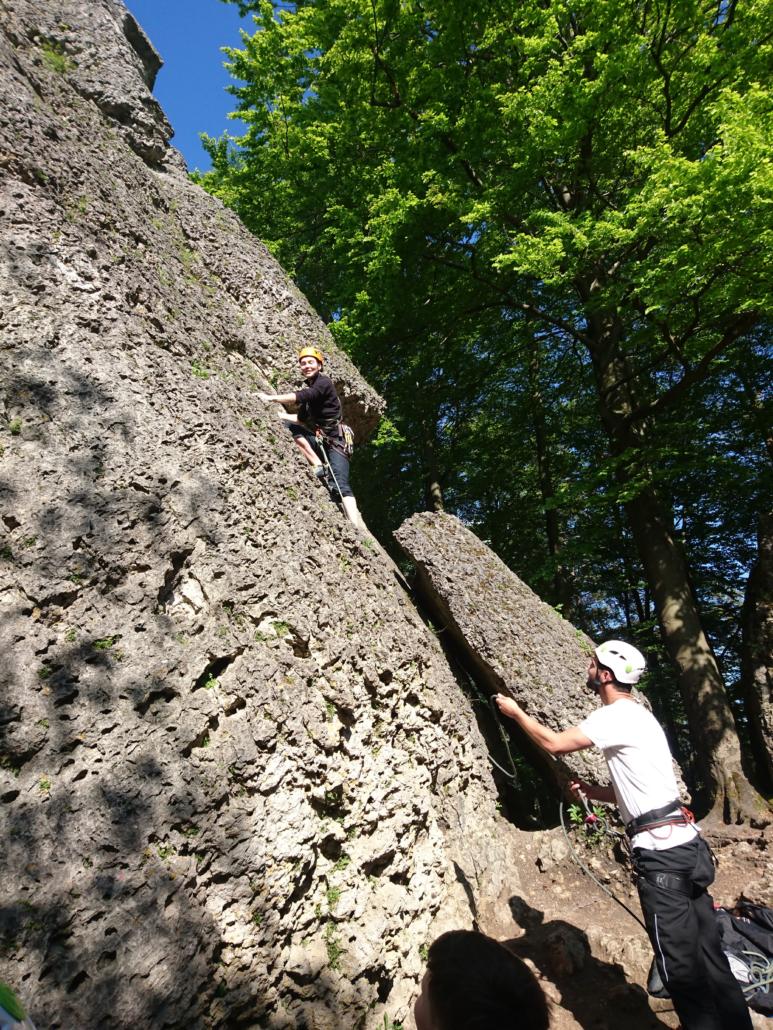
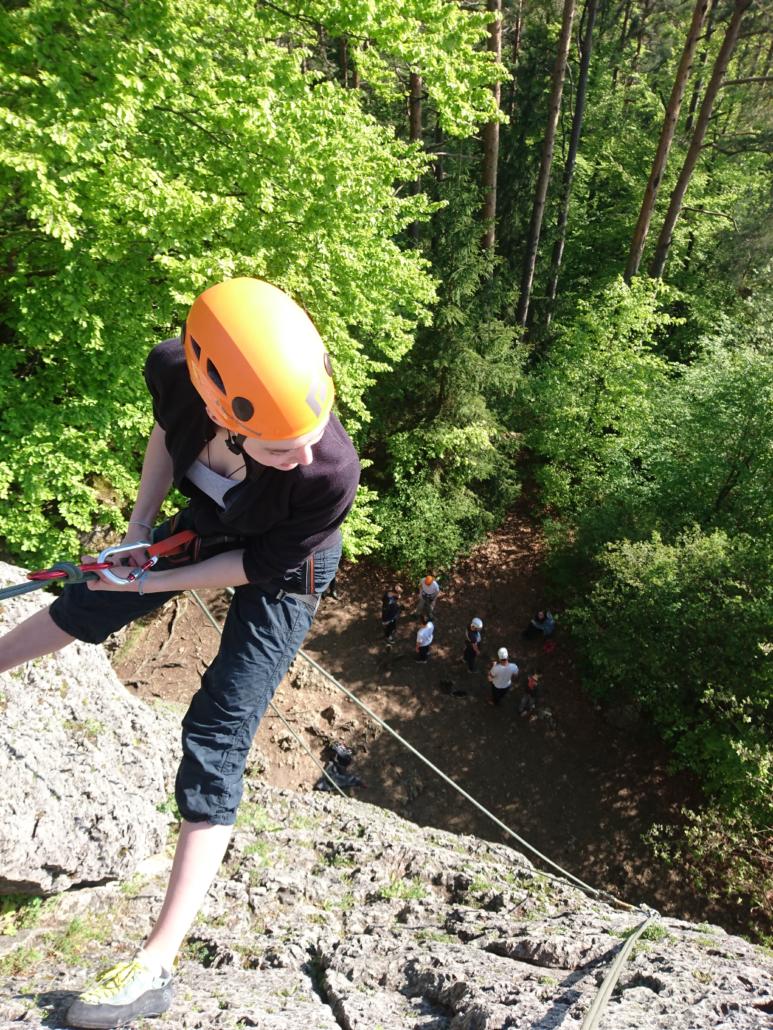
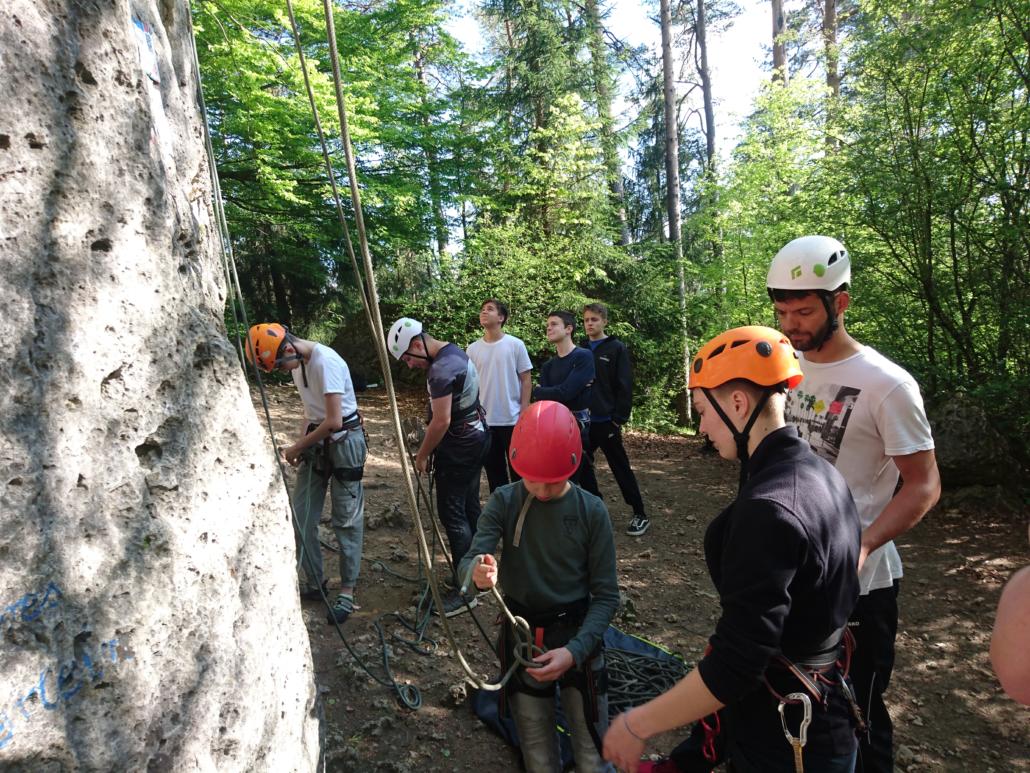
A team of nine went climbing in Franconian Switzerland near Morschreuth. The plan was to camp on the meadow of the “Zur guten Einkehr” inn. For some, it was their first time climbing on rock; for others, it was a chance to build on what they already knew. From rappelling to lead climbing to top-roping, there was something for everyone. For Leon, this was his first time lead climbing and, at the same time, his first time belaying. Jaques overcame his fear of heights, began to trust himself, and really started to enjoy the activity.

That also applied to activities that were simply about hanging out in the air, getting a taste of the mountain air and a little adrenaline—just letting yourself go. Of course, the delicious dinner was part of it. First at the inn, then off the grill on Saturday evening. In the mornings, we had a sumptuous breakfast. Everyone always pitched in and helped take care of the group.


For the group’s lead climbers in particular, the event was another highlight. It offered new experiences for everyone. The Steinmühle Boarding School would like to thank the Marburg Climbing Gym for lending them the climbing shoes.


Trip to Dresden

The participants checked into the A&O Hostel. Dinner was already a lot of fun: at the Roller Coaster Restaurant, each main course came hurtling in on a “weightless sparkler express.”

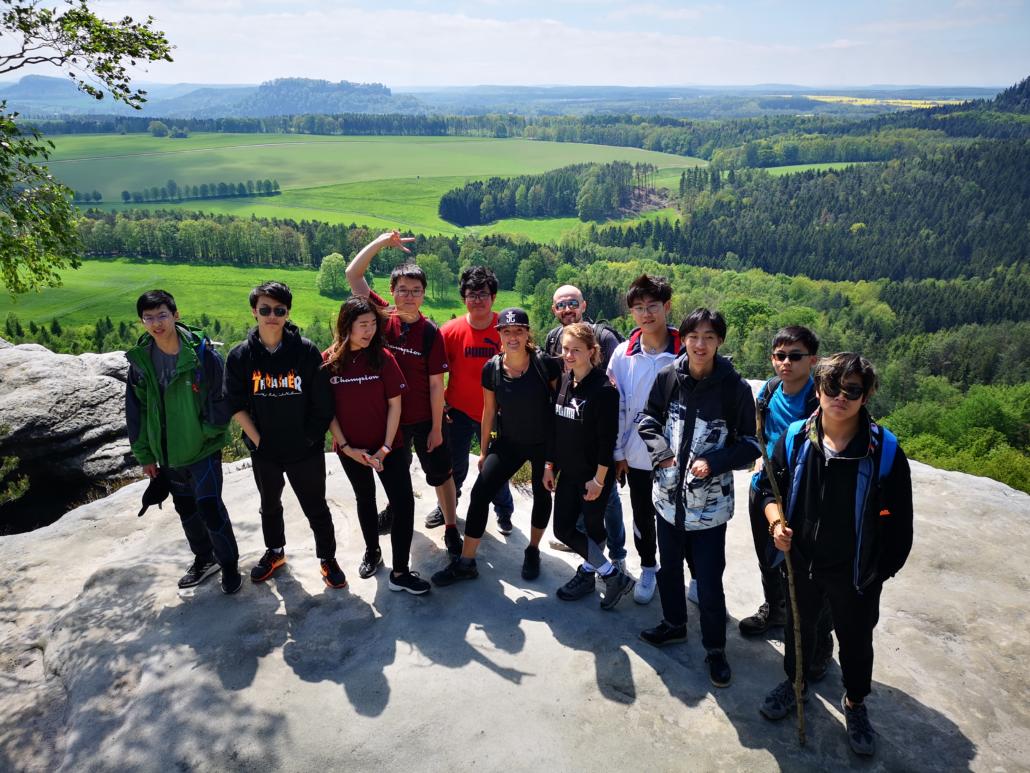
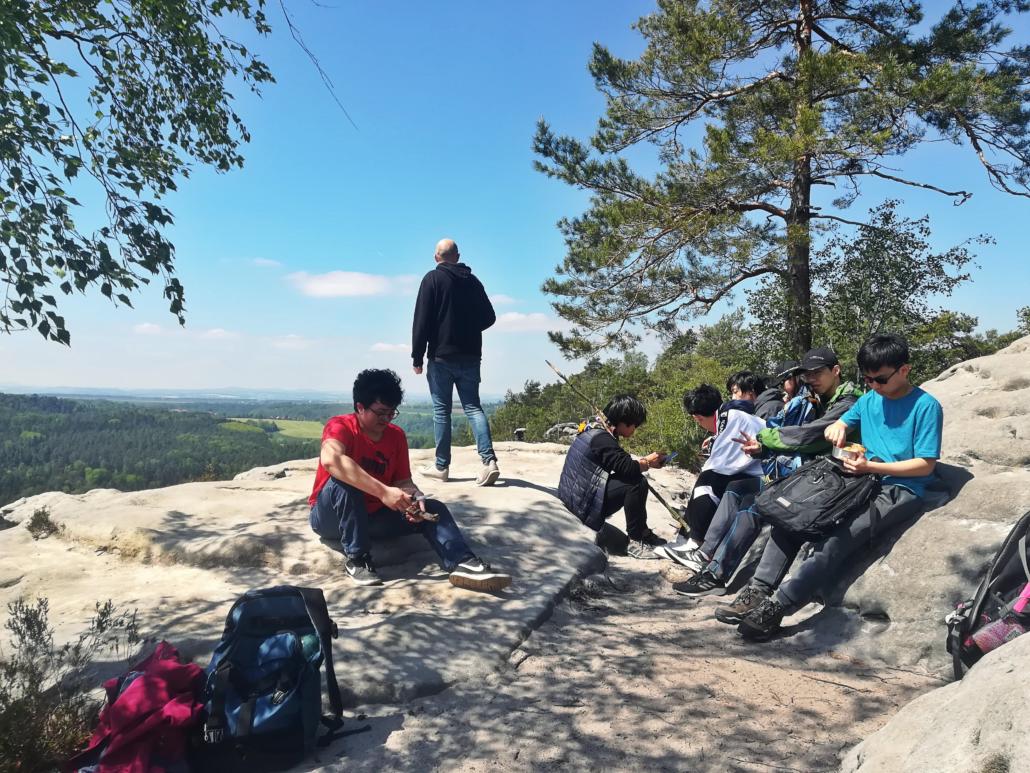
On Saturday, the group took a trip to Saxon Switzerland. They visited Bad Rathen with its Elbe Sandstone Mountains, hiked the Rauenstein ridge trail with views of the Elbe, and explored the Bastei, including the Gorge Trail with the “Schwedenlöcher,” passing by Amselsee.
A special city tour was on the agenda for Sunday. The route: Neumarkt with the Frauenkirche, the Semper Opera House, the Zwinger, the Royal Palace, Brühl’s Terrace, the Procession of the Princes, the Stallhof, the Catholic Court Church, the Taschenberg Palace, the Augustus Bridge, and a visit to the Frauenkirche. The verdict: Lots of history, lots of culture—and lots of fun.


Canoe Tour

The canoe trip began at our base camp, the Ederblick Campground near Bad Wildungen, where we set up our tents. The plan was to paddle down the Eder River past the dam and into the Fulda River. After a strenuous day in the canoes, the evening wrapped up with a campfire, a barbecue, and some light-hearted games. A total of 14 children, accompanied by three counselors, set out on the canoe trip.


Camping at Lake Eder

Camping on a meadow by Lake Eder was the ultimate outdoor experience: no running water, no electricity, and no restroom facilities.

Giving up all forms of comfort led everyone to focus on themselves. Everyone gathered around the campfire and played games. As has often been the case, one of the favorites was the game “Werewolf,” which kept everyone entertained well into the night.


Just under 1 million students in grades 3 through 12/13 participated in the Kangaroo Competition in Germany this year, 80 of them at Steinmühle, mainly from grades 5 and 6. However, some seventh- and eighth-graders had also signed up for this voluntary test. Subject teacher Gisela Opper reports:

The Kangaroo problems are usually very stimulating, sometimes entertaining, and can be solved using a wide variety of approaches. Sometimes all it takes is common sense, a bit of ingenuity, or a creative idea. In addition, it is a multiple-choice test, which students really appreciate. At the end, all participants received a certificate, a small game, and the Kangaroo workbook containing all the problems and solutions.


Mathilda Lambach was particularly successful

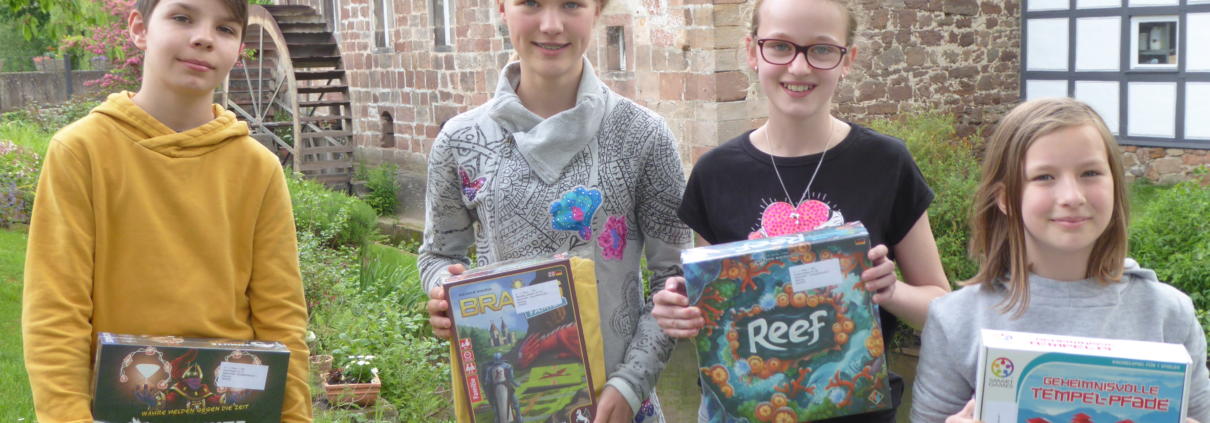
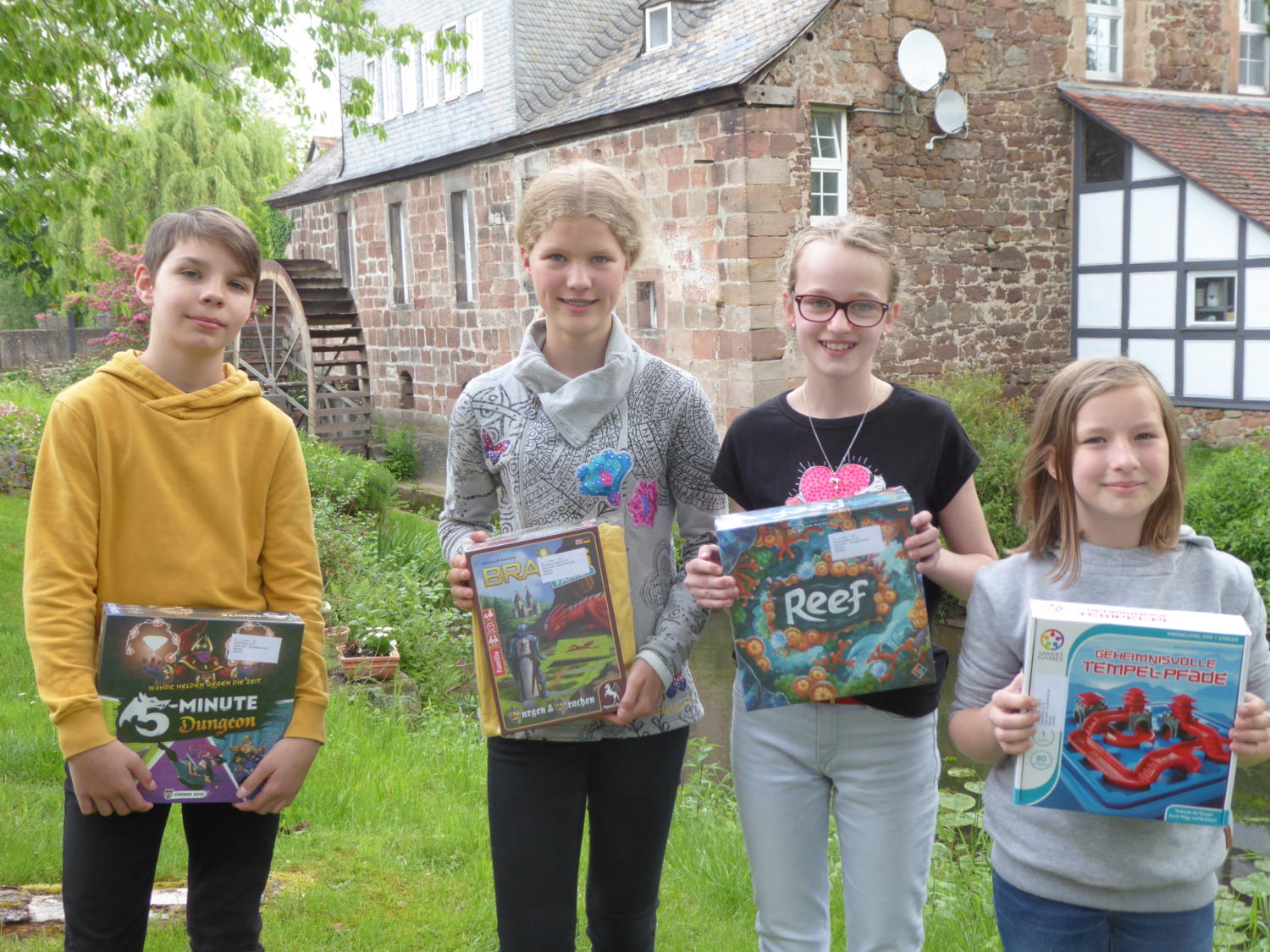
In each grade level, first, second, and third prizes are awarded to the top 5 percent of participants from across Germany. These prizes are usually engaging games, math puzzles, or books. This year, Steinmühle had four prize winners: Juliana Stry (5b) received a second prize, while Teresa Dinges (5b) and Arvid Mayer (7c) each won a first prize. Mathilda Lambach (6b) was once again particularly successful this year. She scored 115 out of 120 points and received not only a game as her first prize, but also a Kangaroo T-shirt for the “longest kangaroo jump”—that is, the highest number of consecutive correct answers.

The photo shows (from left): Arvid Mayer (7c), Mathilda Lambach (6b), Teresa Dinges, and Juliana Stry (both 5b).

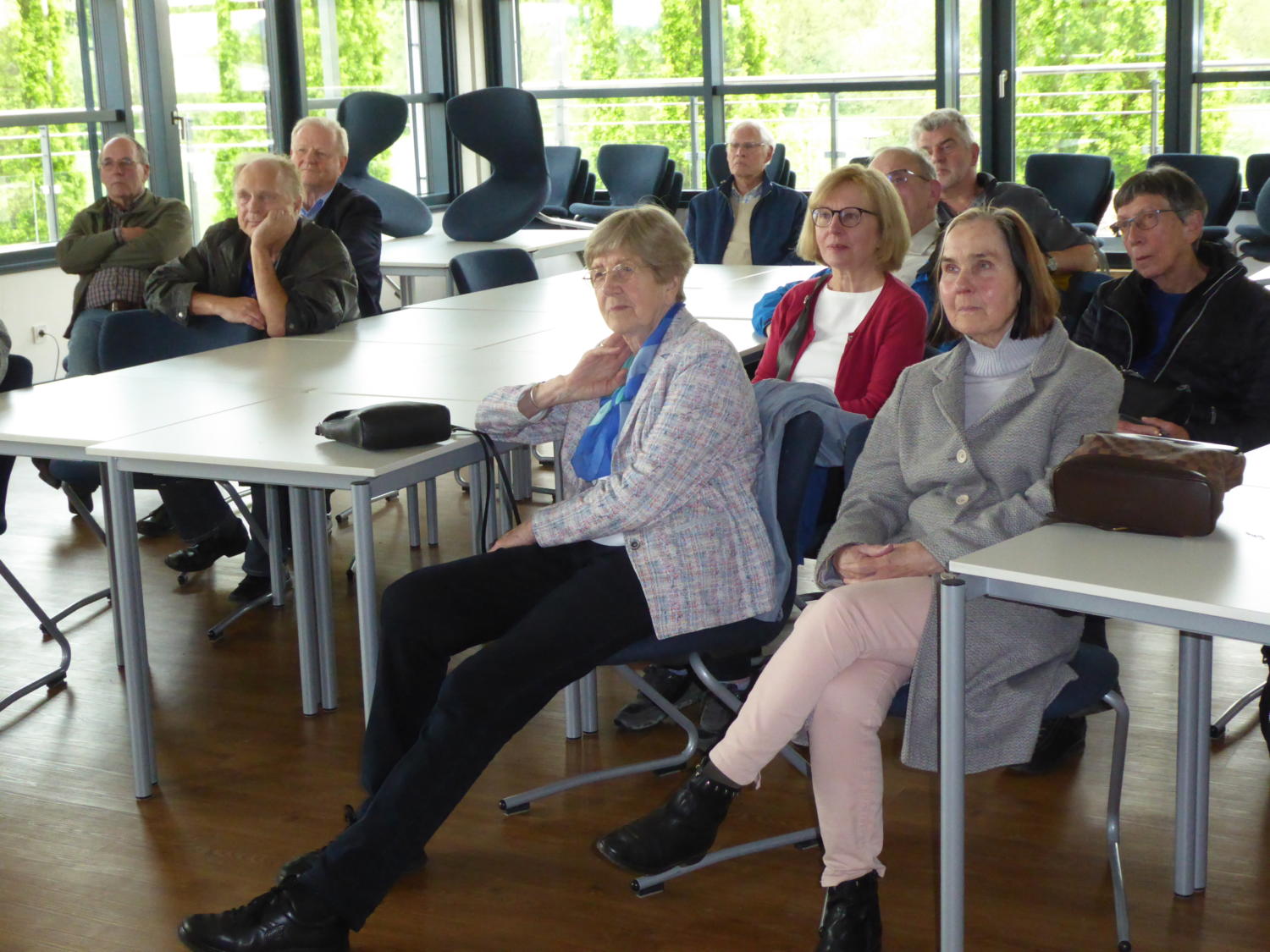
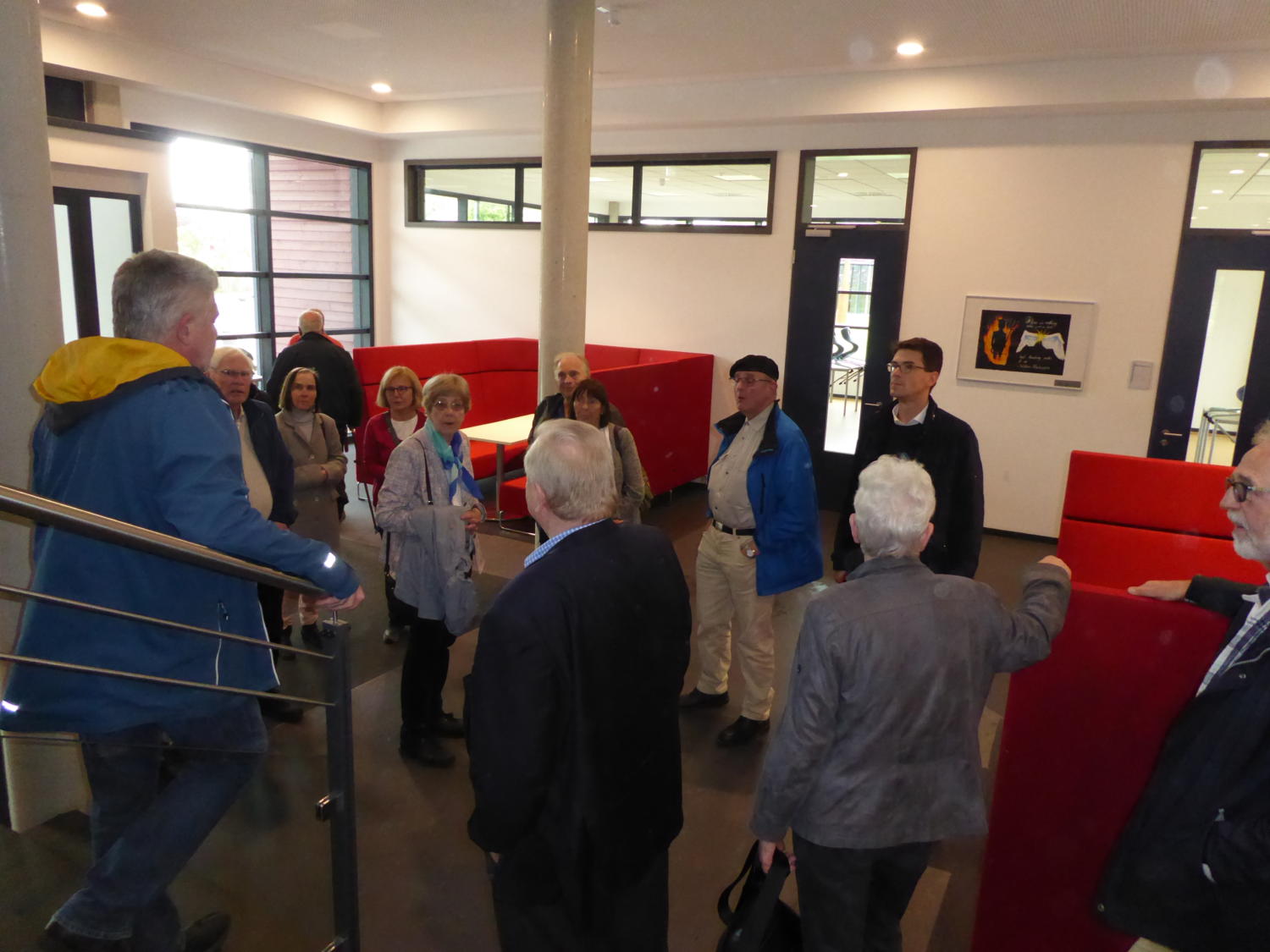
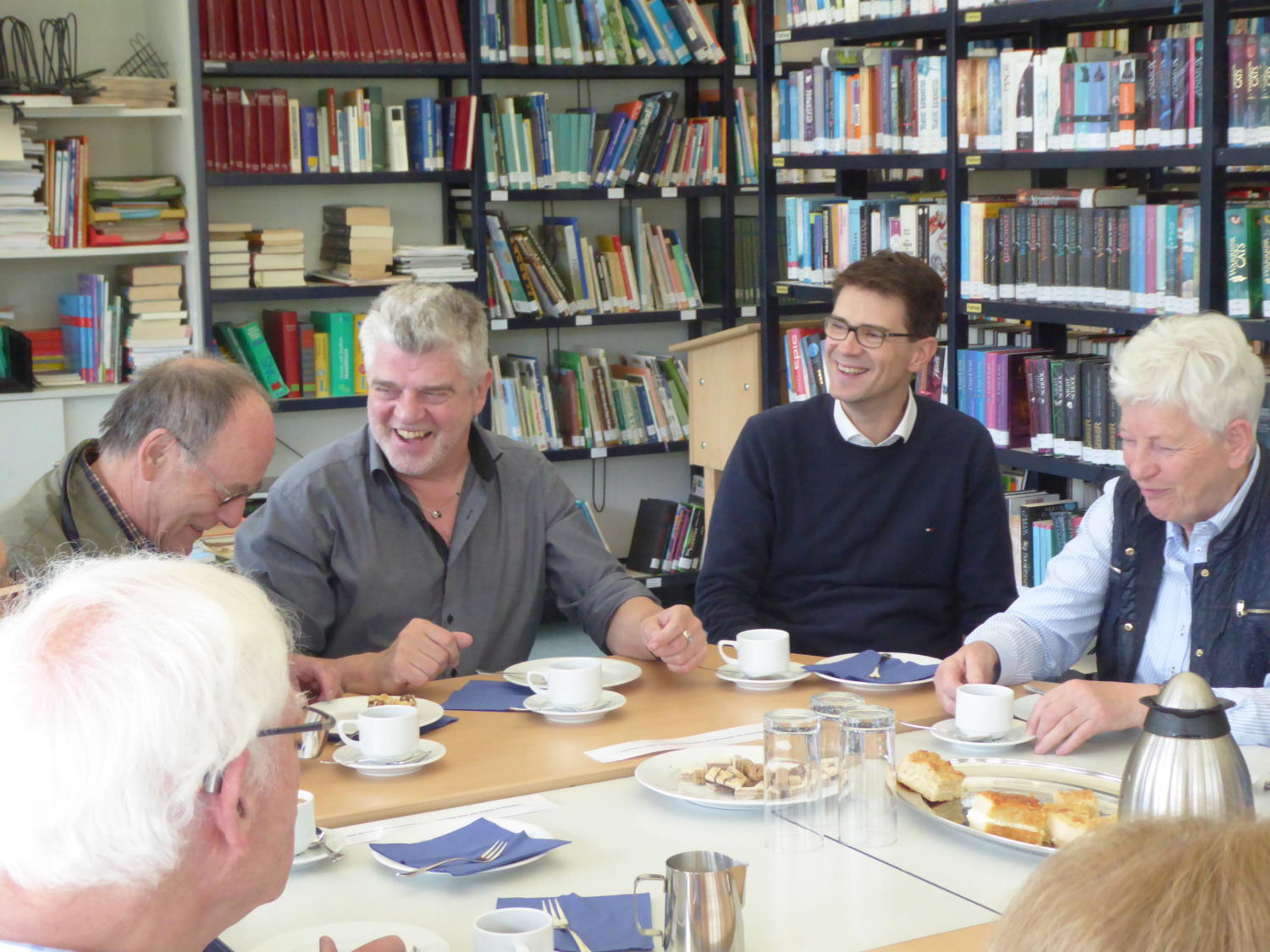
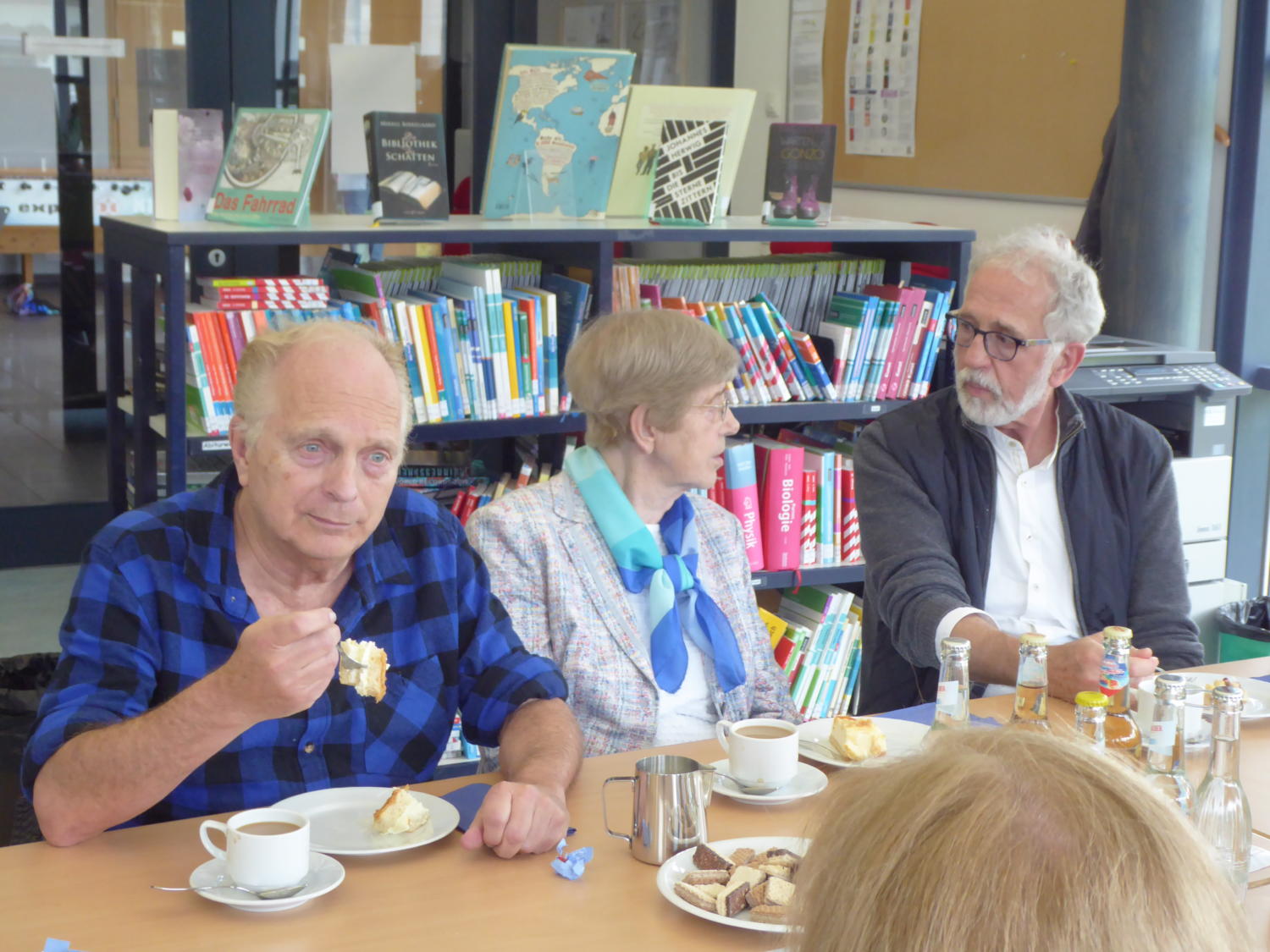
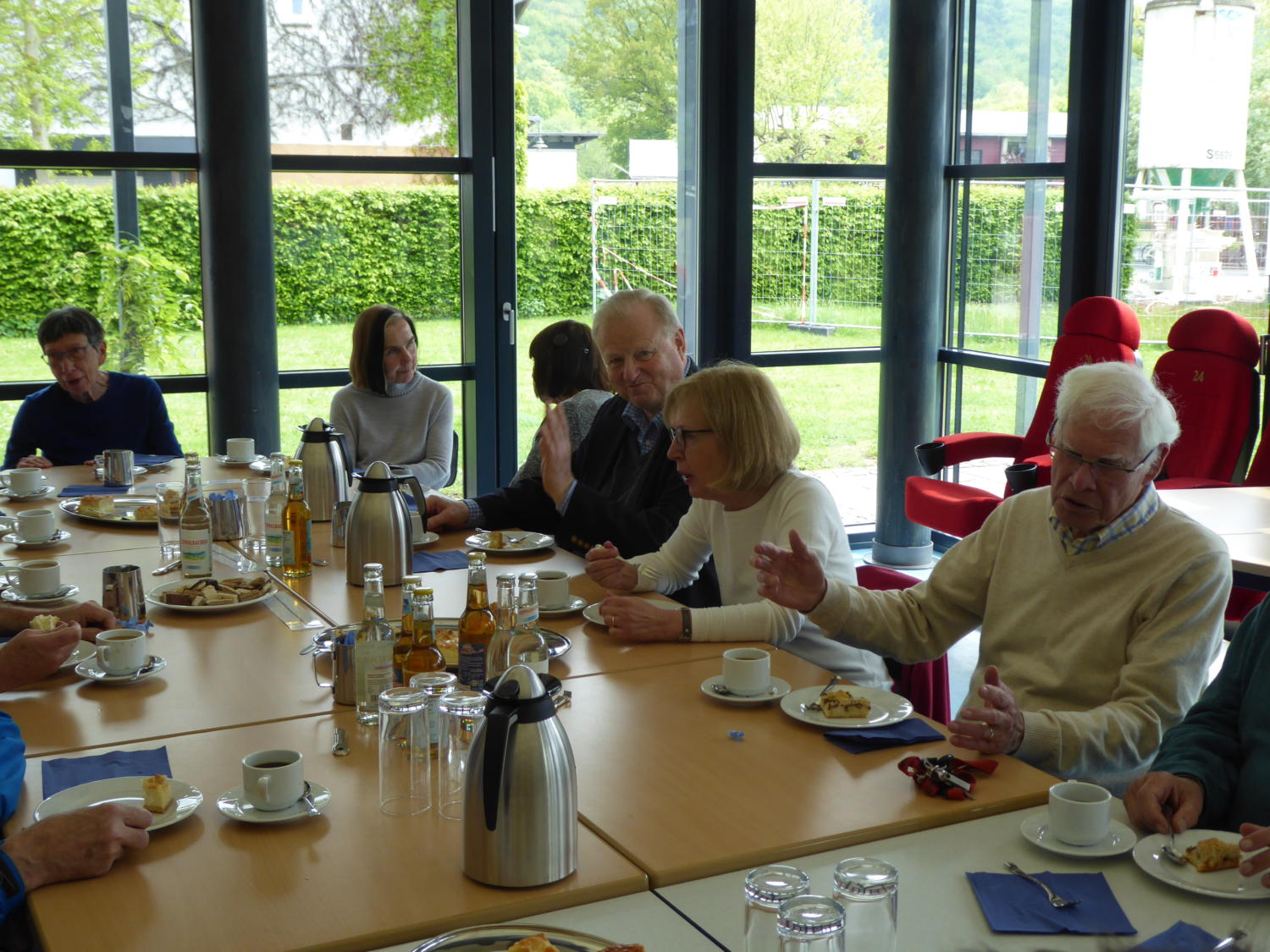
It has now become a lovely tradition for the Steinmühle to invite former colleagues to a cozy get-together in the spring. Gisela Opper reports:

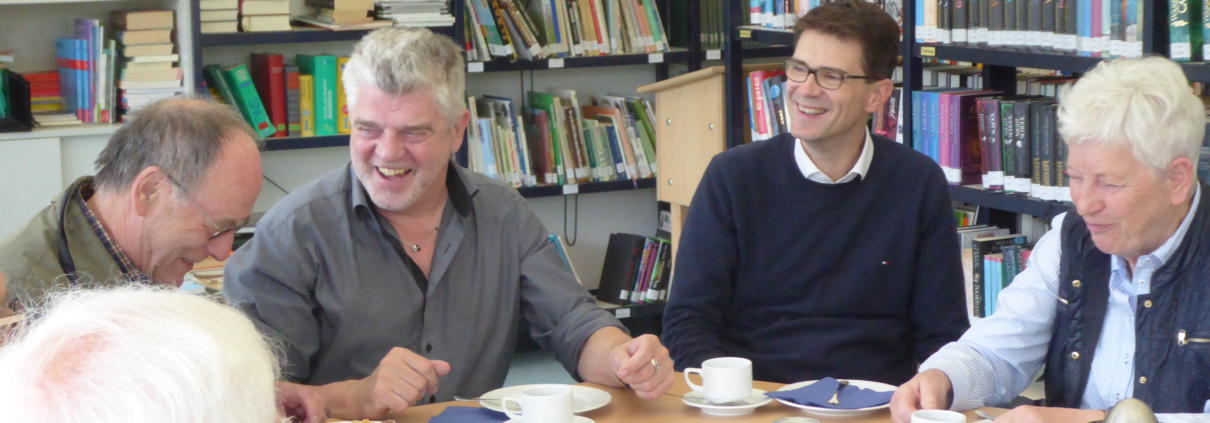
The meeting always includes an update on the latest developments at the school. Since we had toured the construction site at last year’s meeting, there was great interest this year in seeing the completed new building and all it has to offer.Fourteen alumni attended, including four former principals and vice principals. The demonstration of the Activeboard in Room 615 particularly impressed the former teachers, all of whom had written on the blackboard with chalk and had seen the introduction of the overhead projector during their active teaching careers.

Those who were in good shape then went on to take a look at the major renovations underway in the main building. It will be finished by next year’s gathering.

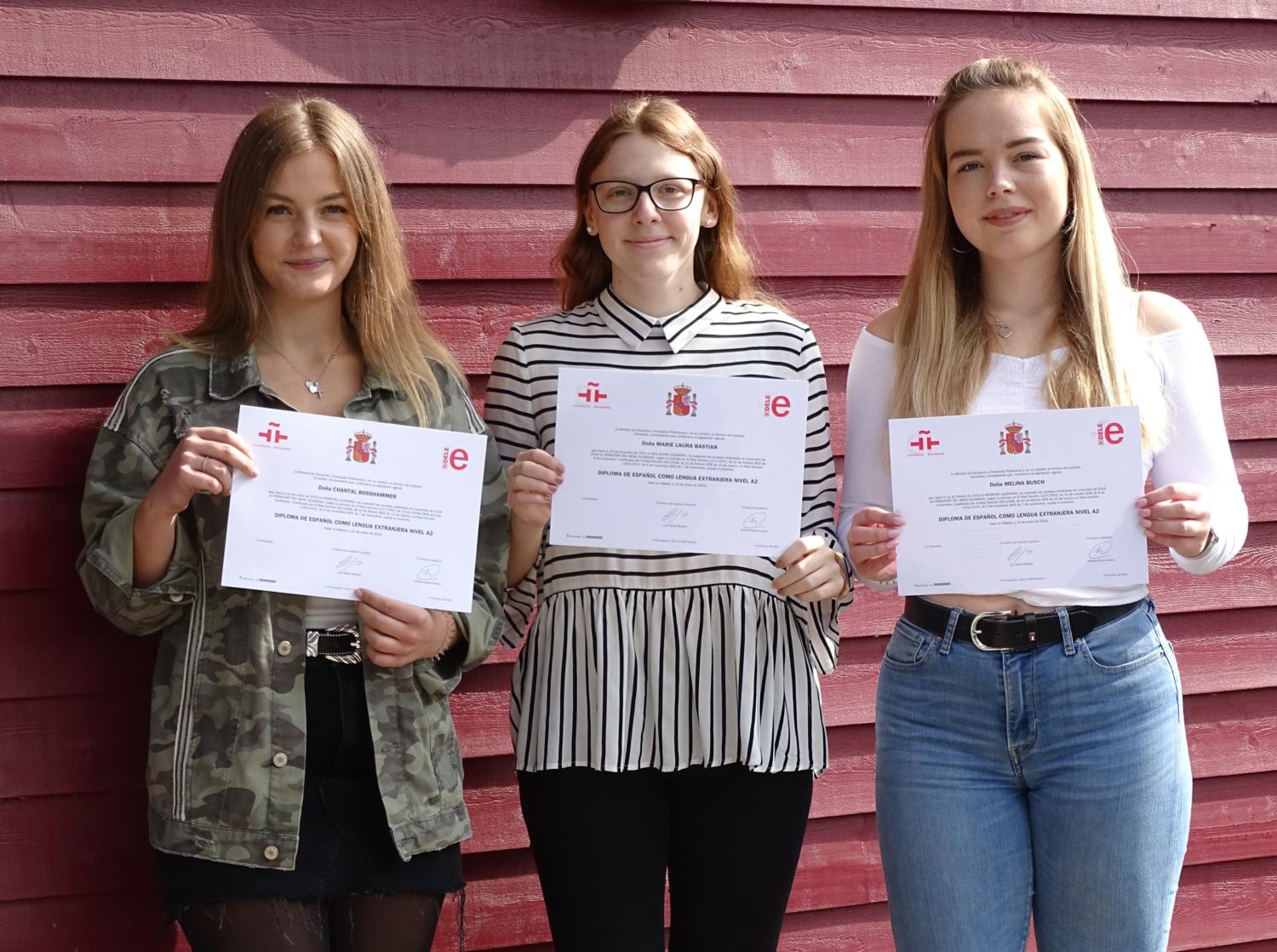
Eleventh-grade students Chantal Boßhammer, Marie Bastian, and Melina Busch (pictured, from left) are the first to have taken the Instituto Cervantes exam to earn the DELE Spanish diploma. DELE stands for Diploma de Español como Lengua Extranjera. The program was presented to 10th-grade students in 2018 and subsequently introduced during the second and third terms.

The three students’ strong performance has led to excellent results. They have all received the official DELE A.2 diploma. “We congratulate them wholeheartedly and encourage other students to give it a try as well,” say Spanish teachers María Ramos and Mar Montenegro. “Steinmühle is an international school, and we look forward to preparing our students for the world and, in particular, for the requirements of the European Union.”

The DELE A2 exam consists of various components, which are divided into two groups: reading and writing skills on the one hand, and oral language skills, including listening comprehension, on the other.


Once again this year, Steinmühle Boarding School sent a small group to compete in the DIV Schools’ BoulderCup. Christian Schäfer, a member of the teaching staff, provides a glimpse into how the competition unfolded:

This year, we met at the Lietz School in Bieberstein near Fulda for the BoulderCup. Bouldering is rope-free climbing at jumping height and a recreational form of climbing. The competition took place for the 16th consecutive year and is by far the most traditional and regularly held competition among the schools of the DIV (Die Internate Vereinigung e.V.). A total of 38 students, 7 alumni, and 6 teachers competed for a top finish.
In good seats

Although we had no chance of winning the overall trophy, we were still determined to secure as many individual victories as possible. And in the end, we didn’t do too badly at all. In addition to doing something meaningful as part of a community of many enthusiastic climbers, we had a lot of fun, met or reconnected with like-minded people, and took home many new climbing experiences.
We even have a few podium finishes to report: Johannes Tetzner took second place in the U13 boys’ division, Kris Gorges placed third in the highly competitive U16 girls’ division, and Christian Schäfer took first place in the Educators/Alumni category. Unfortunately, due to the strong competition, Velten and Jacques were unable to secure a spot in the top three. Landheim Ammersee once again won the overall trophy this year.

Here’s how it went

We set off on Saturday morning after breakfast and arrived in Bieberstein at noon after a peaceful drive. Since we were the first to arrive, we were able to pick the best spots to sleep in the gym and also got the best mats to sleep on. After lunch at 1:00 p.m. in the dining hall of the castle—an impressive building—the competition began at 2:00 p.m. following a few opening remarks by Mr. Lange, a teacher and climbing coach at Bieberstein, and a warm welcome from the boarding school director, Mr. Meister. Until 6:00 p.m., everyone bouldered to the best of their ability, trying to secure the win. After dinner, there were tiebreakers in the U13 girls’ and male educators’ categories. After that, the evening was free for everyone to enjoy as they wished; people could continue climbing—which many did—and later, the “Schopp,” Bieberstein’s student tavern, opened. Tired but in good spirits, the evening drew to a close late. It wasn’t until half past midnight that things finally began to quiet down in the gym, where everyone was sleeping.

Breakfast was served at nine on Sunday. On the way home, we stopped briefly to take a look at the rock face and thought wistfully about the “lost” day >Rock Climbing<. Unfortunately, it had snowed on Saturday morning and again overnight into Sunday, so our original plan to go rock climbing at the Steinwand near Poppenhausen couldn’t be carried out because the rock was wet. The drive home flew by, and we were back at the Steinmühle just in time for SchniPoSa.


It’s all about exchange and interaction with others


Beyond the actual bouldering, however, the competition is primarily about fostering exchange among students from different boarding schools—allowing them to learn about the differences, advantages, and disadvantages of their own schools, as well as other ways of life, meet new people, and interact with them. For educators as well, the gathering is invaluable for gaining insight into their own professional lives and receiving an outside perspective on their own approaches, and it offers many benefits. As a result, many strong friendships and connections have been formed across Germany in recent years.

We’ll keep training hard and compete next year to once again vie for the overall trophy in bouldering. Next year, Landheim Ammersee will host the competition.