


A Very Special Boarding School Weekend—Sustainability Theme Weekend
For the past year, the educational team at Steinmühle has been organizing special weekends focused on the topics of physical and mental health, media education, and sustainability. After some preparation time, the educators form working groups to develop a specialized and practical program for the students, designed to benefit them in the long term in their everyday lives.
So, as the title suggests, last Saturday marked the start of the sustainability-themed weekend. The entire boarding school gathered in the dining hall for the kickoff. Two films were shown to explain the broad concept of sustainability, which was then explored in greater depth during a question-and-answer session. To wrap up the introduction, the students were able to take a self-assessment test on their cell phones. The test was designed to help them visualize their own ecological footprint in terms of the number of Earths required to sustain it. “If everyone on Earth had your footprint, we’d need 3.6 Earths,” the test results page read.  The room was filled with whispering, as the students were amazed by their own environmental footprints; too many of them had results showing multiple “worlds.” After some lively discussions, the students were then able to join their chosen clubs, where they could further discuss and analyze the results of the self-assessment. A desire to reduce their own ecological footprint was already evident at the start of the weekend. All of the workshops offered were designed to help the students incorporate useful tips and tricks into their daily lives.
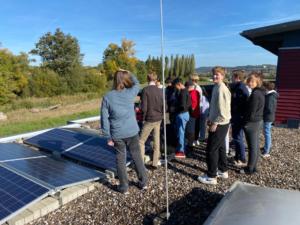
One of the first activities focused on the topic of sustainable energy supply. The school and boarding school had already been actively involved in this area in recent years. Thanks to Sonneninitiative e.V., the Forum’s roof was equipped with a photovoltaic system, which drew visitors for a tour over the weekend. A staff member from the initiative accompanied our students onto the roof to explain the system and answer questions.
Shortly afterward, the event continued in the dining hall with a focus on sustainable consumption. All students were invited to a flea market and swap meet. There, each student could sell or trade old items or clothes. Typical flea market tables were set up, and of course, there were plenty of treats to enjoy as well. On this Saturday, other clubs also met, focusing on environmental pollution—including a cleanup—and the upcycling of everyday items.


On Sunday, the program continued with a focus on sustainable eating. A group of students and teachers headed to a nearby farm stand to stock up on seasonal and regional fruits and vegetables. Later, they baked and cooked together using these delicious ingredients.
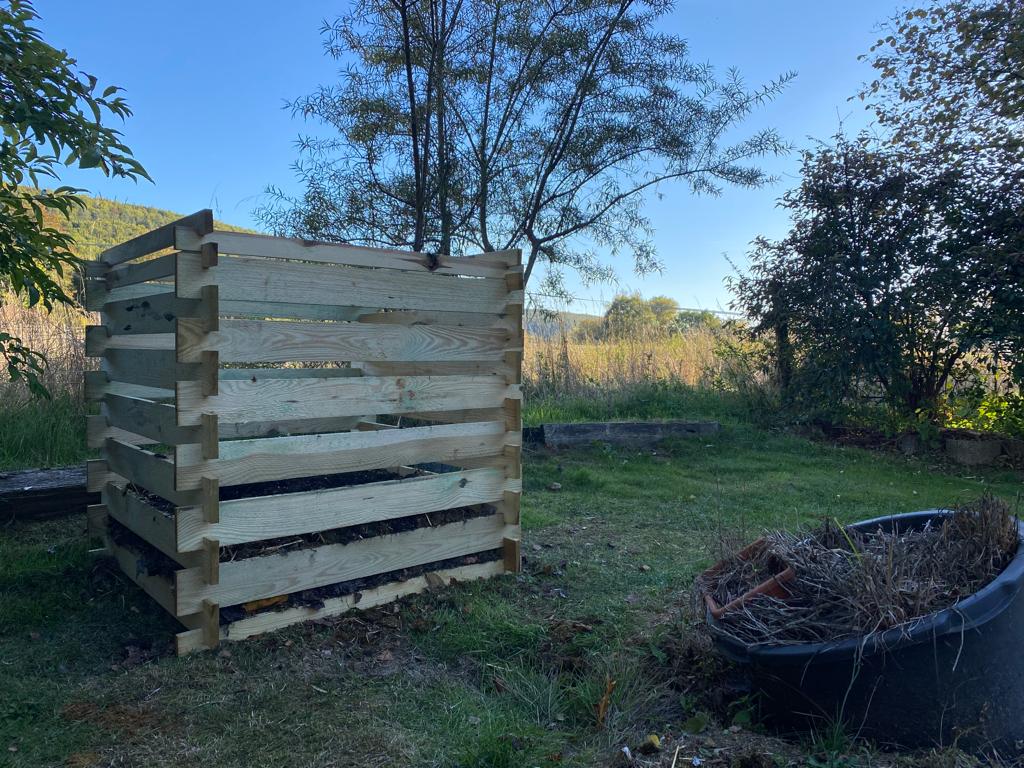
In addition, the activities on Sunday included building a compost bin, planting garden beds, or discussing sustainability as a group.
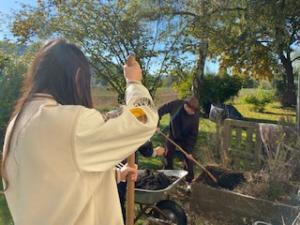
The goal of the weekend was to raise awareness among young people about living more sustainably, and by the end, the students were determined to put what they had learned into practice. Several follow-up discussions took place afterward about how they could take personal responsibility for reducing their own ecological footprint. Even after the weekend, students swapped clothes, used the compost bin for organic waste, and tended to the newly planted garden bed.


