

Saving Lives: Eighth-Graders Keep Pushing Until the Doctor Arrives
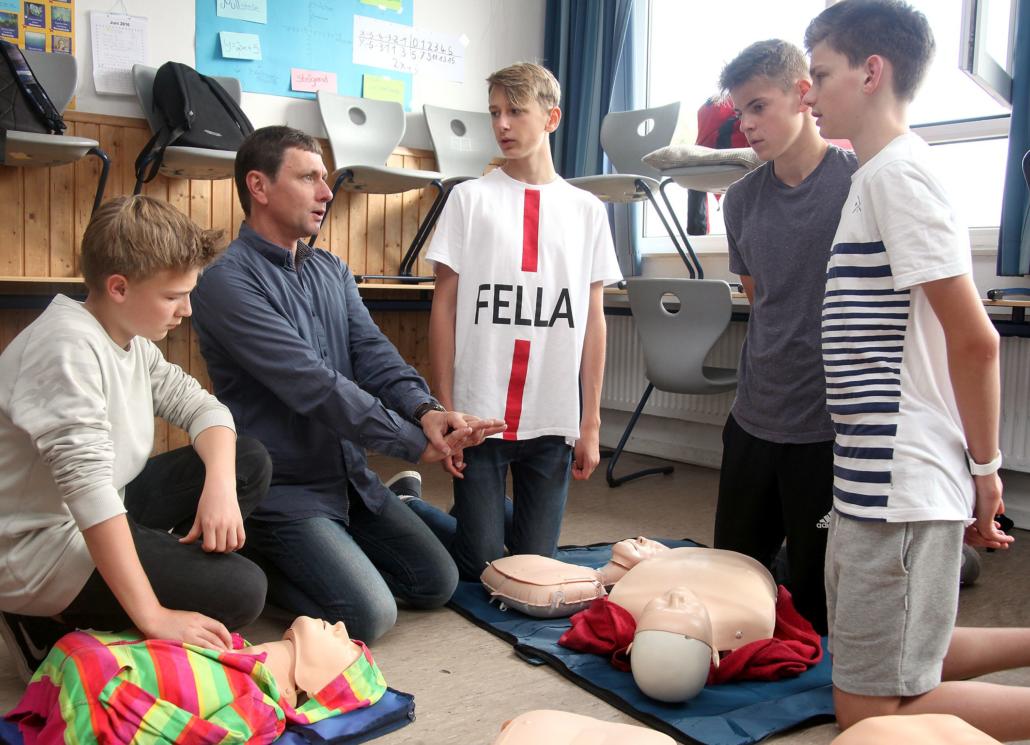
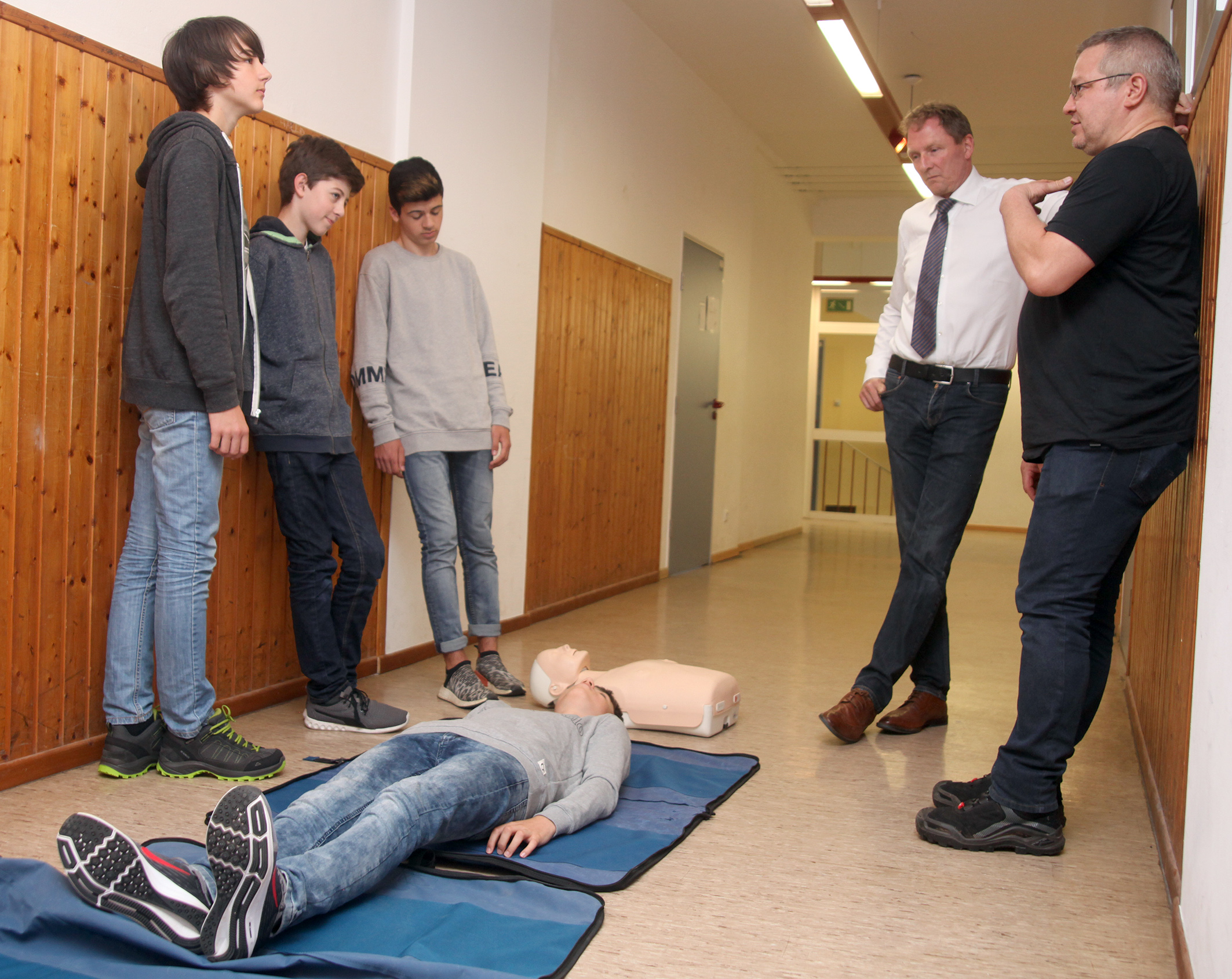
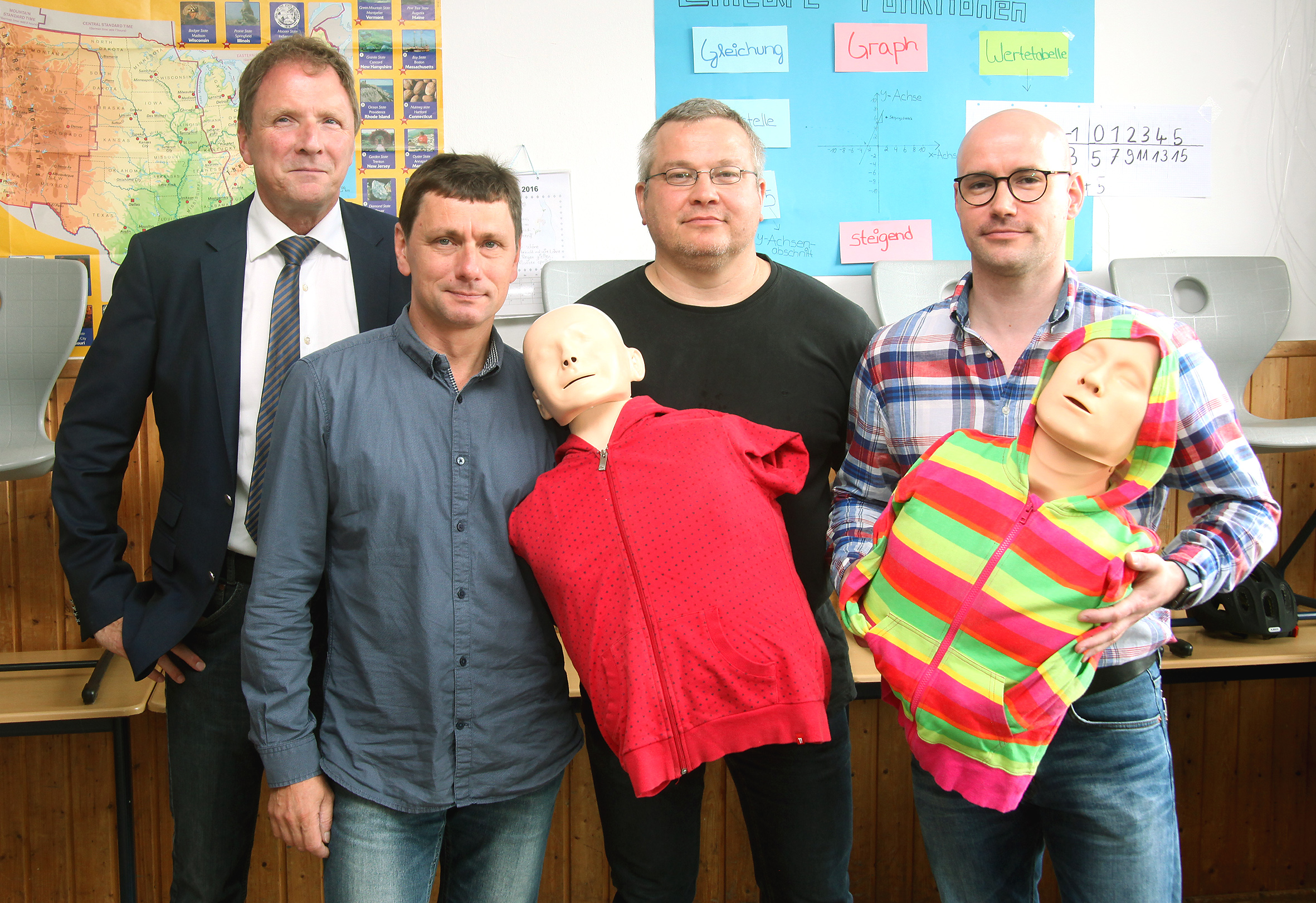
“The worst thing you can do is nothing at all.”—With these words, which were both a warning and an encouragement, Prof. Dr. Hinnerk Wulf, Director of the Department of Anesthesiology and Intensive Care Medicine at the University Hospital of Giessen-Marburg (UKGM), explained to the eighth-graders at Steinmühle the importance of first aid in the event of sudden cardiac arrest. After all, it can happen anywhere that people find themselves in this emergency and rely on first responders to keep a clear head. As part of a pilot project, the physician and his colleagues Dr. Markus Spies, Karsten Szeder, and Jörg Dieterich spent two days teaching the approximately 70 eighth-grade students at Steinmühle what to do in the event of a cardiovascular arrest and how to proceed: Press on the chest at a rapid pace while following certain steps—until the emergency medical technician arrives.
Resuscitation as a School Subject?
As part of a pilot project currently underway at three medical centers in Central Hesse, the goal is to gather insights into how and at what age students can be introduced to this life-saving topic. The Conference of Ministers of Education is planning to potentially integrate the topic of CPR into the school curriculum.
Steinmühle is proud to be a pioneer in this pilot project in the region and would like to thank everyone involved, both in leadership roles and on the ground. The “Students Save Lives” pilot project is being carried out by the departments of anesthesiology and intensive care medicine in Marburg, Giessen, and Frankfurt in cooperation with the Hessian State Medical Association and the Ministry of Education and Cultural Affairs.
With 8,000 to 100,000 cases per year, sudden cardiac death is one of the leading causes of death in Germany.