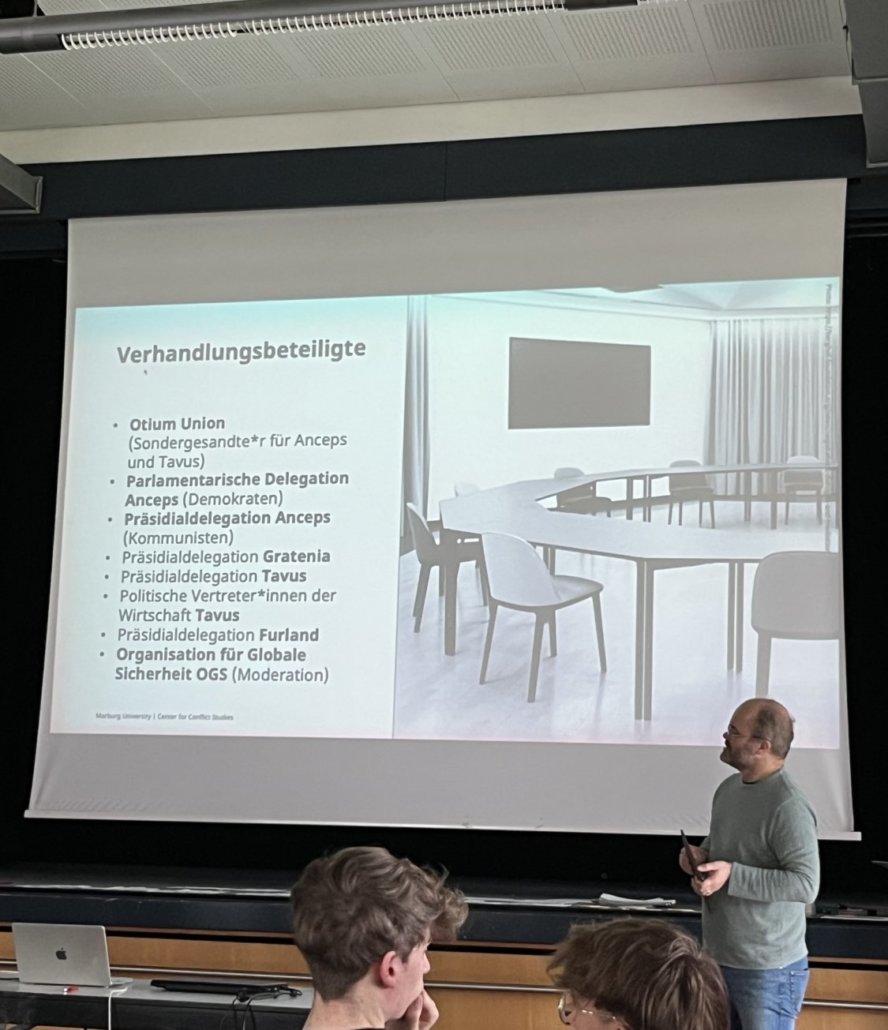
Why can’t international conflicts simply be resolved at the negotiating table? The 13th-grade students at Steinmühle once again explored this question. Following the successful premiere two years ago, this year’s collaboration with Philipps University of Marburg once again demonstrated just how challenging diplomatic negotiations actually are. The event was largely facilitated by conflict researcher Dr. Stéphane Voell, who led the simulation and guided the participants through the challenging simulation exercise.
Informal discussions as a first step
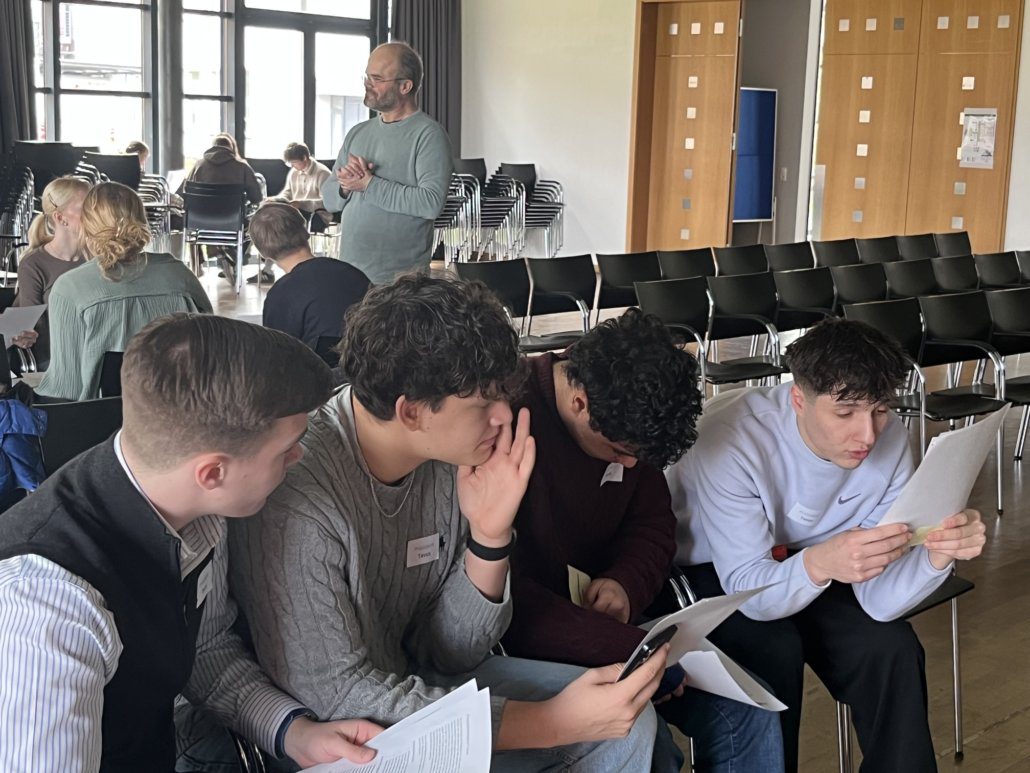
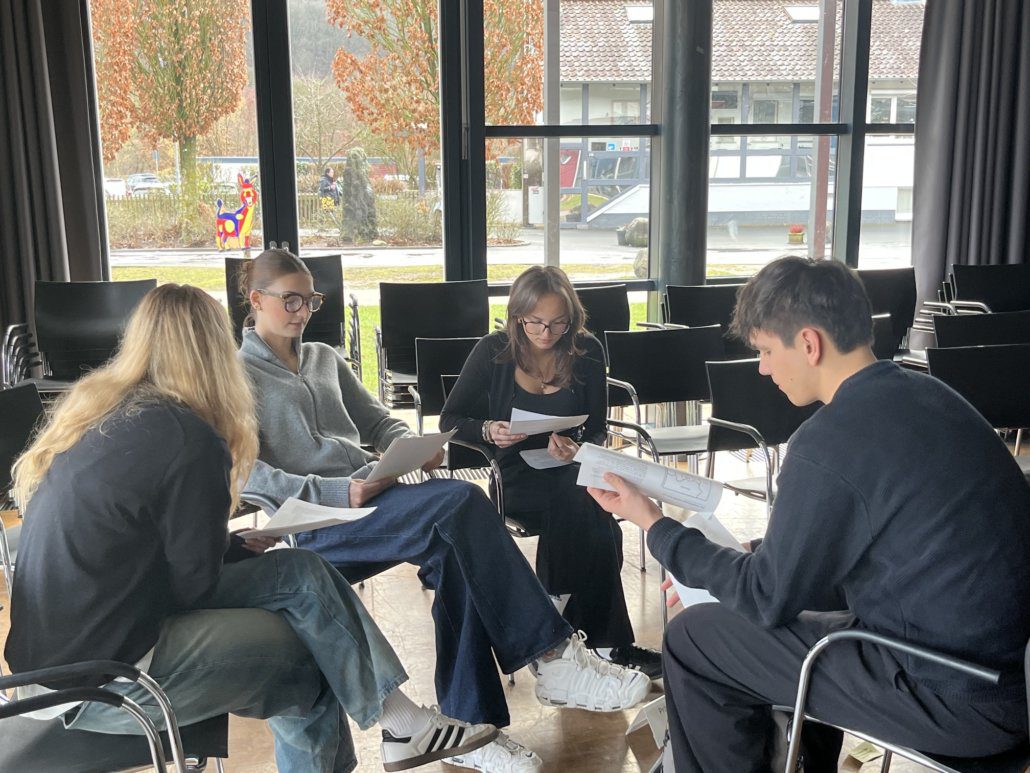
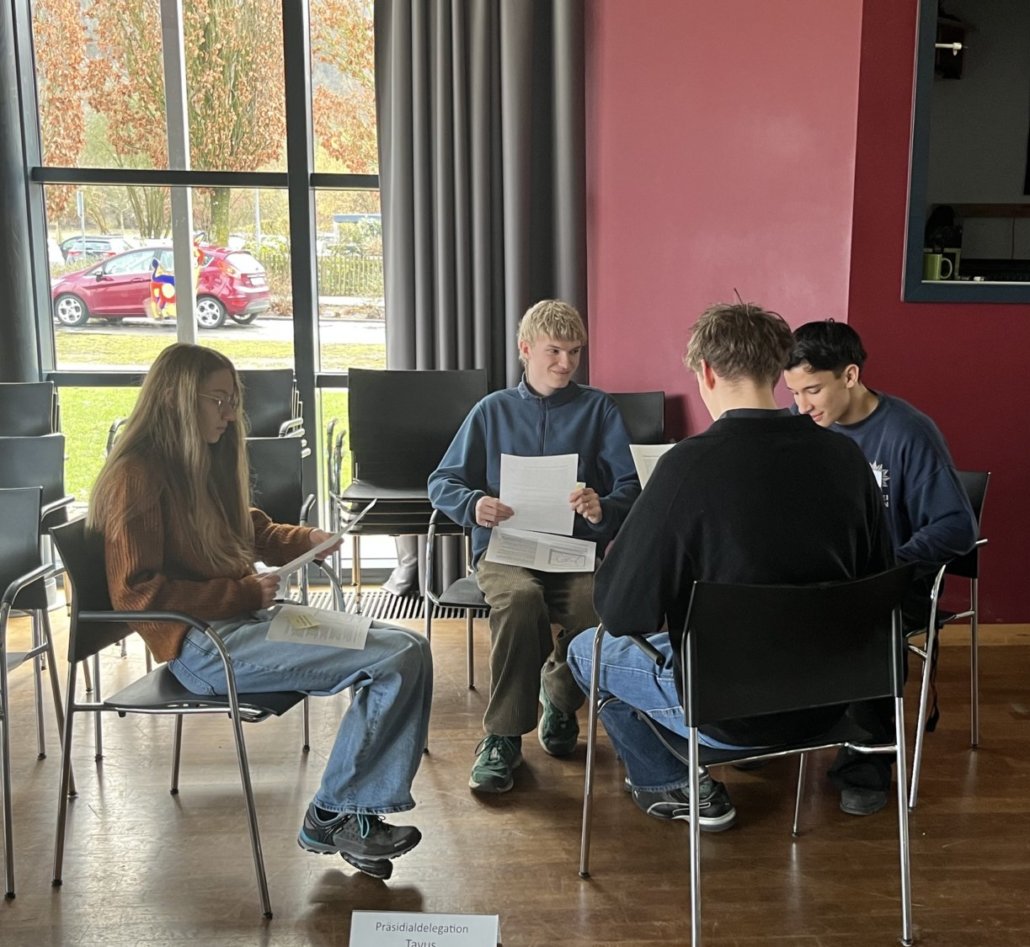
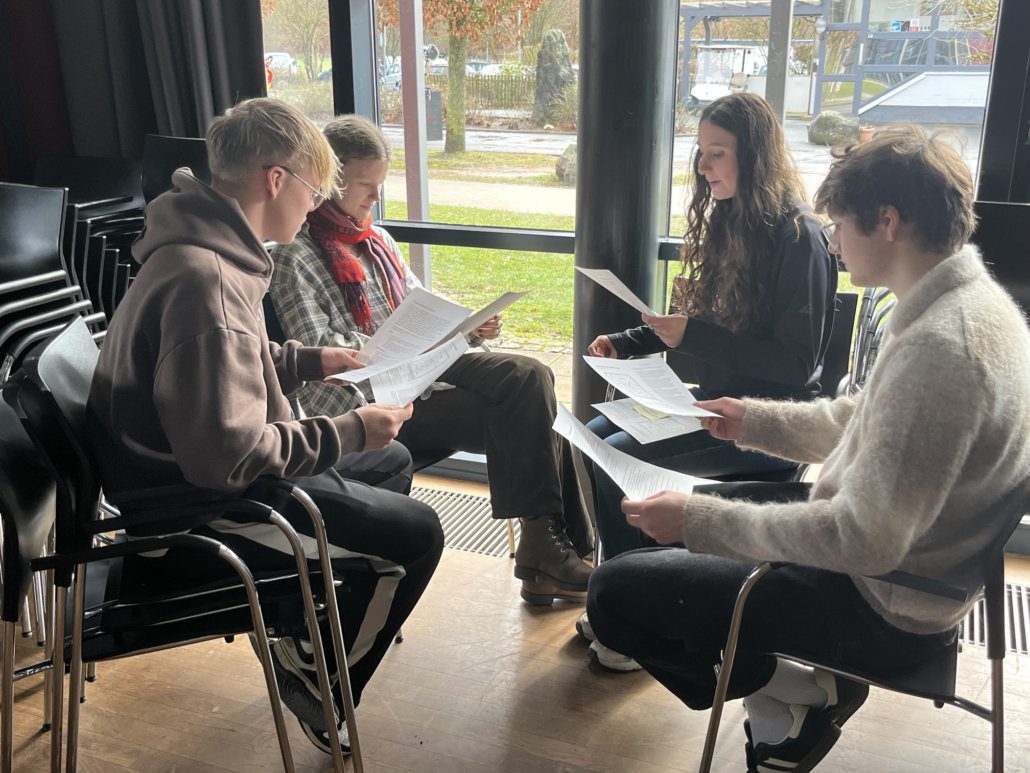
During the event, the students took on the roles of delegates from various fictional countries. Each with their own interests, political goals, and territorial claims, they first engaged in informal discussions before gathering at a roundtable to try to develop a joint solution to the conflict. To give the simulation as authentic and official a character as possible, the participants were instructed to consistently address one another formally during the negotiations. It quickly became clear how difficult it is to negotiate compromises when national interests, economic interdependencies, and security considerations clash.
Caught between conflicting interests
Not every delegation was willing to compromise. Some vigorously defended their positions, while others sought dialogue—a tension that significantly shaped the course of the negotiations. The participants gained firsthand experience of just how challenging international diplomacy can be and why even well-intentioned solutions often fail due to conflicting interests.
A Keener Perspective on Real-World Conflicts
During the concluding reflection session, many students described how intensely they had experienced their respective roles. Terms like “frustrating” or “complicated” came up repeatedly, yet it also became clear that these very experiences had sharpened their perspective on real-world political conflicts. Together with Stéphane Voell, the dynamics of the negotiations were analyzed, and the simulation’s framework was finally revealed: The scenario was broadly based on the Transnistria conflict between the Republic of Moldova and the self-proclaimed Transnistrian Republic, with Russia’s involvement.
Experience the partnership with the university firsthand
For Bernd Hülsbeck, a subject teacher and head of the social sciences division within the Politics and Economics Department, the event is a successful example of close collaboration between the school and the university. It allows students to experience firsthand the long-standing partnership with Philipps University of Marburg. At the same time, the simulation adds a practical perspective to the 13th-grade curriculum, which is currently covering international relations.
A Wide Range of Career Opportunities
The Peace and Conflict Studies program at the University of Marburg offers graduates a wide range of career opportunities—including positions in international organizations such as the United Nations, as well as in the academic analysis and resolution of international conflicts. The simulation, held once again, impressively demonstrated just how complex peace processes are and how important dialogue, negotiation skills, and mutual understanding remain for sustainable solutions.
(Angela Heinemann)



Diplomacy Up Close: Simulation Game Challenged This Year’s 13th-Grade Class
Collaborations & Partnerships, News, Politics, Business & ResponsibilityWhy can’t international conflicts simply be resolved at the negotiating table? The 13th-grade students at Steinmühle once again explored this question. Following the successful premiere two years ago, this year’s collaboration with Philipps University of Marburg once again demonstrated just how challenging diplomatic negotiations actually are. The event was largely facilitated by conflict researcher Dr. Stéphane Voell, who led the simulation and guided the participants through the challenging simulation exercise.
Informal discussions as a first step
During the event, the students took on the roles of delegates from various fictional countries. Each with their own interests, political goals, and territorial claims, they first engaged in informal discussions before gathering at a roundtable to try to develop a joint solution to the conflict. To give the simulation as authentic and official a character as possible, the participants were instructed to consistently address one another formally during the negotiations. It quickly became clear how difficult it is to negotiate compromises when national interests, economic interdependencies, and security considerations clash.
Caught between conflicting interests
Not every delegation was willing to compromise. Some vigorously defended their positions, while others sought dialogue—a tension that significantly shaped the course of the negotiations. The participants gained firsthand experience of just how challenging international diplomacy can be and why even well-intentioned solutions often fail due to conflicting interests.
A Keener Perspective on Real-World Conflicts
During the concluding reflection session, many students described how intensely they had experienced their respective roles. Terms like “frustrating” or “complicated” came up repeatedly, yet it also became clear that these very experiences had sharpened their perspective on real-world political conflicts. Together with Stéphane Voell, the dynamics of the negotiations were analyzed, and the simulation’s framework was finally revealed: The scenario was broadly based on the Transnistria conflict between the Republic of Moldova and the self-proclaimed Transnistrian Republic, with Russia’s involvement.
Experience the partnership with the university firsthand
For Bernd Hülsbeck, a subject teacher and head of the social sciences division within the Politics and Economics Department, the event is a successful example of close collaboration between the school and the university. It allows students to experience firsthand the long-standing partnership with Philipps University of Marburg. At the same time, the simulation adds a practical perspective to the 13th-grade curriculum, which is currently covering international relations.
A Wide Range of Career Opportunities
The Peace and Conflict Studies program at the University of Marburg offers graduates a wide range of career opportunities—including positions in international organizations such as the United Nations, as well as in the academic analysis and resolution of international conflicts. The simulation, held once again, impressively demonstrated just how complex peace processes are and how important dialogue, negotiation skills, and mutual understanding remain for sustainable solutions.
(Angela Heinemann)