The school bell served as a stark reminder that class was over. Otherwise, the 11th-grade class would likely have continued chatting with Angela Dorn for hours. The Hessian Minister of Science and the Arts was a guest at the Steinmühle Energy Forum—fully aware that she would meet well-informed students there, as she had mentioned beforehand. Thorough preparation on the one hand, credible, thoughtful answers, and an ability to meet them on their level on the other—that is likely the secret to a fruitful dialogue with young people on the cusp of becoming first-time voters. But let’s take it one step at a time.
It became clear in the first part of the event that the students of subject teachers Erno Menzel, Carmen Bastian, and Dr. Claudia Röder had thoroughly explored the topic of energy. Classes 11a through 11e took a close look at liquefied petroleum gas (LPG) as a potential alternative to natural gas, explaining its advantages, disadvantages, and properties. A similar analysis was conducted on the topic of nuclear power plants—though, of course, not without pointing out the potential dangers and the unresolved problem of final storage for nuclear waste. They also examined whether electric cars can save the climate. Here, issues such as child labor, lithium mining and its water requirements, the recycling problem with batteries, and infrastructure related to charging stations came into play, as well as the potential forced relocation of people in mining regions. The energy consumption associated with digitalization was also discussed, as was an interview with Claudia Schnabel, mayor of the large municipality of Fronhausen/Lahn, and the results of a survey showing that, on average, respondents were willing to be part of the climate transition.
For Better European Connectivity
“It’s not every day we have a minister visit the school,” said Principal Björn Gemmer happily as he welcomed the guest. And so it was time to ask Angela Dorn some pressing questions. Whether carbon capture—that is, the underground storage of CO2—is an adequate solution. “We need this as an additional measure,” said the minister, adding that Germany is on the right track with it. When asked about the nuclear phase-out, the minister stated that it was inevitable. After all, she explained, the key question is what to do with radioactive waste—a question that is always answered according to the “not in my backyard” principle: “Please, not here.” “We are currently still dependent on nuclear power, including from other countries,” the guest acknowledged. However, she added, this cannot be the future. Angela Dorn cited government subsidies for companies that reduce their energy consumption as one possible solution. “Speed and flexibility are essential here. And we must respond with pinpoint precision.”
Another student wanted to discuss the idea of harnessing solar energy from Africa. “The local population must also benefit,” the minister replied, calling for even better European coordination and the full utilization of the potential of existing open spaces.
The shift toward walking, biking, or using public transportation presents Angela Dorn with the challenge of widespread adoption of electric cars. “We won’t be able to achieve the energy transition with electric cars alone.” Angela Dorn sees the introduction of the Deutschland-Ticket, for example, as the right step in the right direction. Connecting “every hour, every village” via public transportation is the goal when it comes to public transit. The student body viewed this effort with some skepticism, and was critical of the lack of or insufficient support for implementing certain private initiatives related to the energy transition.
No Deindustrialization
The event with the minister concluded with a few remarks from her. Citizens should be offered a wider range of energy-related behaviors and measures to choose from, and she stated: “We can only achieve this by making it appealing.” It is clear to Angela Dorn that it is significantly easier to conserve energy resources in urban areas than in rural areas, and that it is fundamentally wrong to place the burden on the shoulders of individual people. We must not accept deindustrialization, nor the undermining of all rights by the so-called “Last Generation.”
The term “motivation” came up frequently in the debate. It made it clear that, in the minister’s view, the focus should be on encouragement rather than on imposing rules. The discussion also touched on the need to strive for intergenerational justice and, despite everything, the importance of social cohesion: “None of us,” Angela Dorn concluded, “should be left behind in this transformation.”
The following additional topics were discussed or touched upon during the 11th-grade Energy Forum and the visit by Angela Dorn, Hesse’s Minister of Science and the Arts: Nutrition, set-aside of agricultural land, privatization of the UKGM, dead zones in cellular coverage, the e-highway test route for trucks on the A5, and speed limits.
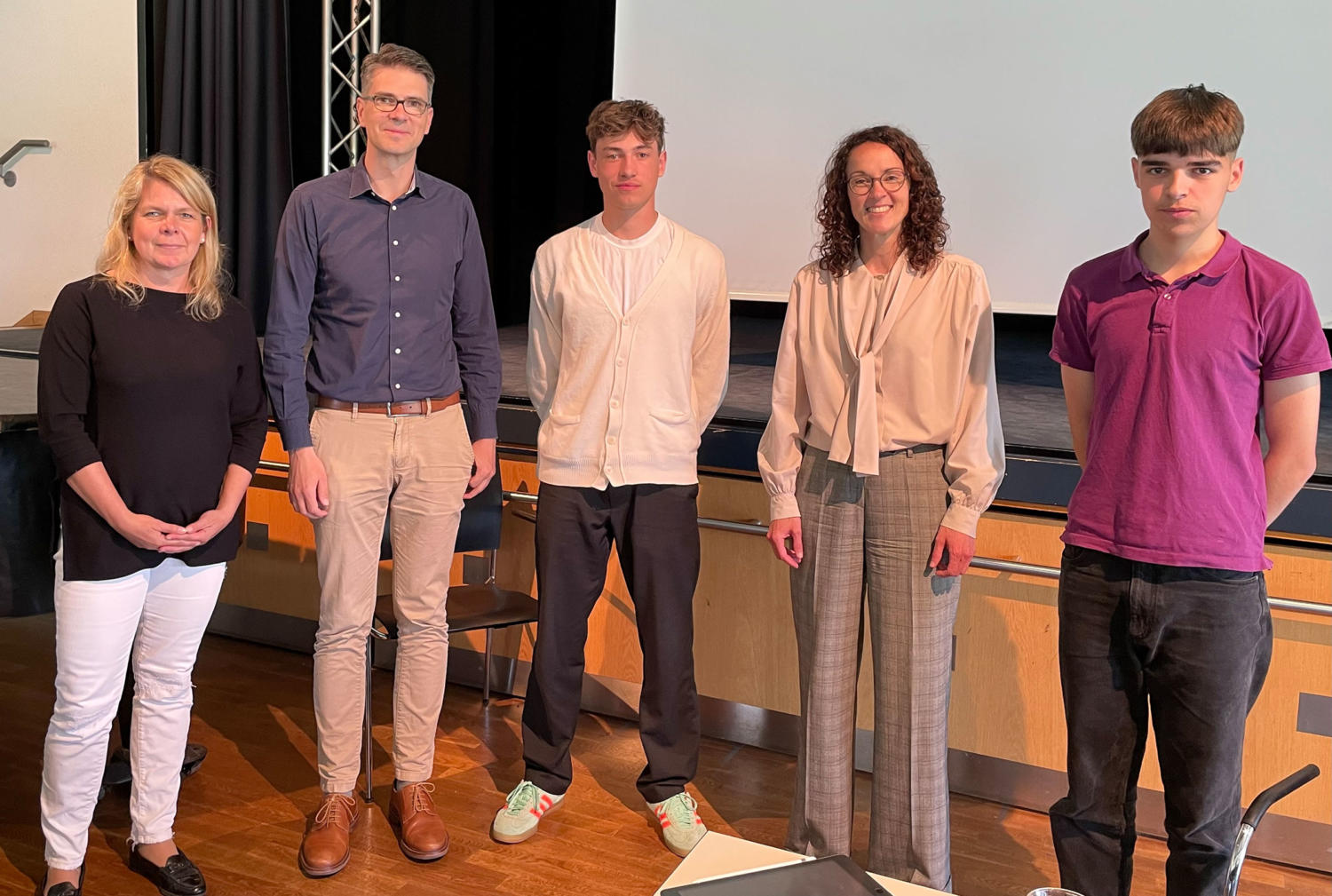
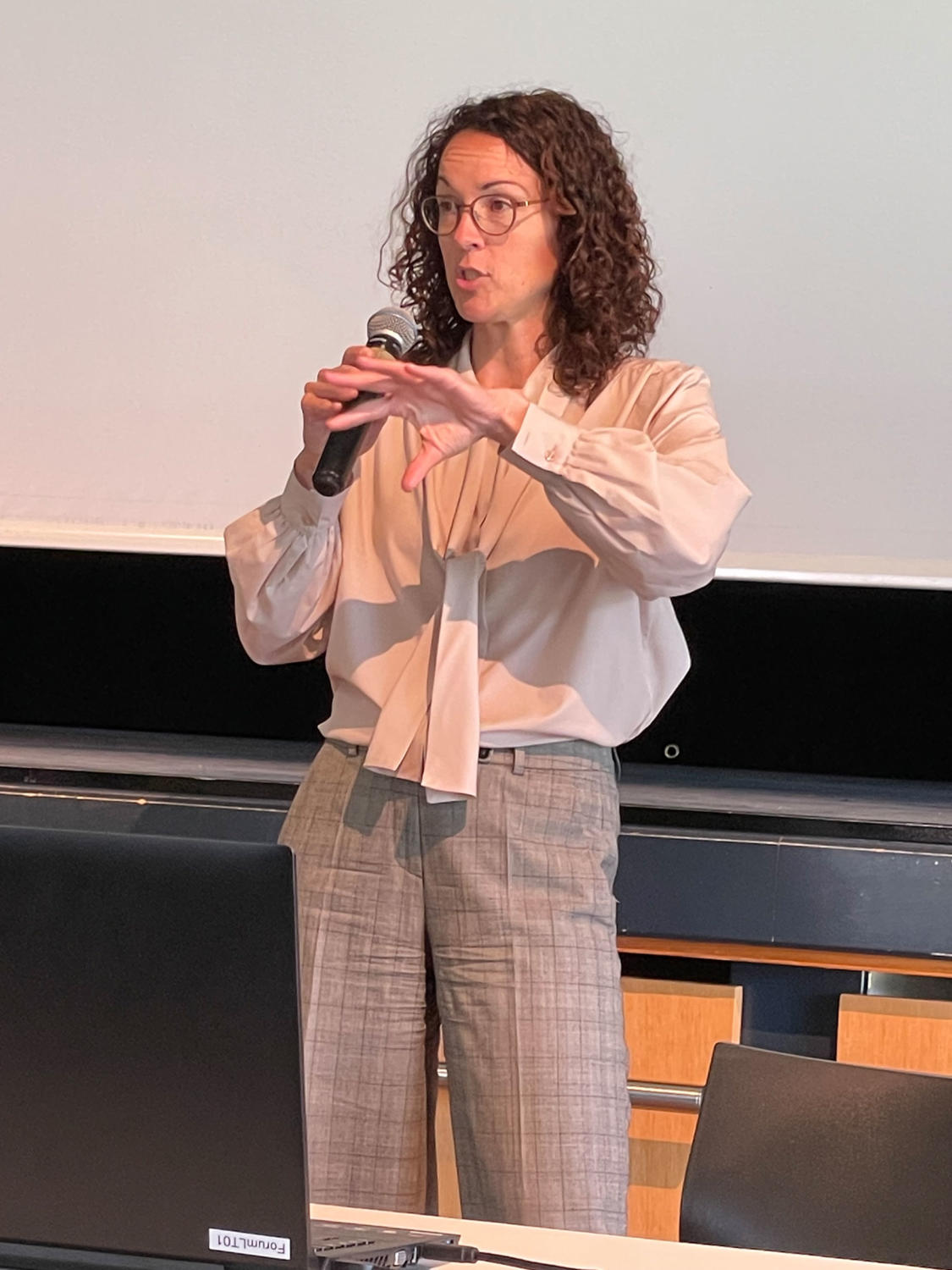



11th-grade students spoke at the Energy Forum with Science Minister Angela Dorn
Collaborations & Partnerships, Ecology and Sustainability, News, Politics, Business & ResponsibilityThe school bell served as a stark reminder that class was over. Otherwise, the 11th-grade class would likely have continued chatting with Angela Dorn for hours. The Hessian Minister of Science and the Arts was a guest at the Steinmühle Energy Forum—fully aware that she would meet well-informed students there, as she had mentioned beforehand. Thorough preparation on the one hand, credible, thoughtful answers, and an ability to meet them on their level on the other—that is likely the secret to a fruitful dialogue with young people on the cusp of becoming first-time voters. But let’s take it one step at a time.
It became clear in the first part of the event that the students of subject teachers Erno Menzel, Carmen Bastian, and Dr. Claudia Röder had thoroughly explored the topic of energy. Classes 11a through 11e took a close look at liquefied petroleum gas (LPG) as a potential alternative to natural gas, explaining its advantages, disadvantages, and properties. A similar analysis was conducted on the topic of nuclear power plants—though, of course, not without pointing out the potential dangers and the unresolved problem of final storage for nuclear waste. They also examined whether electric cars can save the climate. Here, issues such as child labor, lithium mining and its water requirements, the recycling problem with batteries, and infrastructure related to charging stations came into play, as well as the potential forced relocation of people in mining regions. The energy consumption associated with digitalization was also discussed, as was an interview with Claudia Schnabel, mayor of the large municipality of Fronhausen/Lahn, and the results of a survey showing that, on average, respondents were willing to be part of the climate transition.
For Better European Connectivity
“It’s not every day we have a minister visit the school,” said Principal Björn Gemmer happily as he welcomed the guest. And so it was time to ask Angela Dorn some pressing questions. Whether carbon capture—that is, the underground storage of CO2—is an adequate solution. “We need this as an additional measure,” said the minister, adding that Germany is on the right track with it. When asked about the nuclear phase-out, the minister stated that it was inevitable. After all, she explained, the key question is what to do with radioactive waste—a question that is always answered according to the “not in my backyard” principle: “Please, not here.” “We are currently still dependent on nuclear power, including from other countries,” the guest acknowledged. However, she added, this cannot be the future. Angela Dorn cited government subsidies for companies that reduce their energy consumption as one possible solution. “Speed and flexibility are essential here. And we must respond with pinpoint precision.”
Another student wanted to discuss the idea of harnessing solar energy from Africa. “The local population must also benefit,” the minister replied, calling for even better European coordination and the full utilization of the potential of existing open spaces.
The shift toward walking, biking, or using public transportation presents Angela Dorn with the challenge of widespread adoption of electric cars. “We won’t be able to achieve the energy transition with electric cars alone.” Angela Dorn sees the introduction of the Deutschland-Ticket, for example, as the right step in the right direction. Connecting “every hour, every village” via public transportation is the goal when it comes to public transit. The student body viewed this effort with some skepticism, and was critical of the lack of or insufficient support for implementing certain private initiatives related to the energy transition.
No Deindustrialization
The event with the minister concluded with a few remarks from her. Citizens should be offered a wider range of energy-related behaviors and measures to choose from, and she stated: “We can only achieve this by making it appealing.” It is clear to Angela Dorn that it is significantly easier to conserve energy resources in urban areas than in rural areas, and that it is fundamentally wrong to place the burden on the shoulders of individual people. We must not accept deindustrialization, nor the undermining of all rights by the so-called “Last Generation.”
The term “motivation” came up frequently in the debate. It made it clear that, in the minister’s view, the focus should be on encouragement rather than on imposing rules. The discussion also touched on the need to strive for intergenerational justice and, despite everything, the importance of social cohesion: “None of us,” Angela Dorn concluded, “should be left behind in this transformation.”
The following additional topics were discussed or touched upon during the 11th-grade Energy Forum and the visit by Angela Dorn, Hesse’s Minister of Science and the Arts: Nutrition, set-aside of agricultural land, privatization of the UKGM, dead zones in cellular coverage, the e-highway test route for trucks on the A5, and speed limits.