

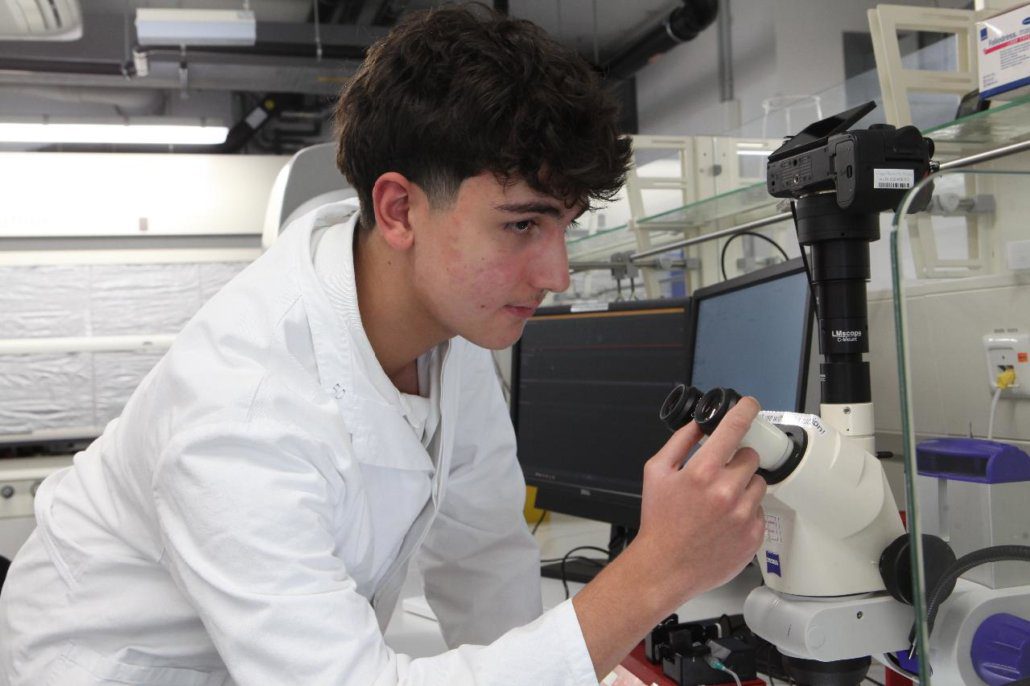
Top talent Nik Tadjiky is working with his team to explore the medicine of tomorrow
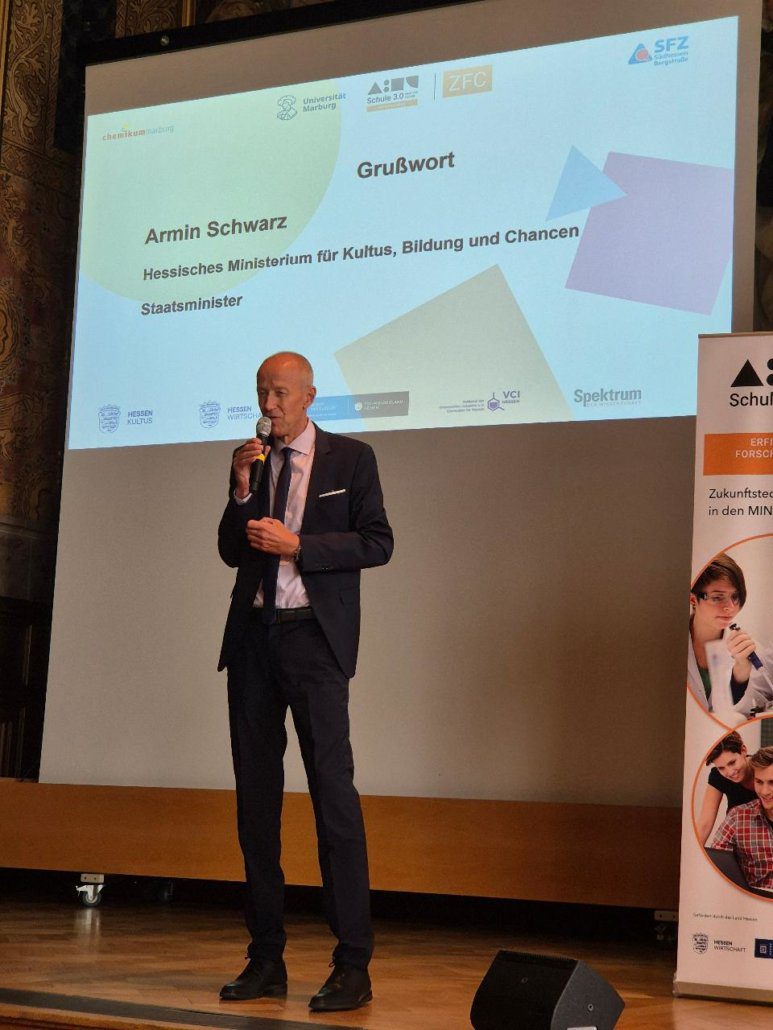
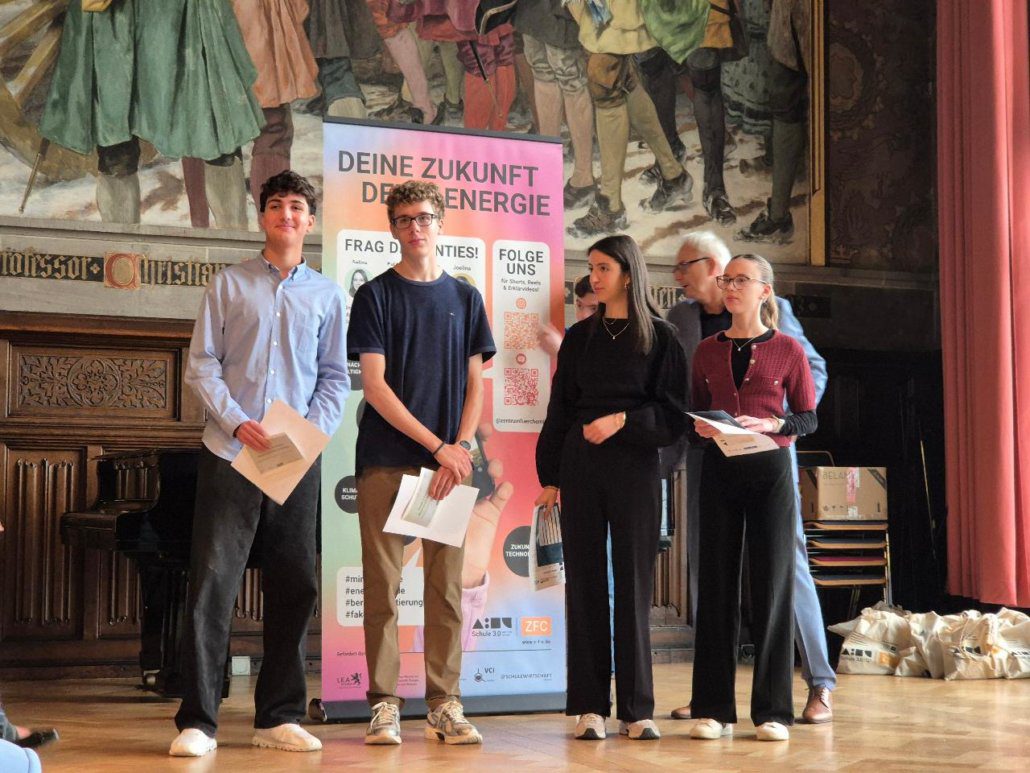
During the 41st Inventors’ Lab hosted by the Center for Chemistry (ZFC) from August 17 to 21, August, 16 high school students from 16 schools in Hesse—all with top grades in STEM subjects—spent a week at Philipps University of Marburg conducting research on current issues in biotechnology and drug development. The high-achieving students presented their findings in the historic auditorium of Philipps University of Marburg to an audience of 170 guests, including Armin Schwarz, Hesse’s Minister of Education and Cultural Affairs. Among the research team was Nik Tadjiky from the Steinmühle School & Boarding School in Marburg. The Inventors’ Lab also served as a celebratory event as part of “80 Years of Hesse.”
When Viruses Help and Protect Dying Cells:
Can viruses help in the fight against dangerous bacteria? How can tumor cells be targeted specifically? Can active ingredients be formulated so that they work exactly where they’re needed? And can stressed stem cells protect other cells? Eight female and eight male students presented answers to these questions to guests from the fields of science, politics, education, and business. The event took place in the Alte Aula at Philipps University of Marburg, a historic venue where teaching and research have been conducted for centuries. There, the students presented—in a clear and concise manner—what they had developed during a week of intensive laboratory work.
“Scientific knowledge alone is not enough. You also have to be able to communicate it in a way that even non-experts can understand its significance,” said Dr. Thomas Schneidermeier, Executive Director of the ZFC. “In this age of fake news, we need this kind of knowledge communication now more than ever.” Rather than conducting simplified school experiments, the young people spent a week working in research groups at Philipps University of Marburg. There, they learned about scientific methods and developed and tested their own solutions. They also discovered that research doesn’t always yield the results one expects.
An Insight into Industrial Pharmaceutical Manufacturing
The Inventors’ Lab not only supports high-achieving students but also opens up concrete prospects for higher education and careers. During a tour of the Aenova facility in Marburg on the first day of the workshop week, the students gained insights into industrial drug manufacturing and potential career paths in the pharmaceutical industry. At the Max Planck Institute for Terrestrial Microbiology, Director Prof. Dr. Helge Bode vividly explained scientific working methods and academic career paths. “It is precisely this combination of research, communication, and career guidance that defines the Inventor Lab,” said Meike Jäger, who also serves on the ZFC’s board of directors.
The 16 teenagers had successfully navigated a rigorous selection process. A total of 196 high-achieving high school students from 115 schools in Hesse had applied for this year’s two ZFC Inventor Labs. In the selection process, the ZFC considers not only academic performance but also, among other things, a balanced gender ratio and the inclusion of as many different schools as possible
.
Connection to everyday life established
How much are we affected by PIM-1 mutations? Who among you has ever seen a malformation like this? Are all viruses bad, like the coronavirus? Can dying stem cells protect other cells?
The students opened their final presentations with such thought-provoking questions. With confidence and poise, they explained even highly complex scientific concepts in a way that was easy to understand, repeatedly drawing parallels to the listeners’ everyday lives. “The PIM1 kinase is actually an important protein in our cells. However, if it exists in a mutated—that is, defective—form, it can contribute to the development and growth of tumors,” one group explained. “This can affect any one of us.” That makes it all the more important to continue researching new therapeutic approaches, which those affected are counting on and depend on.
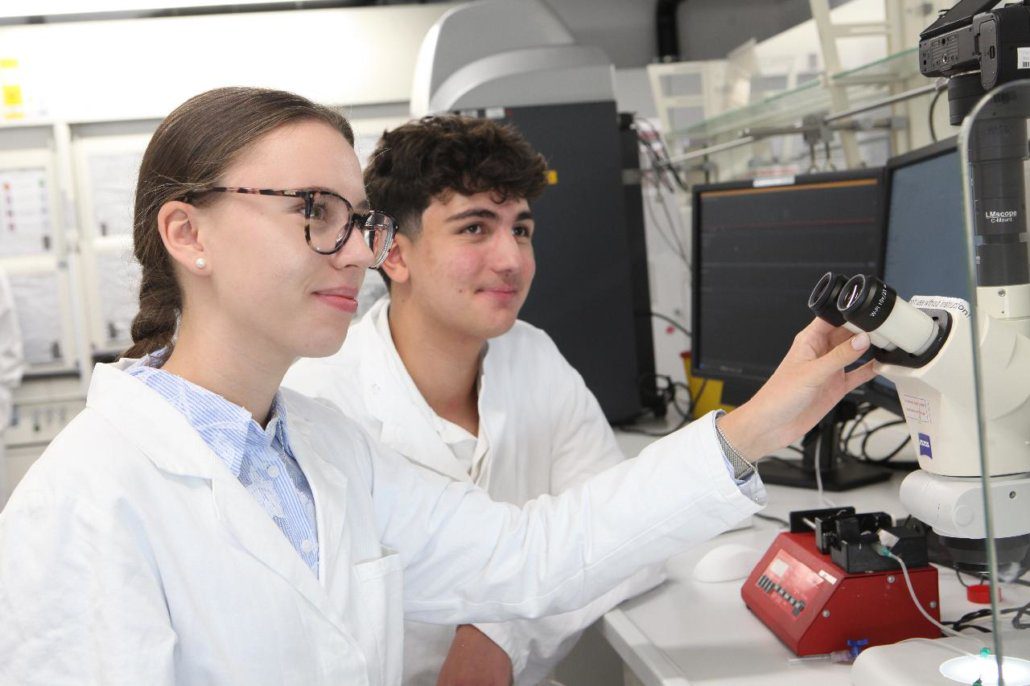
In the research groups, the students worked with professional laboratory techniques—ranging from chromatography and mass spectrometry to scanning electron microscopy, cell culture, and fluorescence methods. Guided by research staff, they conducted challenging experiments, analyzed their results, and gained an authentic insight into the day-to-day work of modern life sciences research.
“Using STEM Knowledge to Make Sense of the News”
Scientific knowledge is urgently needed to make sense of public debates and news reports, according to ZFC board member Thomas Schneidermeier. “Today, STEM knowledge also serves as a kind of shield against false or misleading statements.” Using public statements about
hydrogen technologies, he demonstrated how difficult it can be to evaluate news reports from a technical perspective. Those who have experimented with hydrogen themselves and understand the fundamentals of science are better able to assess such statements.
Schneidermeier also addressed the current debate surrounding mRNA vaccines. He noted that whether this technology is effective and safe cannot be determined based on political statements, but only through dialogue with scientists conducting research in this field. Particularly in light of fake news and artificial intelligence, she said, it is therefore a responsibility for society as a whole to empower young people to critically examine and evaluate statements in the media.
Real research, as opposed to traditional classroom instruction
The students themselves described just how different real research feels compared to traditional classroom instruction. “My highlight was the moment when the synthesis worked for the first time and we actually had our product in our hands,” said one student.
One student summed up her experience with one word: “Independence.” While school experiments usually specify exactly what is to be done and what results are expected, she said they were able to set their own priorities in the lab. “We had much more flexibility and were able to develop a completely different connection to our project.” She was also particularly impressed by the technical capabilities of professional research.
Another insight a student took away from the week was: “Nature offers an incredible number of solutions to our problems. We just have to look more closely, explore them, and make use of them.”
The Inventor Lab has also opened up new perspectives when it comes to academic and career guidance. “You get to meet people from a wide variety of fields, degree programs, and professions, and gain firsthand experience and advice,” said one student.
Another student also reflected on the experience: “Talking with people in the field of research has once again significantly broadened my horizons.”
Marburg: A Center of Scholarship with a Long Tradition
Minister of State Armin Schwarz praised Marburg as a strong hub for science and research and recognized the 16 participants as its next generation. The Inventors’ Lab stands for “talent, ideas, and innovation” and for asking the right questions. Addressing the young people, Schwarz said, “We have young people who are capable, who are motivated, and who are driving us forward”—both scientifically and, consequently, economically.
Evelyn Damer, student vice president at Philipps University of Marburg, highlighted the university’s nearly 500-year-old tradition of research. She noted that the Inventor Lab represents the “development of the next generation of researchers.” Here, young people can gain firsthand experience with the university, research, and potential academic paths. At the same time, the transfer of knowledge to the business sector is an important factor for Hesse as a location.
“We need people who are curious”
Dr. Janin Sameith of the Hessian Ministry of Economics, Energy, Transportation, Housing, and Rural Affairs focused on the connection between research and application. In Marburg, she noted, “chemistry and healthcare” come together. From Emil von Behring to today’s life sciences industry, it is evident how scientific discoveries can be translated into medical applications and economic development. “We need people who are curious—people who want to generate knowledge and get things done,” said Sameith.
Heike Blaum of the Chemical Industry Association (VCI) of Hesse described Marburg as the “perfect place” to conduct research on biotechnology and pharmaceuticals. She noted that the city has long been shaped by science and pharmaceutical development, but at the same time must continually face new
challenges. “This requires bright minds,” said Blaum: people who help shape the future, take on responsibility, and develop solutions together.
Is there a typical career path?
Johanna Lücke, a student at Philipps University of Marburg, highlighted the breadth of science degree programs during a discussion on academic and career guidance. She chose pharmacy because she wanted to combine her interest in the natural sciences with medicine and the effects of pharmaceutical compounds. “Pharmacy is a mix of many disciplines—medicine, chemistry, biology, and even a little physics,” she said.
Dr. Christof Wegscheid-Gerlach, director of Chemikum Marburg, demonstrated through his own career path that a professional journey does not have to follow a straight line. He initially wanted to study chemistry, but then studied pharmacy, earned his doctorate, worked in the pharmaceutical industry, and later returned to the university. Today, he combines pharmacy, teaching, supporting young talent, and science communication. His conclusion:
Science degree programs open up far more paths than traditional career profiles might suggest. “Do your research, try things out, and don’t let anything deter you,” he advised the young people.
Minister of State Armin Schwarz: “I’ve learned something new”
Minister of State Armin Schwarz was impressed by the young people’s presentations. He noted that they had tackled challenging and highly relevant social issues and communicated complex research in a way that allowed even an audience without a background in the subject to gain a great deal from it. “I learned something new,” said Schwarz. The young people embody “pure innovation” and “pure curiosity.”
Anke Hundt, head of the STEM division at the Hessian Ministry of Culture, Education, and Opportunity, emphasized how clearly the young people had explained their research. She noted that they were particularly successful in engaging the audience right from the start with a vivid question and in making orders of magnitude understandable through everyday comparisons.
Technical terminology translated into plain language
Heike Blaum from VCI Hessen felt the same way after the presentation on phages. She said she hadn’t known what phages were before, but the presentation—even for someone like her who isn’t a scientist—enabled her to understand their relevance. She particularly praised the fact that the young people consistently translated the technical jargon into language that was easy for everyone to understand.
Following the presentation, Dr. Janin Sameith of the Hessian Ministry of Economic Affairs also highlighted the use of humor. However, she noted that it was particularly important that the young people openly acknowledged that experiments do not always go as planned. It is precisely in those moments, she said, that it is important to use unexpected results to generate new questions.
“MINTIES” at the ZFC: Science Between Shorts and Reels
Making science accessible is also the goal of the ZFC’s “MINTIES” program. Former participants in the Inventors’ Lab produce explanatory videos, shorts, and Reels for YouTube, Instagram, and TikTok. There are now more than 220 posts online. The topics range from green steel and hydrogen mobility to artificial tissue structures created with 3D printers. Together with Clarissa Corêa da Silva, known from the TV show “Sendung mit der Maus,” the MINTIES, for example, conducted experiments on hydrogen and fuel cells and demonstrated the technology using, among other things, a
hydrogen-powered car.
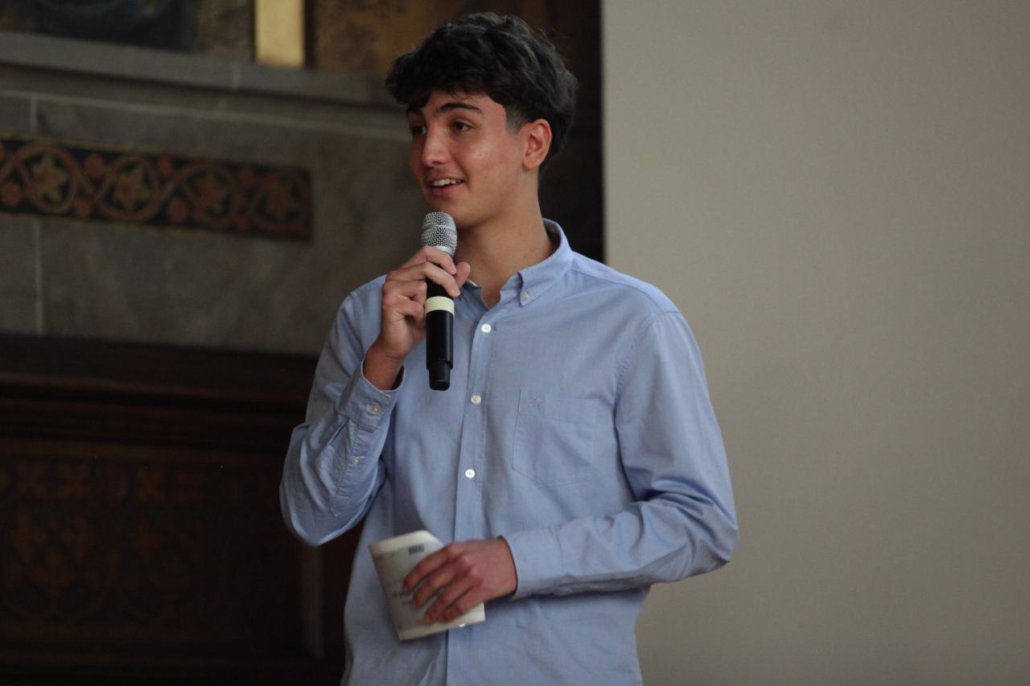
Elise Beck also demonstrated just how closely linked the Inventor Lab and MINTIES are: Having participated in an Inventor Lab herself just last year, she this time served as the eloquent host of the closing event. As a MINTIE, she also explains scientific topics on camera, such as how three-dimensional cell structures can be created using stem cells and so-called “bio-ink” in 3D printing.
The goal of the explanatory videos, Shorts, and Reels is to bring research from universities and industry to the places where young people spend part of their free time and to present complex topics related to the future in a way that makes them understandable even outside of specialized classes
.
Committed partners make it possible
The Inventors’ Lab is made possible by a close-knit network of universities, research institutions, sponsors, and partners. “I’d like to extend my special thanks to everyone who made this week possible,” said Dr. Thomas Schneidermeier. The long-standing and trusting collaboration makes it possible to directly involve high school students in real research.
To wrap things up, Meike Jäger once again turned the spotlight on the 16 young people. After a week of hard work and their final presentations, she said they deserved the biggest thanks: “You are the stars of this event.”
In closing, Dr. Christof Wegscheid-Gerlach emphasized that the supervising research groups also benefit from this exchange. The young people’s questions and perspectives could open up new ways of looking at things. “That way, both sides benefit,” he said.
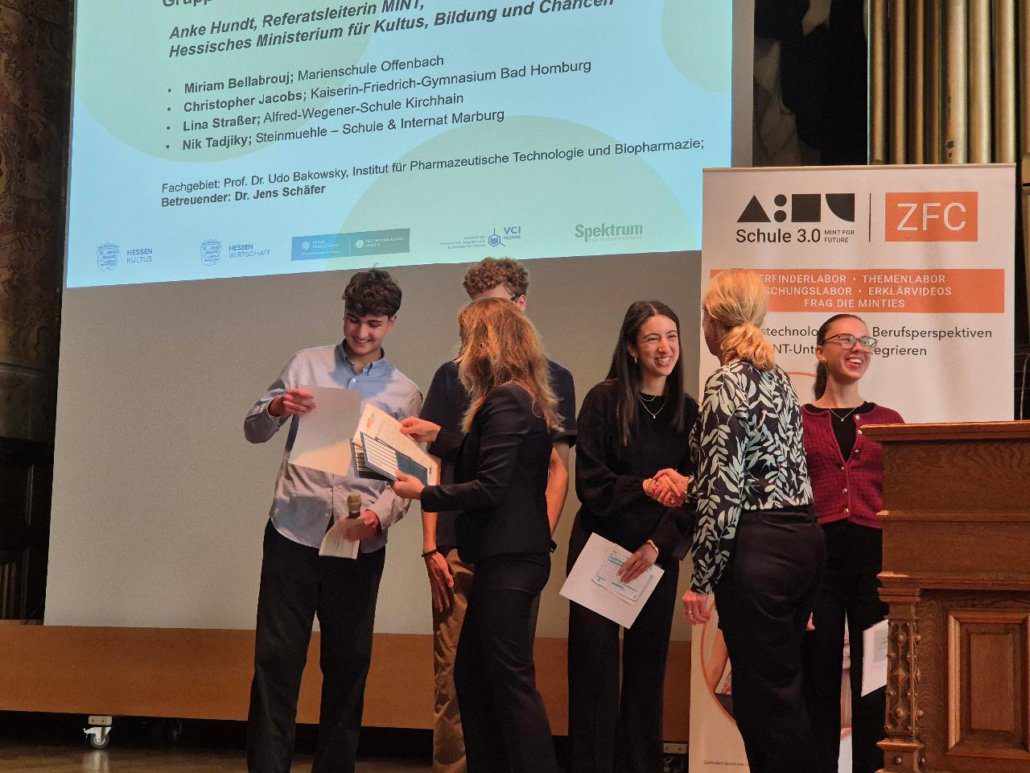
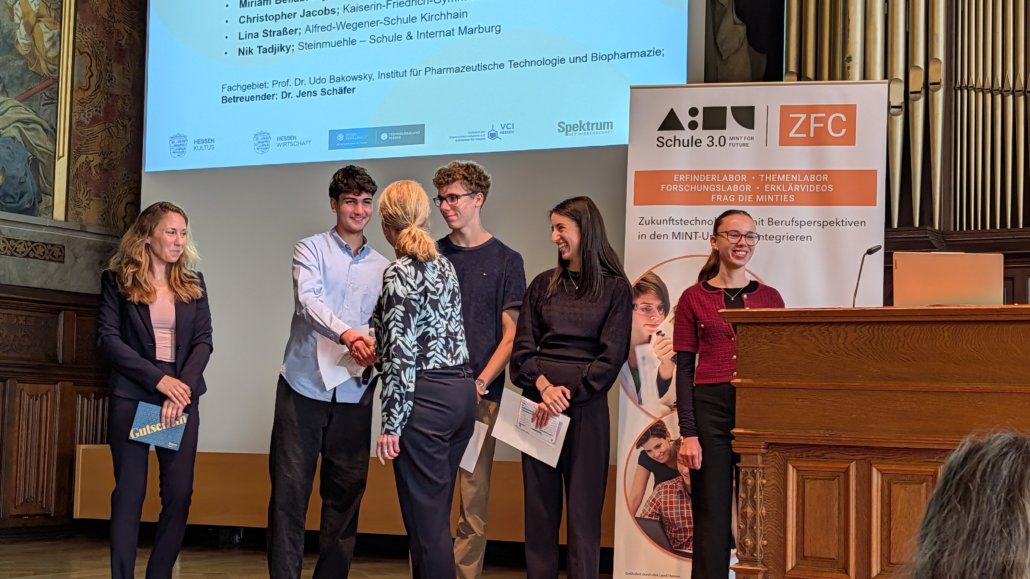
In recognition of their achievements, the 16 participants received a one-year subscription to *Spektrum der Wissenschaft* at the end of the program, giving them the opportunity to continue following current research even after the Inventor Lab has ended.
STEM Knowledge Against Fake News
The Inventor Labs are part of the ZFC initiative “School 3.0 – STEM for Future.” The goal is to more closely integrate socially relevant topics such as digitalization, artificial intelligence, climate protection, the energy transition, and drug development into the regular curriculum at schools. Young people should learn to understand scientific concepts, analyze information from a technical perspective, and explore options for higher education and careers. The initiative is also designed to help students use STEM knowledge to identify and evaluate targeted fake news circulating online.
About the Center for Chemistry
The Center for Chemistry (ZFC) is a registered nonprofit organization. For over 20 years, the ZFC has been carrying out STEM projects for students aged 8 to 19 in collaboration with schools, universities, research institutes, companies, associations, foundations, and ministries. Incorporating socially relevant issues into regular classroom instruction facilitates better career guidance, thereby helping to ensure a sufficient supply of STEM professionals and enabling students to analyze news stories using their STEM knowledge.
For more information: www.z-f-c.de
(ZFC / Heinm, Stm)