

Academic Simulation Games (MUN): Nicolas Rechner Won Several Awards
Everyone talks about diplomacy—but how does it actually work? Nicolas Rechner, a 13th-grade student at Steinmühlen, has actively explored this topic on several occasions. During the fall break, he actively participated in a MUN for the second time.
MUN stands for Model United Nations. These are academic simulation exercises for high school and college students in which participants take on the roles of diplomats and reenact the work of the United Nations.
Participation in MUN events in London and Basel
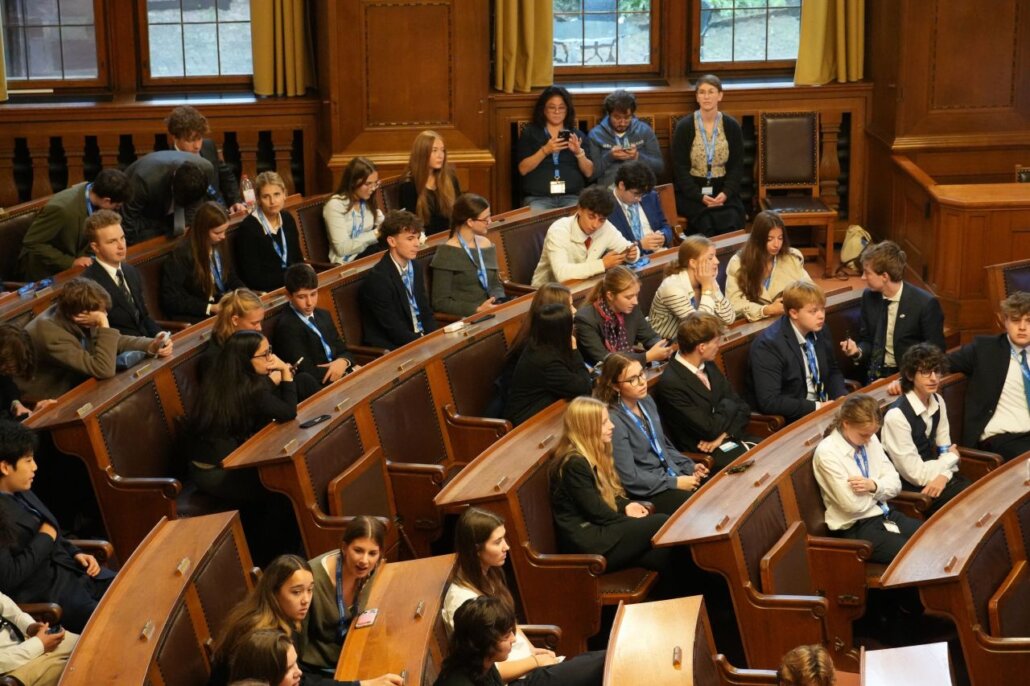
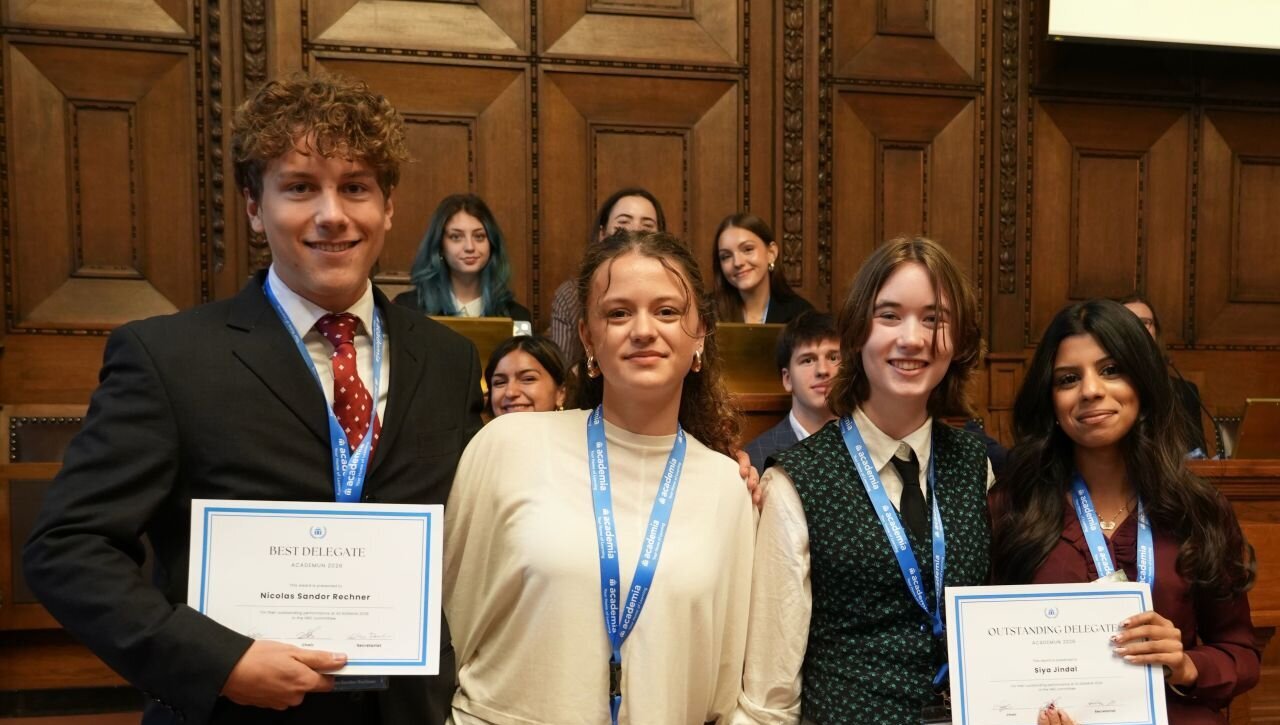
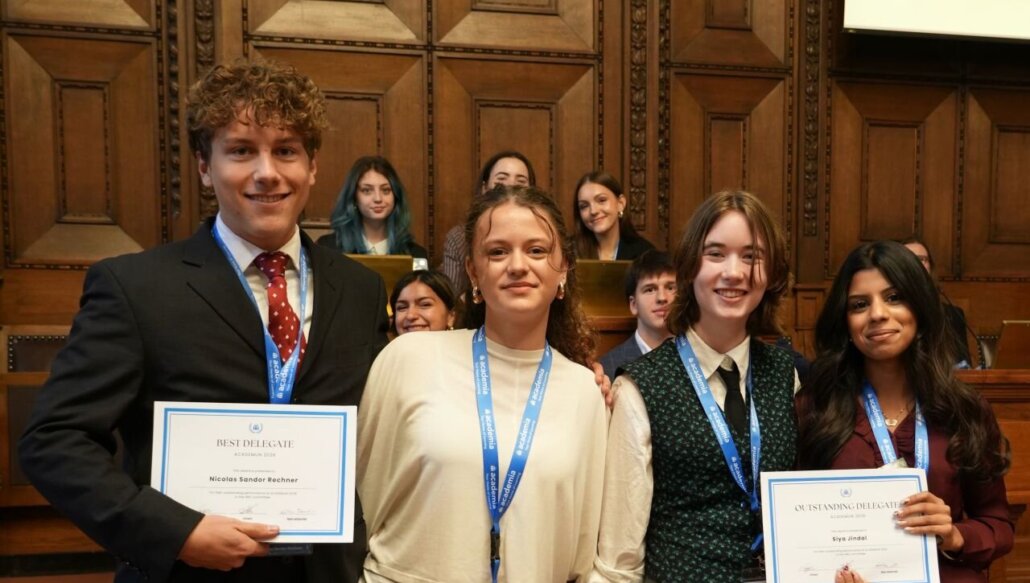
At Academun, which is part of the Academia School in Basel, Nicolas Rechner initially represented Brazil on the Human Rights Council (HRC), but after the first day he took on the role of the Israeli delegation to make the debate in the HRC even more interesting, as he put it. Nicolas managed to introduce five amendments to the resolution and later received the Best Delegate Award.
“Every MUN is different, because it really depends on the venue, the organizer, and the participants,” explains Nicolas. This was his second time attending a MUN—first in London in April and now in Basel—and he won awards at both conferences:
Best Delegate, Distinguished Delegate, and Best Position Paper. The MUNs were always conducted in English.
“The topics usually vary depending on the MUN,” he says, “but AI is, of course, a very hot topic right now. On top of that, each committee or panel has its own set of subtopics.” So far, Nicolas has served on the UN General Assembly (GA) and the UN Human Rights Council (HRC).
(Angela Heinemann)
The Concept
Role Assignment: Each person or team represents a specific country or organization in a simulated body (e.g., the UN General Assembly or the Security Council).
No personal opinion: One does not argue from one’s own perspective, but officially represents the political stance of the assigned country.
Objectives: Participants debate global crises or issues (such as climate change or human rights), engage in negotiations, and work together to draft resolutions.
Debates: Give speeches, submit motions, and form alliances with other countries.
Learning Outcome: To impart knowledge of international politics, diplomacy, international law, as well as rhetoric, negotiation skills, and intercultural understanding.
Conferences: MUNs take place as one-day school events or as large national and international conferences lasting several days, such as those organized by the Deutsche Model United Nations e.V.
(Source: AI)