What is our vision for biology classes at Steinmühle?
Direct experiences with nature not only increase students’ motivation to learn but also foster a caring attitude toward living things and the environment.
Biodiversity plays a central role, especially in the debate on climate change. It is precisely this diversity of habitats, animals, and plants that we now need to document and integrate even more deeply into biology classes. That is why we set out to assess and map the potential of the Steinmühle site.
Who are we?
We are the BiologyDepartment, which currently consists of ten faculty members. These include Carmen Bastian, Tim Elmshäuser, Hanna Herzog, Marcel Kalb, Malte Klimczak, Yvonne Nehl, Heike Rabben-Martin, Mirko Radatz, Siiri Wienbeck, and Aylin Yüzguelen.
What did we do?
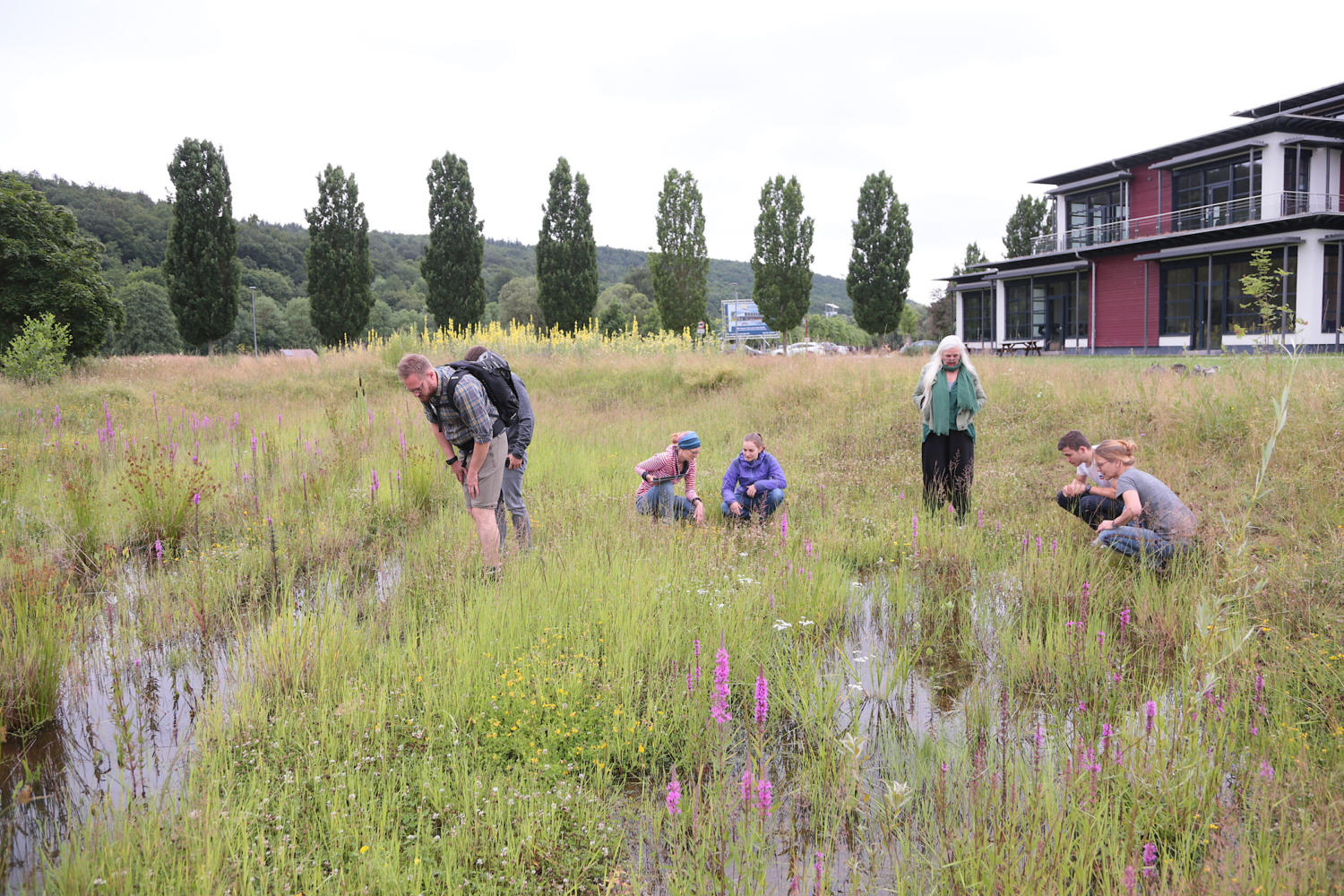
The BiologyStudent Council met at the Steinmühle grounds before summer break, discussed the general plan, and then we were off. We explored the orchard meadow, whose variety of fruit tree species sparked our interest in old apple varieties. The pond, with its inhabitants, invited us to observe and linger. The vegetation-rich area along the Lahn River fascinated and inspired us with its diversity of shapes and colors. In addition to the stream, the Steinmühle school garden, and the greenhouse, the Steinmühle grounds impress with their large number of different trees.
How can you bring nature into the classroom?
In addition to the many ideas that have already been implemented to incorporate the diversity of habitats into biology classes, Marcel Kalb describes a successful project below:
Thanks to the EU LIFE project “Living Lahn – One River, Many Demands,” a significant stretch of the Lahn at the far end of the Steinmühle site was also extensively restored to its natural state.
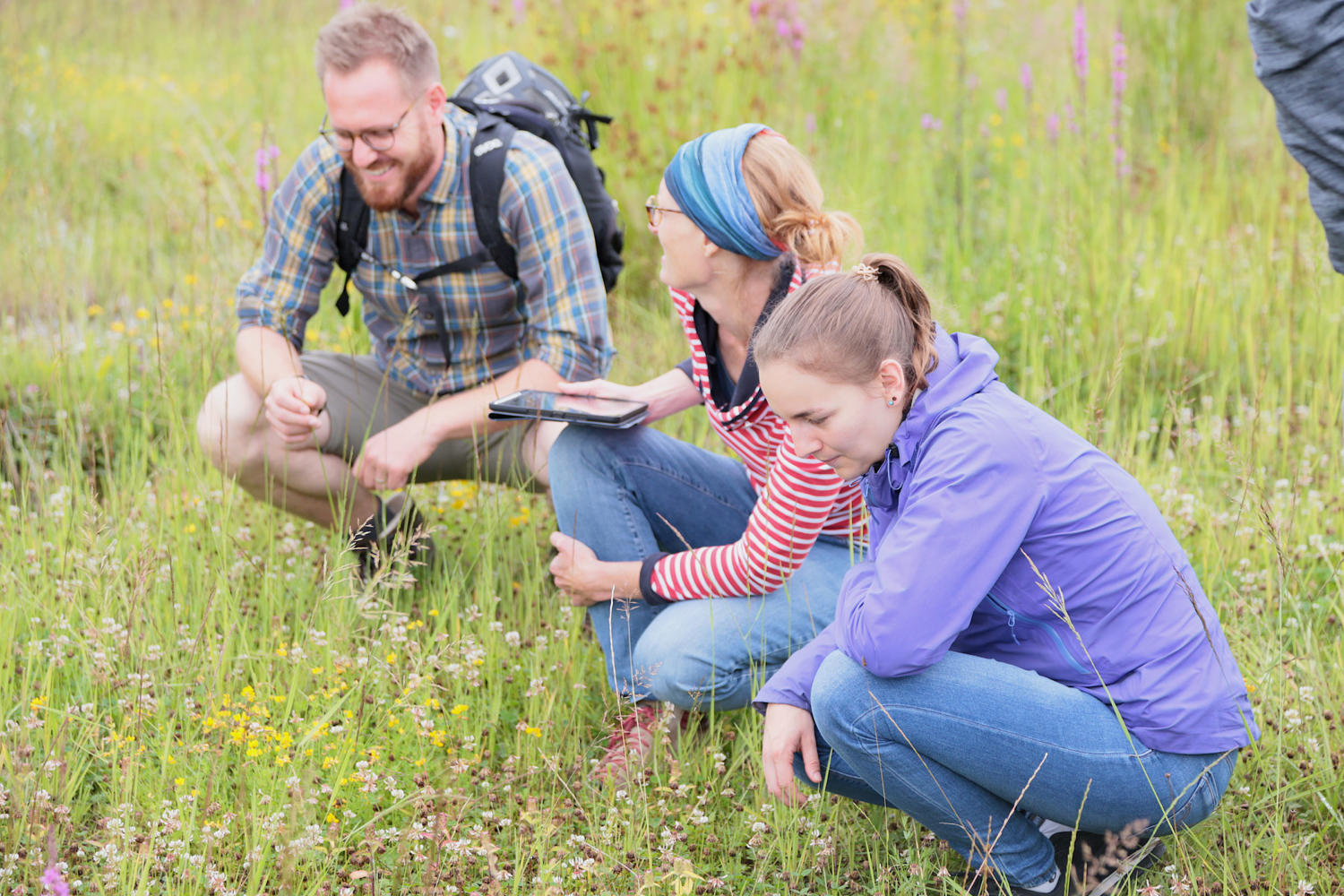
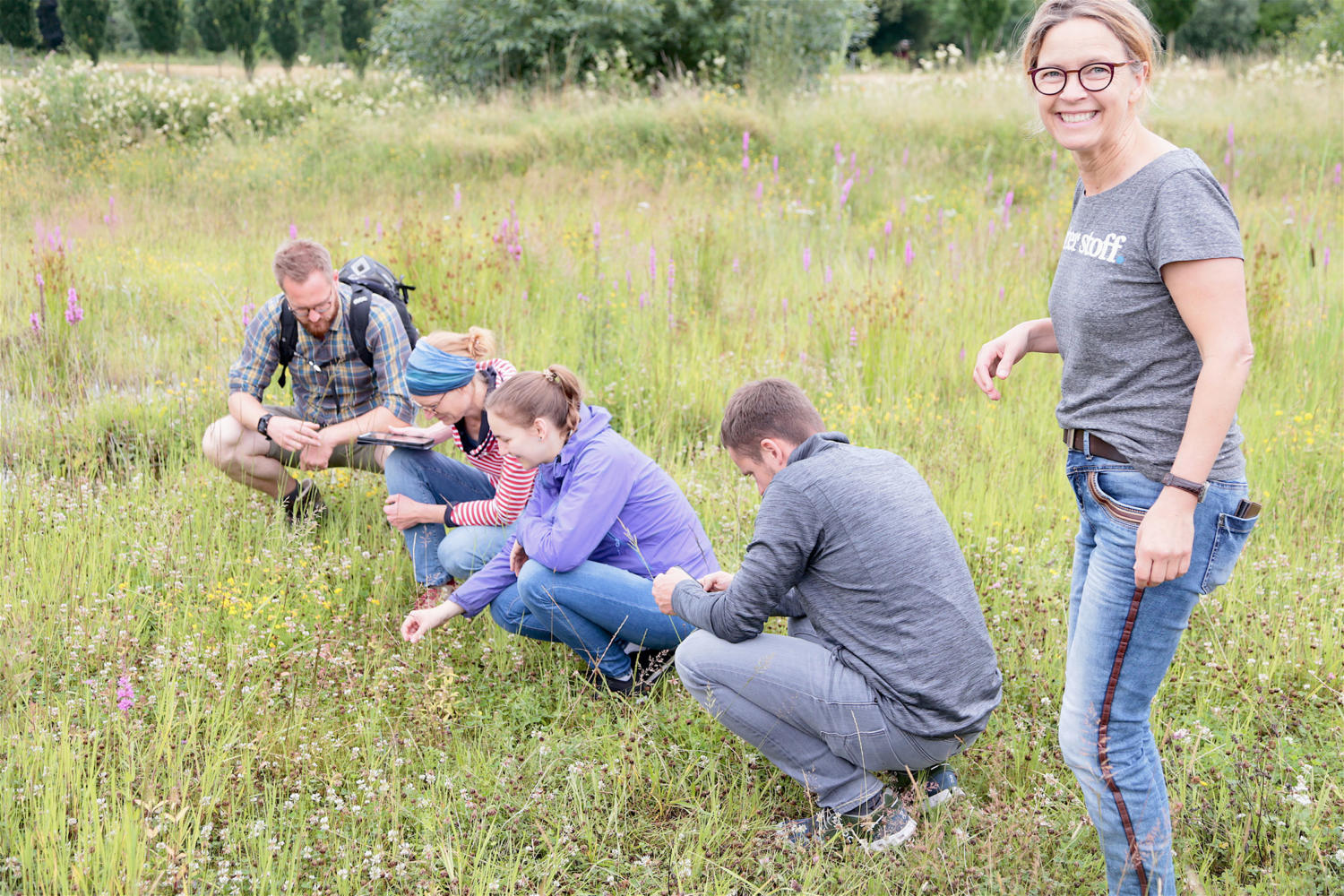
That’s why a “field trip just around the corner” for the Q2 biology class was the perfect opportunity. Armed with ecological background knowledge and equipped with outdated maps and photographs, the students were tasked with analyzing which structures had changed as a result of the intervention and what ecological impacts this intervention had on the organisms living there. The fact that the students were able to leave the classroom and experience the subject matter with all their senses reflects Steinmühle’s guiding principle of sustainable and hands-on learning. In the concluding reflection session, the class agreed: “This is what makes cramming fun!”
Yvonne Nehl





Engaging Biology Lessons on the Steinmühle Grounds
News, STEMWhat is our vision for biology classes at Steinmühle?
Direct experiences with nature not only increase students’ motivation to learn but also foster a caring attitude toward living things and the environment.
Biodiversity plays a central role, especially in the debate on climate change. It is precisely this diversity of habitats, animals, and plants that we now need to document and integrate even more deeply into biology classes. That is why we set out to assess and map the potential of the Steinmühle site.
Who are we?
We are the BiologyDepartment, which currently consists of ten faculty members. These include Carmen Bastian, Tim Elmshäuser, Hanna Herzog, Marcel Kalb, Malte Klimczak, Yvonne Nehl, Heike Rabben-Martin, Mirko Radatz, Siiri Wienbeck, and Aylin Yüzguelen.
What did we do?
The BiologyStudent Council met at the Steinmühle grounds before summer break, discussed the general plan, and then we were off. We explored the orchard meadow, whose variety of fruit tree species sparked our interest in old apple varieties. The pond, with its inhabitants, invited us to observe and linger. The vegetation-rich area along the Lahn River fascinated and inspired us with its diversity of shapes and colors. In addition to the stream, the Steinmühle school garden, and the greenhouse, the Steinmühle grounds impress with their large number of different trees.
How can you bring nature into the classroom?
In addition to the many ideas that have already been implemented to incorporate the diversity of habitats into biology classes, Marcel Kalb describes a successful project below:
Thanks to the EU LIFE project “Living Lahn – One River, Many Demands,” a significant stretch of the Lahn at the far end of the Steinmühle site was also extensively restored to its natural state.
That’s why a “field trip just around the corner” for the Q2 biology class was the perfect opportunity. Armed with ecological background knowledge and equipped with outdated maps and photographs, the students were tasked with analyzing which structures had changed as a result of the intervention and what ecological impacts this intervention had on the organisms living there. The fact that the students were able to leave the classroom and experience the subject matter with all their senses reflects Steinmühle’s guiding principle of sustainable and hands-on learning. In the concluding reflection session, the class agreed: “This is what makes cramming fun!”
Yvonne Nehl