How does human respiration work? And how do fish manage to live underwater without suffocating? Students in 5th grade learned about this in NaUnt, the science class taught by biology teacher Heike Rabben-Martin. Lenja Kissling from class 5b wrote an essay about how the group approached the topic:
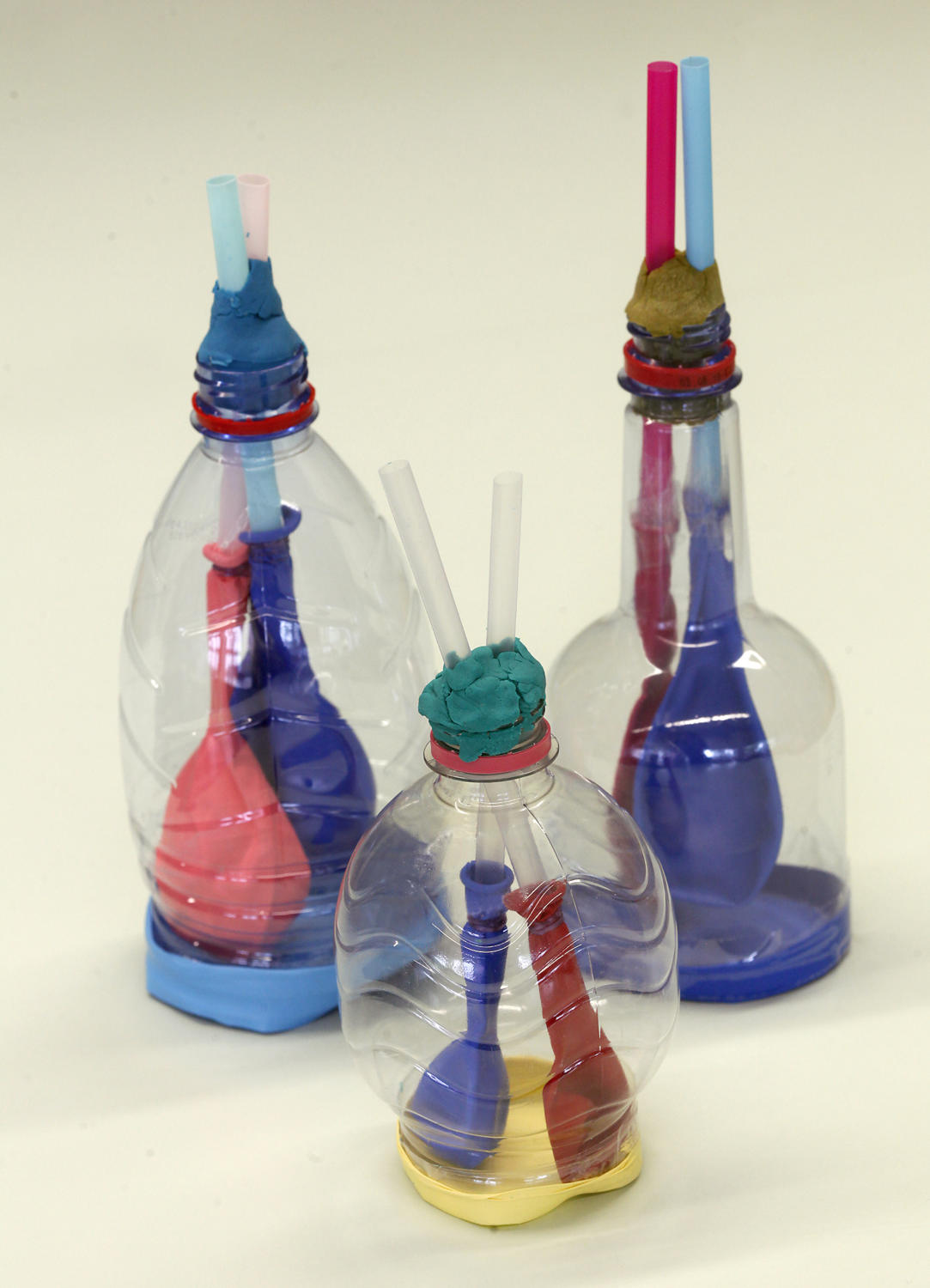
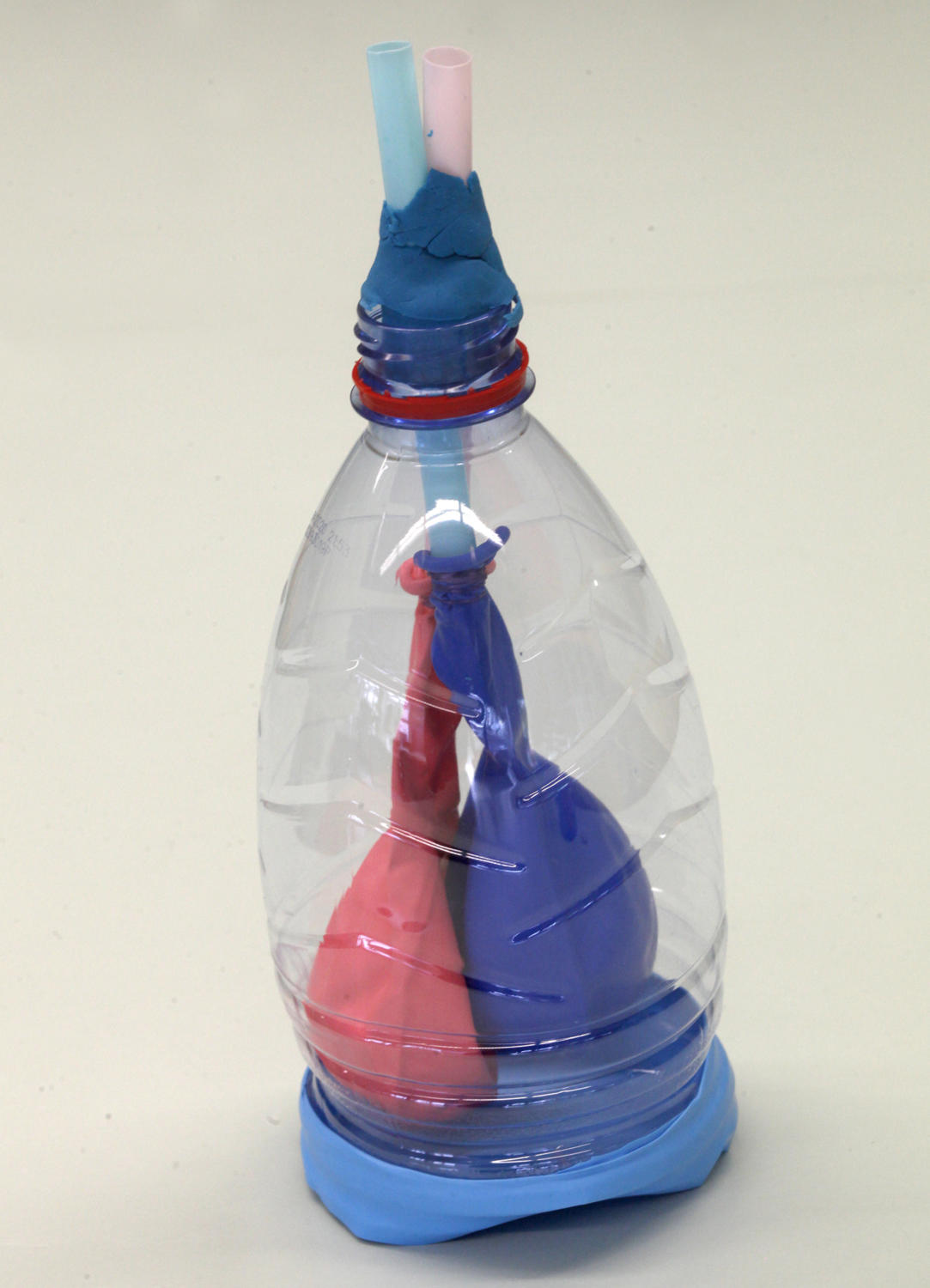
“At the beginning, we built a simple model of human respiration in NaUnt, which you can clearly see in the photo. We, as pulmonary breathers, take in air into our lungs. The ambient air contains only 21 percent oxygen. However, our lungs are able to absorb this oxygen from the air and release it into our bloodstream.
The lungs fill with air when we inhale and empty again when we exhale. The diaphragm contracts when we inhale and relaxes when we exhale. When we inhale, oxygen-rich air is drawn into the lungs through the mouth or nose and down the windpipe, and oxygen-poor air leaves our body via the same route.
The researchers then studied the fish’s respiration to determine how they manage to live underwater without suffocating.
In class, we learned that the main organ fish use to breathe is their gills. Fish open their mouths, allowing water to flow in. When they close their mouths, the water flows back out through the gills. The gills absorb the dissolved oxygen from the water, and the water that exits the gills contains less oxygen.
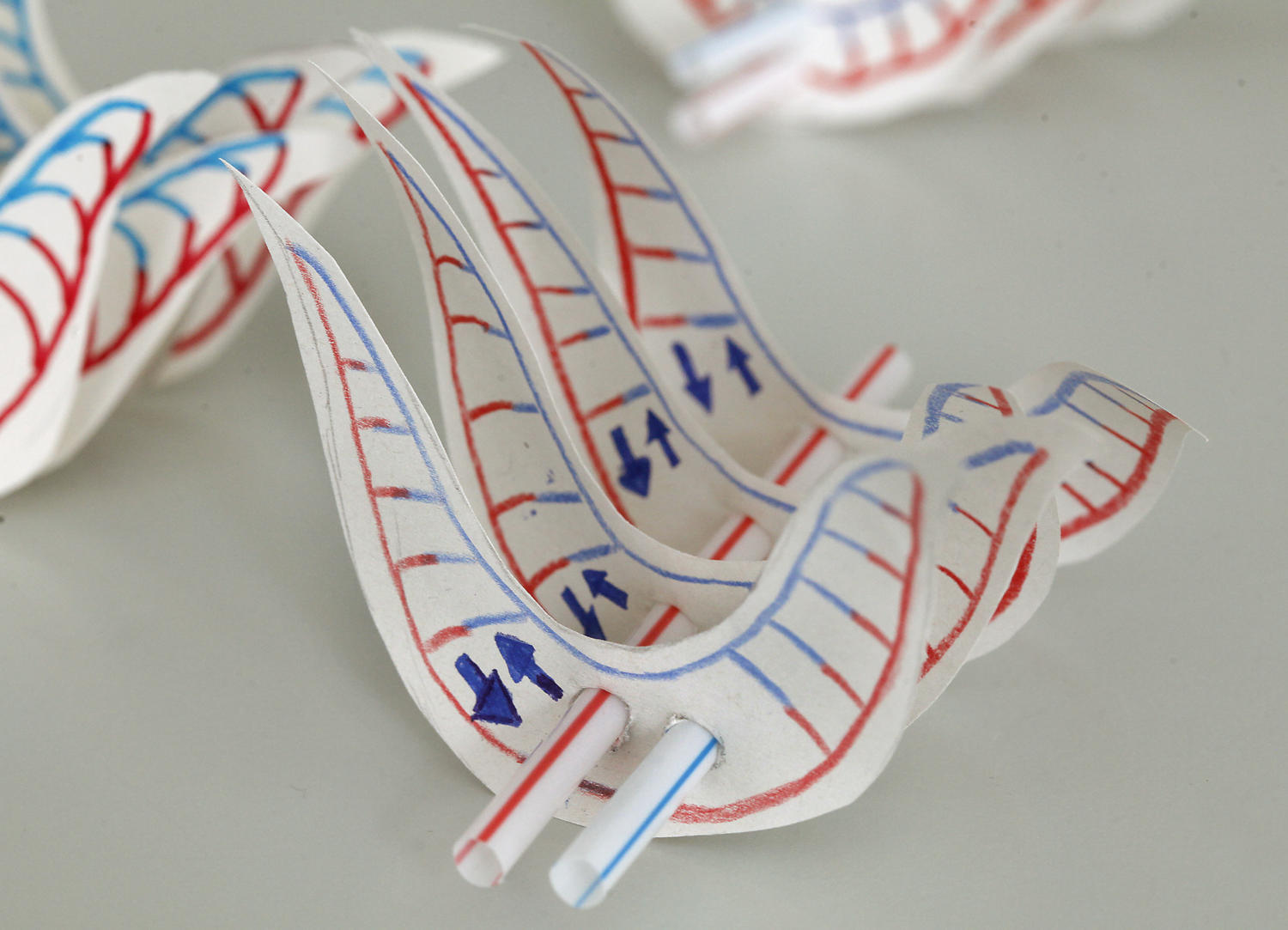
“To better understand the structure and function of gills, we made a model of fish gills in class, as shown in the photo.”



NaUnt: Fifth-grade students use a model to study the respiratory process
News, STEMHow does human respiration work? And how do fish manage to live underwater without suffocating? Students in 5th grade learned about this in NaUnt, the science class taught by biology teacher Heike Rabben-Martin. Lenja Kissling from class 5b wrote an essay about how the group approached the topic:
“At the beginning, we built a simple model of human respiration in NaUnt, which you can clearly see in the photo. We, as pulmonary breathers, take in air into our lungs. The ambient air contains only 21 percent oxygen. However, our lungs are able to absorb this oxygen from the air and release it into our bloodstream.
The lungs fill with air when we inhale and empty again when we exhale. The diaphragm contracts when we inhale and relaxes when we exhale. When we inhale, oxygen-rich air is drawn into the lungs through the mouth or nose and down the windpipe, and oxygen-poor air leaves our body via the same route.
The researchers then studied the fish’s respiration to determine how they manage to live underwater without suffocating.
In class, we learned that the main organ fish use to breathe is their gills. Fish open their mouths, allowing water to flow in. When they close their mouths, the water flows back out through the gills. The gills absorb the dissolved oxygen from the water, and the water that exits the gills contains less oxygen.
“To better understand the structure and function of gills, we made a model of fish gills in class, as shown in the photo.”