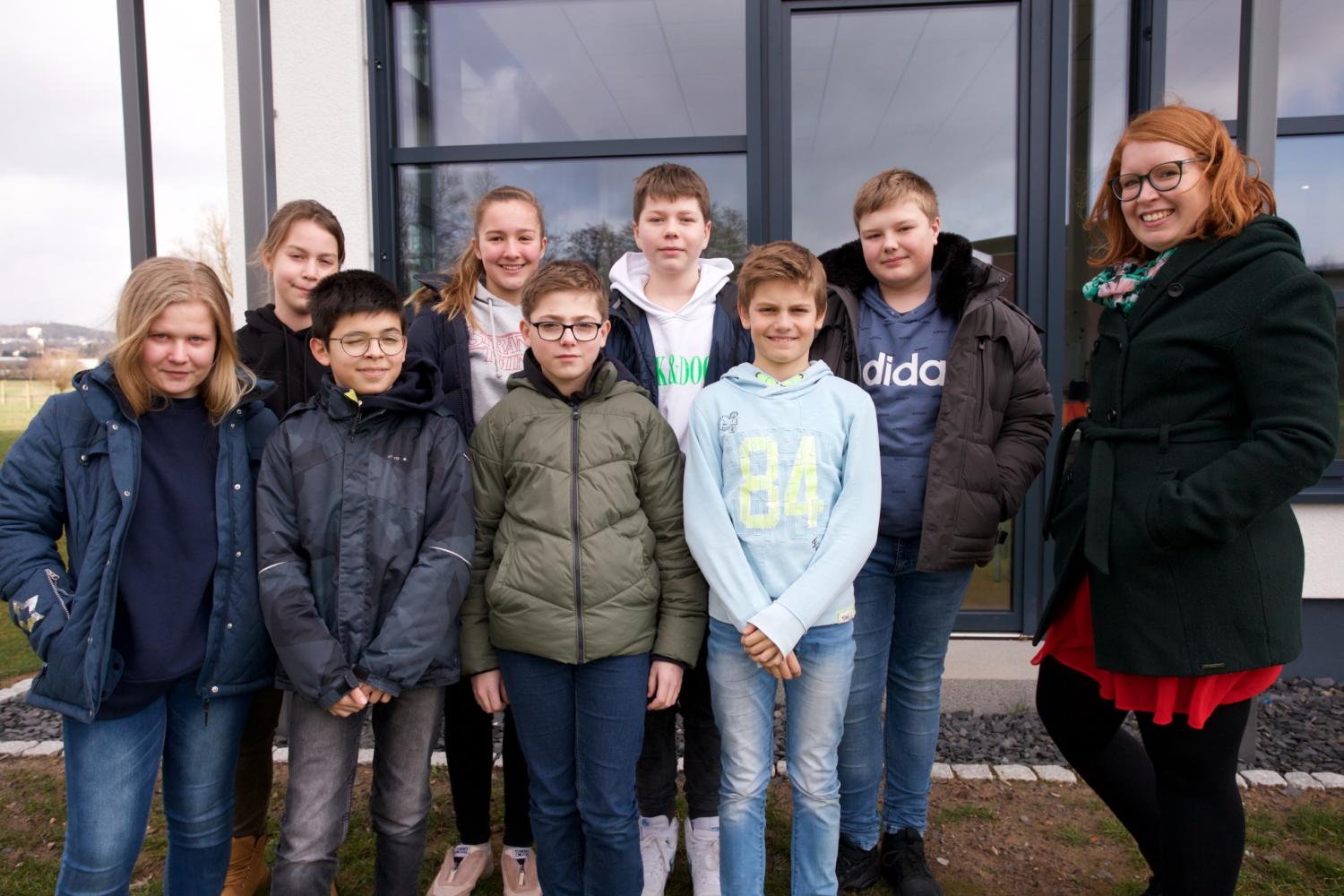


Junior Science Olympiad: Even the youngest participants worked independently and successfully
The first round of the 17th International Junior Science Olympiad took place between early December and mid-January. During this round, children and teenagers up to age 15 had the opportunity to conduct, document, and analyze experiments on a specific topic—this year, “ink.” This competition offers students an accessible introduction to STEM subjects (science, technology, engineering, and mathematics) and is designed to spark an interest in inquiry-based learning—particularly in an interdisciplinary context—that goes far beyond the standard school curriculum.
A total of 10 students took on the challenge at the Steinmühle under the guidance of their NaUnt teacher, Julia Riemenschneider: Liliane Albrecht, Mats Egbring, Maximilian Glock, Lilian Gräser, Max Krug, Antonia Kurlinsky, Stella Preiß, Konrad Rothmann, Jonathan Wolff, and Philipp Zielen. Alongside their regular classes, they worked with great enthusiasm on the experiments, which they conducted and documented using only everyday materials. The tasks posed a particularly significant challenge, especially for the youngest participants in the competition. Despite this, they were able to successfully complete the experiments on their own, demonstrating great enthusiasm for STEM subjects.
Julia Riemenschneider