

Dedicated high school students are expanding the orchard meadow
The “scattered-tree orchard.” It’s considered a symbol of traditional agriculture, evoking associations with picking apples, freshly squeezed fruit juices, homemade jam, and jars filled with preserves in the pantry—and perhaps even “We Children of Bullerbü”?
Furthermore, orchard meadows provide a habitat for a wide variety of animal and plant species and are therefore rightly considered biodiversity hotspots. They are an important part of the cultural landscape—not only in Hesse. However, due to restructuring measures in the agricultural sector (EU directives), the expansion of new residential areas, a lack of interest, the need for maintenance, drought (climate change), etc., their numbers have been severely depleted and they are now endangered. Accordingly, orchard meadows are protected under the Biodiversity Enhancement Act.
Use as a “green classroom”
Since the meadow in the undergrowth is rarely mowed, it is particularly rich in flowers and provides a food source for many insect species—such as protected wild bees. It goes without saying that the school’s own orchard meadow is also used as a “green classroom” as part of biology lessons—to study and observe flora and fauna, or simply to “enjoy” nature.
Of course, the plan is for students to harvest the fruit themselves and then process and taste it as part of classroom projects.
Since the fruit is consumed and processed locally, there is no need for the usual long transport routes—including climate-damaging emissions and energy consumption. Thus, the orchard meadow also makes an important contribution to nature conservation and climate protection! Plus: The orchard will likely “spice up” the occasional class as well.
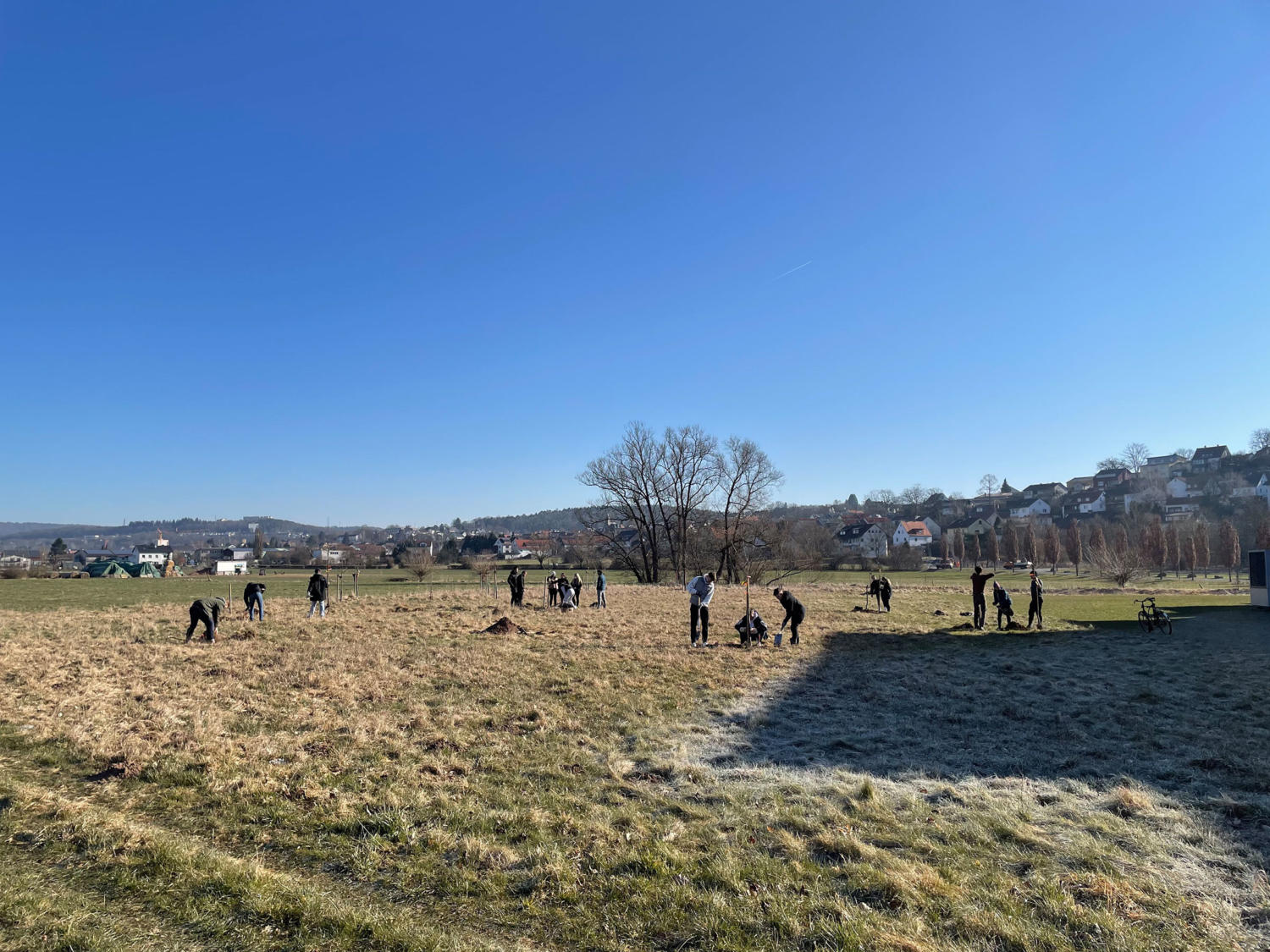
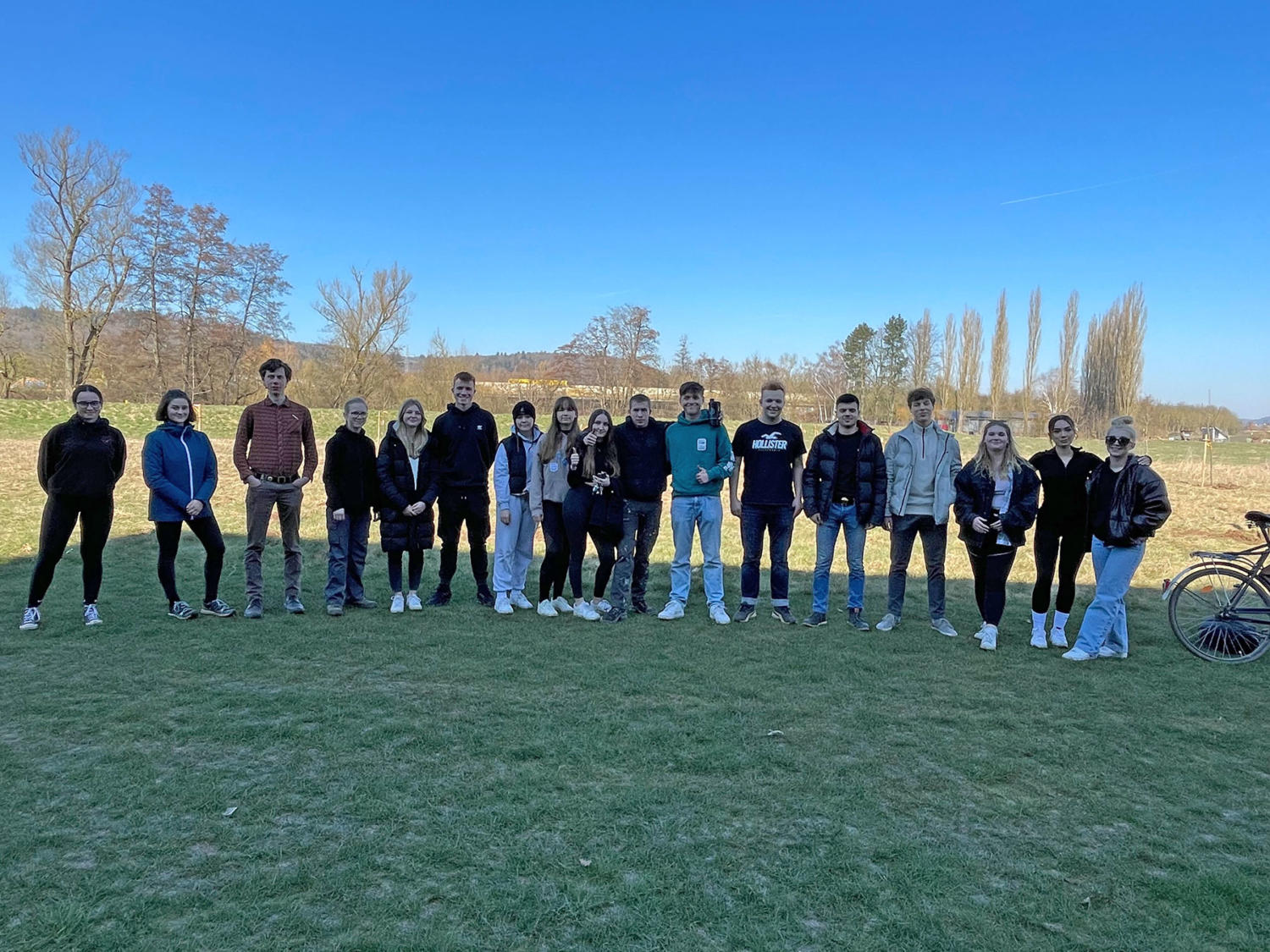
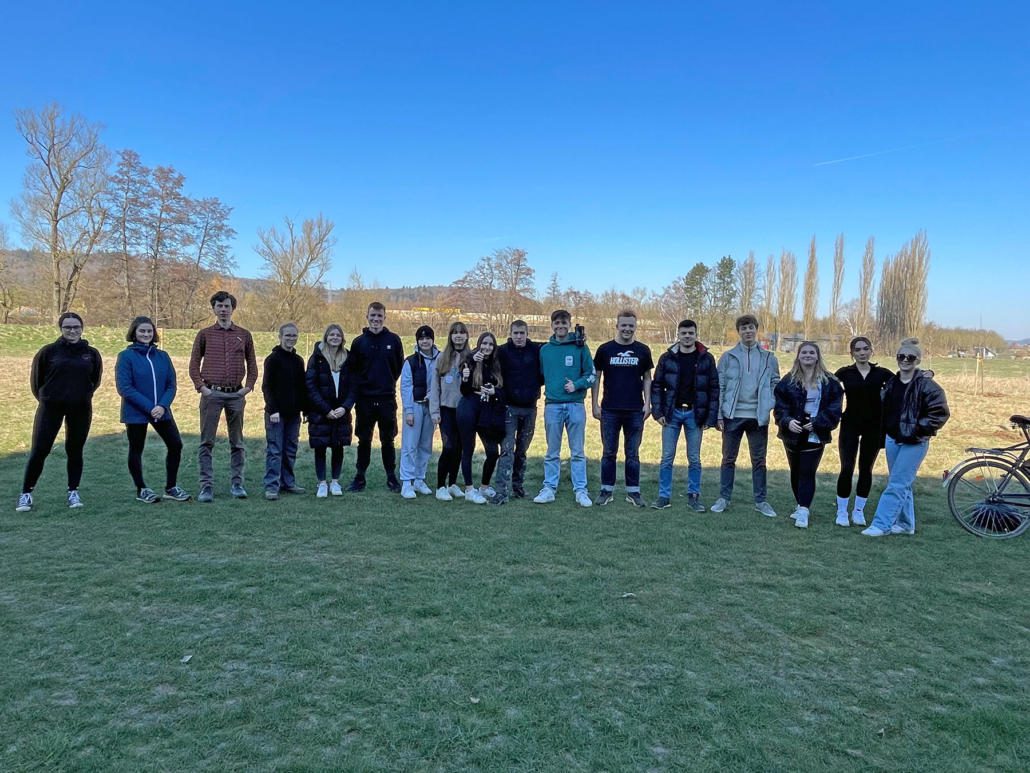
With this in mind, the Advanced Biology, General Biology, and Political Science courses (taught by Carmen Bastian) have decided to expand the orchard—which was originally established as part of a project-based learning initiative in 9th grade—by adding twenty fruit trees. Recommended attire: work gloves, work pants, plus a spade and shovel. Thanks to the parents for lending us the tools!
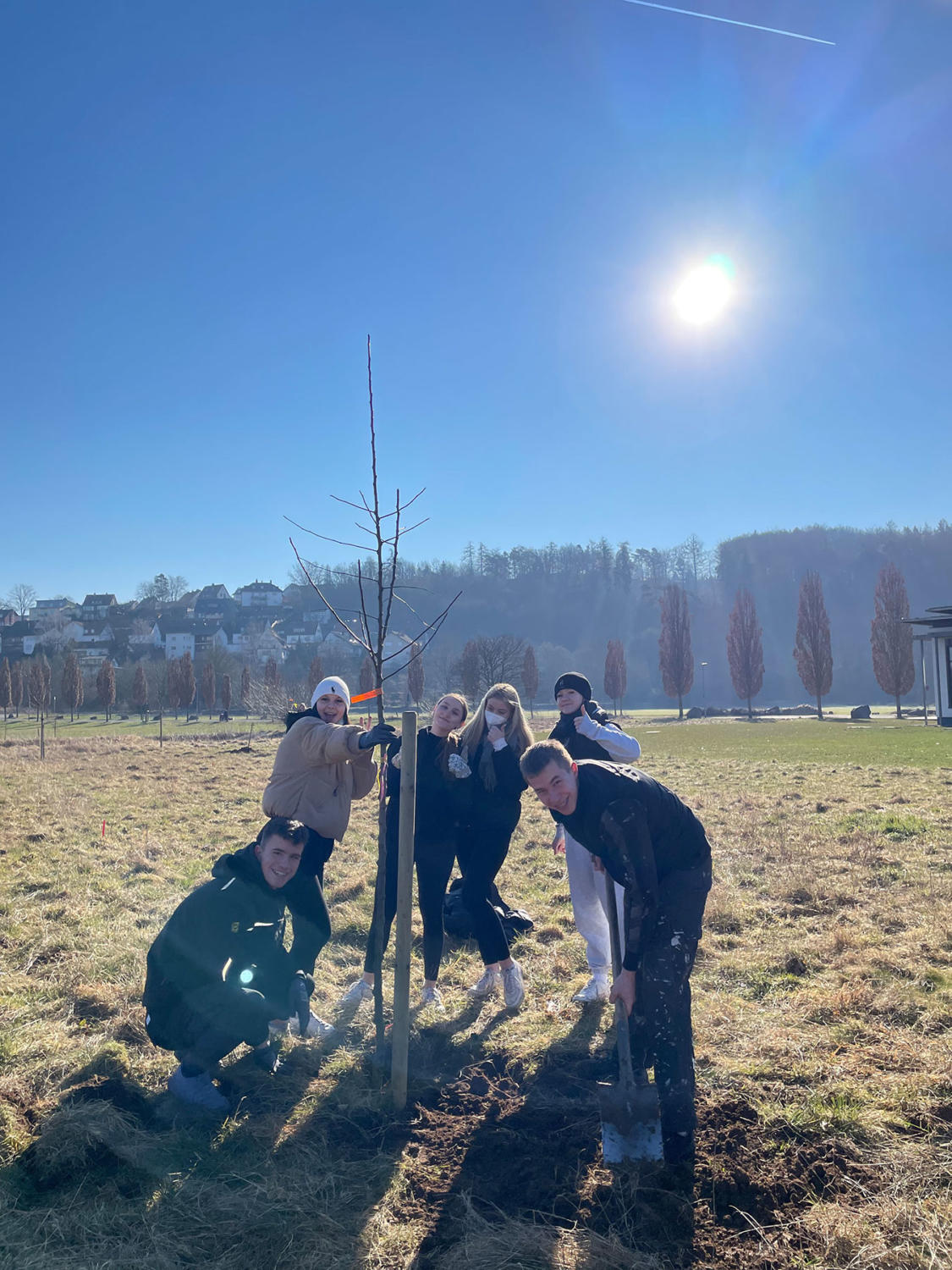
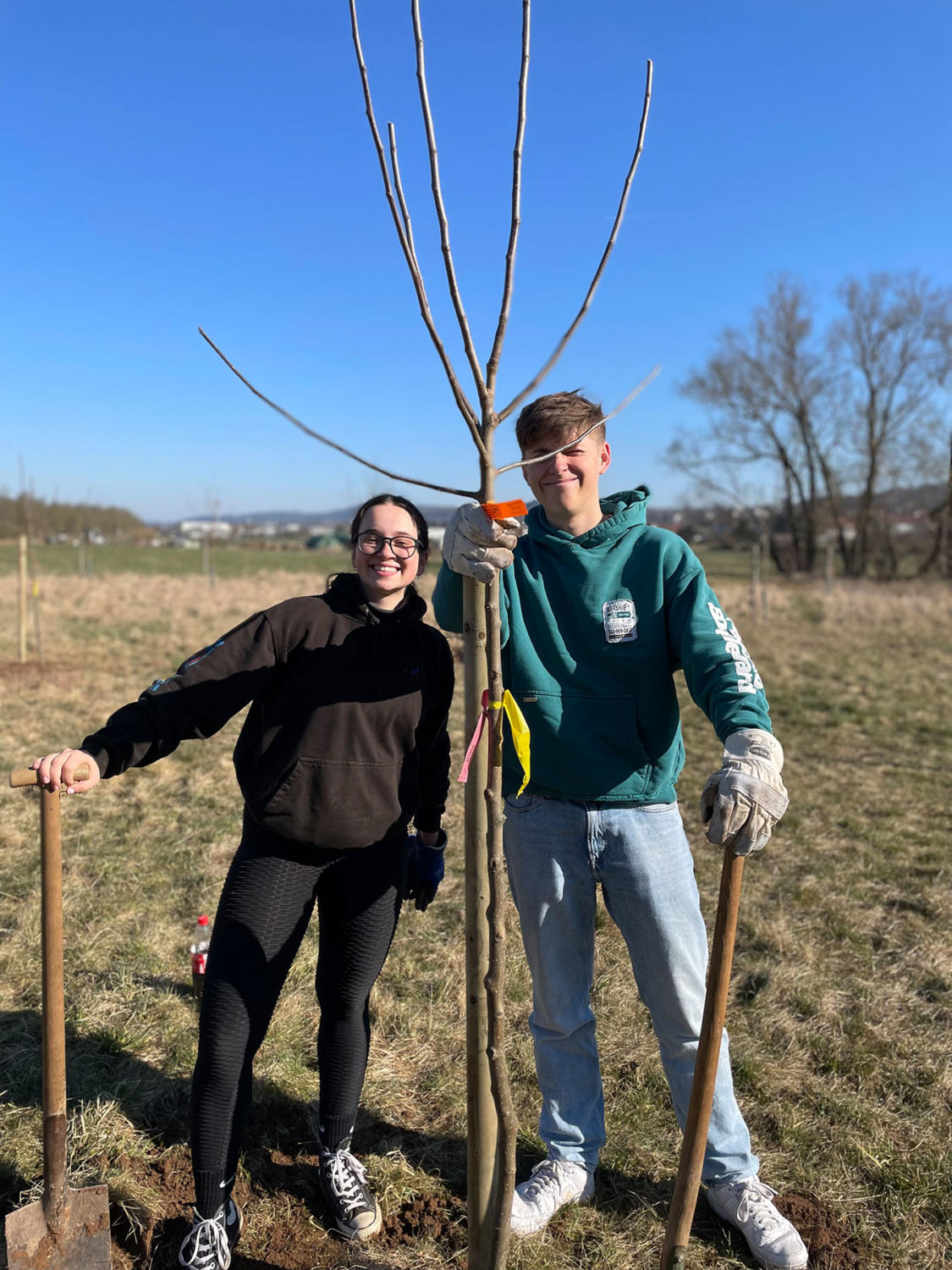
Divided into “tree-planting teams,” the students began digging planting holes and wrapping wire around the tree roots to protect them. The trees were planted, secured to a stake [usually straight ;-)], and watered.
The question of whether only the roots were watered—or whether, in addition, one or two students’ feet were “accidentally” watered as well—remains unanswered.
Finally, each “tree-planting team” “named” its tree with a name of its own choosing. This “ceremony” had no religious, political, esoteric, or similar motives. Rather:
“Planting a tree is fun and sustainable.”
Whether the quote “If I knew the world were to end tomorrow, I would still plant an apple tree today” actually comes from Luther or is falsely attributed to him played no role in the expansion of the orchard meadow.
Will the wish to enjoy an apple from “my own tree”—as part of a fall festival in a few years J—come true? We’ll see.
Jana Müller, Biology Honors Class, 10th Grade