At the 27th Inventors’ Lab organized by the Center for Chemistry, based in Bensheim an der Bergstraße, 17-year-old Justus Schneider, a student at Steinmühlen High School, was one of 16 highly gifted students who spent a week at RheinMain University of Applied Sciences exploring the topic “Electromobility—Fuel Cells.” In front of a large audience, including prominent figures from business, academia, and government ministries, he and his group presented their research ideas and proposed solutions at the event’s conclusion.
Out of nearly 200 outstanding applicants from all over Hesse, Justus was one of the 16 selected participants. He and Luca Weigel from the Lahntalschule in Biedenkopf were the only representatives from the entire county. At the Inventor Lab in the Department of Engineering at Rhein-Main University of Applied Sciences in Rüsselsheim, the young inventors were given their challenge. The challenge was to build a small vehicle on site that is powered by fuel cells. But that wasn’t all: the vehicle also had to be capable of powering other devices at the same time, including a lamp.
Fuel cells and a capacitor were among the components provided. But that was the extent of the assistance. Justus Schneider’s team built a car body out of wood and cardboard. The wheels were created using a 3D printer. The young researchers used the capacitor as an energy storage device. This allowed the lamp to stay lit even when the car was no longer moving.
Inspired by the topics of electric mobility and fuel cells
Producing hydrogen proved to be a test of patience. Since the fuel cells had two ports for hydrogen, this was the stated goal. In the lab, the talented young scientists broke down water through electrolysis. However, the endeavor to store hydrogen in balloons required the staying power necessary for research work. “Don’t give up” was also Justus Schneider’s motto when the balloon burst several times. It ultimately took five hours to make everything airtight.
The successful completion of this project has inspired Justus Schneider. Although he had already planned to pursue a career in research in mathematics or physics before the project, he can now imagine working on the further development of vehicles powered by fuel cells. Although such vehicles already exist, Justus Schneider says, they are relatively expensive to purchase. Justus Schneider’s idea is that gas stations could produce hydrogen themselves or have it delivered by industry. Based on his observations, he believes it would be easy to make changes in this area.
Justus was encouraged by his Steinmühlen teacher and STEM coordinator, Dr. Jutta Töhl-Borsdorf, to enter the competition, which had previously required practical skills. She, along with his physics teacher Dr. Rainer Nietzke and the entire school, is delighted that Steinmühle’s “streak” of participation in this prestigious event has continued this year as well.
If Justus’s work in the Inventors’ Lab did indeed serve as a catalyst for his career—so much the better. Who knows: Perhaps one day it will be a team led by Justus Schneider that achieves a breakthrough in the further development of fuel-cell-powered vehicles.
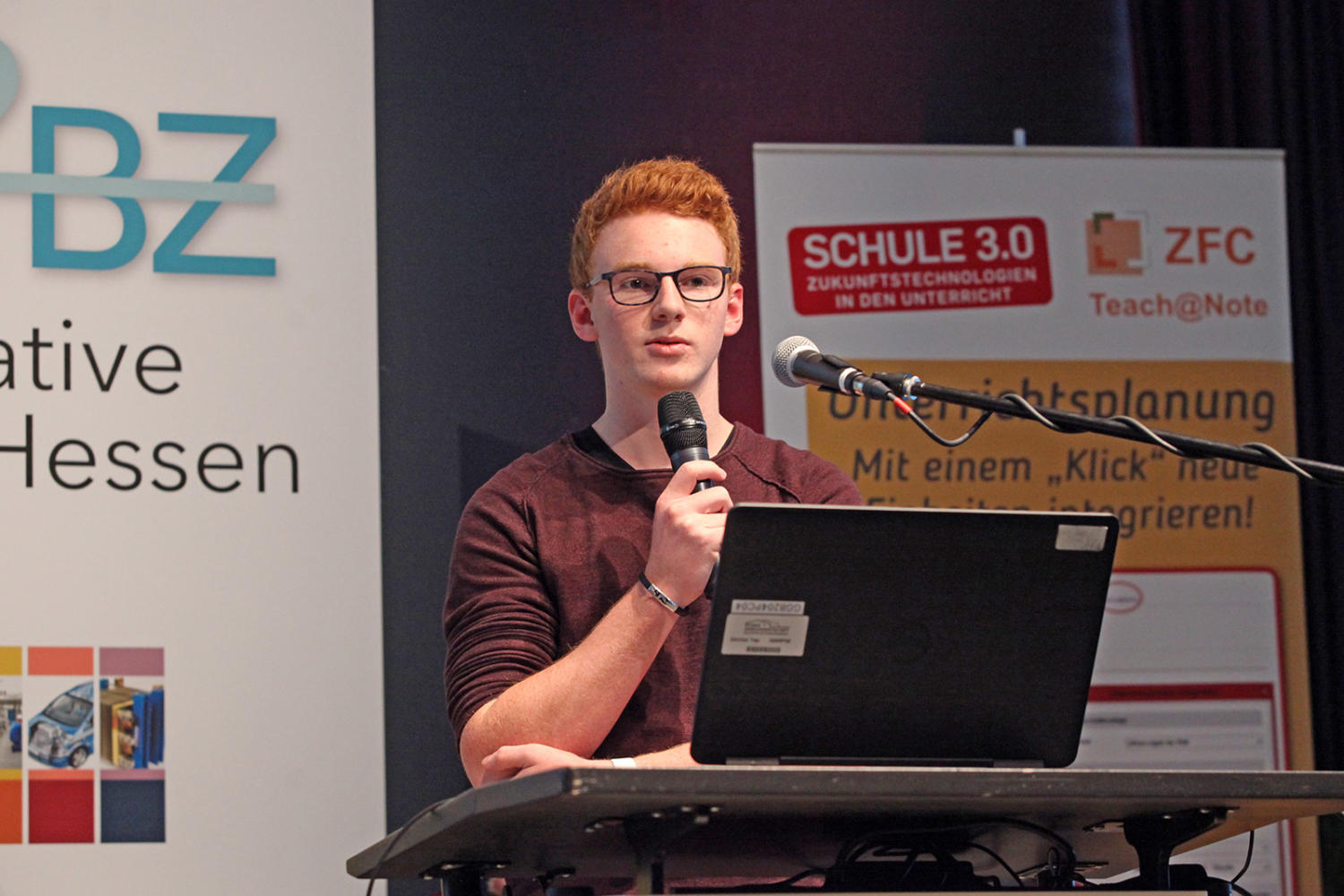
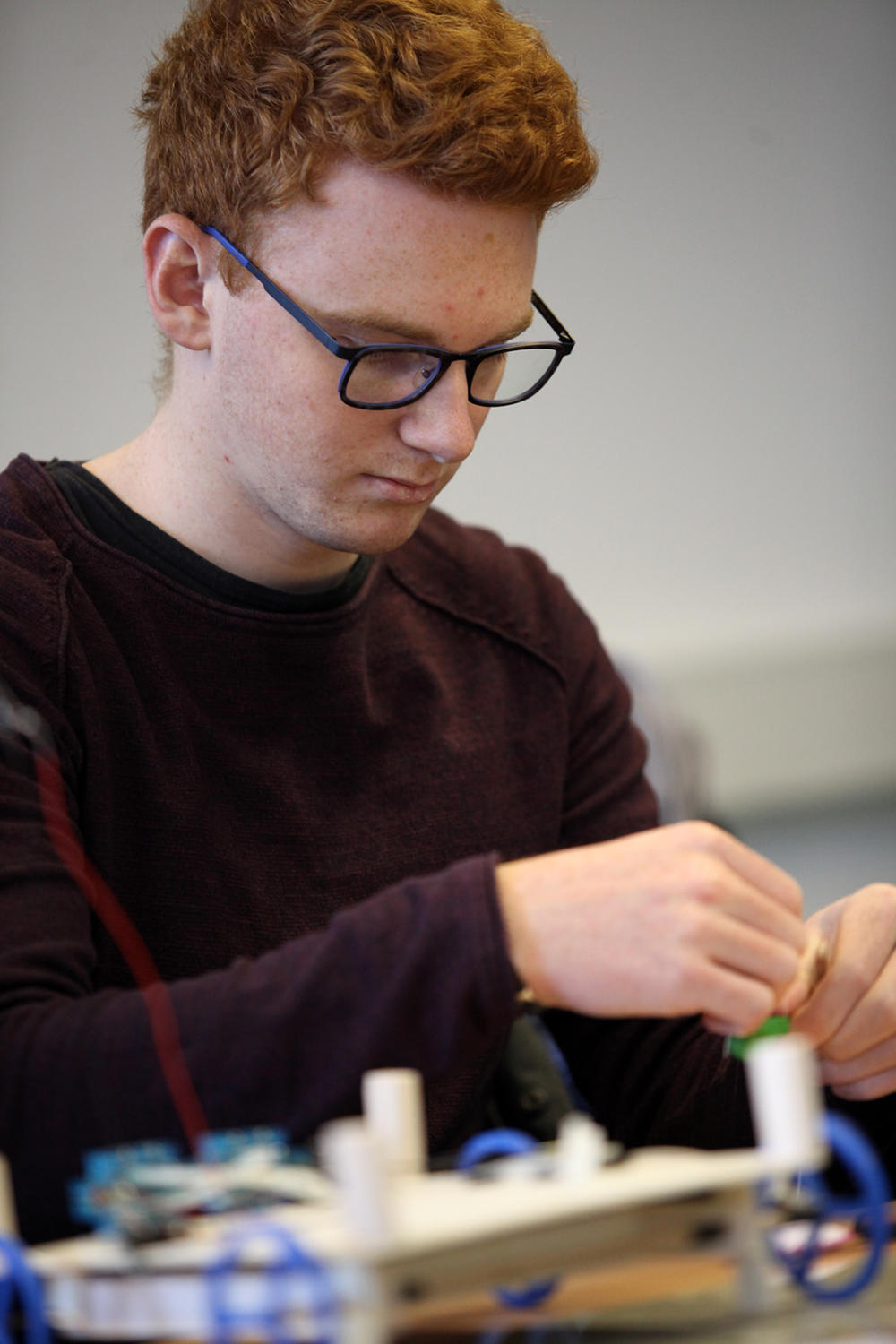
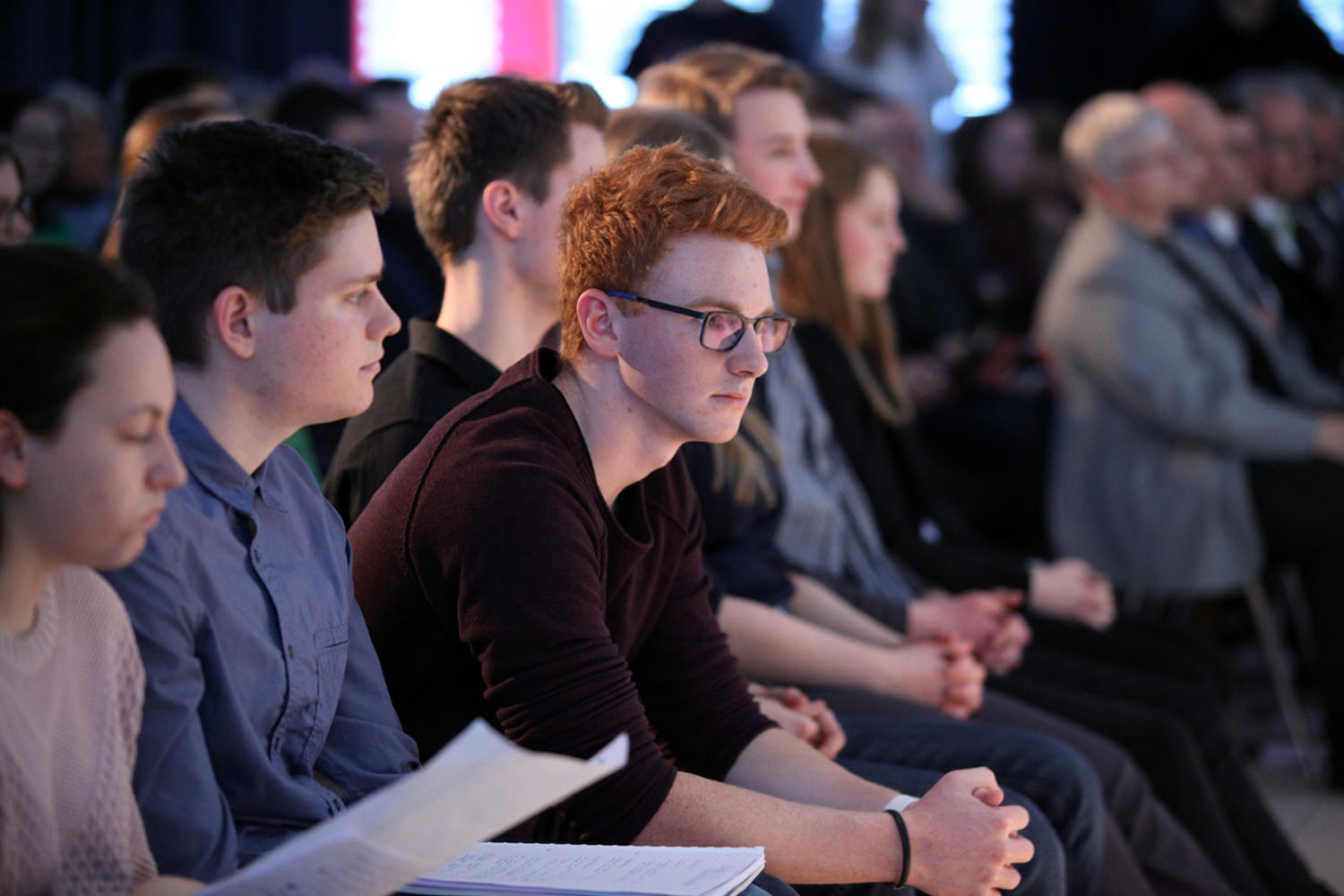
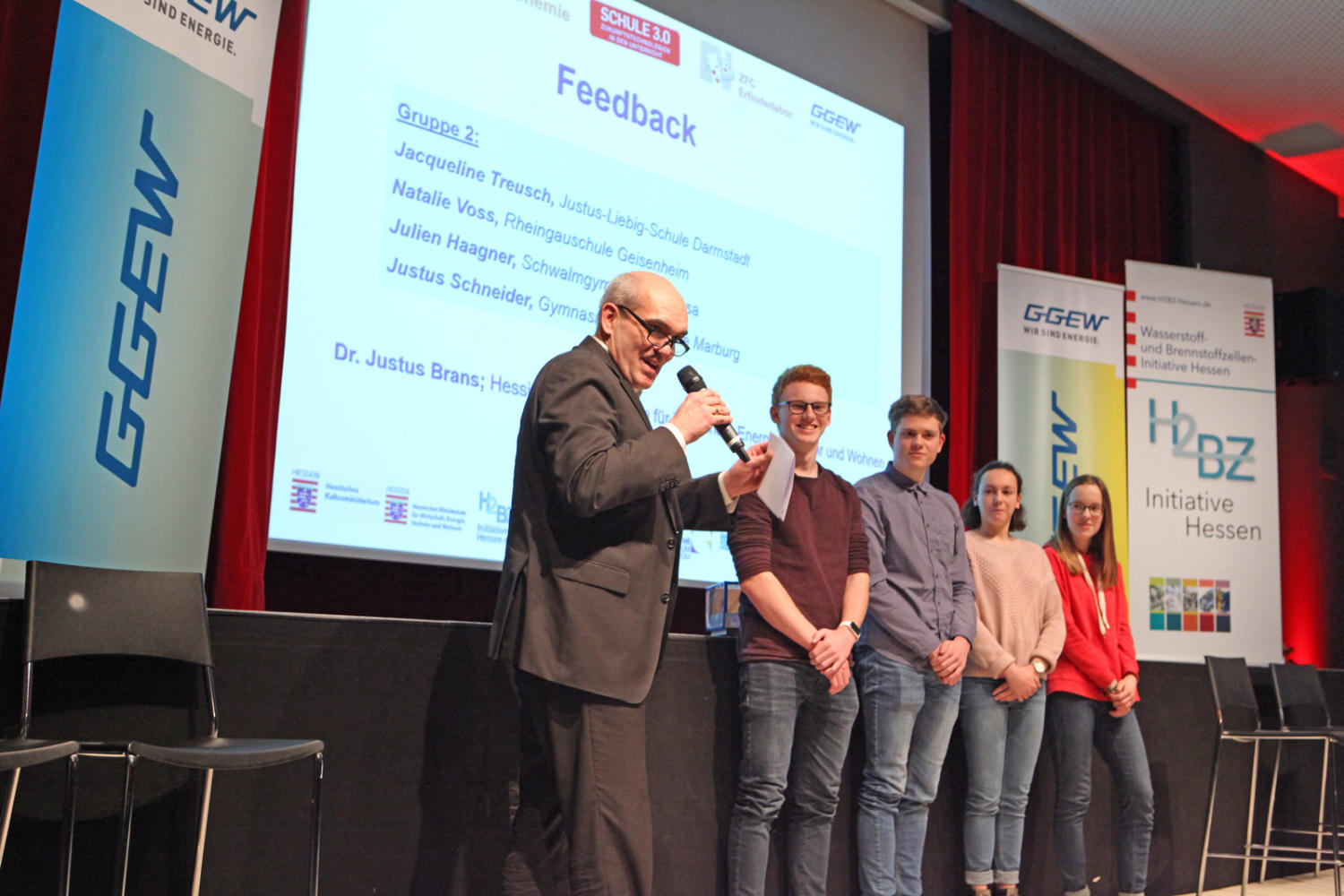



Justus Schneider on the Gifted Students’ Team at the 27th Inventors’ Lab
Contests & Awards, News, STEM, Talent DevelopmentAt the 27th Inventors’ Lab organized by the Center for Chemistry, based in Bensheim an der Bergstraße, 17-year-old Justus Schneider, a student at Steinmühlen High School, was one of 16 highly gifted students who spent a week at RheinMain University of Applied Sciences exploring the topic “Electromobility—Fuel Cells.” In front of a large audience, including prominent figures from business, academia, and government ministries, he and his group presented their research ideas and proposed solutions at the event’s conclusion.
Out of nearly 200 outstanding applicants from all over Hesse, Justus was one of the 16 selected participants. He and Luca Weigel from the Lahntalschule in Biedenkopf were the only representatives from the entire county. At the Inventor Lab in the Department of Engineering at Rhein-Main University of Applied Sciences in Rüsselsheim, the young inventors were given their challenge. The challenge was to build a small vehicle on site that is powered by fuel cells. But that wasn’t all: the vehicle also had to be capable of powering other devices at the same time, including a lamp.
Fuel cells and a capacitor were among the components provided. But that was the extent of the assistance. Justus Schneider’s team built a car body out of wood and cardboard. The wheels were created using a 3D printer. The young researchers used the capacitor as an energy storage device. This allowed the lamp to stay lit even when the car was no longer moving.
Inspired by the topics of electric mobility and fuel cells
Producing hydrogen proved to be a test of patience. Since the fuel cells had two ports for hydrogen, this was the stated goal. In the lab, the talented young scientists broke down water through electrolysis. However, the endeavor to store hydrogen in balloons required the staying power necessary for research work. “Don’t give up” was also Justus Schneider’s motto when the balloon burst several times. It ultimately took five hours to make everything airtight.
The successful completion of this project has inspired Justus Schneider. Although he had already planned to pursue a career in research in mathematics or physics before the project, he can now imagine working on the further development of vehicles powered by fuel cells. Although such vehicles already exist, Justus Schneider says, they are relatively expensive to purchase. Justus Schneider’s idea is that gas stations could produce hydrogen themselves or have it delivered by industry. Based on his observations, he believes it would be easy to make changes in this area.
Justus was encouraged by his Steinmühlen teacher and STEM coordinator, Dr. Jutta Töhl-Borsdorf, to enter the competition, which had previously required practical skills. She, along with his physics teacher Dr. Rainer Nietzke and the entire school, is delighted that Steinmühle’s “streak” of participation in this prestigious event has continued this year as well.
If Justus’s work in the Inventors’ Lab did indeed serve as a catalyst for his career—so much the better. Who knows: Perhaps one day it will be a team led by Justus Schneider that achieves a breakthrough in the further development of fuel-cell-powered vehicles.